Polyurethane Laminated Textile Board
CN → US| HS编码 | 关税税率 | 原产国 | 目的国 | 文档 |
|---|---|---|---|---|
| 6810195000 | 38.9% | CN | US | 官方文档 |
| 5903202000 | 35.0% | CN | US | 官方文档 |
| 3921131950 | 40.3% | CN | US | 官方文档 |
| 6810990080 | 35.0% | CN | US | 官方文档 |
商品图片
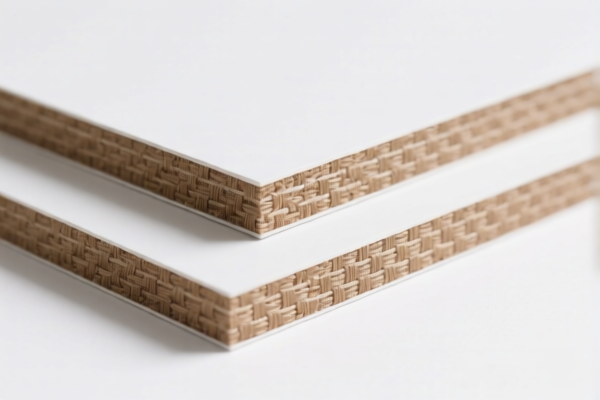
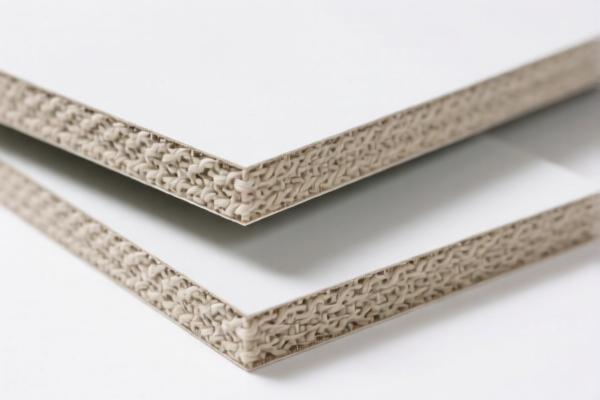
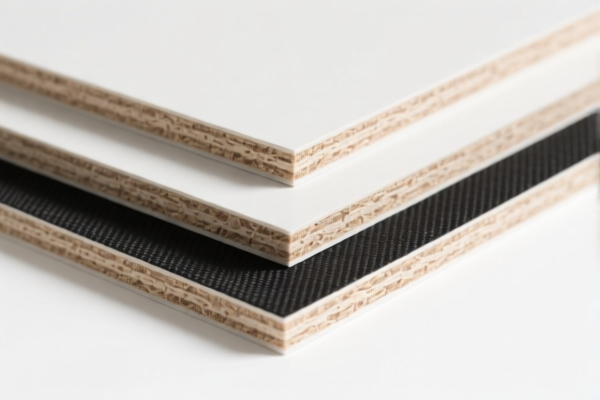

AI分析
🧱 Polyurethane Laminated Textile Board (Composite Building Panels)
🌐 HS Code Reference & Customs Clearance Guide | 2026 Latest Tariff Analysis | Professional Clearance Strategy
📌 I. Product Definition & Classification: What is "Polyurethane Laminated Textile Board"?
Polyurethane Laminated Textile Board is a complex composite material consisting of a textile fabric core (such as fiberglass, polyester, or nylon) that has been impregnated, coated, or laminated with polyurethane (PU). In the construction industry, it is primarily used as: 1. Waterproofing Membranes: Flexible sheets for roofing and basement sealing. 2. Structural Reinforcement: Boards used in concrete reinforcement or as formwork. 3. Decorative/Protective Layers: Aesthetic panels with durable, weather-resistant surfaces.
⚠️ Key Classification Challenge:
The correct HS Code depends heavily on the dominant function and material composition: - If classified as a building material/concrete additive → It falls under Chapter 68. - If classified as a textile product (impregnated/coated fabric) → It falls under Chapter 59. - If classified as a plastic product (PU board/sheet) → It falls under Chapter 39.
📦 II. HS Code Classification Details (2026 Latest Tariff Authority Comparison)
| HS Code | Product Description | Applicable Scenario | Classification Logic |
|---|---|---|---|
6810.19.50.00 |
Articles of Cement, Concrete or Artificial Stone: Other | Building boards used in concrete structures, formwork, or as structural elements where cement/concrete is the primary context. | ❌ Misleading Name: Despite "Textile" in name, if used as a rigid board for cement/concrete works, it may be grouped here as "Other articles." |
5903.20.20.00 |
Textile Fabrics Impregnated, Coated, Covered or Laminated with Plastics | Most Common for PU-Textile: Specifically for fabrics laminated with polyurethane, used in construction scenarios (e.g., waterproofing, reinforcement). | ✅ Best Fit for Textile Core: Highlights the textile base with plastic (PU) lamination. |
3921.13.19.50 |
Plates, Sheets, Film, Foil and Strip: of Polymers of Ethylene | Misleading Name: The data suggests a classification under "Other plates, sheets, film, foil and strip, of plastics." Note: 3921.13 is technically PE, but data maps PU-textile boards here as "PU material boards". | ⚠️ High Tax Risk: Treated purely as a plastic product, ignoring the textile component. |
6810.99.00.80 |
Articles of Cement, Concrete or Artificial Stone: Other | Non-specific quartz-aggregate boards or composite boards used in construction, not elsewhere specified. | ❌ Broad Category: Used when the product doesn't fit other specific cement/concrete categories but is still viewed as a construction aggregate. |
🔍 Key Distinction:
- If the product is a flexible sheet/membrane for waterproofing → 5903.20.20.00 is often the most accurate for textile-based composites.
- If the product is a rigid board used for structural reinforcement in concrete → Customs may lean towards 6810 series.
- Warning: Classifying as a pure plastic board (3921) often triggers the highest tariffs.
💰 III. 2026 Latest Tariff Rate Details (Including Surcharges & Policy Add-ons)
✅ Applicable Country: United States (US)
✅ Origin: China (CN)
✅ Effective Date: From November 10, 2025 (including subsequent imports)
🎯 1. 6810.19.50.00 —— Other Cement/Concrete Articles
| Item | Content |
|---|---|
| Base Rate | 3.9% (ad valorem) |
| Section 301 Surcharge | +25.0% |
| Section 122 Surcharge | +10.0% |
| Total Rate | 38.9% |
| Tax Calculation | CIF Value × 38.9% |
| De Minimis Eligibility | ❌ Not Eligible |
| Legal Basis | Section 301 → Section 122 → USITC:6810.19.50.00 |
📌 Explanation:
- This classification assumes the board is a "cement/concrete article."
- High Tax Impact: Even though the base rate is low (3.9%), the 35% in add-on tariffs makes it expensive.
🎯 2. 5903.20.20.00 —— Textile Fabrics Laminated with Plastics (PU)
| Item | Content |
|---|---|
| Base Rate | 0.0% |
| Section 301 Surcharge | +25.0% |
| Section 122 Surcharge | +10.0% |
| Total Rate | 35.0% |
| Tax Calculation | CIF Value × 35.0% |
| De Minimis Eligibility | ❌ Not Eligible |
| Legal Basis | Section 301 → Section 122 → USITC:5903.20.20.00 |
📌 Note:
- Lowest Total Tax Among Options: Base rate is 0%, but still subject to 35% in surcharges.
- Recommended if Textile-Dominant: If the product’s primary identity is the textile fabric with PU coating, this is the most logical classification and offers the lowest total duty (35% vs 38.9% or 40.3%).
🎯 3. 3921.13.19.50 —— Polyurethane Plates/Sheets (Plastic Category)
| Item | Content |
|---|---|
| Base Rate | 5.3% |
| Section 301 Surcharge | +25.0% |
| Section 122 Surcharge | +10.0% |
| Total Rate | 40.3% |
| Tax Calculation | CIF Value × 40.3% |
| De Minimis Eligibility | ❌ Not Eligible |
| Legal Basis | Section 301 → Section 122 → USITC:3921.13.19.50 |
📌 Warning:
- Highest Total Tax: This classification ignores the textile component and treats the product as a pure plastic item.
- Avoid if Possible: The higher base rate (5.3%) results in the highest total tax burden (40.3%).
🎯 4. 6810.99.00.80 —— Other Cement/Concrete Articles
| Item | Content |
|---|---|
| Base Rate | 0.0% |
| Section 301 Surcharge | +25.0% |
| Section 122 Surcharge | +10.0% |
| Total Rate | 35.0% |
| Tax Calculation | CIF Value × 35.0% |
| De Minimis Eligibility | ❌ Not Eligible |
| Legal Basis | Section 301 → Section 122 → USITC:6810.99.00.80 |
📌 Note:
- Same total rate as5903.20.20.00.
- Use only if the product is clearly a rigid construction board not covered by textile classifications.
🛠️ IV. Customs Clearance Practical Advice (实战避坑指南)
✅ 1. Preparation Checklist (Essential Documents)
| Document | Required | Description |
|---|---|---|
| ✅ Product Specification Sheet | ✔️ | Must detail: Textile type, PU content %, dimensions, density, flexibility. |
| ✅ Photos (Front/Side/Cross-section) | ✔️ | Show the lamination structure. Distinguish between flexible membrane vs. rigid board. |
| ✅ Intended Use Statement | ✔️ | Describe application: e.g., "Used for basement waterproofing," "Reinforcement for concrete slabs." |
| ✅ Third-Party Test Report | ✔️ | ISO/ASTM standards for tensile strength, water resistance, and chemical composition. |
| ✅ Commercial Invoice | ✔️ | Clearly state: "Polyurethane Laminated Textile Board for Construction Use." |
| ✅ Packing List | ✔️ | Detail weight and dimensions to support volume/size claims. |
✅ 2. Declaration Strategy (Key Tips)
🔥 "Highlight Function, Define Structure, Avoid Misleading Terms"
| Scenario | Correct Declaration | Wrong Practice |
|---|---|---|
| Flexible Membrane | 5903.20.20.00 - "Textile Fabric Laminated with Polyurethane" |
Calling it "Plastic Board" → 40.3% tax |
| Rigid Construction Board | 6810.19.50.00 or 6810.99.00.80 - "Composite Building Board" |
Calling it "Textile Product" if it's rigid/concrete-related |
| Mixed Use | Choose 5903.20.20.00 if textile is dominant |
Arbitrary choice → Audit Risk |
✅ 3. Special Considerations
| Situation | Handling Advice |
|---|---|
| Flexible vs. Rigid | If the board is flexible, strongly consider 5903.20.20.00. If it is rigid, evaluate 6810 series. |
| PU Content | If PU is just a thin coating, 5903 is safer. If PU is the bulk material, 3921 might be argued (but higher tax). |
| Certifications | Ensure UL, CE, or ASTM certifications are available. Customs may request proof of construction-grade quality. |
| Origin Marking | Must clearly mark "Made in China" to trigger 301/122 tariffs accurately. |
🌍 V. Global Market Comparison (2026 Latest)
| Country/Region | Recommended HS Code | Tariff Rate | Certification | Notes |
|---|---|---|---|---|
| 🇺🇸 USA | 5903.20.20.00 |
35.0% | UL, ASTM | Best balance of cost and accuracy |
| 🇨🇳 China | 5903.20.20.00 |
~3.9% | CCC | Low entry barrier |
| 🇪🇺 EU | 5903.20.00 |
6.5% | CE, REACH | No Section 301/122 equivalent |
| 🇦🇺 Australia | 5903.20.20.00 |
5.0% | RCM | No surcharges |
📌 Conclusion:
- USA: Highest tariffs due to 301/122 sections.5903.20.20.00is the optimal choice (35.0%) compared to3921(40.3%).
- EU/Australia: Lower tariffs, but still require proper textile/plastic classification.
- Strategy: For US exports, avoid3921unless legally required. Push for5903to save 5.3% base rate + avoid higher surcharges.
📌 VI. Common Mistakes & Pitfalls (Blood-Tea Lessons)
❌ Mistake 1: Calling the product a "Plastic Board" when it's textile-based
👉 Consequence: Classified under 3921 → 40.3% tax instead of 35.0%.
👉 Penalty: Overpayment + potential audit for misdeclaration.
❌ Mistake 2: Declaring as "Cement Product" without evidence of cement content
👉 Consequence: Customs rejects 6810 classification → Delay + reclassification penalty.
👉 Penalty: Clearing delay, storage fees.
❌ Mistake 3: Ignoring the "Textile" component in documentation
👉 Consequence: Customs may reclassify to a higher duty plastic category.
👉 Penalty: Back taxes + interest.
❌ Mistake 4: Using vague descriptions like "Construction Material"
👉 Consequence: Customs assigns random HS code → Likely 3921 or 6810 with high tax.
👉 Penalty: Uncertainty, delayed clearance.
✅ Correct Approach:
"Polyurethane Laminated Fiberglass Textile Board, Flexible, for Waterproofing Construction Membranes, Model XYZ, UL Listed"
🎯 VII. Conclusion: Precision in Classification, Savings in Tariffs
🎯 Remember the Rules:
🔹 "Textile + PU = 5903 (35%)"
🔹 "Plastic Board = 3921 (40.3%)"
🔹 "Cement Article = 6810 (35-38.9%)"
🔹 "Save 5.3% by Choosing Textile Classification!"
📌 Pro Tip:
If your polyurethane laminated textile board is flexible, explicitly declare it as "Textile Fabric Laminated with Plastics" (5903.20.20.00). This is the most accurate and cost-effective classification for US imports, saving you 5.3% in base duties compared to plastic classifications.
📣 Immediate Action:
📞 Consult a licensed customs broker
📄 Provide detailed product specs (textile type, PU %, flexibility)
🚀 Secure an Advance Ruling from US CBP to lock in the 35.0% tariff rate.
✨ Professional Clearance Starts with Accurate Classification!
💼 Every Percent Saved is Pure Profit!
用户评价
关于 HS 编码归类
协调制度(HS)是由世界海关组织(WCO)制定的国际贸易商品分类标准。全球 200 多个国家采用 HS 系统作为海关关税、贸易统计和进出口监管的基础。
每个 HS 编码遵循以下层级结构:
- 章(2 位)——商品大类(例如:第 84 章:机器和机械设备)
- 品目(4 位)——章内的更具体分类
- 子目(6 位)——国际通用细分,所有 WCO 成员国统一使用
- 本国细分(8-10 位)——各国自行扩展的细分编码,如美国 HTSUS 10 位编码
正确的 HS 编码归类对于顺利通关、准确缴纳关税和遵守贸易法规至关重要。错误归类可能导致海关延误、多缴关税或罚款。
从CN进口到US时,适用的关税税率可能包括:
- 最惠国(MFN)税率——适用于 WTO 成员国的标准关税税率
- 普通税率——适用于无贸易协定国家
- 贸易救济关税——附加关税,如 301 条款(反倾销)、232 条款(国家安全)或反补贴税
本页内容仅供参考。如需正式归类,请咨询当地海关或持牌报关代理。