Polyurethane Laminated Textile Board
CN → US| HS Code | Tariff Rate | Origin | Destination | Doc |
|---|---|---|---|---|
| 6810195000 | 38.9% | CN | US | Official Doc |
| 5903202000 | 35.0% | CN | US | Official Doc |
| 3921131950 | 40.3% | CN | US | Official Doc |
| 6810990080 | 35.0% | CN | US | Official Doc |
Product Images
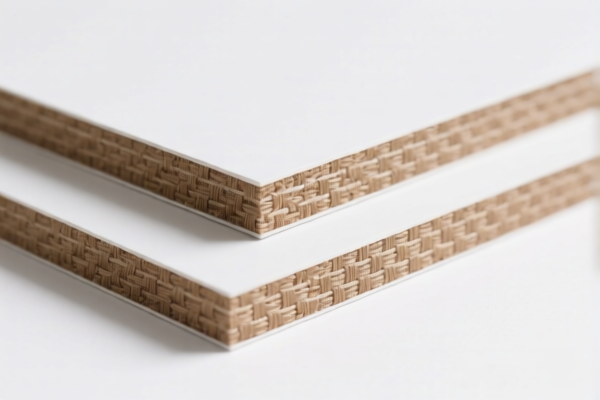
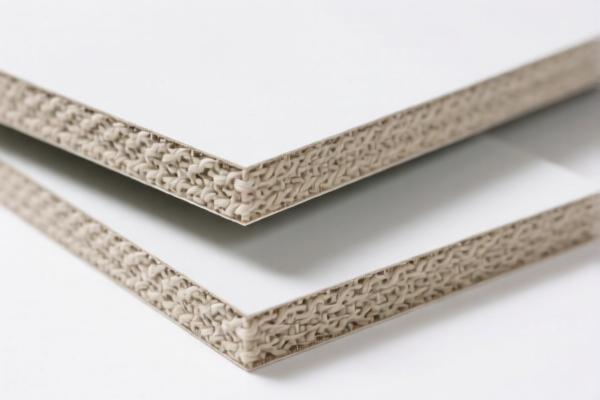
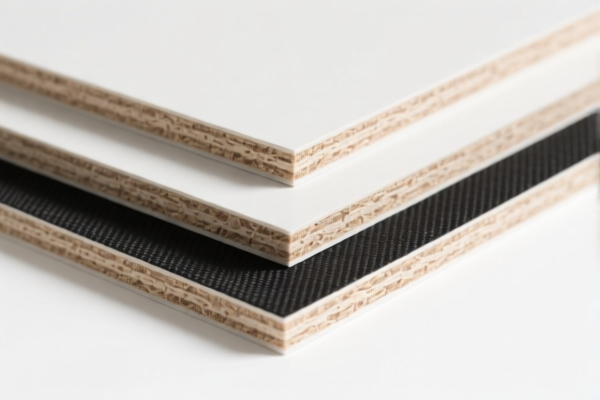

AI Analysis
🧱 Polyurethane Laminated Textile Board (Composite Building Panels)
🌐 HS Code Reference & Customs Clearance Guide | 2026 Latest Tariff Analysis | Professional Clearance Strategy
📌 I. Product Definition & Classification: What is "Polyurethane Laminated Textile Board"?
Polyurethane Laminated Textile Board is a complex composite material consisting of a textile fabric core (such as fiberglass, polyester, or nylon) that has been impregnated, coated, or laminated with polyurethane (PU). In the construction industry, it is primarily used as: 1. Waterproofing Membranes: Flexible sheets for roofing and basement sealing. 2. Structural Reinforcement: Boards used in concrete reinforcement or as formwork. 3. Decorative/Protective Layers: Aesthetic panels with durable, weather-resistant surfaces.
⚠️ Key Classification Challenge:
The correct HS Code depends heavily on the dominant function and material composition: - If classified as a building material/concrete additive → It falls under Chapter 68. - If classified as a textile product (impregnated/coated fabric) → It falls under Chapter 59. - If classified as a plastic product (PU board/sheet) → It falls under Chapter 39.
📦 II. HS Code Classification Details (2026 Latest Tariff Authority Comparison)
| HS Code | Product Description | Applicable Scenario | Classification Logic |
|---|---|---|---|
6810.19.50.00 |
Articles of Cement, Concrete or Artificial Stone: Other | Building boards used in concrete structures, formwork, or as structural elements where cement/concrete is the primary context. | ❌ Misleading Name: Despite "Textile" in name, if used as a rigid board for cement/concrete works, it may be grouped here as "Other articles." |
5903.20.20.00 |
Textile Fabrics Impregnated, Coated, Covered or Laminated with Plastics | Most Common for PU-Textile: Specifically for fabrics laminated with polyurethane, used in construction scenarios (e.g., waterproofing, reinforcement). | ✅ Best Fit for Textile Core: Highlights the textile base with plastic (PU) lamination. |
3921.13.19.50 |
Plates, Sheets, Film, Foil and Strip: of Polymers of Ethylene | Misleading Name: The data suggests a classification under "Other plates, sheets, film, foil and strip, of plastics." Note: 3921.13 is technically PE, but data maps PU-textile boards here as "PU material boards". | ⚠️ High Tax Risk: Treated purely as a plastic product, ignoring the textile component. |
6810.99.00.80 |
Articles of Cement, Concrete or Artificial Stone: Other | Non-specific quartz-aggregate boards or composite boards used in construction, not elsewhere specified. | ❌ Broad Category: Used when the product doesn't fit other specific cement/concrete categories but is still viewed as a construction aggregate. |
🔍 Key Distinction:
- If the product is a flexible sheet/membrane for waterproofing → 5903.20.20.00 is often the most accurate for textile-based composites.
- If the product is a rigid board used for structural reinforcement in concrete → Customs may lean towards 6810 series.
- Warning: Classifying as a pure plastic board (3921) often triggers the highest tariffs.
💰 III. 2026 Latest Tariff Rate Details (Including Surcharges & Policy Add-ons)
✅ Applicable Country: United States (US)
✅ Origin: China (CN)
✅ Effective Date: From November 10, 2025 (including subsequent imports)
🎯 1. 6810.19.50.00 —— Other Cement/Concrete Articles
| Item | Content |
|---|---|
| Base Rate | 3.9% (ad valorem) |
| Section 301 Surcharge | +25.0% |
| Section 122 Surcharge | +10.0% |
| Total Rate | 38.9% |
| Tax Calculation | CIF Value × 38.9% |
| De Minimis Eligibility | ❌ Not Eligible |
| Legal Basis | Section 301 → Section 122 → USITC:6810.19.50.00 |
📌 Explanation:
- This classification assumes the board is a "cement/concrete article."
- High Tax Impact: Even though the base rate is low (3.9%), the 35% in add-on tariffs makes it expensive.
🎯 2. 5903.20.20.00 —— Textile Fabrics Laminated with Plastics (PU)
| Item | Content |
|---|---|
| Base Rate | 0.0% |
| Section 301 Surcharge | +25.0% |
| Section 122 Surcharge | +10.0% |
| Total Rate | 35.0% |
| Tax Calculation | CIF Value × 35.0% |
| De Minimis Eligibility | ❌ Not Eligible |
| Legal Basis | Section 301 → Section 122 → USITC:5903.20.20.00 |
📌 Note:
- Lowest Total Tax Among Options: Base rate is 0%, but still subject to 35% in surcharges.
- Recommended if Textile-Dominant: If the product’s primary identity is the textile fabric with PU coating, this is the most logical classification and offers the lowest total duty (35% vs 38.9% or 40.3%).
🎯 3. 3921.13.19.50 —— Polyurethane Plates/Sheets (Plastic Category)
| Item | Content |
|---|---|
| Base Rate | 5.3% |
| Section 301 Surcharge | +25.0% |
| Section 122 Surcharge | +10.0% |
| Total Rate | 40.3% |
| Tax Calculation | CIF Value × 40.3% |
| De Minimis Eligibility | ❌ Not Eligible |
| Legal Basis | Section 301 → Section 122 → USITC:3921.13.19.50 |
📌 Warning:
- Highest Total Tax: This classification ignores the textile component and treats the product as a pure plastic item.
- Avoid if Possible: The higher base rate (5.3%) results in the highest total tax burden (40.3%).
🎯 4. 6810.99.00.80 —— Other Cement/Concrete Articles
| Item | Content |
|---|---|
| Base Rate | 0.0% |
| Section 301 Surcharge | +25.0% |
| Section 122 Surcharge | +10.0% |
| Total Rate | 35.0% |
| Tax Calculation | CIF Value × 35.0% |
| De Minimis Eligibility | ❌ Not Eligible |
| Legal Basis | Section 301 → Section 122 → USITC:6810.99.00.80 |
📌 Note:
- Same total rate as5903.20.20.00.
- Use only if the product is clearly a rigid construction board not covered by textile classifications.
🛠️ IV. Customs Clearance Practical Advice (实战避坑指南)
✅ 1. Preparation Checklist (Essential Documents)
| Document | Required | Description |
|---|---|---|
| ✅ Product Specification Sheet | ✔️ | Must detail: Textile type, PU content %, dimensions, density, flexibility. |
| ✅ Photos (Front/Side/Cross-section) | ✔️ | Show the lamination structure. Distinguish between flexible membrane vs. rigid board. |
| ✅ Intended Use Statement | ✔️ | Describe application: e.g., "Used for basement waterproofing," "Reinforcement for concrete slabs." |
| ✅ Third-Party Test Report | ✔️ | ISO/ASTM standards for tensile strength, water resistance, and chemical composition. |
| ✅ Commercial Invoice | ✔️ | Clearly state: "Polyurethane Laminated Textile Board for Construction Use." |
| ✅ Packing List | ✔️ | Detail weight and dimensions to support volume/size claims. |
✅ 2. Declaration Strategy (Key Tips)
🔥 "Highlight Function, Define Structure, Avoid Misleading Terms"
| Scenario | Correct Declaration | Wrong Practice |
|---|---|---|
| Flexible Membrane | 5903.20.20.00 - "Textile Fabric Laminated with Polyurethane" |
Calling it "Plastic Board" → 40.3% tax |
| Rigid Construction Board | 6810.19.50.00 or 6810.99.00.80 - "Composite Building Board" |
Calling it "Textile Product" if it's rigid/concrete-related |
| Mixed Use | Choose 5903.20.20.00 if textile is dominant |
Arbitrary choice → Audit Risk |
✅ 3. Special Considerations
| Situation | Handling Advice |
|---|---|
| Flexible vs. Rigid | If the board is flexible, strongly consider 5903.20.20.00. If it is rigid, evaluate 6810 series. |
| PU Content | If PU is just a thin coating, 5903 is safer. If PU is the bulk material, 3921 might be argued (but higher tax). |
| Certifications | Ensure UL, CE, or ASTM certifications are available. Customs may request proof of construction-grade quality. |
| Origin Marking | Must clearly mark "Made in China" to trigger 301/122 tariffs accurately. |
🌍 V. Global Market Comparison (2026 Latest)
| Country/Region | Recommended HS Code | Tariff Rate | Certification | Notes |
|---|---|---|---|---|
| 🇺🇸 USA | 5903.20.20.00 |
35.0% | UL, ASTM | Best balance of cost and accuracy |
| 🇨🇳 China | 5903.20.20.00 |
~3.9% | CCC | Low entry barrier |
| 🇪🇺 EU | 5903.20.00 |
6.5% | CE, REACH | No Section 301/122 equivalent |
| 🇦🇺 Australia | 5903.20.20.00 |
5.0% | RCM | No surcharges |
📌 Conclusion:
- USA: Highest tariffs due to 301/122 sections.5903.20.20.00is the optimal choice (35.0%) compared to3921(40.3%).
- EU/Australia: Lower tariffs, but still require proper textile/plastic classification.
- Strategy: For US exports, avoid3921unless legally required. Push for5903to save 5.3% base rate + avoid higher surcharges.
📌 VI. Common Mistakes & Pitfalls (Blood-Tea Lessons)
❌ Mistake 1: Calling the product a "Plastic Board" when it's textile-based
👉 Consequence: Classified under 3921 → 40.3% tax instead of 35.0%.
👉 Penalty: Overpayment + potential audit for misdeclaration.
❌ Mistake 2: Declaring as "Cement Product" without evidence of cement content
👉 Consequence: Customs rejects 6810 classification → Delay + reclassification penalty.
👉 Penalty: Clearing delay, storage fees.
❌ Mistake 3: Ignoring the "Textile" component in documentation
👉 Consequence: Customs may reclassify to a higher duty plastic category.
👉 Penalty: Back taxes + interest.
❌ Mistake 4: Using vague descriptions like "Construction Material"
👉 Consequence: Customs assigns random HS code → Likely 3921 or 6810 with high tax.
👉 Penalty: Uncertainty, delayed clearance.
✅ Correct Approach:
"Polyurethane Laminated Fiberglass Textile Board, Flexible, for Waterproofing Construction Membranes, Model XYZ, UL Listed"
🎯 VII. Conclusion: Precision in Classification, Savings in Tariffs
🎯 Remember the Rules:
🔹 "Textile + PU = 5903 (35%)"
🔹 "Plastic Board = 3921 (40.3%)"
🔹 "Cement Article = 6810 (35-38.9%)"
🔹 "Save 5.3% by Choosing Textile Classification!"
📌 Pro Tip:
If your polyurethane laminated textile board is flexible, explicitly declare it as "Textile Fabric Laminated with Plastics" (5903.20.20.00). This is the most accurate and cost-effective classification for US imports, saving you 5.3% in base duties compared to plastic classifications.
📣 Immediate Action:
📞 Consult a licensed customs broker
📄 Provide detailed product specs (textile type, PU %, flexibility)
🚀 Secure an Advance Ruling from US CBP to lock in the 35.0% tariff rate.
✨ Professional Clearance Starts with Accurate Classification!
💼 Every Percent Saved is Pure Profit!
Customer Reviews
About HS Code Classification
The Harmonized System (HS) is an internationally standardized nomenclature developed by the World Customs Organization (WCO) to classify traded products. Over 200 countries use the HS system as the basis for customs tariffs, trade statistics, and import/export regulations.
Each HS code follows a hierarchical structure:
- Chapter (2 digits) — Broad category of goods (e.g., Chapter 84: Machinery and Mechanical Appliances)
- Heading (4 digits) — More specific grouping within the chapter
- Subheading (6 digits) — Internationally standardized breakdown, used by all WCO member countries
- National subdivisions (8-10 digits) — Country-specific extensions for further classification, such as US HTSUS 10-digit codes
Correct HS code classification is essential for smooth customs clearance, accurate duty payment, and compliance with trade regulations. Misclassification can lead to customs delays, overpayment of duties, or penalties.
When importing from CN to US, the applicable tariff rates may include:
- Most-Favored-Nation (MFN) rate — The standard duty rate applied to WTO members
- General rate — Applied to countries without trade agreements
- Trade remedy duties — Additional tariffs such as Section 301 (anti-dumping), Section 232 (national security), or countervailing duties
The information provided on this page is for reference purposes only. For official classification, please consult with your local customs authority or a licensed customs broker.