Polyurethane Textile Composite Anti static Board
CN → US| HS编码 | 关税税率 | 原产国 | 目的国 | 文档 |
|---|---|---|---|---|
| 3921131950 | 40.3% | CN | US | 官方文档 |
| 5903202500 | 42.5% | CN | US | 官方文档 |
| 3921131500 | 41.5% | CN | US | 官方文档 |
| 5903202000 | 35.0% | CN | US | 官方文档 |
| 6810990080 | 35.0% | CN | US | 官方文档 |
商品图片
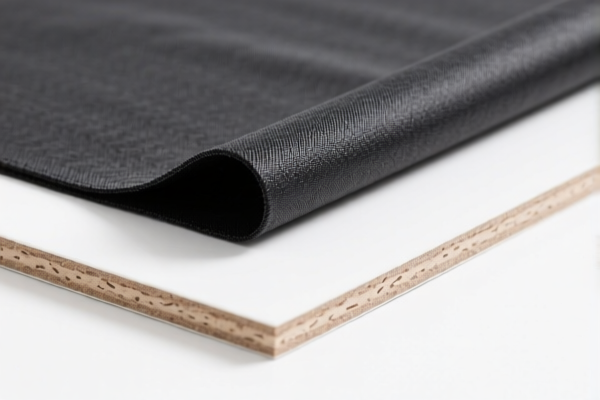
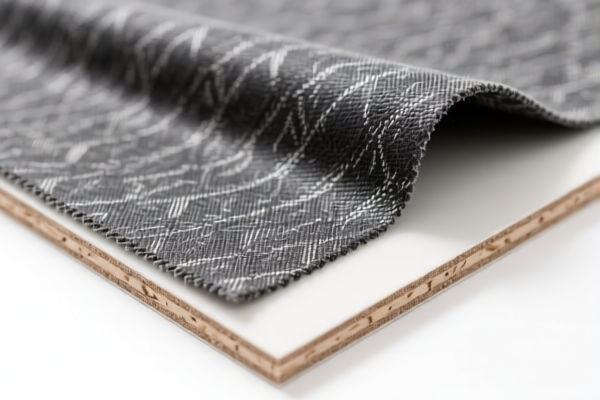
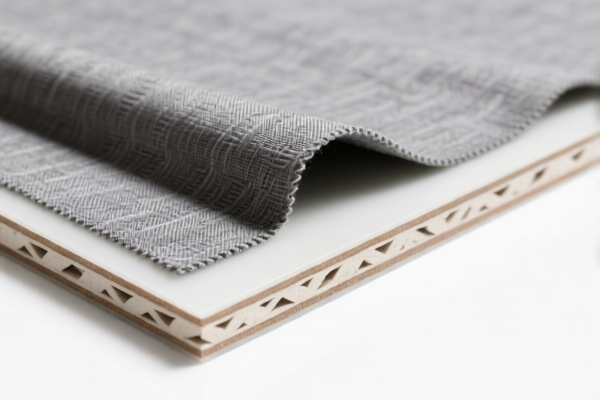

AI分析
🧱 Polyurethane Textile Composite Anti-static Board
🌐 HS Code Classification & Customs Clearance Guide | 2026 Tax Analysis | Strategic Compliance Strategy
📌 I. Product Definition: What is a "Polyurethane Textile Composite Anti-static Board"?
This product is a specialized construction material combining Polyurethane (PU) with Textile/Fabric layers, processed into a board or panel format. The "anti-static" feature suggests an added functional coating or conductive thread, but the core classification depends on the material composition and form.
⚠️ Critical Classification Point:
The customs authority will look at whether the product is primarily identified as:
1. A Plastic/PU Board (Chapter 39) → If PU is the dominant structural material.
2. A Textile Fabric (Chapter 59) → If the fabric base is coated/impregnated with PU and forms the essential character.
3. A Concrete/Cement Product (Chapter 68) → Only if the PU/textile is considered a minor additive or backing, which is rare for this description.
📦 II. HS Code Classification Matrix (Based on Provided Data)
| HS Code | Description Summary | Key Feature | Tax Rate |
|---|---|---|---|
| 3921.13.19.50 | PU Material, Sheet/Board Form, Construction Use | Pure PU board structure | 40.3% |
| 5903.20.25.00 | PU Material + Textile Form | PU-coated textile fabric | 42.5% |
| 3921.13.15.00 | PU Material, Composite Board, Construction Use | PU + Textile composite panel | 41.5% |
| 5903.20.20.00 | PU Material, Textile Composite Form | PU-treated artificial fiber textile | 35.0% |
| 6810.99.00.80 | Construction Board, Cement/Concrete/Artificial Stone | Inferred as concrete product with PU backing | 35.0% |
🔍 Analysis:
- The lowest tax rate (35.0%) is found in 5903.20.20.00 and 6810.99.00.80.
- However, 6810.99.00.80 requires the product to be inferred as a cement/concrete product, which may not fit a "polyurethane textile composite" unless it's a lightweight concrete board with PU facing.
- 5903.20.20.00 is the most logical low-tax option if the product is primarily a PU-coated textile used as a building panel.
💰 III. 2026 Tariff Rate Breakdown (US Import from China)
✅ Applicable Country: United States (US)
✅ Origin: China (CN)
✅ Effective Date: 2025-11-10 onwards (including future imports)
🎯 1. 3921.13.19.50 – Polyurethane Boards (Non-Textile Dominant)
| Item | Detail |
|---|---|
| Base Tariff | 5.3% |
| Section 301 Tariff | +25.0% |
| Section 122 Tariff | +10.0% |
| Total Tax Rate | 40.3% |
| Calculation | CIF Value × 40.3% |
| De Minimis Exemption | ❌ Denied (high-risk category) |
| Legal Path | IEEPA:9903.01.25 → USITC:3921.13.19.50 |
📌 Explanation:
- Base (5.3%): Standard MFN rate for plastic plates/sheets.
- Section 301 (25%): US trade remedy tariffs on Chinese plastic products.
- Section 122 (10%): Additional penalty tariff for certain Chinese imports.
- Total: 40.3% – High cost, requires strict documentation.
🎯 2. 5903.20.25.00 – PU-Coated Textile Fabric (High-End Composite)
| Item | Detail |
|---|---|
| Base Tariff | 7.5% |
| Section 301 Tariff | +25.0% |
| Section 122 Tariff | +10.0% |
| Total Tax Rate | 42.5% |
| Calculation | CIF Value × 42.5% |
| De Minimis Exemption | ❌ Denied |
| Legal Path | IEEPA:9903.01.25 → USITC:5903.20.25.00 |
📌 Warning:
- This is the highest tax rate in the set.
- Avoid this classification unless the product is strictly a flat textile roll and not a rigid board.
🎯 3. 3921.13.15.00 – PU Composite Board (Construction)
| Item | Detail |
|---|---|
| Base Tariff | 6.5% |
| Section 301 Tariff | +25.0% |
| Section 122 Tariff | +10.0% |
| Total Tax Rate | 41.5% |
| Calculation | CIF Value × 41.5% |
| De Minimis Exemption | ❌ Denied |
| Legal Path | IEEPA:9903.01.25 → USITC:3921.13.15.00 |
📌 Note:
- Slightly better than5903.20.25.00.
- Suitable if the product is a rigid composite panel where PU is the main binder.
🎯 4. 5903.20.20.00 – PU-Treated Artificial Fiber Textile (Optimal Low Tax)
| Item | Detail |
|---|---|
| Base Tariff | 0.0% |
| Section 301 Tariff | +25.0% |
| Section 122 Tariff | +10.0% |
| Total Tax Rate | 35.0% |
| Calculation | CIF Value × 35.0% |
| De Minimis Exemption | ❌ Denied |
| Legal Path | IEEPA:9903.01.25 → USITC:5903.20.20.00 |
📌 Strategic Advantage:
- Lowest Base Tariff (0%)!
- Only Section 301 (25%) and Section 122 (10%) apply.
- Ideal for clearance if the product can be argued as a textile composite rather than a rigid plastic board.
- Requirement: Must prove the textile character is essential (e.g., flexible, fabric-like, or used as a lining/surface).
🎯 5. 6810.99.00.80 – Concrete/Stone Board (Inferred Classification)
| Item | Detail |
|---|---|
| Base Tariff | 0.0% |
| Section 301 Tariff | +25.0% |
| Section 122 Tariff | +10.0% |
| Total Tax Rate | 35.0% |
| Calculation | CIF Value × 35.0% |
| De Minimis Exemption | ❌ Denied |
| Legal Path | IEEPA:9903.01.25 → USITC:6810.99.00.80 |
📌 Risk Warning:
- High Risk of Misclassification.
- If the product is not made of cement/concrete, this code is incorrect.
- Customs may penalize for fraud if the material is clearly PU/Fabric.
- Only use if the product is a cement board with PU/textile facing.
🛠️ IV. Customs Clearance Practical Advice
✅ 1. Documentation Checklist (Essential)
| Document | Required | Notes |
|---|---|---|
| Product Specification Sheet | ✔️ | Detail material layers: PU%, Textile%, Additives (anti-static). |
| Material Composition Statement | ✔️ | Explicitly state % by weight/volume of PU vs. Textile. |
| Product Photos | ✔️ | Show cross-section to prove composite structure. |
| Anti-Static Test Report | ✔️ | Prove functional claim (ESD compliance). |
| Commercial Invoice | ✔️ | Describe as "Polyurethane-Textile Composite Panel" or "PU-Coated Textile Board". |
| Packing List | ✔️ | Include weight, dimensions, quantity. |
✅ 2. Classification Strategy: Which HS Code to Choose?
| Strategy | Recommended HS Code | Tax Rate | Pros | Cons |
|---|---|---|---|---|
| Best Tax Rate | 5903.20.20.00 |
35.0% | Lowest total tax (0% base). | Must prove textile character. |
| Safest Physical Fit | 3921.13.15.00 |
41.5% | Fits "composite board" description. | Higher tax. |
| Risky Low Tax | 6810.99.00.80 |
35.0% | Lowest tax. | High risk of audit if not concrete. |
| Avoid | 5903.20.25.00 |
42.5% | - | Highest tax, unnecessary. |
🔥 Pro Tip:
If the board is rigid, consider3921.13.15.00(41.5%) for safety.
If the board is flexible or semi-flexible, argue for5903.20.20.00(35.0%) to save 6.5% in base tariff.
✅ 3. Anti-Static Feature: Does It Change Classification?
❌ No.
- Anti-static properties are functional, not structural.
- Customs classifies based on material, not function.
- Add a note in the invoice: "Anti-static treated for ESD protection" but do not change HS code.
✅ 4. Common Pitfalls
| Mistake | Consequence |
|---|---|
| Claiming it’s "Concrete" when it’s PU | Customs Penalty for misclassification. |
| Splitting shipment into "PU Sheets" and "Fabric" | Higher Tax (each part taxed separately, potentially higher rates). |
| Ignoring Section 122 Tariff | Underpayment + Interest. |
Using 5903.20.25.00 unnecessarily |
Overpayment of 7.5% base tariff. |
🌍 V. Global Market Comparison (2026)
| Region | Recommended HS Code | Estimated Tax (China Origin) | Notes |
|---|---|---|---|
| 🇺🇸 USA | 5903.20.20.00 or 3921.13.15.00 |
35.0% - 41.5% | High tariffs due to Section 301 & 122. |
| 🇨🇳 China | 5903.20.20.00 or 3921.13.15.00 |
0% - 6.5% | No Section 301/122. Low import duty. |
| 🇪🇺 EU | 5903.20.20.00 or 3921.13.15.00 |
0% - 6.5% | No additional anti-dumping on PU textiles. |
| 🇬🇧 UK | 5903.20.20.00 or 3921.13.15.00 |
0% - 6.5% | Post-Brexit trade terms apply. |
📌 Key Insight:
- USA is the most expensive market due to punitive tariffs.
- Consider third-country manufacturing (e.g., Vietnam, Mexico) for US exports to avoid Section 301/122 tariffs.
📌 VI. Final Recommendations
🎯 1. Optimal Classification Strategy
Primary Choice:
5903.20.20.00(35.0% Tax)
Reason: Lowest base tariff (0%) + Section 301 (25%) + Section 122 (10%).
Condition: Product must be defensible as a PU-coated textile rather than a rigid plastic board.
🎯 2. Secondary Choice (If Rigid Board)
Choice:
3921.13.15.00(41.5% Tax)
Reason: Accurate for composite boards. Safe from customs disputes.
🎯 3. Action Plan
- Confirm Physical Properties: Is it rigid or flexible?
- Prepare Documentation: Highlight textile layer in specs.
- Apply for Advance Ruling: If possible, get a binding opinion from US Customs.
- Consider Supply Chain Shift: For US exports, explore non-China origins to reduce tariffs.
🎯 VII. Conclusion
🎯 Remember:
🔹 "Textile Character Saves Tax!" – Argue for
5903.20.20.00if possible.
🔹 "Rigid Board = Higher Tax!" – If rigid,3921.13.15.00is safer but costs more.
🔹 "Section 122 is Mandatory!" – Budget for the extra 10% regardless of classification.
📌 Pro Tip:
If your product is anti-static, ensure it meets ANSI/ESD S20.20 standards. While this doesn’t change HS code, it adds value and justifies the price point in the US market.
📣 Immediate Action:
📞 Consult a Customs Broker with expertise in Chapter 59 (Textiles) and Chapter 39 (Plastics).
📄 Provide material composition reports to support your chosen HS code.
🚀 Optimize your tax burden by choosing the correct classification from day one!
✨ Accurate Classification = Lower Costs + Faster Clearance!
💼 Don’t let tariff surprises eat your margins!
用户评价
关于 HS 编码归类
协调制度(HS)是由世界海关组织(WCO)制定的国际贸易商品分类标准。全球 200 多个国家采用 HS 系统作为海关关税、贸易统计和进出口监管的基础。
每个 HS 编码遵循以下层级结构:
- 章(2 位)——商品大类(例如:第 84 章:机器和机械设备)
- 品目(4 位)——章内的更具体分类
- 子目(6 位)——国际通用细分,所有 WCO 成员国统一使用
- 本国细分(8-10 位)——各国自行扩展的细分编码,如美国 HTSUS 10 位编码
正确的 HS 编码归类对于顺利通关、准确缴纳关税和遵守贸易法规至关重要。错误归类可能导致海关延误、多缴关税或罚款。
从CN进口到US时,适用的关税税率可能包括:
- 最惠国(MFN)税率——适用于 WTO 成员国的标准关税税率
- 普通税率——适用于无贸易协定国家
- 贸易救济关税——附加关税,如 301 条款(反倾销)、232 条款(国家安全)或反补贴税
本页内容仅供参考。如需正式归类,请咨询当地海关或持牌报关代理。