Polyurethane Textile Composite Anti static Board
CN → US| HS Code | Tariff Rate | Origin | Destination | Doc |
|---|---|---|---|---|
| 3921131950 | 40.3% | CN | US | Official Doc |
| 5903202500 | 42.5% | CN | US | Official Doc |
| 3921131500 | 41.5% | CN | US | Official Doc |
| 5903202000 | 35.0% | CN | US | Official Doc |
| 6810990080 | 35.0% | CN | US | Official Doc |
Product Images
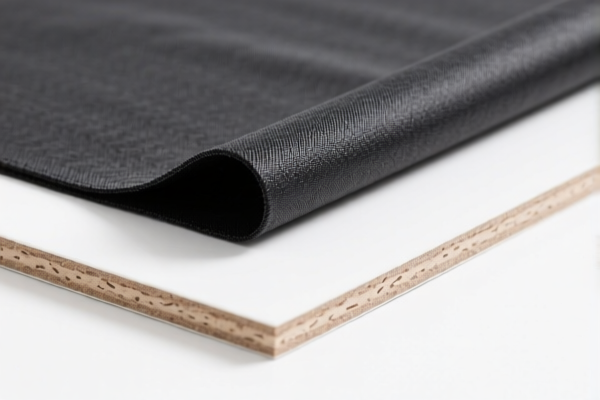
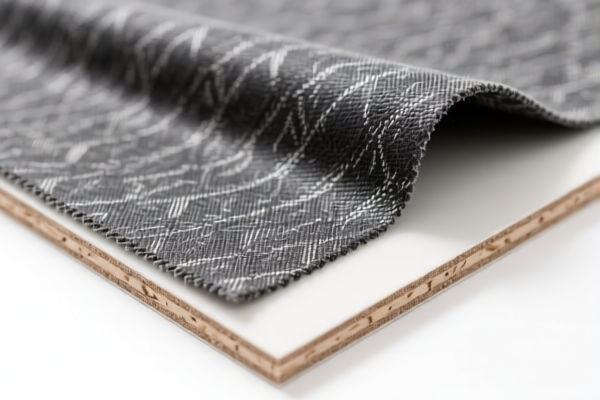
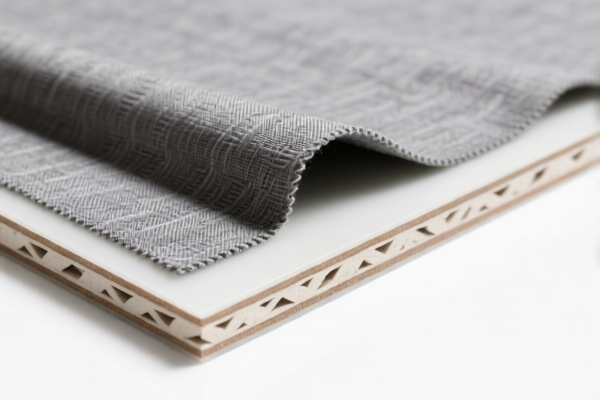

AI Analysis
🧱 Polyurethane Textile Composite Anti-static Board
🌐 HS Code Classification & Customs Clearance Guide | 2026 Tax Analysis | Strategic Compliance Strategy
📌 I. Product Definition: What is a "Polyurethane Textile Composite Anti-static Board"?
This product is a specialized construction material combining Polyurethane (PU) with Textile/Fabric layers, processed into a board or panel format. The "anti-static" feature suggests an added functional coating or conductive thread, but the core classification depends on the material composition and form.
⚠️ Critical Classification Point:
The customs authority will look at whether the product is primarily identified as:
1. A Plastic/PU Board (Chapter 39) → If PU is the dominant structural material.
2. A Textile Fabric (Chapter 59) → If the fabric base is coated/impregnated with PU and forms the essential character.
3. A Concrete/Cement Product (Chapter 68) → Only if the PU/textile is considered a minor additive or backing, which is rare for this description.
📦 II. HS Code Classification Matrix (Based on Provided Data)
| HS Code | Description Summary | Key Feature | Tax Rate |
|---|---|---|---|
| 3921.13.19.50 | PU Material, Sheet/Board Form, Construction Use | Pure PU board structure | 40.3% |
| 5903.20.25.00 | PU Material + Textile Form | PU-coated textile fabric | 42.5% |
| 3921.13.15.00 | PU Material, Composite Board, Construction Use | PU + Textile composite panel | 41.5% |
| 5903.20.20.00 | PU Material, Textile Composite Form | PU-treated artificial fiber textile | 35.0% |
| 6810.99.00.80 | Construction Board, Cement/Concrete/Artificial Stone | Inferred as concrete product with PU backing | 35.0% |
🔍 Analysis:
- The lowest tax rate (35.0%) is found in 5903.20.20.00 and 6810.99.00.80.
- However, 6810.99.00.80 requires the product to be inferred as a cement/concrete product, which may not fit a "polyurethane textile composite" unless it's a lightweight concrete board with PU facing.
- 5903.20.20.00 is the most logical low-tax option if the product is primarily a PU-coated textile used as a building panel.
💰 III. 2026 Tariff Rate Breakdown (US Import from China)
✅ Applicable Country: United States (US)
✅ Origin: China (CN)
✅ Effective Date: 2025-11-10 onwards (including future imports)
🎯 1. 3921.13.19.50 – Polyurethane Boards (Non-Textile Dominant)
| Item | Detail |
|---|---|
| Base Tariff | 5.3% |
| Section 301 Tariff | +25.0% |
| Section 122 Tariff | +10.0% |
| Total Tax Rate | 40.3% |
| Calculation | CIF Value × 40.3% |
| De Minimis Exemption | ❌ Denied (high-risk category) |
| Legal Path | IEEPA:9903.01.25 → USITC:3921.13.19.50 |
📌 Explanation:
- Base (5.3%): Standard MFN rate for plastic plates/sheets.
- Section 301 (25%): US trade remedy tariffs on Chinese plastic products.
- Section 122 (10%): Additional penalty tariff for certain Chinese imports.
- Total: 40.3% – High cost, requires strict documentation.
🎯 2. 5903.20.25.00 – PU-Coated Textile Fabric (High-End Composite)
| Item | Detail |
|---|---|
| Base Tariff | 7.5% |
| Section 301 Tariff | +25.0% |
| Section 122 Tariff | +10.0% |
| Total Tax Rate | 42.5% |
| Calculation | CIF Value × 42.5% |
| De Minimis Exemption | ❌ Denied |
| Legal Path | IEEPA:9903.01.25 → USITC:5903.20.25.00 |
📌 Warning:
- This is the highest tax rate in the set.
- Avoid this classification unless the product is strictly a flat textile roll and not a rigid board.
🎯 3. 3921.13.15.00 – PU Composite Board (Construction)
| Item | Detail |
|---|---|
| Base Tariff | 6.5% |
| Section 301 Tariff | +25.0% |
| Section 122 Tariff | +10.0% |
| Total Tax Rate | 41.5% |
| Calculation | CIF Value × 41.5% |
| De Minimis Exemption | ❌ Denied |
| Legal Path | IEEPA:9903.01.25 → USITC:3921.13.15.00 |
📌 Note:
- Slightly better than5903.20.25.00.
- Suitable if the product is a rigid composite panel where PU is the main binder.
🎯 4. 5903.20.20.00 – PU-Treated Artificial Fiber Textile (Optimal Low Tax)
| Item | Detail |
|---|---|
| Base Tariff | 0.0% |
| Section 301 Tariff | +25.0% |
| Section 122 Tariff | +10.0% |
| Total Tax Rate | 35.0% |
| Calculation | CIF Value × 35.0% |
| De Minimis Exemption | ❌ Denied |
| Legal Path | IEEPA:9903.01.25 → USITC:5903.20.20.00 |
📌 Strategic Advantage:
- Lowest Base Tariff (0%)!
- Only Section 301 (25%) and Section 122 (10%) apply.
- Ideal for clearance if the product can be argued as a textile composite rather than a rigid plastic board.
- Requirement: Must prove the textile character is essential (e.g., flexible, fabric-like, or used as a lining/surface).
🎯 5. 6810.99.00.80 – Concrete/Stone Board (Inferred Classification)
| Item | Detail |
|---|---|
| Base Tariff | 0.0% |
| Section 301 Tariff | +25.0% |
| Section 122 Tariff | +10.0% |
| Total Tax Rate | 35.0% |
| Calculation | CIF Value × 35.0% |
| De Minimis Exemption | ❌ Denied |
| Legal Path | IEEPA:9903.01.25 → USITC:6810.99.00.80 |
📌 Risk Warning:
- High Risk of Misclassification.
- If the product is not made of cement/concrete, this code is incorrect.
- Customs may penalize for fraud if the material is clearly PU/Fabric.
- Only use if the product is a cement board with PU/textile facing.
🛠️ IV. Customs Clearance Practical Advice
✅ 1. Documentation Checklist (Essential)
| Document | Required | Notes |
|---|---|---|
| Product Specification Sheet | ✔️ | Detail material layers: PU%, Textile%, Additives (anti-static). |
| Material Composition Statement | ✔️ | Explicitly state % by weight/volume of PU vs. Textile. |
| Product Photos | ✔️ | Show cross-section to prove composite structure. |
| Anti-Static Test Report | ✔️ | Prove functional claim (ESD compliance). |
| Commercial Invoice | ✔️ | Describe as "Polyurethane-Textile Composite Panel" or "PU-Coated Textile Board". |
| Packing List | ✔️ | Include weight, dimensions, quantity. |
✅ 2. Classification Strategy: Which HS Code to Choose?
| Strategy | Recommended HS Code | Tax Rate | Pros | Cons |
|---|---|---|---|---|
| Best Tax Rate | 5903.20.20.00 |
35.0% | Lowest total tax (0% base). | Must prove textile character. |
| Safest Physical Fit | 3921.13.15.00 |
41.5% | Fits "composite board" description. | Higher tax. |
| Risky Low Tax | 6810.99.00.80 |
35.0% | Lowest tax. | High risk of audit if not concrete. |
| Avoid | 5903.20.25.00 |
42.5% | - | Highest tax, unnecessary. |
🔥 Pro Tip:
If the board is rigid, consider3921.13.15.00(41.5%) for safety.
If the board is flexible or semi-flexible, argue for5903.20.20.00(35.0%) to save 6.5% in base tariff.
✅ 3. Anti-Static Feature: Does It Change Classification?
❌ No.
- Anti-static properties are functional, not structural.
- Customs classifies based on material, not function.
- Add a note in the invoice: "Anti-static treated for ESD protection" but do not change HS code.
✅ 4. Common Pitfalls
| Mistake | Consequence |
|---|---|
| Claiming it’s "Concrete" when it’s PU | Customs Penalty for misclassification. |
| Splitting shipment into "PU Sheets" and "Fabric" | Higher Tax (each part taxed separately, potentially higher rates). |
| Ignoring Section 122 Tariff | Underpayment + Interest. |
Using 5903.20.25.00 unnecessarily |
Overpayment of 7.5% base tariff. |
🌍 V. Global Market Comparison (2026)
| Region | Recommended HS Code | Estimated Tax (China Origin) | Notes |
|---|---|---|---|
| 🇺🇸 USA | 5903.20.20.00 or 3921.13.15.00 |
35.0% - 41.5% | High tariffs due to Section 301 & 122. |
| 🇨🇳 China | 5903.20.20.00 or 3921.13.15.00 |
0% - 6.5% | No Section 301/122. Low import duty. |
| 🇪🇺 EU | 5903.20.20.00 or 3921.13.15.00 |
0% - 6.5% | No additional anti-dumping on PU textiles. |
| 🇬🇧 UK | 5903.20.20.00 or 3921.13.15.00 |
0% - 6.5% | Post-Brexit trade terms apply. |
📌 Key Insight:
- USA is the most expensive market due to punitive tariffs.
- Consider third-country manufacturing (e.g., Vietnam, Mexico) for US exports to avoid Section 301/122 tariffs.
📌 VI. Final Recommendations
🎯 1. Optimal Classification Strategy
Primary Choice:
5903.20.20.00(35.0% Tax)
Reason: Lowest base tariff (0%) + Section 301 (25%) + Section 122 (10%).
Condition: Product must be defensible as a PU-coated textile rather than a rigid plastic board.
🎯 2. Secondary Choice (If Rigid Board)
Choice:
3921.13.15.00(41.5% Tax)
Reason: Accurate for composite boards. Safe from customs disputes.
🎯 3. Action Plan
- Confirm Physical Properties: Is it rigid or flexible?
- Prepare Documentation: Highlight textile layer in specs.
- Apply for Advance Ruling: If possible, get a binding opinion from US Customs.
- Consider Supply Chain Shift: For US exports, explore non-China origins to reduce tariffs.
🎯 VII. Conclusion
🎯 Remember:
🔹 "Textile Character Saves Tax!" – Argue for
5903.20.20.00if possible.
🔹 "Rigid Board = Higher Tax!" – If rigid,3921.13.15.00is safer but costs more.
🔹 "Section 122 is Mandatory!" – Budget for the extra 10% regardless of classification.
📌 Pro Tip:
If your product is anti-static, ensure it meets ANSI/ESD S20.20 standards. While this doesn’t change HS code, it adds value and justifies the price point in the US market.
📣 Immediate Action:
📞 Consult a Customs Broker with expertise in Chapter 59 (Textiles) and Chapter 39 (Plastics).
📄 Provide material composition reports to support your chosen HS code.
🚀 Optimize your tax burden by choosing the correct classification from day one!
✨ Accurate Classification = Lower Costs + Faster Clearance!
💼 Don’t let tariff surprises eat your margins!
Customer Reviews
About HS Code Classification
The Harmonized System (HS) is an internationally standardized nomenclature developed by the World Customs Organization (WCO) to classify traded products. Over 200 countries use the HS system as the basis for customs tariffs, trade statistics, and import/export regulations.
Each HS code follows a hierarchical structure:
- Chapter (2 digits) — Broad category of goods (e.g., Chapter 84: Machinery and Mechanical Appliances)
- Heading (4 digits) — More specific grouping within the chapter
- Subheading (6 digits) — Internationally standardized breakdown, used by all WCO member countries
- National subdivisions (8-10 digits) — Country-specific extensions for further classification, such as US HTSUS 10-digit codes
Correct HS code classification is essential for smooth customs clearance, accurate duty payment, and compliance with trade regulations. Misclassification can lead to customs delays, overpayment of duties, or penalties.
When importing from CN to US, the applicable tariff rates may include:
- Most-Favored-Nation (MFN) rate — The standard duty rate applied to WTO members
- General rate — Applied to countries without trade agreements
- Trade remedy duties — Additional tariffs such as Section 301 (anti-dumping), Section 232 (national security), or countervailing duties
The information provided on this page is for reference purposes only. For official classification, please consult with your local customs authority or a licensed customs broker.