Polyvinyl Chloride Rods
CN → US| HS编码 | 关税税率 | 原产国 | 目的国 | 文档 |
|---|---|---|---|---|
| 3916200010 | 40.8% | CN | US | 官方文档 |
| 3916200091 | 40.8% | CN | US | 官方文档 |
商品图片
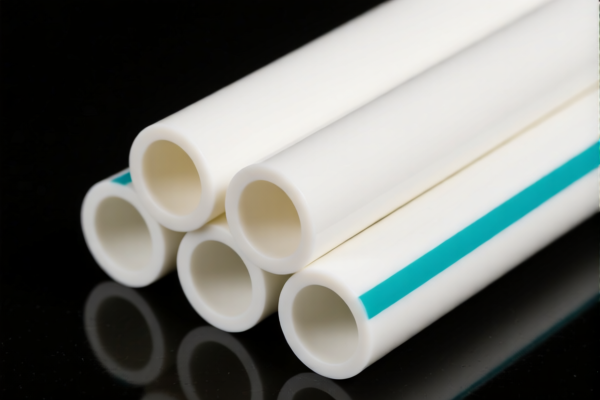
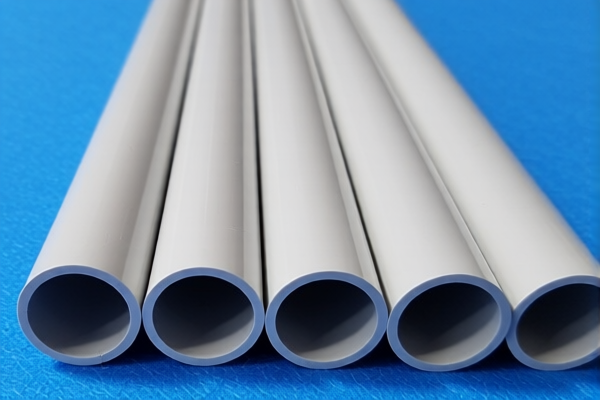
AI分析
🏗️ Polyvinyl Chloride Rods (PVC Rods)
🌐 HS Code Reference & Customs Clearance Guide | 2024/2025 Tariff Analysis | Professional Entry Strategy
📌 Part I: Product Definition & Classification: Do You Really Understand "PVC Rods"?
PVC rods, technically classified as "Monofilament, rods, sticks, and profile shapes" in international trade, are semi-finished plastic products used in chemical processing, construction, signage, and manufacturing.
In the context of US Customs (HTSUS), the critical distinction lies in the cross-sectional dimension. According to Chapter 39 Note 6, plastic monofilament is defined as having any cross-sectional dimension exceeding 1 mm.
⚠️ Key Distinction Point:
- If any dimension of the cross-section (diameter, width, or thickness) is > 1 mm → It is classified under 3916 (Monofilament/Rods/Profile Shapes).
- If all dimensions are ≤ 1 mm → It is classified under 3920 or 3921 (Plates, Sheets, Film, etc.) or potentially 3918 (if carpet backing), but definitely NOT 3916.
- Surface Treatment: "Surface-worked but not otherwise worked" means sanding, polishing, or painting is allowed. Once cut to length or drilled, it may change classification.
📦 Part II: HS Code Classification Details (Based on Provided Data)
Based on the provided data for Polyvinyl Chloride (PVC) products, there are two specific sub-headings depending on the end-use.
| HS Code | Product Description | Applicable Scenario | Tax Rate |
|---|---|---|---|
| 3916.20.00.10 | Siding for house or building exterior | PVC rods/profiles specifically manufactured for use as exterior siding for houses or buildings. | 30.8% (Base 5.8% + Additional 25.0%) |
| 3916.20.00.91 | Other | PVC rods, sticks, and profile shapes for general industrial, commercial, or non-siding uses. | 30.8% (Base 5.8% + Additional 25.0%) |
🔍 Critical Note:
- Both codes fall under HTS 3916.20: "Of polymers of vinyl chloride."
- The distinction is purely application-based: Is it for exterior siding?
- Yes →3916.20.00.10
- No (e.g., chemical resistance rods, signage, plumbing components, general molding stock) →3916.20.00.91
- ⚠️ Warning: If the rod is used for siding but not explicitly marketed/used as such, do not force it into.10. If it is a general-purpose PVC rod, it defaults to.91.
💰 Part III: 2024/2025 Customs Tariff Rate Breakdown
✅ Applicable Country: United States (US)
✅ Origin: China (CN) (Implied by the "Additional Tariff" structure)
✅ Effective Date: Current Section 301 Tariffs apply.
🎯 1. General PVC Rods (Non-Siding) & Siding Rods
| Item | Detail |
|---|---|
| HS Code Range | 3916.20.00.10 (Siding) OR 3916.20.00.91 (Other) |
| Product Description | Monofilament, rods, sticks, profile shapes of PVC |
| Base Tariff Rate | 5.8% (Ad Valorem) |
| Section 301 Additional Tariff | +25.0% |
| Total Effective Tax Rate | 30.8% |
| Tax Calculation | CIF Value × 30.8% |
| De Minimis Exemption | ❌ NOT Applicable (Section 301 tariffs generally do not apply to de minimis shipments under $800 if subject to specific exclusions, but PVC rods are high-risk. Confirm with broker.) |
| Legal Basis Path | HTS:3916.20 → Section 301 Footnote → Total 30.8% |
📌 Explanation:
- The 5.8% is the standard Most Favored Nation (MFN) rate for PVC plastic products.
- The 25.0% is the additional duty imposed under Section 301 of the Trade Act of 1974 on Chinese goods.
- Total Cost Impact: For every $10,000 of goods, you pay $3,080 in duties. This is a significant cost driver.
🛠️ Part IV: Customs Clearance Practical Advice (Avoiding Pitfalls)
✅ 1. Required Documentation Checklist
| Document | Required? | Description |
|---|---|---|
| ✅ Commercial Invoice | ✔️ | Must clearly state "Polyvinyl Chloride Rods" and HS Code 3916.20.00.91 or .10. |
| ✅ Packing List | ✔️ | Detail dimensions (must confirm >1mm cross-section) and weight. |
| ✅ Product Description | ✔️ | Specify: "PVC Rod, Diameter X mm, Length Y mm, White/Natural, Non-Insulated." |
| ✅ Certified Labeling | ✔️ | If intended for siding, provide architectural specs proving "Exterior Siding" use. |
| ✅ Origin Certificate | ✔️ | To confirm Country of Origin (China triggers 301 tariff). |
✅ 2. Declaration Tips (Crucial Keywords)
🔥 "Dimension is King, Application Defines the Code!"
| Scenario | Correct Declaration | Risk if Wrong |
|---|---|---|
| General PVC Rod (e.g., for chemical tanks) | 3916.20.00.91 - PVC Rods, Other |
Misclassifying as siding may trigger audits if no building permit is provided. |
| Siding Profiles | 3916.20.00.10 - Siding for House Exterior |
If used as structural supports instead of siding, you may be liable for back-taxes. |
| Small Diameter Rods (≤1mm) | NOT 3916 | If you declare ≤1mm rods as 3916, you might get lower duty, but if CBP measures >1mm, you face penalties. Measure accurately! |
| Composite Rods (PVC + Metal Core) | Not 3916 | Likely classified under Chapter 73 or 85 depending on core. |
✅ 3. Special Considerations
| Situation | Handling Advice |
|---|---|
| Surface Treatment | If rods are painted or coated, still 3916 as long as "not otherwise worked" (e.g., not cut into final shapes). |
| Mixed Containers | If a container has both siding profiles and general rods, split the line items. Do not lump them under one code. |
| Importer Security Filing (ISF) | File 10+2 rule 24 hours before loading. Accurate HTS is critical. |
🌍 Part V: Global Market Comparison (Contextual)
| Country | HS Code (6-digit) | Base Tariff | Additional Tax (China) | Total Effective |
|---|---|---|---|---|
| 🇺🇸 USA | 3916.20 | 5.8% | +25% (Section 301) | 30.8% |
| 🇨🇳 China | 3916.20 | ~5% | N/A | ~5% |
| 🇪🇺 EU | 3916.20 | 6.5% | N/A (if not restricted) | 6.5% |
| 🇨🇦 Canada | 3916.20 | 5% | 0% (CUSMA) | 5% |
📌 Conclusion:
- The US market is the most expensive for PVC rods from China due to the 25% Section 301 tariff.
- Consider supply chain diversification (e.g., from Vietnam or Mexico) if possible to avoid the 25% add-on.
- Ensure accurate measurement of cross-section. Misclassifying a 0.8mm filament as a rod can lead to severe penalties.
📌 Part VI: Common Errors & Pitfalls (Lessons Learned)
❌ Error 1: Declaring all PVC rods as 3916.20.00.91 regardless of use.
👉 Consequence: If used for siding, you might miss specific regulatory requirements for building materials.
👉 Fix: Clearly state end-use in commercial invoice.
❌ Error 2: Ignoring the 1mm threshold.
👉 Consequence: Declaring a 0.5mm PVC filament as a "rod" (3916) when it should be "film/plate" (3920/3921) may result in lower duty assessment, but CBP audits will demand back-duties + interest.
👉 Fix: Provide mill certificates showing cross-sectional dimensions.
❌ Error 3: Confusing PVC Rods with PVC Pipes.
👉 Consequence: Pipes are often classified under 3917.31 (Tubes). Rods are 3916.20.
👉 Fix:
- Pipe: Hollow, circular cross-section, for fluid transport.
- Rod: Solid, any cross-section, structural/mechanical use.
✅ Correct Declaration Example:
"Polyvinyl Chloride Rods, Solid, Diameter 25mm, Length 1m, White, For Industrial Machinery Components, HS 3916.20.00.91"
🎯 Part VII: Conclusion: Precision in Classification Saves Money
🎯 Remember the Golden Rules:
🔹 "Over 1mm? It's a Rod (3916). Under 1mm? It's Film/Sheet (3920/3921)."
🔹 "Siding Use? Code .10. Other Use? Code .91. Same Tax, Different Compliance."
🔹 "30.8% Total Tax is High. Verify Origin and Application Every Time."
📌 Pro Tip:
If you are importing large volumes, consider applying for a Section 301 Exclusion (if available for specific PVC types) or explore bonded warehouses to defer duty payment.
Always request a Customs Ruling from US CBP if your product is borderline (e.g., coated rods, composite materials).
📣 Immediate Action:
📞 Engage a licensed Customs Broker
📐 Verify cross-sectional dimensions (>1mm)
🏷️ Label products as "Siding" or "General Purpose" clearly on invoices
🚀 Ensure smooth customs clearance and avoid 30.8% surprises!
✨ Professional Customs Clearance Starts with Accurate Classification!
💼 Every Percentage Point Counts in Your Bottom Line!
用户评价
关于 HS 编码归类
协调制度(HS)是由世界海关组织(WCO)制定的国际贸易商品分类标准。全球 200 多个国家采用 HS 系统作为海关关税、贸易统计和进出口监管的基础。
每个 HS 编码遵循以下层级结构:
- 章(2 位)——商品大类(例如:第 84 章:机器和机械设备)
- 品目(4 位)——章内的更具体分类
- 子目(6 位)——国际通用细分,所有 WCO 成员国统一使用
- 本国细分(8-10 位)——各国自行扩展的细分编码,如美国 HTSUS 10 位编码
正确的 HS 编码归类对于顺利通关、准确缴纳关税和遵守贸易法规至关重要。错误归类可能导致海关延误、多缴关税或罚款。
从CN进口到US时,适用的关税税率可能包括:
- 最惠国(MFN)税率——适用于 WTO 成员国的标准关税税率
- 普通税率——适用于无贸易协定国家
- 贸易救济关税——附加关税,如 301 条款(反倾销)、232 条款(国家安全)或反补贴税
本页内容仅供参考。如需正式归类,请咨询当地海关或持牌报关代理。