Polyvinyl Chloride Rods
CN → US| HS Code | Tariff Rate | Origin | Destination | Doc |
|---|---|---|---|---|
| 3916200010 | 40.8% | CN | US | Official Doc |
| 3916200091 | 40.8% | CN | US | Official Doc |
Product Images
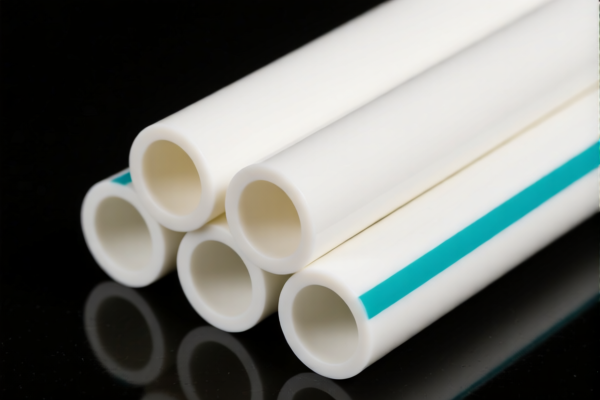
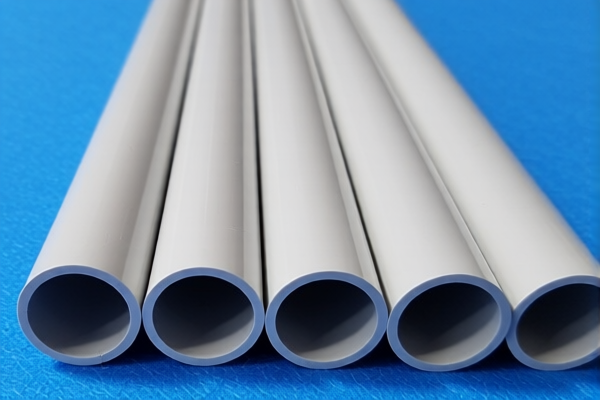
AI Analysis
🏗️ Polyvinyl Chloride Rods (PVC Rods)
🌐 HS Code Reference & Customs Clearance Guide | 2024/2025 Tariff Analysis | Professional Entry Strategy
📌 Part I: Product Definition & Classification: Do You Really Understand "PVC Rods"?
PVC rods, technically classified as "Monofilament, rods, sticks, and profile shapes" in international trade, are semi-finished plastic products used in chemical processing, construction, signage, and manufacturing.
In the context of US Customs (HTSUS), the critical distinction lies in the cross-sectional dimension. According to Chapter 39 Note 6, plastic monofilament is defined as having any cross-sectional dimension exceeding 1 mm.
⚠️ Key Distinction Point:
- If any dimension of the cross-section (diameter, width, or thickness) is > 1 mm → It is classified under 3916 (Monofilament/Rods/Profile Shapes).
- If all dimensions are ≤ 1 mm → It is classified under 3920 or 3921 (Plates, Sheets, Film, etc.) or potentially 3918 (if carpet backing), but definitely NOT 3916.
- Surface Treatment: "Surface-worked but not otherwise worked" means sanding, polishing, or painting is allowed. Once cut to length or drilled, it may change classification.
📦 Part II: HS Code Classification Details (Based on Provided Data)
Based on the provided data for Polyvinyl Chloride (PVC) products, there are two specific sub-headings depending on the end-use.
| HS Code | Product Description | Applicable Scenario | Tax Rate |
|---|---|---|---|
| 3916.20.00.10 | Siding for house or building exterior | PVC rods/profiles specifically manufactured for use as exterior siding for houses or buildings. | 30.8% (Base 5.8% + Additional 25.0%) |
| 3916.20.00.91 | Other | PVC rods, sticks, and profile shapes for general industrial, commercial, or non-siding uses. | 30.8% (Base 5.8% + Additional 25.0%) |
🔍 Critical Note:
- Both codes fall under HTS 3916.20: "Of polymers of vinyl chloride."
- The distinction is purely application-based: Is it for exterior siding?
- Yes →3916.20.00.10
- No (e.g., chemical resistance rods, signage, plumbing components, general molding stock) →3916.20.00.91
- ⚠️ Warning: If the rod is used for siding but not explicitly marketed/used as such, do not force it into.10. If it is a general-purpose PVC rod, it defaults to.91.
💰 Part III: 2024/2025 Customs Tariff Rate Breakdown
✅ Applicable Country: United States (US)
✅ Origin: China (CN) (Implied by the "Additional Tariff" structure)
✅ Effective Date: Current Section 301 Tariffs apply.
🎯 1. General PVC Rods (Non-Siding) & Siding Rods
| Item | Detail |
|---|---|
| HS Code Range | 3916.20.00.10 (Siding) OR 3916.20.00.91 (Other) |
| Product Description | Monofilament, rods, sticks, profile shapes of PVC |
| Base Tariff Rate | 5.8% (Ad Valorem) |
| Section 301 Additional Tariff | +25.0% |
| Total Effective Tax Rate | 30.8% |
| Tax Calculation | CIF Value × 30.8% |
| De Minimis Exemption | ❌ NOT Applicable (Section 301 tariffs generally do not apply to de minimis shipments under $800 if subject to specific exclusions, but PVC rods are high-risk. Confirm with broker.) |
| Legal Basis Path | HTS:3916.20 → Section 301 Footnote → Total 30.8% |
📌 Explanation:
- The 5.8% is the standard Most Favored Nation (MFN) rate for PVC plastic products.
- The 25.0% is the additional duty imposed under Section 301 of the Trade Act of 1974 on Chinese goods.
- Total Cost Impact: For every $10,000 of goods, you pay $3,080 in duties. This is a significant cost driver.
🛠️ Part IV: Customs Clearance Practical Advice (Avoiding Pitfalls)
✅ 1. Required Documentation Checklist
| Document | Required? | Description |
|---|---|---|
| ✅ Commercial Invoice | ✔️ | Must clearly state "Polyvinyl Chloride Rods" and HS Code 3916.20.00.91 or .10. |
| ✅ Packing List | ✔️ | Detail dimensions (must confirm >1mm cross-section) and weight. |
| ✅ Product Description | ✔️ | Specify: "PVC Rod, Diameter X mm, Length Y mm, White/Natural, Non-Insulated." |
| ✅ Certified Labeling | ✔️ | If intended for siding, provide architectural specs proving "Exterior Siding" use. |
| ✅ Origin Certificate | ✔️ | To confirm Country of Origin (China triggers 301 tariff). |
✅ 2. Declaration Tips (Crucial Keywords)
🔥 "Dimension is King, Application Defines the Code!"
| Scenario | Correct Declaration | Risk if Wrong |
|---|---|---|
| General PVC Rod (e.g., for chemical tanks) | 3916.20.00.91 - PVC Rods, Other |
Misclassifying as siding may trigger audits if no building permit is provided. |
| Siding Profiles | 3916.20.00.10 - Siding for House Exterior |
If used as structural supports instead of siding, you may be liable for back-taxes. |
| Small Diameter Rods (≤1mm) | NOT 3916 | If you declare ≤1mm rods as 3916, you might get lower duty, but if CBP measures >1mm, you face penalties. Measure accurately! |
| Composite Rods (PVC + Metal Core) | Not 3916 | Likely classified under Chapter 73 or 85 depending on core. |
✅ 3. Special Considerations
| Situation | Handling Advice |
|---|---|
| Surface Treatment | If rods are painted or coated, still 3916 as long as "not otherwise worked" (e.g., not cut into final shapes). |
| Mixed Containers | If a container has both siding profiles and general rods, split the line items. Do not lump them under one code. |
| Importer Security Filing (ISF) | File 10+2 rule 24 hours before loading. Accurate HTS is critical. |
🌍 Part V: Global Market Comparison (Contextual)
| Country | HS Code (6-digit) | Base Tariff | Additional Tax (China) | Total Effective |
|---|---|---|---|---|
| 🇺🇸 USA | 3916.20 | 5.8% | +25% (Section 301) | 30.8% |
| 🇨🇳 China | 3916.20 | ~5% | N/A | ~5% |
| 🇪🇺 EU | 3916.20 | 6.5% | N/A (if not restricted) | 6.5% |
| 🇨🇦 Canada | 3916.20 | 5% | 0% (CUSMA) | 5% |
📌 Conclusion:
- The US market is the most expensive for PVC rods from China due to the 25% Section 301 tariff.
- Consider supply chain diversification (e.g., from Vietnam or Mexico) if possible to avoid the 25% add-on.
- Ensure accurate measurement of cross-section. Misclassifying a 0.8mm filament as a rod can lead to severe penalties.
📌 Part VI: Common Errors & Pitfalls (Lessons Learned)
❌ Error 1: Declaring all PVC rods as 3916.20.00.91 regardless of use.
👉 Consequence: If used for siding, you might miss specific regulatory requirements for building materials.
👉 Fix: Clearly state end-use in commercial invoice.
❌ Error 2: Ignoring the 1mm threshold.
👉 Consequence: Declaring a 0.5mm PVC filament as a "rod" (3916) when it should be "film/plate" (3920/3921) may result in lower duty assessment, but CBP audits will demand back-duties + interest.
👉 Fix: Provide mill certificates showing cross-sectional dimensions.
❌ Error 3: Confusing PVC Rods with PVC Pipes.
👉 Consequence: Pipes are often classified under 3917.31 (Tubes). Rods are 3916.20.
👉 Fix:
- Pipe: Hollow, circular cross-section, for fluid transport.
- Rod: Solid, any cross-section, structural/mechanical use.
✅ Correct Declaration Example:
"Polyvinyl Chloride Rods, Solid, Diameter 25mm, Length 1m, White, For Industrial Machinery Components, HS 3916.20.00.91"
🎯 Part VII: Conclusion: Precision in Classification Saves Money
🎯 Remember the Golden Rules:
🔹 "Over 1mm? It's a Rod (3916). Under 1mm? It's Film/Sheet (3920/3921)."
🔹 "Siding Use? Code .10. Other Use? Code .91. Same Tax, Different Compliance."
🔹 "30.8% Total Tax is High. Verify Origin and Application Every Time."
📌 Pro Tip:
If you are importing large volumes, consider applying for a Section 301 Exclusion (if available for specific PVC types) or explore bonded warehouses to defer duty payment.
Always request a Customs Ruling from US CBP if your product is borderline (e.g., coated rods, composite materials).
📣 Immediate Action:
📞 Engage a licensed Customs Broker
📐 Verify cross-sectional dimensions (>1mm)
🏷️ Label products as "Siding" or "General Purpose" clearly on invoices
🚀 Ensure smooth customs clearance and avoid 30.8% surprises!
✨ Professional Customs Clearance Starts with Accurate Classification!
💼 Every Percentage Point Counts in Your Bottom Line!
Customer Reviews
About HS Code Classification
The Harmonized System (HS) is an internationally standardized nomenclature developed by the World Customs Organization (WCO) to classify traded products. Over 200 countries use the HS system as the basis for customs tariffs, trade statistics, and import/export regulations.
Each HS code follows a hierarchical structure:
- Chapter (2 digits) — Broad category of goods (e.g., Chapter 84: Machinery and Mechanical Appliances)
- Heading (4 digits) — More specific grouping within the chapter
- Subheading (6 digits) — Internationally standardized breakdown, used by all WCO member countries
- National subdivisions (8-10 digits) — Country-specific extensions for further classification, such as US HTSUS 10-digit codes
Correct HS code classification is essential for smooth customs clearance, accurate duty payment, and compliance with trade regulations. Misclassification can lead to customs delays, overpayment of duties, or penalties.
When importing from CN to US, the applicable tariff rates may include:
- Most-Favored-Nation (MFN) rate — The standard duty rate applied to WTO members
- General rate — Applied to countries without trade agreements
- Trade remedy duties — Additional tariffs such as Section 301 (anti-dumping), Section 232 (national security), or countervailing duties
The information provided on this page is for reference purposes only. For official classification, please consult with your local customs authority or a licensed customs broker.