Portable Document Pouches
CN → US| HS编码 | 关税税率 | 原产国 | 目的国 | 文档 |
|---|---|---|---|---|
| 4820900000 | 35.0% | CN | US | 官方文档 |
| 3926909989 | 22.8% | CN | US | 官方文档 |
| 4202329300 | 52.6% | CN | US | 官方文档 |
| 4820300040 | 35.0% | CN | US | 官方文档 |
| 3926908700 | 40.3% | CN | US | 官方文档 |
商品图片
AI分析
📂 Portable Document Pouches (Folder Cases & Organizer Pouches)
🌐 HS Code Reference & Customs Clearance Guide | 2026 Latest Tariff Analysis | Professional Clearance Strategy
📌 I. Product Definition & Classification: Do You Really Understand "Document Pouches"?
Portable Document Pouches are essential office and organizational supplies used to store, protect, and transport documents. In international trade, they are not a single unified category. Their classification depends entirely on material and structural design.
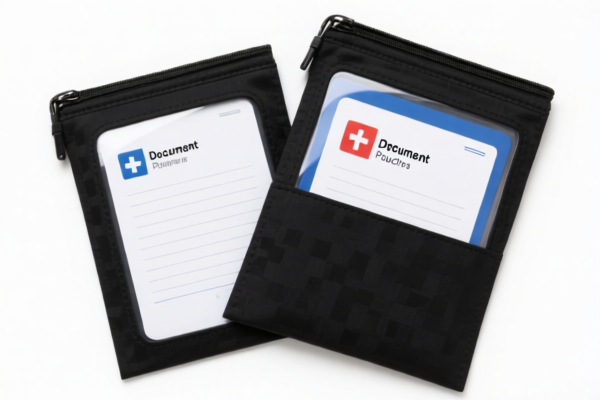
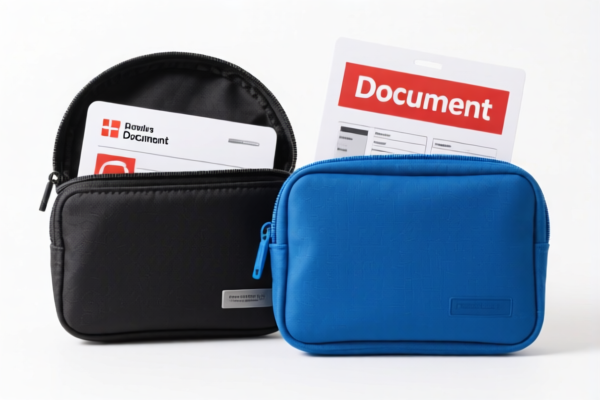
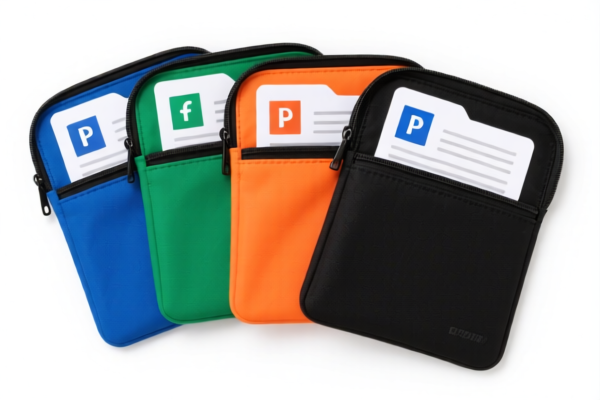
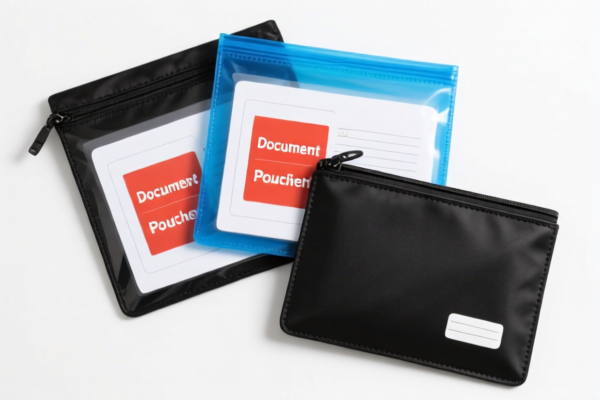
There are three primary classifications for these items: 1. Paper/Cardboard Pouches: Flat or foldable pouches made primarily of paper or cardboard (often called "folders" or "file covers"). 2. Plastic Pouches: Flexible or semi-rigid pouches made of plastic materials (often categorized as "other plastic articles" or "stationery/storage"). 3. Luggage/Bag-Style Pouches: Structured pouches with outer surfaces of plastic sheeting or textiles, resembling small bags or cases.
⚠️ Key Distinction Point:
- If the material is Paper/Cardboard → Look at Chapter 48 (Paper/Paperboard).
- If the material is Plastic (and considered an article/stationery) → Look at Chapter 39 (Plastics).
- If the material is Plastic/Textile but classified as a Bag/Case → Look at Chapter 42 (Articles of Leather/Travel Goods).
📦 II. HS Code Classification Details (2026 Latest Tariff Authority Match)
Based on the provided data, here are the specific HS Codes and their corresponding tax rates for Portable Document Pouches.
| HS Code | Product Description & Logic | Total Tax Rate (China to US) | Tax Breakdown |
|---|---|---|---|
| 4820.90.00.00 | Paper/Cardboard Pouches: Belongs to "Folders/File Covers" category. Material is paper or cardboard. | 35.0% | Base: 0.0% Add'l (Sec 301): 25.0% Section 122: 10% |
| 3926.90.99.89 | Plastic Pouches (Standard): Plastic material, falls under "Plastic Articles". | 22.8% | Base: 5.3% Add'l (Sec 301): 7.5% Section 122: 10% |
| 4202.32.93.00 | Bag-Style Pouches: Classified as "Boxes, Bags & Similar Containers". Outer surface is plastic sheeting or textile. | 52.6% | Base: 17.6% Add'l (Sec 301): 25.0% Section 122: 10% |
| 4820.30.00.40 | Paper/Cardboard Pouches (Specific): Belongs to "Folders/File Covers". Material is paper or cardboard. | 35.0% | Base: 0.0% Add'l (Sec 301): 25.0% Section 122: 10% |
| 3926.90.87.00 | Plastic Pouches (Stationery/Storage): Flat shape, plastic material, categorized as stationery/storage items. | 40.3% | Base: 5.3% Add'l (Sec 301): 25.0% Section 122: 10% |
🔍 重点提醒 (Key Reminders):
- Chapter 48 (Paper) generally has 0% Base Tariff, but the 25% Section 301 duty applies, leading to a 35% Total.
- Chapter 39 (Plastics) has a 5.3% Base Tariff. Depending on the specific sub-heading (Article vs. Stationery), the Section 301 duty varies (7.5% vs 25%), resulting in 22.8% or 40.3%.
- Chapter 42 (Bags) carries the highest risk with a 17.6% Base Tariff + 25% Section 301 = 52.6% Total. Misclassification here can drastically increase costs.
💰 III. 2026 Latest Tariff Rate Explanation (Detailed Breakdown)
✅ Applicable Country: United States (US)
✅ Origin: China (CN)
✅ Effective Date: 2025/2026 (Including subsequent imports)
🎯 1. 4820.90.00.00 & 4820.30.00.40 —— Paper/Cardboard Document Pouches
| Item | Content |
|---|---|
| Base Tariff | 0% (ad valorem) |
| Section 301 Tariff | +25% (USITC Footnote related to Chapter 48 goods from China) |
| Section 122 Tariff | +10% (Specific duty for certain paper/paperboard articles) |
| Total Rate | 35.0% |
| Tax Calculation | CIF Value × 35% |
| De Minimis Exemption? | ❌ No (High duty rate usually disqualifies from de minimis benefits in practice, though technically Section 321 applies if < $800, but for commercial shipment, full duty applies). |
| Legal Basis | USITC:4820.90.00.00 → Section 301: 25% → Section 122: 10% |
📌 Explanation:
- Paper-based organizers are low in base duty but heavily impacted by trade war tariffs (Section 301).
- Key Risk: If the paper pouch has significant plastic coatings or components, Customs may reclassify it to Chapter 39 or 42.
🎯 2. 3926.90.99.89 —— Plastic Document Pouches (Articles)
| Item | Content |
|---|---|
| Base Tariff | 5.3% |
| Section 301 Tariff | +7.5% (Lower tier for certain plastic articles) |
| Section 122 Tariff | +10% |
| Total Rate | 22.8% |
| Tax Calculation | CIF Value × 22.8% |
| De Minimis Exemption? | ❌ No (For commercial clearance). |
| Legal Basis | USITC:3926.90.99.89 → Section 301: 7.5% → Section 122: 10% |
📌 Note:
- This is the most cost-effective option if the product is purely a plastic "pocket" or sleeve.
- The lower Section 301 rate (7.5% vs 25%) makes this significantly cheaper than other plastic classifications.
🎯 3. 3926.90.87.00 —— Plastic Document Pouches (Stationery/Storage)
| Item | Content |
|---|---|
| Base Tariff | 5.3% |
| Section 301 Tariff | +25% (Higher tier for plastic stationery/storage) |
| Section 122 Tariff | +10% |
| Total Rate | 40.3% |
| Tax Calculation | CIF Value × 40.3% |
| Legal Basis | USITC:3926.90.87.00 → Section 301: 25% → Section 122: 10% |
📌 Note:
- If Customs argues the item is "Stationery" rather than a general "Plastic Article," the Section 301 rate jumps from 7.5% to 25%.
- Defense: Provide clear product photos showing it as a general storage item, not branded school stationery.
🎯 4. 4202.32.93.00 —— Bag-Style Document Pouches
| Item | Content |
|---|---|
| Base Tariff | 17.6% |
| Section 301 Tariff | +25% |
| Section 122 Tariff | +10% |
| Total Rate | 52.6% |
| Tax Calculation | CIF Value × 52.6% |
| Legal Basis | USITC:4202.32.93.00 → Section 301: 25% → Section 122: 10% |
📌 Warning:
- This is the highest tax bracket.
- Occurs when the pouch has a zipper, handle, or structured body resembling a "bag" or "case."
- Strategy: Avoid this classification if possible. Emphasize "flat," "sleeve," or "pocket" design in descriptions.
🛠️ IV. Customs Clearance Practical Advice (Battle-Proven Pitfall Avoidance)
✅ 1. Documentation Checklist (Essential)
| Document | Required? | Description |
|---|---|---|
| ✅ Product Specifications | ✔️ | Material composition (e.g., "100% Polypropylene"), dimensions, closure type (zipper/snap/glue). |
| ✅ Product Photos | ✔️ | Must show the item flat (if claiming paper/plastic article) vs. structured (if bag). Show interior and exterior. |
| ✅ Commercial Invoice | ✔️ | Clear description: e.g., "Plastic Document Sleeve, No Zippers, Flat" vs. "Plastic Document Case with Zipper". |
| ✅ Material Certificate | ✔️ | Proof of paper/plastic content to support Chapter 48 vs. 39 classification. |
✅ 2. Declaration Strategy (Key Mantra)
🔥 “Flat Sleeves Go Low, Structured Bags Go High!”
| Scenario | Correct Declaration | Incorrect Action |
|---|---|---|
| Flat Plastic Sleeve (No zipper/handle) | 3926.90.99.89 (22.8%) |
Declare as "Bag" → 52.6% |
| Paper Folder/Pouch | 4820.90.00.00 (35.0%) |
Declare as "Plastic" (if paper-coated) → Potential reclassification risk |
| Structured Pouch with Zipper | 4202.32.93.00 (52.6%) |
Try to declare as "Plastic Article" → Customs may reject if structure resembles a bag |
| Stationery-Style Plastic Pouch | 3926.90.87.00 (40.3%) |
Declare as "Plastic Article" (7.5% Sec 301) → Risk of audit if clearly school/office branded |
✅ 3. Special Case Handling
| Situation | Handling Advice |
|---|---|
| Mixed Materials (e.g., Paper with Plastic Window) | Generally falls under Chapter 48 if paper is the essential character. Provide photos of the window. |
| Branded Stationery (e.g., with School Logo) | Higher risk of being classified as 3926.90.87.00 (40.3%) due to "Stationery" designation. Avoid heavy branding if aiming for 22.8%. |
| OEM Custom Pouches | Provide design specs showing "flat, sleeve-like" structure to argue for Chapter 39 (Art. 99) or Chapter 48. |
| With Zippers/Handles | Almost certainly 4202. Cannot be avoided if the structure is bag-like. |
🌍 V. Global Market Comparison (2026 Latest)
| Country/Region | Recommended HS Code | Est. Tariff (China Origin) | Certification Notes | Remarks |
|---|---|---|---|---|
| 🇺🇸 USA | 3926.90.99.89 |
22.8% | None specific | Best rate if flat plastic sleeve. Avoid 4202 (52.6%). |
| 🇨🇳 China | 3926.90.99.89 |
~5-6% (Import Duty) | CCC (if applicable) | Low base duty, no Section 301. |
| 🇪🇺 EU | 3926.90.99 |
4.5% - 6.5% | CE (if electrical components involved, rarely for pouches) | No trade war tariffs. |
| 🇬🇧 UK | 3926.90.99 |
4.5% - 6.5% | UKCA (if applicable) | Post-Brexit, aligns with EU mostly. |
| 🇦🇺 Australia | 3926.90.99 |
5.0% | None | FTA with China may reduce duty to 0%. |
📌 Conclusion:
- USA is the only major market with punitive tariffs (Section 301 + Section 122).
- Choice of HS Code is critical for US clearance:3926.90.99.89(22.8%) is significantly better than4202.32.93.00(52.6%).
- Paper products (4820) sit in the middle at 35%.
📌 VI. Common Errors & Pitfall Guide (Lessons Learned)
❌ Mistake 1: Calling a zipped pouch a "Plastic Sleeve"
👉 Consequence: Customs may reclassify to 4202 (52.6%) due to "bag-like" structure.
✅ Fix: If it has a zipper/handle, declare as "Case" or "Bag" and accept the higher duty, or redesign to be a flat sleeve.
❌ Mistake 2: Misidentifying Paper Pouches as Plastic
👉 Consequence: If the product is paper-based but declared as plastic, Customs may assess incorrect base duties or lack of proper material proof.
✅ Fix: Accurate material declaration: "100% Paper" or "Paper with Plastic Coating".
❌ Mistake 3: Ignoring Section 122 Tariff
👉 Consequence: Forgetting the 10% Section 122 duty leads to underpayment and penalties.
✅ Fix: Always calculate Base + Sec 301 + Sec 122 for paper/plastic articles from China to US.
❌ Mistake 4: Using "Folder" vs. "Pouch" Ambiguously
👉 Consequence: "Folder" implies 4820 (35%), "Pouch" might be interpreted as 3926 (22.8% or 40.3%).
✅ Fix: Be precise in description. "Paper Document Folder" vs. "Plastic Document Pouch".
✅ Correct Declaration Example:
"Plastic Document Sleeve, Polypropylene, Flat, No Zippers, For A4 Paper, Unbranded"
➡️ Supports3926.90.99.89(22.8%)
🎯 VII. Conclusion: Precision Classification Saves Costs!
🎯 Remember the Mantra:
🔹 “Flat Plastic: 22.8%. Paper: 35%. Plastic Stationery: 40.3%. Bag-Style: 52.6%.”
🔹 “Structure Dictates Duty. A Zipper Can Double Your Cost!”
📌 Pro Tip:
If your document pouches are flat, zipper-less, and plastic, aim for
3926.90.99.89.
Avoid structural elements (zippers, handles, stiffeners) if you want to stay in Chapter 39 (Plastics) rather than Chapter 42 (Bags).
Apply for a Pre-Ruling from US Customs (CBP) if your design is ambiguous.
📣 Immediate Action:
📞 Consult with a licensed customs broker.
📸 Provide clear photos of the closure mechanism and material.
🚀 Optimize your product design to qualify for the 22.8% rate instead of 52.6%!
✨ Professional Clearance Starts with Accurate Classification!
💼 Every percentage point saved is pure profit!
用户评价
关于 HS 编码归类
协调制度(HS)是由世界海关组织(WCO)制定的国际贸易商品分类标准。全球 200 多个国家采用 HS 系统作为海关关税、贸易统计和进出口监管的基础。
每个 HS 编码遵循以下层级结构:
- 章(2 位)——商品大类(例如:第 84 章:机器和机械设备)
- 品目(4 位)——章内的更具体分类
- 子目(6 位)——国际通用细分,所有 WCO 成员国统一使用
- 本国细分(8-10 位)——各国自行扩展的细分编码,如美国 HTSUS 10 位编码
正确的 HS 编码归类对于顺利通关、准确缴纳关税和遵守贸易法规至关重要。错误归类可能导致海关延误、多缴关税或罚款。
从CN进口到US时,适用的关税税率可能包括:
- 最惠国(MFN)税率——适用于 WTO 成员国的标准关税税率
- 普通税率——适用于无贸易协定国家
- 贸易救济关税——附加关税,如 301 条款(反倾销)、232 条款(国家安全)或反补贴税
本页内容仅供参考。如需正式归类,请咨询当地海关或持牌报关代理。