Portable Document Pouches
CN → US| HS Code | Tariff Rate | Origin | Destination | Doc |
|---|---|---|---|---|
| 4820900000 | 35.0% | CN | US | Official Doc |
| 3926909989 | 22.8% | CN | US | Official Doc |
| 4202329300 | 52.6% | CN | US | Official Doc |
| 4820300040 | 35.0% | CN | US | Official Doc |
| 3926908700 | 40.3% | CN | US | Official Doc |
Product Images
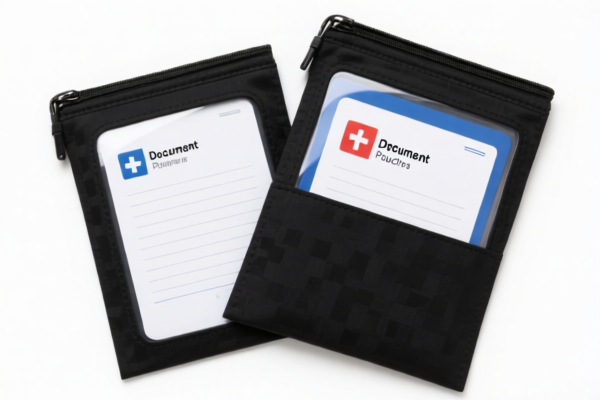
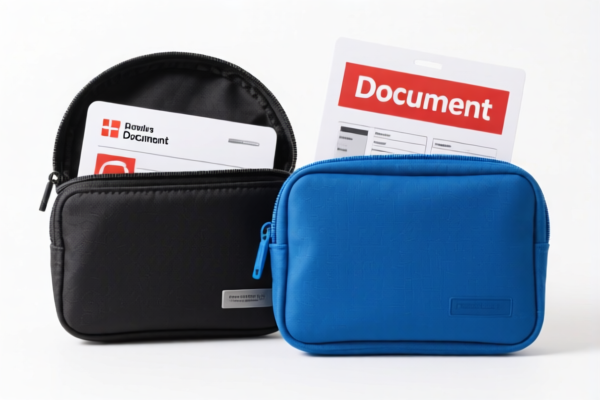
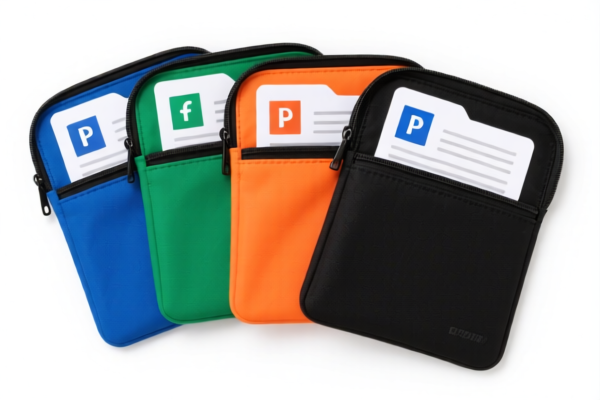
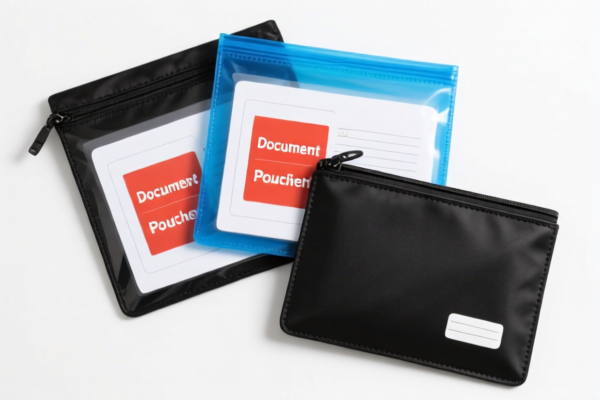
AI Analysis
📂 Portable Document Pouches (Folder Cases & Organizer Pouches)
🌐 HS Code Reference & Customs Clearance Guide | 2026 Latest Tariff Analysis | Professional Clearance Strategy
📌 I. Product Definition & Classification: Do You Really Understand "Document Pouches"?
Portable Document Pouches are essential office and organizational supplies used to store, protect, and transport documents. In international trade, they are not a single unified category. Their classification depends entirely on material and structural design.
There are three primary classifications for these items: 1. Paper/Cardboard Pouches: Flat or foldable pouches made primarily of paper or cardboard (often called "folders" or "file covers"). 2. Plastic Pouches: Flexible or semi-rigid pouches made of plastic materials (often categorized as "other plastic articles" or "stationery/storage"). 3. Luggage/Bag-Style Pouches: Structured pouches with outer surfaces of plastic sheeting or textiles, resembling small bags or cases.
⚠️ Key Distinction Point:
- If the material is Paper/Cardboard → Look at Chapter 48 (Paper/Paperboard).
- If the material is Plastic (and considered an article/stationery) → Look at Chapter 39 (Plastics).
- If the material is Plastic/Textile but classified as a Bag/Case → Look at Chapter 42 (Articles of Leather/Travel Goods).
📦 II. HS Code Classification Details (2026 Latest Tariff Authority Match)
Based on the provided data, here are the specific HS Codes and their corresponding tax rates for Portable Document Pouches.
| HS Code | Product Description & Logic | Total Tax Rate (China to US) | Tax Breakdown |
|---|---|---|---|
| 4820.90.00.00 | Paper/Cardboard Pouches: Belongs to "Folders/File Covers" category. Material is paper or cardboard. | 35.0% | Base: 0.0% Add'l (Sec 301): 25.0% Section 122: 10% |
| 3926.90.99.89 | Plastic Pouches (Standard): Plastic material, falls under "Plastic Articles". | 22.8% | Base: 5.3% Add'l (Sec 301): 7.5% Section 122: 10% |
| 4202.32.93.00 | Bag-Style Pouches: Classified as "Boxes, Bags & Similar Containers". Outer surface is plastic sheeting or textile. | 52.6% | Base: 17.6% Add'l (Sec 301): 25.0% Section 122: 10% |
| 4820.30.00.40 | Paper/Cardboard Pouches (Specific): Belongs to "Folders/File Covers". Material is paper or cardboard. | 35.0% | Base: 0.0% Add'l (Sec 301): 25.0% Section 122: 10% |
| 3926.90.87.00 | Plastic Pouches (Stationery/Storage): Flat shape, plastic material, categorized as stationery/storage items. | 40.3% | Base: 5.3% Add'l (Sec 301): 25.0% Section 122: 10% |
🔍 重点提醒 (Key Reminders):
- Chapter 48 (Paper) generally has 0% Base Tariff, but the 25% Section 301 duty applies, leading to a 35% Total.
- Chapter 39 (Plastics) has a 5.3% Base Tariff. Depending on the specific sub-heading (Article vs. Stationery), the Section 301 duty varies (7.5% vs 25%), resulting in 22.8% or 40.3%.
- Chapter 42 (Bags) carries the highest risk with a 17.6% Base Tariff + 25% Section 301 = 52.6% Total. Misclassification here can drastically increase costs.
💰 III. 2026 Latest Tariff Rate Explanation (Detailed Breakdown)
✅ Applicable Country: United States (US)
✅ Origin: China (CN)
✅ Effective Date: 2025/2026 (Including subsequent imports)
🎯 1. 4820.90.00.00 & 4820.30.00.40 —— Paper/Cardboard Document Pouches
| Item | Content |
|---|---|
| Base Tariff | 0% (ad valorem) |
| Section 301 Tariff | +25% (USITC Footnote related to Chapter 48 goods from China) |
| Section 122 Tariff | +10% (Specific duty for certain paper/paperboard articles) |
| Total Rate | 35.0% |
| Tax Calculation | CIF Value × 35% |
| De Minimis Exemption? | ❌ No (High duty rate usually disqualifies from de minimis benefits in practice, though technically Section 321 applies if < $800, but for commercial shipment, full duty applies). |
| Legal Basis | USITC:4820.90.00.00 → Section 301: 25% → Section 122: 10% |
📌 Explanation:
- Paper-based organizers are low in base duty but heavily impacted by trade war tariffs (Section 301).
- Key Risk: If the paper pouch has significant plastic coatings or components, Customs may reclassify it to Chapter 39 or 42.
🎯 2. 3926.90.99.89 —— Plastic Document Pouches (Articles)
| Item | Content |
|---|---|
| Base Tariff | 5.3% |
| Section 301 Tariff | +7.5% (Lower tier for certain plastic articles) |
| Section 122 Tariff | +10% |
| Total Rate | 22.8% |
| Tax Calculation | CIF Value × 22.8% |
| De Minimis Exemption? | ❌ No (For commercial clearance). |
| Legal Basis | USITC:3926.90.99.89 → Section 301: 7.5% → Section 122: 10% |
📌 Note:
- This is the most cost-effective option if the product is purely a plastic "pocket" or sleeve.
- The lower Section 301 rate (7.5% vs 25%) makes this significantly cheaper than other plastic classifications.
🎯 3. 3926.90.87.00 —— Plastic Document Pouches (Stationery/Storage)
| Item | Content |
|---|---|
| Base Tariff | 5.3% |
| Section 301 Tariff | +25% (Higher tier for plastic stationery/storage) |
| Section 122 Tariff | +10% |
| Total Rate | 40.3% |
| Tax Calculation | CIF Value × 40.3% |
| Legal Basis | USITC:3926.90.87.00 → Section 301: 25% → Section 122: 10% |
📌 Note:
- If Customs argues the item is "Stationery" rather than a general "Plastic Article," the Section 301 rate jumps from 7.5% to 25%.
- Defense: Provide clear product photos showing it as a general storage item, not branded school stationery.
🎯 4. 4202.32.93.00 —— Bag-Style Document Pouches
| Item | Content |
|---|---|
| Base Tariff | 17.6% |
| Section 301 Tariff | +25% |
| Section 122 Tariff | +10% |
| Total Rate | 52.6% |
| Tax Calculation | CIF Value × 52.6% |
| Legal Basis | USITC:4202.32.93.00 → Section 301: 25% → Section 122: 10% |
📌 Warning:
- This is the highest tax bracket.
- Occurs when the pouch has a zipper, handle, or structured body resembling a "bag" or "case."
- Strategy: Avoid this classification if possible. Emphasize "flat," "sleeve," or "pocket" design in descriptions.
🛠️ IV. Customs Clearance Practical Advice (Battle-Proven Pitfall Avoidance)
✅ 1. Documentation Checklist (Essential)
| Document | Required? | Description |
|---|---|---|
| ✅ Product Specifications | ✔️ | Material composition (e.g., "100% Polypropylene"), dimensions, closure type (zipper/snap/glue). |
| ✅ Product Photos | ✔️ | Must show the item flat (if claiming paper/plastic article) vs. structured (if bag). Show interior and exterior. |
| ✅ Commercial Invoice | ✔️ | Clear description: e.g., "Plastic Document Sleeve, No Zippers, Flat" vs. "Plastic Document Case with Zipper". |
| ✅ Material Certificate | ✔️ | Proof of paper/plastic content to support Chapter 48 vs. 39 classification. |
✅ 2. Declaration Strategy (Key Mantra)
🔥 “Flat Sleeves Go Low, Structured Bags Go High!”
| Scenario | Correct Declaration | Incorrect Action |
|---|---|---|
| Flat Plastic Sleeve (No zipper/handle) | 3926.90.99.89 (22.8%) |
Declare as "Bag" → 52.6% |
| Paper Folder/Pouch | 4820.90.00.00 (35.0%) |
Declare as "Plastic" (if paper-coated) → Potential reclassification risk |
| Structured Pouch with Zipper | 4202.32.93.00 (52.6%) |
Try to declare as "Plastic Article" → Customs may reject if structure resembles a bag |
| Stationery-Style Plastic Pouch | 3926.90.87.00 (40.3%) |
Declare as "Plastic Article" (7.5% Sec 301) → Risk of audit if clearly school/office branded |
✅ 3. Special Case Handling
| Situation | Handling Advice |
|---|---|
| Mixed Materials (e.g., Paper with Plastic Window) | Generally falls under Chapter 48 if paper is the essential character. Provide photos of the window. |
| Branded Stationery (e.g., with School Logo) | Higher risk of being classified as 3926.90.87.00 (40.3%) due to "Stationery" designation. Avoid heavy branding if aiming for 22.8%. |
| OEM Custom Pouches | Provide design specs showing "flat, sleeve-like" structure to argue for Chapter 39 (Art. 99) or Chapter 48. |
| With Zippers/Handles | Almost certainly 4202. Cannot be avoided if the structure is bag-like. |
🌍 V. Global Market Comparison (2026 Latest)
| Country/Region | Recommended HS Code | Est. Tariff (China Origin) | Certification Notes | Remarks |
|---|---|---|---|---|
| 🇺🇸 USA | 3926.90.99.89 |
22.8% | None specific | Best rate if flat plastic sleeve. Avoid 4202 (52.6%). |
| 🇨🇳 China | 3926.90.99.89 |
~5-6% (Import Duty) | CCC (if applicable) | Low base duty, no Section 301. |
| 🇪🇺 EU | 3926.90.99 |
4.5% - 6.5% | CE (if electrical components involved, rarely for pouches) | No trade war tariffs. |
| 🇬🇧 UK | 3926.90.99 |
4.5% - 6.5% | UKCA (if applicable) | Post-Brexit, aligns with EU mostly. |
| 🇦🇺 Australia | 3926.90.99 |
5.0% | None | FTA with China may reduce duty to 0%. |
📌 Conclusion:
- USA is the only major market with punitive tariffs (Section 301 + Section 122).
- Choice of HS Code is critical for US clearance:3926.90.99.89(22.8%) is significantly better than4202.32.93.00(52.6%).
- Paper products (4820) sit in the middle at 35%.
📌 VI. Common Errors & Pitfall Guide (Lessons Learned)
❌ Mistake 1: Calling a zipped pouch a "Plastic Sleeve"
👉 Consequence: Customs may reclassify to 4202 (52.6%) due to "bag-like" structure.
✅ Fix: If it has a zipper/handle, declare as "Case" or "Bag" and accept the higher duty, or redesign to be a flat sleeve.
❌ Mistake 2: Misidentifying Paper Pouches as Plastic
👉 Consequence: If the product is paper-based but declared as plastic, Customs may assess incorrect base duties or lack of proper material proof.
✅ Fix: Accurate material declaration: "100% Paper" or "Paper with Plastic Coating".
❌ Mistake 3: Ignoring Section 122 Tariff
👉 Consequence: Forgetting the 10% Section 122 duty leads to underpayment and penalties.
✅ Fix: Always calculate Base + Sec 301 + Sec 122 for paper/plastic articles from China to US.
❌ Mistake 4: Using "Folder" vs. "Pouch" Ambiguously
👉 Consequence: "Folder" implies 4820 (35%), "Pouch" might be interpreted as 3926 (22.8% or 40.3%).
✅ Fix: Be precise in description. "Paper Document Folder" vs. "Plastic Document Pouch".
✅ Correct Declaration Example:
"Plastic Document Sleeve, Polypropylene, Flat, No Zippers, For A4 Paper, Unbranded"
➡️ Supports3926.90.99.89(22.8%)
🎯 VII. Conclusion: Precision Classification Saves Costs!
🎯 Remember the Mantra:
🔹 “Flat Plastic: 22.8%. Paper: 35%. Plastic Stationery: 40.3%. Bag-Style: 52.6%.”
🔹 “Structure Dictates Duty. A Zipper Can Double Your Cost!”
📌 Pro Tip:
If your document pouches are flat, zipper-less, and plastic, aim for
3926.90.99.89.
Avoid structural elements (zippers, handles, stiffeners) if you want to stay in Chapter 39 (Plastics) rather than Chapter 42 (Bags).
Apply for a Pre-Ruling from US Customs (CBP) if your design is ambiguous.
📣 Immediate Action:
📞 Consult with a licensed customs broker.
📸 Provide clear photos of the closure mechanism and material.
🚀 Optimize your product design to qualify for the 22.8% rate instead of 52.6%!
✨ Professional Clearance Starts with Accurate Classification!
💼 Every percentage point saved is pure profit!
Customer Reviews
About HS Code Classification
The Harmonized System (HS) is an internationally standardized nomenclature developed by the World Customs Organization (WCO) to classify traded products. Over 200 countries use the HS system as the basis for customs tariffs, trade statistics, and import/export regulations.
Each HS code follows a hierarchical structure:
- Chapter (2 digits) — Broad category of goods (e.g., Chapter 84: Machinery and Mechanical Appliances)
- Heading (4 digits) — More specific grouping within the chapter
- Subheading (6 digits) — Internationally standardized breakdown, used by all WCO member countries
- National subdivisions (8-10 digits) — Country-specific extensions for further classification, such as US HTSUS 10-digit codes
Correct HS code classification is essential for smooth customs clearance, accurate duty payment, and compliance with trade regulations. Misclassification can lead to customs delays, overpayment of duties, or penalties.
When importing from CN to US, the applicable tariff rates may include:
- Most-Favored-Nation (MFN) rate — The standard duty rate applied to WTO members
- General rate — Applied to countries without trade agreements
- Trade remedy duties — Additional tariffs such as Section 301 (anti-dumping), Section 232 (national security), or countervailing duties
The information provided on this page is for reference purposes only. For official classification, please consult with your local customs authority or a licensed customs broker.