Portable Letter Paper Notebook
CN → US| HS编码 | 关税税率 | 原产国 | 目的国 | 文档 |
|---|---|---|---|---|
| 4820102060 | 35.0% | CN | US | 官方文档 |
| 4901990092 | 17.5% | CN | US | 官方文档 |
| 4820102010 | 35.0% | CN | US | 官方文档 |
| 4901990093 | 17.5% | CN | US | 官方文档 |
| 8471300100 | 10.0% | CN | US | 官方文档 |
商品图片
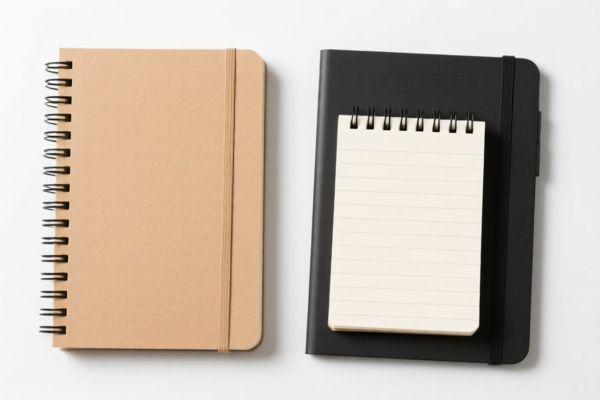
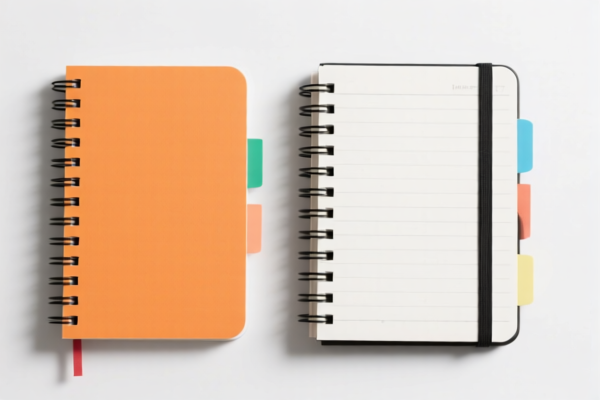
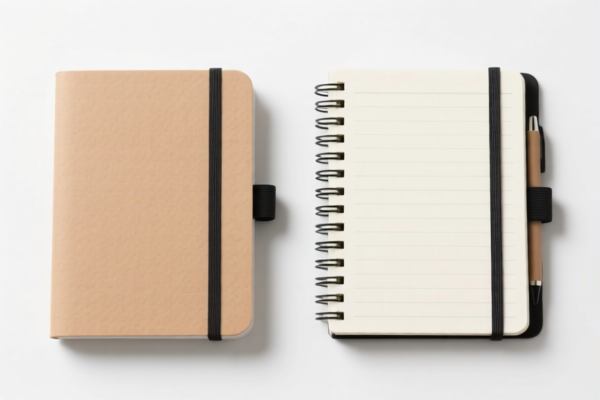
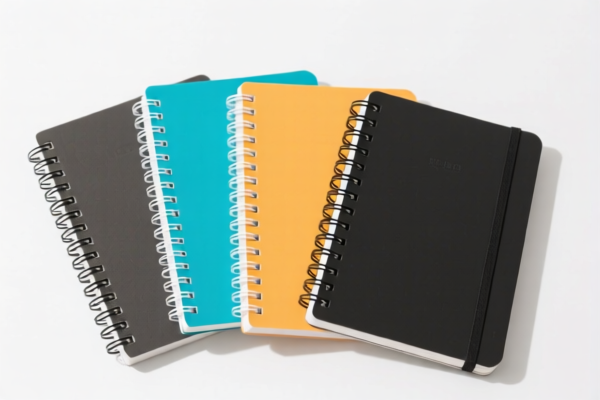
AI分析
📓 Portable Paper Notebook (Stationery & Printed Materials)
🌐 HS Code Reference & Customs Clearance Guide | 2026 Latest Tariff Analysis | Professional-Level Entry Strategy
📌 1. Product Definition & Classification: Do You Truly Understand "Notebooks"?
In international trade, "Portable Paper Notebooks" are generally categorized into two main groups based on their physical structure and content:
1. Paper Stationery Notebooks (Booklets/Diaries):
These are made of bound paper leaves, often with a cover. They fall under Chapter 48 (Paper and Paperboard).
Key Characteristic: The primary value is in the binding and paper material, not the printed text content.
2. Printed Books & Publications:
These contain substantial printed matter (text, illustrations) such as diaries with pre-printed pages, blank journals for writing, or logbooks. They fall under Chapter 49 (Printed Books, Newspapers, Pictures, and other Printed Industries).
Key Characteristic: The primary value is in the printed content/format, even if mostly blank lines or grids.
⚠️ Critical Distinction Point:
- If it is a simple bound blank paper pad or a basic spiral notebook with minimal printing → Often classified under 4820 (Notebooks, letter pads, etc.).
- If it has significant printed content (e.g., pre-printed diaries, specific log formats, educational content) → Classified under 4901 (Printed books, brochures, etc.).
📦 2. HS Code Classification Matrix (2026 Latest Tariff Authority Comparison)
| HS Code | Product Description | Applicable Scenario | Primary Classification Basis |
|---|---|---|---|
4820.10.20.60 |
Paper portable notebooks, conforming to paper material and notebook category | Simple blank notebooks, spiral-bound paper pads | ✅ Paper Stationery (Ch 48) |
4901.99.00.92 |
Paper portable notebooks, belonging to printed books/notebooks category | Pre-printed diaries, logbooks, journals with text | ✅ Printed Matter (Ch 49) |
4820.10.20.10 |
Paper portable notebooks, conforming to diary/notebook category definition | Specific diary-style notebooks under Ch 48 | ✅ Paper Stationery (Ch 48) |
4901.99.00.93 |
Paper portable notebooks, belonging to printed paper publications | Other printed paper publications | ✅ Printed Matter (Ch 49) |
🔍 Key Reminder:
- Chapter 48 (4820) is typically for "Blank" or "Simple" stationery where the binding and paper are the main features.
- Chapter 49 (4901) is for printed items where the printing (even if mostly lines or headers) defines the product.
- Misclassification Risk: Declaring a pre-printed diary as a blank notebook (4820) to seek lower duties can lead to customs penalties. Conversely, declaring a simple blank pad as a printed book (4901) may result in unnecessary complexity.
💰 3. 2026 Latest Tariff Rate Breakdown (Including Additional Duties)
✅ Applicable Country: United States (US)
✅ Country of Origin: China (CN)
✅ Effective Date: Post-November 2025 (Current Trade Policy)
🎯 1. 4820.10.20.60 & 4820.10.20.10 —— Paper Stationery Notebooks (Ch 48)
| Item | Detail |
|---|---|
| Base Duty Rate | 0.0% (ad valorem) |
| USITC Additional Duty | +25.0% (Section 301 Tariff) |
| Section 122 Duty | +10.0% (Specific provision for certain paper products) |
| Total Duty Rate | 35.0% |
| Tax Calculation | CIF Value × 35% |
| De Minimis Exemption | ❌ Not Eligible (High tariff rates usually exclude small packages from de minimis benefits if duties exceed certain thresholds) |
| Legal Basis | Section 301 + Section 122 Specifics |
📌 Explanation:
- The 25% is the standard Section 301 tariff on many Chinese goods.
- The 10% is an additional duty under Section 122 (often applied to specific paper/wooden products in recent trade adjustments).
- Total: 35%. This is a high-cost category for importers.
🎯 2. 4901.99.00.92 & 4901.99.00.93 —— Printed Notebooks/Diaries (Ch 49)
| Item | Detail |
|---|---|
| Base Duty Rate | 0.0% (ad valorem) |
| USITC Additional Duty | +7.5% (Section 301 Tariff - Lower bracket for some printed goods) |
| Section 122 Duty | +10.0% (Specific provision for certain paper products) |
| Total Duty Rate | 17.5% |
| Tax Calculation | CIF Value × 17.5% |
| De Minimis Exemption | ❌ Not Eligible (Likely denied due to Section 122/301 inclusion) |
| Legal Basis | Section 301 (Lower Bracket) + Section 122 |
📌 Explanation:
- The 7.5% is a reduced Section 301 rate for certain printed materials compared to the 25% general rate.
- The 10% remains under Section 122.
- Total: 17.5%. This is significantly cheaper than the 35% rate for paper stationery.
🛠️ 4. Customs Clearance Practical Advice (Battle-Tested Pitfall Avoidance Guide)
✅ 1. Required Documentation Checklist (None Can Be Omitted)
| Document | Mandatory? | Description |
|---|---|---|
| ✅ Product Specification Sheet | ✔️ | Must detail: Paper type (GSM, weight), binding method (spiral, glue, stitch), cover material. |
| ✅ Product Photos | ✔️ | Clear images of the cover and interior pages to prove if it's "blank" (Ch 48) or "printed" (Ch 49). |
| ✅ Commercial Invoice | ✔️ | Must clearly state "Paper Notebook" or "Printed Diary". Avoid vague terms like "Gift Item". |
| ✅ Packing List | ✔️ | Specify dimensions and weight. |
| ✅ Certificate of Origin (CO) | ✔️ | Essential for confirming Chinese origin, triggering Section 301/122 duties. |
✅ 2. Classification Strategy (Key Mantra)
🔥 "Blank is 48, Printed is 49. Check the interior!"
| Scenario | Correct HS Code Category | Error to Avoid |
|---|---|---|
| Simple blank spiral notebook | 4820.10.20.x0 (35% Duty) |
Misclassifying as 4901 to try for lower rate → Risk of Penalty if interior has no printing. |
| Pre-printed Diary / Logbook | 4901.99.00.9x (17.5% Duty) |
Misclassifying as 4820 to avoid Section 301 → High Risk. Customs will see the text/headers. |
| Combination: Cover Printed, Pages Blank | Debatable → Usually 4820 if content is negligible. |
If the cover has significant text/branding, Customs may argue for Ch 49. |
💡 Pro Tip:
If your notebook has pre-printed lines, headers, or graphics inside, it leans towards 4901 (17.5%).
If it is purely blank white/yellow paper with only the brand on the cover, it leans towards 4820 (35%).
Wait, why is 4901 cheaper?
Because the US tariffs on printed matter (4901) are often lower than on stationery/paper goods (4820) under specific Section 301 exclusions, even though Section 122 applies to both. This is a critical cost-saving insight.
✅ 3. Special Cases Handling
| Case | Handling Advice |
|---|---|
| Digital/Laptop Notebooks? | ❌ STOP! The data provided is for PAPER notebooks. If it is an electronic device (e.g., Kindle, Tablet), it falls under 8471.30.01.00 (10% Duty). See below. |
| Mixed Shipments | If shipping both paper notebooks and electronic devices, separate declarations are required to avoid confusion and incorrect duty application. |
| Section 122 Eligibility | Verify if your specific paper product qualifies for Section 122. Some paper products may have different treatment. Consult current HTSUS notes. |
💻 Special Note: Electronic "Portable" Notebooks (Tablets/Digital Notepads)
If your "Portable Letter Paper Notebook" is actually an Electronic Device (e.g., a digital tablet with a stylus for writing), the classification changes completely!
| HS Code | Description | Total Duty | Tax Detail |
|---|---|---|---|
8471.30.01.00 |
Portable automatic data processing machines, weighing ≤ 10 kg (e.g., Tablets, Digital Notebooks) | 10.0% | Base: 0.0%, Sec 301: 0.0%, Sec 122: 10% |
📌 Why is this important?
Many users confuse paper notebooks with digital tablets.
- Paper Notebook: 17.5% or 35% Duty.
- Digital Tablet: 10% Duty (No Section 301, only Sec 122).
Always confirm the material: Paper vs. Electronics!
🌍 5. Global Market Comparison (2026 Snapshot)
| Market | Paper Notebook (4820) | Printed Notebook (4901) | Digital Tablet (8471) |
|---|---|---|---|
| 🇺🇸 USA (China Origin) | 35% (High) | 17.5% (Medium) | 10% (Low) |
| 🇪🇺 EU | 2.4% | 2.4% | 0% |
| 🇬🇧 UK | 2.4% | 2.4% | 0% |
| 🇨🇳 China (Import) | 5-8% | 5-8% | 0% |
📌 Conclusion:
- The US market is the most expensive for imported stationery due to Section 301 and Section 122.
- Printing content matters: Declaring a product as "Printed Matter" (4901) can save you 17.5% in duties compared to "Paper Stationery" (4820), IF it qualifies under Ch 49.
- Digital devices enjoy the lowest duty rate (10%) among the three options.
📌 6. Common Mistakes & Pitfalls (Blood Lessons)
❌ Mistake 1: Assuming all notebooks are "Stationery" (4820).
👉 Consequence: You pay 35% instead of 17.5% if the notebook has printed content (like a diary or logbook).
👉 Solution: Analyze the interior pages. If there is text/graphics, argue for 4901.
❌ Mistake 2: Confusing Paper Notebooks with Electronic Tablets.
👉 Consequence: Declaring a digital tablet as a paper notebook leads to seizure or heavy fines for misclassification.
👉 Solution: Clearly describe the product as "Digital Tablet" or "Electronic Notebook" with HS Code 8471.30.01.00.
❌ Mistake 3: Ignoring Section 122.
👉 Consequence: Assuming 0% base duty means 0% total duty.
👉 Solution: Always add the Section 122 (10%) to your cost calculation for paper products.
🎯 7. Conclusion: Professional Declaration, Cost Efficiency!
🎯 Key Takeaway:
🔹 "Paper Blank = 35% (4820)"
🔹 "Paper Printed = 17.5% (4901)"
🔹 "Electronic Device = 10% (8471)"
🔹 "Check the interior!"
📌 Final Advice:
Before shipping, audit your product's interior content. If it contains pre-printed text, headers, or designs, you may qualify for the lower 4901 (17.5%) rate. If it is purely blank paper, you are stuck with 4820 (35%). If it is digital, declare it correctly as 8471 (10%).
📣 Action Item:
📞 Provide detailed photos of the interior pages to your customs broker.
🚀 Optimize your HS Code to save 17.5% in duties!
✨ Precision in Classification = Savings in Budget!
💼 Your bottom line depends on the details!
用户评价
关于 HS 编码归类
协调制度(HS)是由世界海关组织(WCO)制定的国际贸易商品分类标准。全球 200 多个国家采用 HS 系统作为海关关税、贸易统计和进出口监管的基础。
每个 HS 编码遵循以下层级结构:
- 章(2 位)——商品大类(例如:第 84 章:机器和机械设备)
- 品目(4 位)——章内的更具体分类
- 子目(6 位)——国际通用细分,所有 WCO 成员国统一使用
- 本国细分(8-10 位)——各国自行扩展的细分编码,如美国 HTSUS 10 位编码
正确的 HS 编码归类对于顺利通关、准确缴纳关税和遵守贸易法规至关重要。错误归类可能导致海关延误、多缴关税或罚款。
从CN进口到US时,适用的关税税率可能包括:
- 最惠国(MFN)税率——适用于 WTO 成员国的标准关税税率
- 普通税率——适用于无贸易协定国家
- 贸易救济关税——附加关税,如 301 条款(反倾销)、232 条款(国家安全)或反补贴税
本页内容仅供参考。如需正式归类,请咨询当地海关或持牌报关代理。