Portable Letter Paper Notebook
CN → US| HS Code | Tariff Rate | Origin | Destination | Doc |
|---|---|---|---|---|
| 4820102060 | 35.0% | CN | US | Official Doc |
| 4901990092 | 17.5% | CN | US | Official Doc |
| 4820102010 | 35.0% | CN | US | Official Doc |
| 4901990093 | 17.5% | CN | US | Official Doc |
| 8471300100 | 10.0% | CN | US | Official Doc |
Product Images
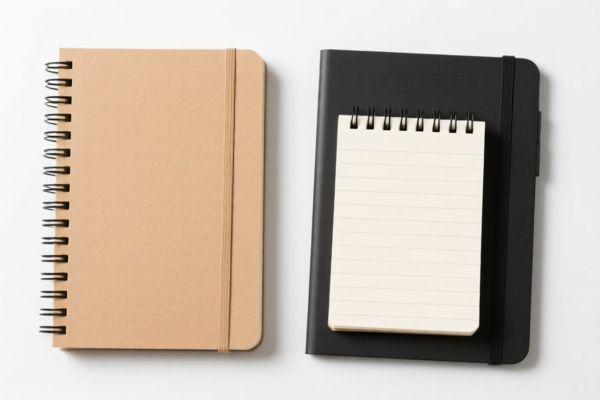
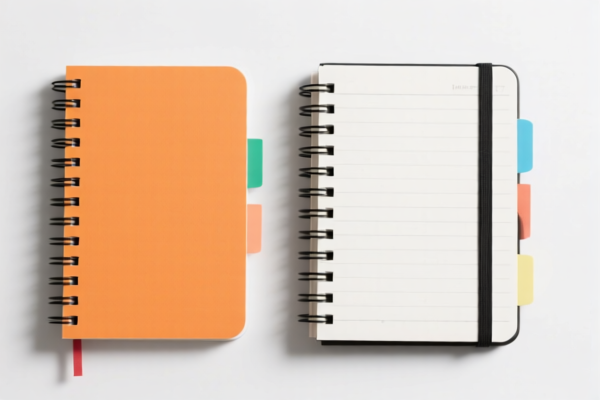
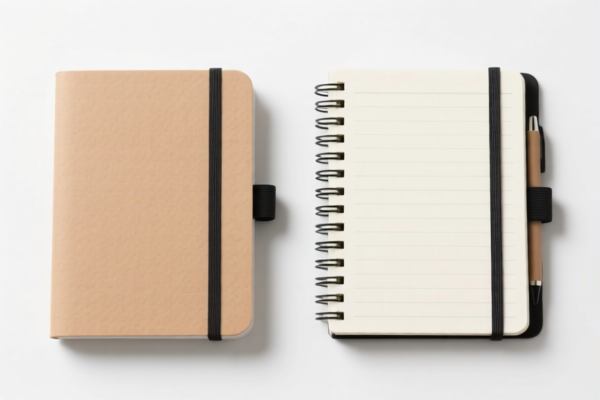
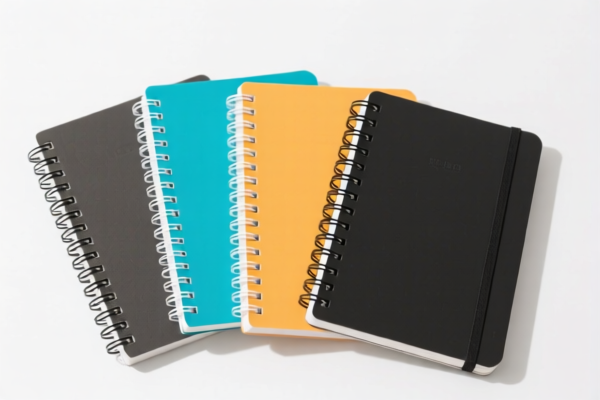
AI Analysis
📓 Portable Paper Notebook (Stationery & Printed Materials)
🌐 HS Code Reference & Customs Clearance Guide | 2026 Latest Tariff Analysis | Professional-Level Entry Strategy
📌 1. Product Definition & Classification: Do You Truly Understand "Notebooks"?
In international trade, "Portable Paper Notebooks" are generally categorized into two main groups based on their physical structure and content:
1. Paper Stationery Notebooks (Booklets/Diaries):
These are made of bound paper leaves, often with a cover. They fall under Chapter 48 (Paper and Paperboard).
Key Characteristic: The primary value is in the binding and paper material, not the printed text content.
2. Printed Books & Publications:
These contain substantial printed matter (text, illustrations) such as diaries with pre-printed pages, blank journals for writing, or logbooks. They fall under Chapter 49 (Printed Books, Newspapers, Pictures, and other Printed Industries).
Key Characteristic: The primary value is in the printed content/format, even if mostly blank lines or grids.
⚠️ Critical Distinction Point:
- If it is a simple bound blank paper pad or a basic spiral notebook with minimal printing → Often classified under 4820 (Notebooks, letter pads, etc.).
- If it has significant printed content (e.g., pre-printed diaries, specific log formats, educational content) → Classified under 4901 (Printed books, brochures, etc.).
📦 2. HS Code Classification Matrix (2026 Latest Tariff Authority Comparison)
| HS Code | Product Description | Applicable Scenario | Primary Classification Basis |
|---|---|---|---|
4820.10.20.60 |
Paper portable notebooks, conforming to paper material and notebook category | Simple blank notebooks, spiral-bound paper pads | ✅ Paper Stationery (Ch 48) |
4901.99.00.92 |
Paper portable notebooks, belonging to printed books/notebooks category | Pre-printed diaries, logbooks, journals with text | ✅ Printed Matter (Ch 49) |
4820.10.20.10 |
Paper portable notebooks, conforming to diary/notebook category definition | Specific diary-style notebooks under Ch 48 | ✅ Paper Stationery (Ch 48) |
4901.99.00.93 |
Paper portable notebooks, belonging to printed paper publications | Other printed paper publications | ✅ Printed Matter (Ch 49) |
🔍 Key Reminder:
- Chapter 48 (4820) is typically for "Blank" or "Simple" stationery where the binding and paper are the main features.
- Chapter 49 (4901) is for printed items where the printing (even if mostly lines or headers) defines the product.
- Misclassification Risk: Declaring a pre-printed diary as a blank notebook (4820) to seek lower duties can lead to customs penalties. Conversely, declaring a simple blank pad as a printed book (4901) may result in unnecessary complexity.
💰 3. 2026 Latest Tariff Rate Breakdown (Including Additional Duties)
✅ Applicable Country: United States (US)
✅ Country of Origin: China (CN)
✅ Effective Date: Post-November 2025 (Current Trade Policy)
🎯 1. 4820.10.20.60 & 4820.10.20.10 —— Paper Stationery Notebooks (Ch 48)
| Item | Detail |
|---|---|
| Base Duty Rate | 0.0% (ad valorem) |
| USITC Additional Duty | +25.0% (Section 301 Tariff) |
| Section 122 Duty | +10.0% (Specific provision for certain paper products) |
| Total Duty Rate | 35.0% |
| Tax Calculation | CIF Value × 35% |
| De Minimis Exemption | ❌ Not Eligible (High tariff rates usually exclude small packages from de minimis benefits if duties exceed certain thresholds) |
| Legal Basis | Section 301 + Section 122 Specifics |
📌 Explanation:
- The 25% is the standard Section 301 tariff on many Chinese goods.
- The 10% is an additional duty under Section 122 (often applied to specific paper/wooden products in recent trade adjustments).
- Total: 35%. This is a high-cost category for importers.
🎯 2. 4901.99.00.92 & 4901.99.00.93 —— Printed Notebooks/Diaries (Ch 49)
| Item | Detail |
|---|---|
| Base Duty Rate | 0.0% (ad valorem) |
| USITC Additional Duty | +7.5% (Section 301 Tariff - Lower bracket for some printed goods) |
| Section 122 Duty | +10.0% (Specific provision for certain paper products) |
| Total Duty Rate | 17.5% |
| Tax Calculation | CIF Value × 17.5% |
| De Minimis Exemption | ❌ Not Eligible (Likely denied due to Section 122/301 inclusion) |
| Legal Basis | Section 301 (Lower Bracket) + Section 122 |
📌 Explanation:
- The 7.5% is a reduced Section 301 rate for certain printed materials compared to the 25% general rate.
- The 10% remains under Section 122.
- Total: 17.5%. This is significantly cheaper than the 35% rate for paper stationery.
🛠️ 4. Customs Clearance Practical Advice (Battle-Tested Pitfall Avoidance Guide)
✅ 1. Required Documentation Checklist (None Can Be Omitted)
| Document | Mandatory? | Description |
|---|---|---|
| ✅ Product Specification Sheet | ✔️ | Must detail: Paper type (GSM, weight), binding method (spiral, glue, stitch), cover material. |
| ✅ Product Photos | ✔️ | Clear images of the cover and interior pages to prove if it's "blank" (Ch 48) or "printed" (Ch 49). |
| ✅ Commercial Invoice | ✔️ | Must clearly state "Paper Notebook" or "Printed Diary". Avoid vague terms like "Gift Item". |
| ✅ Packing List | ✔️ | Specify dimensions and weight. |
| ✅ Certificate of Origin (CO) | ✔️ | Essential for confirming Chinese origin, triggering Section 301/122 duties. |
✅ 2. Classification Strategy (Key Mantra)
🔥 "Blank is 48, Printed is 49. Check the interior!"
| Scenario | Correct HS Code Category | Error to Avoid |
|---|---|---|
| Simple blank spiral notebook | 4820.10.20.x0 (35% Duty) |
Misclassifying as 4901 to try for lower rate → Risk of Penalty if interior has no printing. |
| Pre-printed Diary / Logbook | 4901.99.00.9x (17.5% Duty) |
Misclassifying as 4820 to avoid Section 301 → High Risk. Customs will see the text/headers. |
| Combination: Cover Printed, Pages Blank | Debatable → Usually 4820 if content is negligible. |
If the cover has significant text/branding, Customs may argue for Ch 49. |
💡 Pro Tip:
If your notebook has pre-printed lines, headers, or graphics inside, it leans towards 4901 (17.5%).
If it is purely blank white/yellow paper with only the brand on the cover, it leans towards 4820 (35%).
Wait, why is 4901 cheaper?
Because the US tariffs on printed matter (4901) are often lower than on stationery/paper goods (4820) under specific Section 301 exclusions, even though Section 122 applies to both. This is a critical cost-saving insight.
✅ 3. Special Cases Handling
| Case | Handling Advice |
|---|---|
| Digital/Laptop Notebooks? | ❌ STOP! The data provided is for PAPER notebooks. If it is an electronic device (e.g., Kindle, Tablet), it falls under 8471.30.01.00 (10% Duty). See below. |
| Mixed Shipments | If shipping both paper notebooks and electronic devices, separate declarations are required to avoid confusion and incorrect duty application. |
| Section 122 Eligibility | Verify if your specific paper product qualifies for Section 122. Some paper products may have different treatment. Consult current HTSUS notes. |
💻 Special Note: Electronic "Portable" Notebooks (Tablets/Digital Notepads)
If your "Portable Letter Paper Notebook" is actually an Electronic Device (e.g., a digital tablet with a stylus for writing), the classification changes completely!
| HS Code | Description | Total Duty | Tax Detail |
|---|---|---|---|
8471.30.01.00 |
Portable automatic data processing machines, weighing ≤ 10 kg (e.g., Tablets, Digital Notebooks) | 10.0% | Base: 0.0%, Sec 301: 0.0%, Sec 122: 10% |
📌 Why is this important?
Many users confuse paper notebooks with digital tablets.
- Paper Notebook: 17.5% or 35% Duty.
- Digital Tablet: 10% Duty (No Section 301, only Sec 122).
Always confirm the material: Paper vs. Electronics!
🌍 5. Global Market Comparison (2026 Snapshot)
| Market | Paper Notebook (4820) | Printed Notebook (4901) | Digital Tablet (8471) |
|---|---|---|---|
| 🇺🇸 USA (China Origin) | 35% (High) | 17.5% (Medium) | 10% (Low) |
| 🇪🇺 EU | 2.4% | 2.4% | 0% |
| 🇬🇧 UK | 2.4% | 2.4% | 0% |
| 🇨🇳 China (Import) | 5-8% | 5-8% | 0% |
📌 Conclusion:
- The US market is the most expensive for imported stationery due to Section 301 and Section 122.
- Printing content matters: Declaring a product as "Printed Matter" (4901) can save you 17.5% in duties compared to "Paper Stationery" (4820), IF it qualifies under Ch 49.
- Digital devices enjoy the lowest duty rate (10%) among the three options.
📌 6. Common Mistakes & Pitfalls (Blood Lessons)
❌ Mistake 1: Assuming all notebooks are "Stationery" (4820).
👉 Consequence: You pay 35% instead of 17.5% if the notebook has printed content (like a diary or logbook).
👉 Solution: Analyze the interior pages. If there is text/graphics, argue for 4901.
❌ Mistake 2: Confusing Paper Notebooks with Electronic Tablets.
👉 Consequence: Declaring a digital tablet as a paper notebook leads to seizure or heavy fines for misclassification.
👉 Solution: Clearly describe the product as "Digital Tablet" or "Electronic Notebook" with HS Code 8471.30.01.00.
❌ Mistake 3: Ignoring Section 122.
👉 Consequence: Assuming 0% base duty means 0% total duty.
👉 Solution: Always add the Section 122 (10%) to your cost calculation for paper products.
🎯 7. Conclusion: Professional Declaration, Cost Efficiency!
🎯 Key Takeaway:
🔹 "Paper Blank = 35% (4820)"
🔹 "Paper Printed = 17.5% (4901)"
🔹 "Electronic Device = 10% (8471)"
🔹 "Check the interior!"
📌 Final Advice:
Before shipping, audit your product's interior content. If it contains pre-printed text, headers, or designs, you may qualify for the lower 4901 (17.5%) rate. If it is purely blank paper, you are stuck with 4820 (35%). If it is digital, declare it correctly as 8471 (10%).
📣 Action Item:
📞 Provide detailed photos of the interior pages to your customs broker.
🚀 Optimize your HS Code to save 17.5% in duties!
✨ Precision in Classification = Savings in Budget!
💼 Your bottom line depends on the details!
Customer Reviews
About HS Code Classification
The Harmonized System (HS) is an internationally standardized nomenclature developed by the World Customs Organization (WCO) to classify traded products. Over 200 countries use the HS system as the basis for customs tariffs, trade statistics, and import/export regulations.
Each HS code follows a hierarchical structure:
- Chapter (2 digits) — Broad category of goods (e.g., Chapter 84: Machinery and Mechanical Appliances)
- Heading (4 digits) — More specific grouping within the chapter
- Subheading (6 digits) — Internationally standardized breakdown, used by all WCO member countries
- National subdivisions (8-10 digits) — Country-specific extensions for further classification, such as US HTSUS 10-digit codes
Correct HS code classification is essential for smooth customs clearance, accurate duty payment, and compliance with trade regulations. Misclassification can lead to customs delays, overpayment of duties, or penalties.
When importing from CN to US, the applicable tariff rates may include:
- Most-Favored-Nation (MFN) rate — The standard duty rate applied to WTO members
- General rate — Applied to countries without trade agreements
- Trade remedy duties — Additional tariffs such as Section 301 (anti-dumping), Section 232 (national security), or countervailing duties
The information provided on this page is for reference purposes only. For official classification, please consult with your local customs authority or a licensed customs broker.