Potato Flour
CN → US| HS编码 | 关税税率 | 原产国 | 目的国 | 文档 |
|---|---|---|---|---|
| 1105100000 | 0.0% | CN | US | 官方文档 |
| 1105200000 | 0.0% | CN | US | 官方文档 |
| 1108130010 | 0.0% | CN | US | 官方文档 |
| 1108130090 | 0.0% | CN | US | 官方文档 |
| 1105100000 | 0.0% | CN | US | 官方文档 |
商品图片
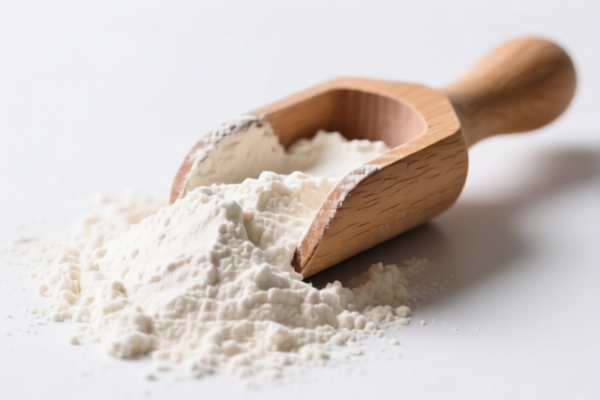
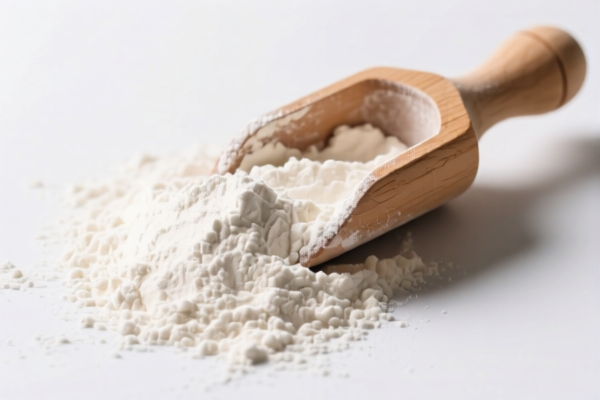
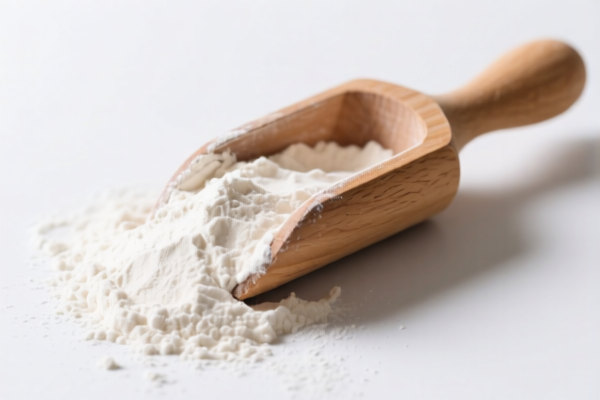
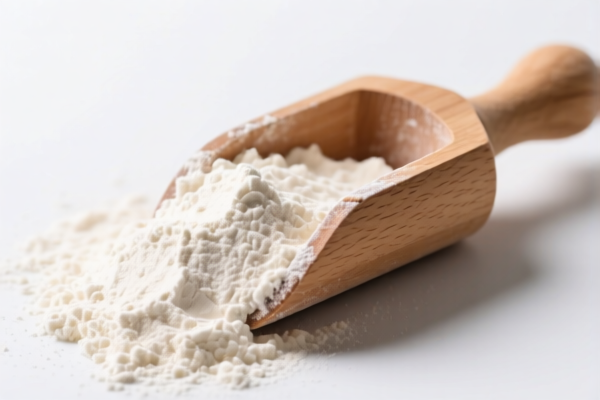
AI分析
🥔 Potato Flour (马铃薯粉) – HS Code & Tariff Guide | 2026 Customs Clearance Masterclass
🌐 HS Code Reference & Customs Strategy | 2026 Updated Tariff Breakdown | Pro-Level Import Planning
📌 One. Product Definition & Classification: What Exactly Is “Potato Flour”?
Potato flour is a fine, starchy powder derived from whole peeled and dried potatoes, processed into a smooth, white or off-white powder. It is used in food manufacturing for thickening, binding, and texture enhancement — especially in gluten-free and specialty food products.
In international trade, potato flour is strictly classified under HS Code 1105.10.00.00 and 1105.20.00.00, depending on the processing method and physical form.
⚠️ Critical Distinction: - If the product is ground into a fine powder, meets the “flour, meal, or powder” form, and is derived from potatoes, it falls under 1105.10.00.00 or 1105.20.00.00. - If it's not for human consumption, or is processed into starch, it may fall under 1108.13.00.10 or 1108.13.00.90.
📦 Two. HS Code Classification Breakdown (2026 Official Tariff Matrix)
| HS Code | Product Description | Applicable Use Case | Human Edible? | Processing Form |
|---|---|---|---|---|
1105.10.00.00 |
Potato flour, in powder form, meeting potato flour/mesh/powder classification | Bakery, gluten-free baking, thickening agents | ✅ Yes | Fine powder |
1105.20.00.00 |
Potato flour, in powder form, meeting potato material & powder requirements | Food processing, instant noodles, sauces | ✅ Yes | Powder form |
1108.13.00.10 |
Potato starch, in primary starch form, derived from potatoes | Industrial use, food additives, bioplastics | ✅ Yes (if food-grade) | Starch form |
1108.13.00.90 |
Other potato starch, not for human consumption | Non-food industrial applications | ❌ No | Non-edible starch |
🔍 Key Insight: - 1105.10.00.00 and 1105.20.00.00 are for edible potato flour — must be in fine powder form. - 1108.13.00.10/90 are for starch, even if derived from potatoes — only if not intended for human consumption.
💰 Three. 2026 Tariff & Duty Breakdown (U.S. Import Rules – China Origin)
✅ Applicable Country: United States (US)
✅ Origin: China (CN)
✅ Effective Date: November 10, 2025 (including future imports)
🎯 1. 1105.10.00.00 — Potato Flour (Powder Form, Edible)
| Item | Detail |
|---|---|
| Base Duty | 1.7¢/kg (ad valorem) |
| USITC Additional Duty | +25% (under Section 301 of U.S. Trade Act) |
| IEEPA Additional Duty | +10% (under International Emergency Economic Powers Act) |
| Total Effective Duty | 1.7¢/kg + 35.0% of CIF value |
| Duty Calculation | (CIF Value × 35%) + (1.7¢ × Weight in kg) |
| De Minimis Threshold | ❌ Not applicable (denied under U.S. law) |
| Legal Basis Path | IEEPA:9903.01.25 → IEEPA:9903.01.24 → USITC:1105.10.00.00 → FOOTNOTE:9903.88.01 |
📌 Explanation: - USITC 25%: From Section 301 tariffs on Chinese goods due to unfair trade practices. - IEEPA 10%: From international emergency powers targeting China, effective since Nov 2025. - Total = 35% + 1.7¢/kg — Very high cost for importers.
🎯 2. 1105.20.00.00 — Potato Flour (Powder Form, Potato Material-Based)
| Item | Detail |
|---|---|
| Base Duty | 1.3¢/kg |
| USITC Additional Duty | +25% |
| IEEPA Additional Duty | +10% |
| Total Effective Duty | 1.3¢/kg + 35.0% of CIF value |
| Duty Calculation | (CIF × 35%) + (1.3¢ × kg) |
| De Minimis | ❌ Not eligible |
| Legal Basis Path | IEEPA:9903.01.25 → IEEPA:9903.01.24 → USITC:1105.20.00.00 → FOOTNOTE:9903.88.01 |
📌 Note: - Slightly lower base duty than 1105.10.00.00, but same total tariff burden (35% + per-kg fee). - Must prove material consistency and powder form to avoid misclassification.
🎯 3. 1108.13.00.10 — Potato Starch (Primary Starch, Edible)
| Item | Detail |
|---|---|
| Base Duty | 0.56¢/kg |
| USITC Additional Duty | +25% |
| IEEPA Additional Duty | +10% |
| Total Duty | 0.56¢/kg + 35.0% of CIF value |
| Calculation | (CIF × 35%) + (0.56¢ × kg) |
| De Minimis | ❌ Not eligible |
| Legal Path | IEEPA:9903.01.25 → IEEPA:9903.01.24 → USITC:1108.13.00.10 → FOOTNOTE:9903.88.01 |
📌 Important: - This code applies only if the product is starch, not flour. - Even if derived from potatoes, if it’s not for human consumption, use
1108.13.00.90.
🎯 4. 1108.13.00.90 — Other Potato Starch (Non-Human Edible)
| Item | Detail |
|---|---|
| Base Duty | 0.56¢/kg |
| USITC Additional Duty | +25% |
| IEEPA Additional Duty | +10% |
| Total Duty | 0.56¢/kg + 35.0% of CIF value |
| Calculation | (CIF × 35%) + (0.56¢ × kg) |
| De Minimis | ❌ Not eligible |
| Legal Path | IEEPA:9903.01.25 → IEEPA:9903.01.24 → USITC:1108.13.00.90 → FOOTNOTE:9903.88.01 |
📌 Critical Rule: - Must be clearly non-food-grade (e.g., for industrial use, bio-plastics, adhesives). - Cannot be used in food products — or it will be reclassified and penalized.
🛠️ Four. Customs Clearance Best Practices (Pro Tips to Avoid Penalties)
✅ 1. Required Documentation (Must-Have Checklist)
| Document | Required? | Why It Matters |
|---|---|---|
| ✅ Product Technical Specs | ✔️ | Prove powder form, particle size, moisture content |
| ✅ Lab Test Report (Food-Grade or Industrial) | ✔️ | Confirm edible vs. non-edible status |
| ✅ Product Photos (Label, Packaging, Texture) | ✔️ | Show fine powder vs. granular or starch |
| ✅ Commercial Invoice | ✔️ | Must state: “Potato Flour – For Human Consumption” or “Industrial Starch” |
| ✅ Certificate of Origin (CO) | ✔️ | If not from China, may qualify for lower tariffs |
| ✅ Packing List | ✔️ | Clarify weight, packaging, and HS Code grouping |
| ✅ Third-Party Certification (FCC, FDA, ISO, etc.) | ✔️ | For food-grade products |
✅ 2.申报技巧(Key Rules to Remember)
🔥 “Form Matters, Use Matters, Label Matters!”
| Scenario | Correct HS Code | Wrong Code | Risk |
|---|---|---|---|
| Fine white powder from potatoes, used in baking | 1105.10.00.00 |
1108.13.00.10 |
Higher tariff + penalty |
| Starch used in glue or plastic | 1108.13.00.90 |
1105.10.00.00 |
Misclassification → seizure |
| Product labeled “food-grade” but tested as industrial | 1108.13.00.90 |
1105.10.00.00 |
Customs audit + fines |
| Mixed powder with additives (e.g., maltodextrin) | 1105.10.00.00 |
1108.13.00.10 |
May be rejected |
✅ 3. Special Cases & How to Handle
| Situation | Recommended Action |
|---|---|
| OEM Product | Provide customer contract + formulation sheet to prove intended use |
| Gluten-Free Labeling | Must be backed by lab test — otherwise, risk of false claim |
| Export to EU/UK/AU | Use non-US HS Codes — no IEEPA/USITC tariffs |
| Bulk Shipment with Mixed Goods | Do not mix flour and starch — separate by HS Code |
| Custom-Processed Product | Apply for Advance Ruling (Pre-Approval) to lock in tariff |
🌍 Five. Global Market Tariff Comparison (2026 Update)
| Country | Recommended HS Code | Tariff | Certification | Notes |
|---|---|---|---|---|
| 🇺🇸 USA (China Origin) | 1105.10.00.00 |
1.7¢/kg + 35% | FDA, USDA, ISO | Highest tariff |
| 🇨🇳 China | 1105.10.00.00 |
5% | CCC, GB | No extra duties |
| 🇪🇺 EU | 1105.10.00.00 |
0% | CE, ISO | No 301/IEEPA |
| 🇦🇺 Australia | 1105.10.00.00 |
5% | RCM | No additional taxes |
| 🇯🇵 Japan | 1105.10.00.00 |
0% | PSE | No extra tariffs |
📌 Takeaway:
- Only the U.S. imposes 35%+ tariff on Chinese potato flour/starch. - Vietnam, Mexico, Thailand, India may qualify for IEEPA exemption — great for supply chain shift.
📌 Six. Common Mistakes & How to Avoid Them (Real-World Pitfalls)
❌ Mistake 1: Labeling “potato flour” but it’s actually starch
👉 Result: Misclassified → 35%+ duty + penalties
❌ Mistake 2: Using 1105.10.00.00 for industrial-grade product
👉 Result: FDA/USDA audit → product recall or seizure
❌ Mistake 3: Not separating edible and non-edible batches in one shipment
👉 Result: Entire shipment delayed or rejected
❌ Mistake 4: Declaring “potato flour” without lab proof of powder form
👉 Result: Customs challenges → prolonged clearance
✅ Best Practice:
Use precise language:
🔹 "Potato Flour, Fine Powder, Food Grade, 98% Starch, 200 Mesh, for Baking"
🔹 "Potato Starch, Industrial Grade, Non-Food Use, for Bioplastics"
🎯 Seven. Final Verdict: Accurate Classification = Profit Protection
🎯 Remember the Golden Rule:
🔹 “If it’s fine, white, and for food → 1105.10/20.00”
🔹 “If it’s starch, not for eating → 1108.13.00.90”
🔹 “If from China to U.S. → 35% + per-kg fee → plan ahead!”
📌 Pro Tip:
🚀 Apply for an Advance Ruling (Pre-Clearance) with U.S. Customs before shipping.
📞 Partner with a U.S.-based customs broker experienced in food-grade agricultural imports.
📣 Act Now!
📞 Contact a specialized customs broker + submit product samples + request HS Code pre-approval
🚀 Avoid delays, penalties, and cost overruns — your next shipment deserves precision!
✨ Smart Importing Starts with Smart Classification!
💼 Every gram counts — and so does your HS Code!
用户评价
关于 HS 编码归类
协调制度(HS)是由世界海关组织(WCO)制定的国际贸易商品分类标准。全球 200 多个国家采用 HS 系统作为海关关税、贸易统计和进出口监管的基础。
每个 HS 编码遵循以下层级结构:
- 章(2 位)——商品大类(例如:第 84 章:机器和机械设备)
- 品目(4 位)——章内的更具体分类
- 子目(6 位)——国际通用细分,所有 WCO 成员国统一使用
- 本国细分(8-10 位)——各国自行扩展的细分编码,如美国 HTSUS 10 位编码
正确的 HS 编码归类对于顺利通关、准确缴纳关税和遵守贸易法规至关重要。错误归类可能导致海关延误、多缴关税或罚款。
从CN进口到US时,适用的关税税率可能包括:
- 最惠国(MFN)税率——适用于 WTO 成员国的标准关税税率
- 普通税率——适用于无贸易协定国家
- 贸易救济关税——附加关税,如 301 条款(反倾销)、232 条款(国家安全)或反补贴税
本页内容仅供参考。如需正式归类,请咨询当地海关或持牌报关代理。