Potato Flour
CN → US| HS Code | Tariff Rate | Origin | Destination | Doc |
|---|---|---|---|---|
| 1105100000 | 0.0% | CN | US | Official Doc |
| 1105200000 | 0.0% | CN | US | Official Doc |
| 1108130010 | 0.0% | CN | US | Official Doc |
| 1108130090 | 0.0% | CN | US | Official Doc |
| 1105100000 | 0.0% | CN | US | Official Doc |
Product Images
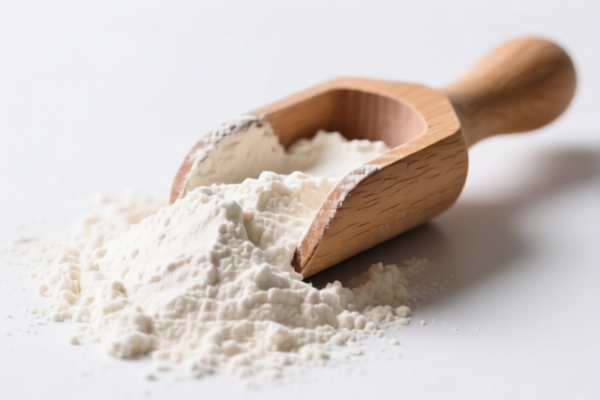
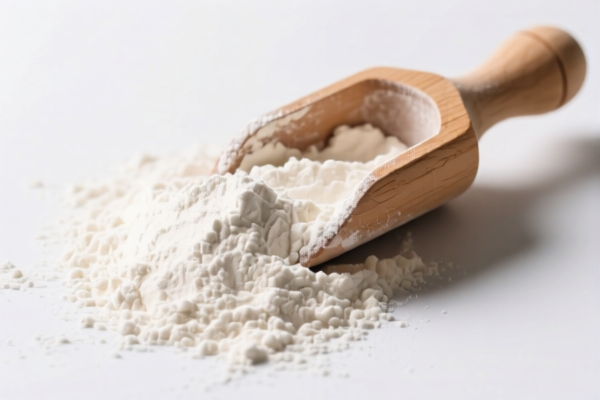
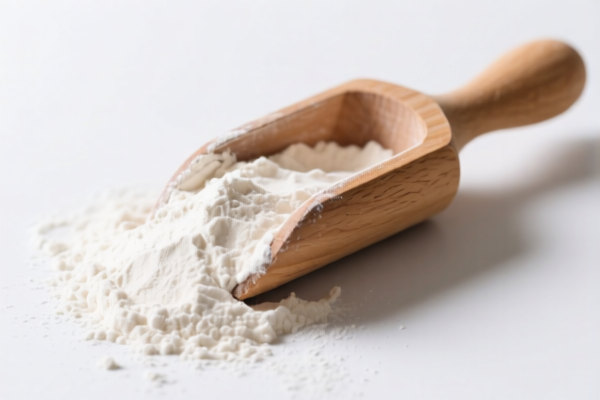
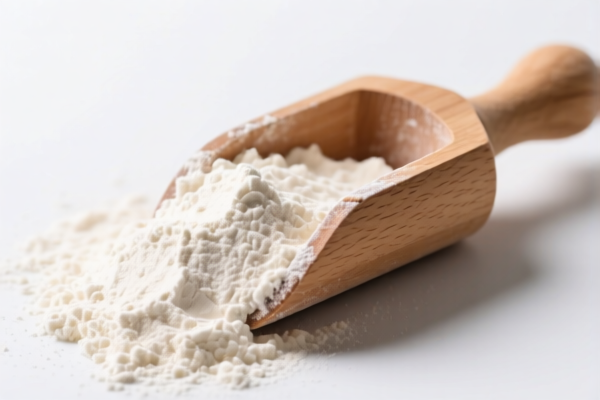
AI Analysis
🥔 Potato Flour (马铃薯粉) – HS Code & Tariff Guide | 2026 Customs Clearance Masterclass
🌐 HS Code Reference & Customs Strategy | 2026 Updated Tariff Breakdown | Pro-Level Import Planning
📌 One. Product Definition & Classification: What Exactly Is “Potato Flour”?
Potato flour is a fine, starchy powder derived from whole peeled and dried potatoes, processed into a smooth, white or off-white powder. It is used in food manufacturing for thickening, binding, and texture enhancement — especially in gluten-free and specialty food products.
In international trade, potato flour is strictly classified under HS Code 1105.10.00.00 and 1105.20.00.00, depending on the processing method and physical form.
⚠️ Critical Distinction: - If the product is ground into a fine powder, meets the “flour, meal, or powder” form, and is derived from potatoes, it falls under 1105.10.00.00 or 1105.20.00.00. - If it's not for human consumption, or is processed into starch, it may fall under 1108.13.00.10 or 1108.13.00.90.
📦 Two. HS Code Classification Breakdown (2026 Official Tariff Matrix)
| HS Code | Product Description | Applicable Use Case | Human Edible? | Processing Form |
|---|---|---|---|---|
1105.10.00.00 |
Potato flour, in powder form, meeting potato flour/mesh/powder classification | Bakery, gluten-free baking, thickening agents | ✅ Yes | Fine powder |
1105.20.00.00 |
Potato flour, in powder form, meeting potato material & powder requirements | Food processing, instant noodles, sauces | ✅ Yes | Powder form |
1108.13.00.10 |
Potato starch, in primary starch form, derived from potatoes | Industrial use, food additives, bioplastics | ✅ Yes (if food-grade) | Starch form |
1108.13.00.90 |
Other potato starch, not for human consumption | Non-food industrial applications | ❌ No | Non-edible starch |
🔍 Key Insight: - 1105.10.00.00 and 1105.20.00.00 are for edible potato flour — must be in fine powder form. - 1108.13.00.10/90 are for starch, even if derived from potatoes — only if not intended for human consumption.
💰 Three. 2026 Tariff & Duty Breakdown (U.S. Import Rules – China Origin)
✅ Applicable Country: United States (US)
✅ Origin: China (CN)
✅ Effective Date: November 10, 2025 (including future imports)
🎯 1. 1105.10.00.00 — Potato Flour (Powder Form, Edible)
| Item | Detail |
|---|---|
| Base Duty | 1.7¢/kg (ad valorem) |
| USITC Additional Duty | +25% (under Section 301 of U.S. Trade Act) |
| IEEPA Additional Duty | +10% (under International Emergency Economic Powers Act) |
| Total Effective Duty | 1.7¢/kg + 35.0% of CIF value |
| Duty Calculation | (CIF Value × 35%) + (1.7¢ × Weight in kg) |
| De Minimis Threshold | ❌ Not applicable (denied under U.S. law) |
| Legal Basis Path | IEEPA:9903.01.25 → IEEPA:9903.01.24 → USITC:1105.10.00.00 → FOOTNOTE:9903.88.01 |
📌 Explanation: - USITC 25%: From Section 301 tariffs on Chinese goods due to unfair trade practices. - IEEPA 10%: From international emergency powers targeting China, effective since Nov 2025. - Total = 35% + 1.7¢/kg — Very high cost for importers.
🎯 2. 1105.20.00.00 — Potato Flour (Powder Form, Potato Material-Based)
| Item | Detail |
|---|---|
| Base Duty | 1.3¢/kg |
| USITC Additional Duty | +25% |
| IEEPA Additional Duty | +10% |
| Total Effective Duty | 1.3¢/kg + 35.0% of CIF value |
| Duty Calculation | (CIF × 35%) + (1.3¢ × kg) |
| De Minimis | ❌ Not eligible |
| Legal Basis Path | IEEPA:9903.01.25 → IEEPA:9903.01.24 → USITC:1105.20.00.00 → FOOTNOTE:9903.88.01 |
📌 Note: - Slightly lower base duty than 1105.10.00.00, but same total tariff burden (35% + per-kg fee). - Must prove material consistency and powder form to avoid misclassification.
🎯 3. 1108.13.00.10 — Potato Starch (Primary Starch, Edible)
| Item | Detail |
|---|---|
| Base Duty | 0.56¢/kg |
| USITC Additional Duty | +25% |
| IEEPA Additional Duty | +10% |
| Total Duty | 0.56¢/kg + 35.0% of CIF value |
| Calculation | (CIF × 35%) + (0.56¢ × kg) |
| De Minimis | ❌ Not eligible |
| Legal Path | IEEPA:9903.01.25 → IEEPA:9903.01.24 → USITC:1108.13.00.10 → FOOTNOTE:9903.88.01 |
📌 Important: - This code applies only if the product is starch, not flour. - Even if derived from potatoes, if it’s not for human consumption, use
1108.13.00.90.
🎯 4. 1108.13.00.90 — Other Potato Starch (Non-Human Edible)
| Item | Detail |
|---|---|
| Base Duty | 0.56¢/kg |
| USITC Additional Duty | +25% |
| IEEPA Additional Duty | +10% |
| Total Duty | 0.56¢/kg + 35.0% of CIF value |
| Calculation | (CIF × 35%) + (0.56¢ × kg) |
| De Minimis | ❌ Not eligible |
| Legal Path | IEEPA:9903.01.25 → IEEPA:9903.01.24 → USITC:1108.13.00.90 → FOOTNOTE:9903.88.01 |
📌 Critical Rule: - Must be clearly non-food-grade (e.g., for industrial use, bio-plastics, adhesives). - Cannot be used in food products — or it will be reclassified and penalized.
🛠️ Four. Customs Clearance Best Practices (Pro Tips to Avoid Penalties)
✅ 1. Required Documentation (Must-Have Checklist)
| Document | Required? | Why It Matters |
|---|---|---|
| ✅ Product Technical Specs | ✔️ | Prove powder form, particle size, moisture content |
| ✅ Lab Test Report (Food-Grade or Industrial) | ✔️ | Confirm edible vs. non-edible status |
| ✅ Product Photos (Label, Packaging, Texture) | ✔️ | Show fine powder vs. granular or starch |
| ✅ Commercial Invoice | ✔️ | Must state: “Potato Flour – For Human Consumption” or “Industrial Starch” |
| ✅ Certificate of Origin (CO) | ✔️ | If not from China, may qualify for lower tariffs |
| ✅ Packing List | ✔️ | Clarify weight, packaging, and HS Code grouping |
| ✅ Third-Party Certification (FCC, FDA, ISO, etc.) | ✔️ | For food-grade products |
✅ 2.申报技巧(Key Rules to Remember)
🔥 “Form Matters, Use Matters, Label Matters!”
| Scenario | Correct HS Code | Wrong Code | Risk |
|---|---|---|---|
| Fine white powder from potatoes, used in baking | 1105.10.00.00 |
1108.13.00.10 |
Higher tariff + penalty |
| Starch used in glue or plastic | 1108.13.00.90 |
1105.10.00.00 |
Misclassification → seizure |
| Product labeled “food-grade” but tested as industrial | 1108.13.00.90 |
1105.10.00.00 |
Customs audit + fines |
| Mixed powder with additives (e.g., maltodextrin) | 1105.10.00.00 |
1108.13.00.10 |
May be rejected |
✅ 3. Special Cases & How to Handle
| Situation | Recommended Action |
|---|---|
| OEM Product | Provide customer contract + formulation sheet to prove intended use |
| Gluten-Free Labeling | Must be backed by lab test — otherwise, risk of false claim |
| Export to EU/UK/AU | Use non-US HS Codes — no IEEPA/USITC tariffs |
| Bulk Shipment with Mixed Goods | Do not mix flour and starch — separate by HS Code |
| Custom-Processed Product | Apply for Advance Ruling (Pre-Approval) to lock in tariff |
🌍 Five. Global Market Tariff Comparison (2026 Update)
| Country | Recommended HS Code | Tariff | Certification | Notes |
|---|---|---|---|---|
| 🇺🇸 USA (China Origin) | 1105.10.00.00 |
1.7¢/kg + 35% | FDA, USDA, ISO | Highest tariff |
| 🇨🇳 China | 1105.10.00.00 |
5% | CCC, GB | No extra duties |
| 🇪🇺 EU | 1105.10.00.00 |
0% | CE, ISO | No 301/IEEPA |
| 🇦🇺 Australia | 1105.10.00.00 |
5% | RCM | No additional taxes |
| 🇯🇵 Japan | 1105.10.00.00 |
0% | PSE | No extra tariffs |
📌 Takeaway:
- Only the U.S. imposes 35%+ tariff on Chinese potato flour/starch. - Vietnam, Mexico, Thailand, India may qualify for IEEPA exemption — great for supply chain shift.
📌 Six. Common Mistakes & How to Avoid Them (Real-World Pitfalls)
❌ Mistake 1: Labeling “potato flour” but it’s actually starch
👉 Result: Misclassified → 35%+ duty + penalties
❌ Mistake 2: Using 1105.10.00.00 for industrial-grade product
👉 Result: FDA/USDA audit → product recall or seizure
❌ Mistake 3: Not separating edible and non-edible batches in one shipment
👉 Result: Entire shipment delayed or rejected
❌ Mistake 4: Declaring “potato flour” without lab proof of powder form
👉 Result: Customs challenges → prolonged clearance
✅ Best Practice:
Use precise language:
🔹 "Potato Flour, Fine Powder, Food Grade, 98% Starch, 200 Mesh, for Baking"
🔹 "Potato Starch, Industrial Grade, Non-Food Use, for Bioplastics"
🎯 Seven. Final Verdict: Accurate Classification = Profit Protection
🎯 Remember the Golden Rule:
🔹 “If it’s fine, white, and for food → 1105.10/20.00”
🔹 “If it’s starch, not for eating → 1108.13.00.90”
🔹 “If from China to U.S. → 35% + per-kg fee → plan ahead!”
📌 Pro Tip:
🚀 Apply for an Advance Ruling (Pre-Clearance) with U.S. Customs before shipping.
📞 Partner with a U.S.-based customs broker experienced in food-grade agricultural imports.
📣 Act Now!
📞 Contact a specialized customs broker + submit product samples + request HS Code pre-approval
🚀 Avoid delays, penalties, and cost overruns — your next shipment deserves precision!
✨ Smart Importing Starts with Smart Classification!
💼 Every gram counts — and so does your HS Code!
Customer Reviews
About HS Code Classification
The Harmonized System (HS) is an internationally standardized nomenclature developed by the World Customs Organization (WCO) to classify traded products. Over 200 countries use the HS system as the basis for customs tariffs, trade statistics, and import/export regulations.
Each HS code follows a hierarchical structure:
- Chapter (2 digits) — Broad category of goods (e.g., Chapter 84: Machinery and Mechanical Appliances)
- Heading (4 digits) — More specific grouping within the chapter
- Subheading (6 digits) — Internationally standardized breakdown, used by all WCO member countries
- National subdivisions (8-10 digits) — Country-specific extensions for further classification, such as US HTSUS 10-digit codes
Correct HS code classification is essential for smooth customs clearance, accurate duty payment, and compliance with trade regulations. Misclassification can lead to customs delays, overpayment of duties, or penalties.
When importing from CN to US, the applicable tariff rates may include:
- Most-Favored-Nation (MFN) rate — The standard duty rate applied to WTO members
- General rate — Applied to countries without trade agreements
- Trade remedy duties — Additional tariffs such as Section 301 (anti-dumping), Section 232 (national security), or countervailing duties
The information provided on this page is for reference purposes only. For official classification, please consult with your local customs authority or a licensed customs broker.