Power Converter
CN → US| HS编码 | 关税税率 | 原产国 | 目的国 | 文档 |
|---|---|---|---|---|
| 8504406001 | 35.0% | CN | US | 官方文档 |
| 8504409510 | 35.0% | CN | US | 官方文档 |
| 8504408500 | 35.0% | CN | US | 官方文档 |
| 8471801000 | 35.0% | CN | US | 官方文档 |
| 8517620020 | 35.0% | CN | US | 官方文档 |
商品图片
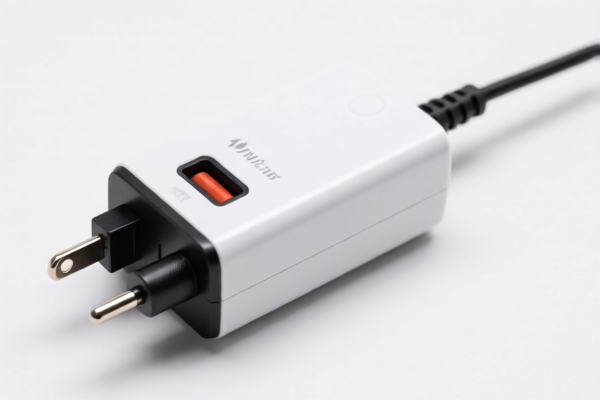
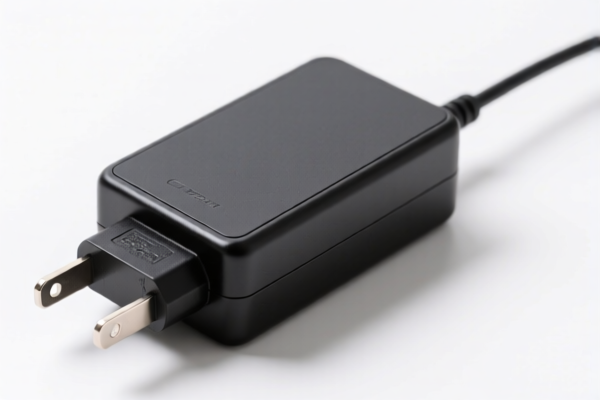
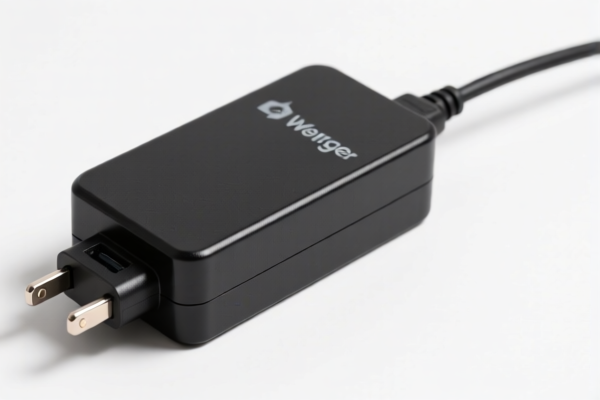
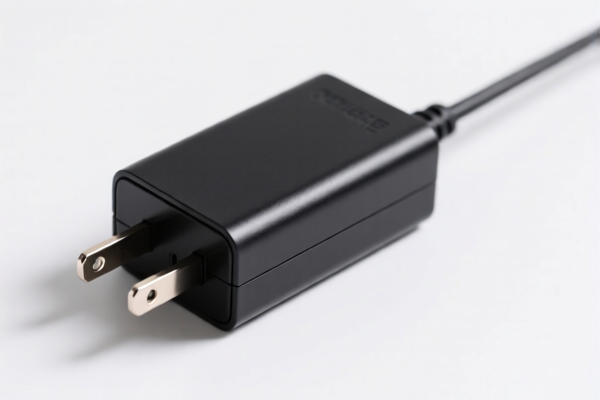
AI分析
⚡ Power Converters & Network Adapters (Static Converters, Data Interfaces & Telecommunications Equipment)
🌐 HS Code Reference & Customs Clearance Guide | 2026 Latest Tariff Analysis | Professional Clearance Strategy
📌 I. Product Definition & Classification: What Exactly Are You Importing?
In international trade, "Power Converters" are a broad category that often causes classification errors. It is crucial to distinguish between Electrical Power Conversion (changing voltage/current) and Signal/Data Conversion (network/transmission adaptation).
1. Electrical Power Converters (Static Converters)
Used to transform AC/DC electricity. They fall under Chapter 85 (Electrical Machinery). The key factor is that they are static (no moving parts), unlike rotary converters.
2. Network/Signal Adapters
Used for data transmission, signal adaptation, or telecommunications. These fall under Chapter 84 (Machinery) or Chapter 85 (Telecommunications).
⚠️ Critical Distinction:
- If it converts Electricity (AC to DC, High Voltage to Low Voltage) → Look at 8504.
- If it converts Data/Signals (USB to HDMI, Serial to Ethernet) → Look at 8471 or 8517.
- Do not mix them up! Misclassification leads to severe penalties.
📦 II. HS Code Classification Details (2026 Latest Tariff Authority Comparison)
Based on the provided data, here are the 5 specific classifications for Power/Network Converters.
| HS Code | Product Description | Application Scenario | Functionality |
|---|---|---|---|
8504.40.60.01 |
Power Converter (Static) | Electrical power supply units (PSUs), Industrial power adapters | ✅ Static Converter |
8504.40.95.10 |
Power Converter (Static) | General static power conversion, material unspecified but compatible | ✅ Static Converter |
8504.40.85.00 |
Network/Telecom Converter | Telecom equipment, static conversion for signal/power hybrid | ✅ Static Converter |
8471.80.10.00 |
Network Adapter (Data) | Data transmission devices, signal adaptation for computers | ✅ Control/Adaptation Unit |
8517.62.00.20 |
Network Converter (Telecom) | Data transmission equipment, switching and routing functions | ✅ Switch/Router Device |
🔍 Key Insight:
- HS 8504 covers the electrical side (transforming power).
- HS 8471 covers data processing peripherals (adaptation).
- HS 8517 covers telecommunications infrastructure (switching/routing).
- Even though the summary mentions "Material unspecified" or "Power conflict," the function is the primary determinant for classification.
💰 III. 2026 Latest Tariff Rate Breakdown (Including Surcharges & Policy Add-ons)
✅ Applicable Country: United States (US)
✅ Origin: China (CN)
✅ Effective Date: As per current USITC/IEEPA regulations (2025/2026 context)
🎯 1. 8504.40.60.01 & 8504.40.95.10 & 8504.40.85.00
(Static Electrical Converters / Power Supplies)
| Item | Content |
|---|---|
| Base Tariff | 0.0% (Ad Valorem) |
| Section 301 Surcharge | +25.0% (From USITC Footnote 9903.88.01) |
| Section 122 Surcharge | +10.0% (Specific trade remedy/additional duty) |
| Total Tax Rate | 35.0% |
| Tax Calculation | CIF Value × 35% |
| De Minimis Exemption | ❌ NOT Eligible (Strictly controlled) |
| Legal Basis Path | Base: 0% → 301: 25% → 122: 10% → Total: 35% |
📌 Explanation:
- These codes fall under "Static Converters".
- The 25% is the standard Section 301 tariff on Chinese electrical machinery.
- The 10% is an additional "Section 122" tariff (often related to specific trade disputes or temporary measures).
- Total 35% is a significant cost burden. Accuracy in declaring "Power" vs. "Data" is critical.
🎯 2. 8471.80.10.00
(Network Adapter / Data Transmission Unit)
| Item | Content |
|---|---|
| Base Tariff | 0.0% |
| Section 301 Surcharge | +25.0% |
| Section 122 Surcharge | +10.0% |
| Total Tax Rate | 35.0% |
| Tax Calculation | CIF Value × 35% |
| De Minimis Exemption | ❌ NOT Eligible |
| Legal Basis Path | Base: 0% → 301: 25% → 122: 10% → Total: 35% |
📌 Explanation:
- Classified as "Other units for automatic data processing machines".
- Even though it's a "Network Adapter," if it's considered a peripheral to data processing, it inherits the same high tariff structure for Chinese origin.
🎯 3. 8517.62.00.20
(Network Converter / Switching & Routing Equipment)
| Item | Content |
|---|---|
| Base Tariff | 0.0% |
| Section 301 Surcharge | +25.0% |
| Section 122 Surcharge | +10.0% |
| Total Tax Rate | 35.0% |
| Tax Calculation | CIF Value × 35% |
| De Minimis Exemption | ❌ NOT Eligible |
| Legal Basis Path | Base: 0% → 301: 25% → 122: 10% → Total: 35% |
📌 Explanation:
- Classified under "Telecommunications apparatus" (Switches/Routers).
- Despite being a "Telecom" device, it is NOT exempt from the 301/122 surcharges.
- The 35% rate applies uniformly across all 5 HS codes provided in the data.
🛠️ IV. Customs Clearance Practical Advice (Real-World Pitfall Avoidance)
✅ 1. Essential Documentation Checklist (Non-Negotiable)
| Document | Required? | Description |
|---|---|---|
| ✅ Product Specification Sheet | ✔️ | Must clearly state: Input/Output Voltage, Power (Watts), or Data Rate (Mbps/Gbps). |
| ✅ Circuit Diagram / Block Diagram | ✔️ | Crucial to prove it is a "Static Converter" (8504) vs. "Data Processor" (8471/8517). |
| ✅ Product Photos (Label & Ports) | ✔️ | Show connectors (HDMI, USB, RJ45, DC Jack) to determine function. |
| ✅ Commercial Invoice | ✔️ | Must use precise language: "Power Supply Unit" vs. "Network Interface Converter." |
| ✅ Certificate of Origin (CO) | ✔️ | Confirm Chinese origin to apply correct 301/122 rates. |
✅ 2. Declaration Tips (Key Mantra)
🔥 "Function Rules, Don't Guess. Power = 8504, Data = 8471/8517. Both 35%."
| Scenario | Correct Declaration | Wrong Declaration |
|---|---|---|
| AC to DC Adapter (e.g., Laptop Charger) | 8504.40.60.01 |
Mislabeling as "Computer Part" → Audit risk |
| USB to Ethernet Adapter | 8471.80.10.00 or 8517.62.00.20 |
Mislabeling as "Power Supply" → Wrong HTS |
| Industrial Power Supply | 8504.40.95.10 |
Splitting parts → Complex scrutiny |
| Network Switch | 8517.62.00.20 |
Calling it "Converter" vaguely → Delay |
📌 Note: Since all codes result in a 35% total tax rate, the primary risk is not the rate difference, but the compliance risk of misclassification. Incorrect codes can lead to audits, fines, and cargo holds.
✅ 3. Special Handling Scenarios
| Scenario | Recommendation |
|---|---|
| Hybrid Devices (Power + Data) | If a device does both (e.g., PoE Injector), declare based on principal function. If power conversion is primary → 8504. |
| Material Ambiguity | The data states "Material not specified but no conflict." Ensure your spec sheet lists materials (e.g., PCB type, housing) to avoid "Material Conflict" flags. |
| De Minimis (Section 321) | ❌ NO EXEMPTION. All 35% rates apply. Do not attempt to split shipments under $800 to evade duties; CBP is aggressive on this. |
| Pre-Ruling | Strongly recommended. Since rates are uniform but codes differ, get a CBP Binding Ruling to confirm if your specific "Network Converter" is 8471 or 8517. |
🌍 V. Global Market Clearance Comparison (2026 Context)
| Country/Region | Recommended HS Code | Tariff Rate (China Origin) | Certification Required | Remarks |
|---|---|---|---|---|
| 🇺🇸 USA | See Data (35% Total) | 35% (Base 0% + 301 25% + 122 10%) | FCC, UL, RoHS | High duty. No de minimis. |
| 🇨🇳 China | 8504 / 8471 / 8517 | 0% - 5% (General) | CCC (if applicable) | Low duty. Standard import. |
| 🇪🇺 EU | 8504 / 8471 | 0% - 2.7% | CE, RoHS, REACH | No Section 301 equivalent. |
| 🇬🇧 UK | 8504 / 8471 | 0% - 4% | UKCA, CE | Post-Brexit rules apply. |
| 🇯🇵 Japan | 8504 / 8471 | 0% - 3% | PSE, TELEC | Low duty. High tech compliance. |
📌 Conclusion:
- The US market is the most challenging due to the 35% cumulative tariff.
- EU, UK, and Japan have significantly lower duties, making them more cost-effective for Chinese-origin electronics.
- Strategy: If targeting the US, ensure accurate classification to avoid penalties, and consider supply chain diversification if possible.
📌 VI. Common Errors & Pitfall Guide (Lessons Learned)
❌ Error 1: Calling a "Network Adapter" a "Power Converter" to avoid Section 301.
👉 Consequence: CBP will reject the declaration. Even if the code were different, the 35% rate applies to all 5 codes in the data. The risk is compliance failure, not just cost.
❌ Error 2: Omitting "Static" in the description for 8504 codes.
👉 Consequence: Customs may classify as rotary converters or other machinery, leading to longer delays for inspection.
❌ Error 3: Assuming "De Minimis" applies to small converters.
👉 Consequence: Severe penalties. US CBP explicitly excludes Section 301 and 122 goods from de minimis entry.
❌ Error 4: Confusing "Network Converter" (8517) with "Power Converter" (8504).
👉 Consequence: While the tax is the same (35%), the certification requirements differ. Power supplies need UL/IEC; Network gear needs FCC Part 15. Wrong code = Wrong Cert = Shipment Rejection.
✅ Correct Approach:
"Network Interface Converter, RJ45 to USB, Data Transmission, Model XYZ, FCC Certified, Made in China"
OR
"AC-DC Power Supply, 12V 5A, Static Converter, Model ABC, UL Certified, Made in China"
🎯 VII. Conclusion: Precision is Profit!
🎯 Remember the Mantra:
🔹 "All Codes 35%, Don't Split Shipments. Power vs. Data Determines the Code. Certifications Determine the Clearance."
🔹 "35% is the floor, not the ceiling. Misclassification adds fines and time."
📌 Pro Tip:
Since all the HS codes in the provided data result in a 35% total tax rate, your focus should shift from cost optimization via code switching to risk mitigation via accurate classification and compliance.
✅ Get a CBP Advance Ruling for your specific product.
✅ Ensure FCC/UL certifications match the declared HS code function.
✅ Keep detailed specs ready for customs audits.
📣 Action Item:
📞 Consult a licensed Customs Broker.
📄 Provide Datasheets and Photos.
🚀 Clear Customs Smoothly, Avoid Penalties, Protect Margins!
✨ Professional Clearance Starts with Accurate Classification!
💼 Every Duty Dollar Counts in 2026!
用户评价
关于 HS 编码归类
协调制度(HS)是由世界海关组织(WCO)制定的国际贸易商品分类标准。全球 200 多个国家采用 HS 系统作为海关关税、贸易统计和进出口监管的基础。
每个 HS 编码遵循以下层级结构:
- 章(2 位)——商品大类(例如:第 84 章:机器和机械设备)
- 品目(4 位)——章内的更具体分类
- 子目(6 位)——国际通用细分,所有 WCO 成员国统一使用
- 本国细分(8-10 位)——各国自行扩展的细分编码,如美国 HTSUS 10 位编码
正确的 HS 编码归类对于顺利通关、准确缴纳关税和遵守贸易法规至关重要。错误归类可能导致海关延误、多缴关税或罚款。
从CN进口到US时,适用的关税税率可能包括:
- 最惠国(MFN)税率——适用于 WTO 成员国的标准关税税率
- 普通税率——适用于无贸易协定国家
- 贸易救济关税——附加关税,如 301 条款(反倾销)、232 条款(国家安全)或反补贴税
本页内容仅供参考。如需正式归类,请咨询当地海关或持牌报关代理。