Power Converter
CN → US| HS Code | Tariff Rate | Origin | Destination | Doc |
|---|---|---|---|---|
| 8504406001 | 35.0% | CN | US | Official Doc |
| 8504409510 | 35.0% | CN | US | Official Doc |
| 8504408500 | 35.0% | CN | US | Official Doc |
| 8471801000 | 35.0% | CN | US | Official Doc |
| 8517620020 | 35.0% | CN | US | Official Doc |
Product Images
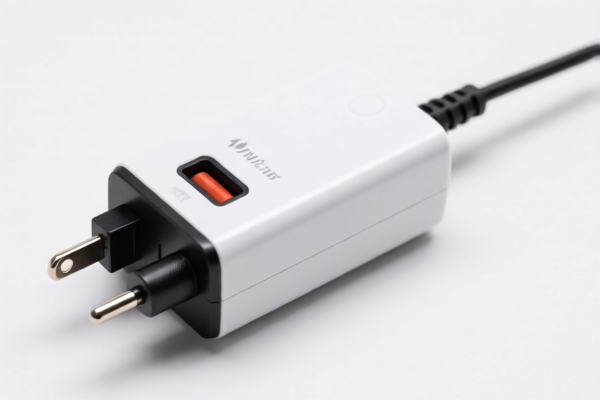
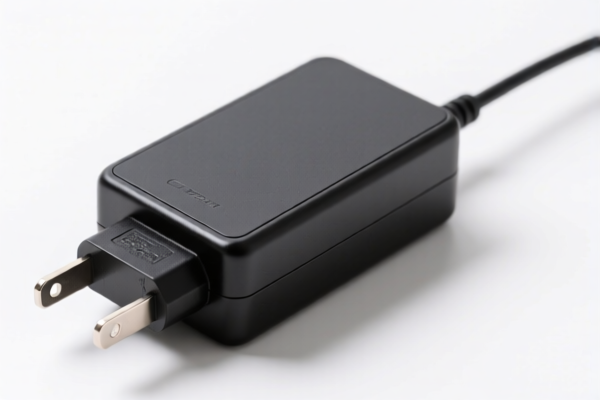
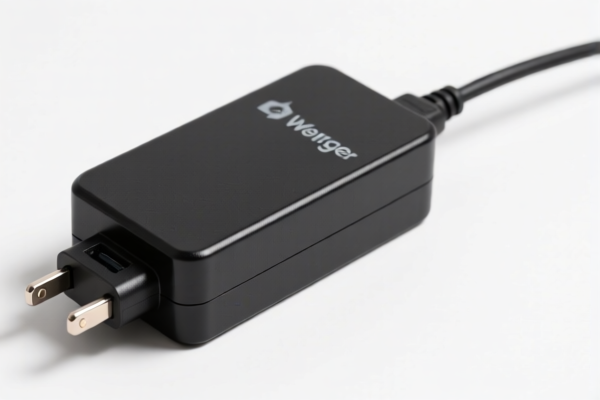
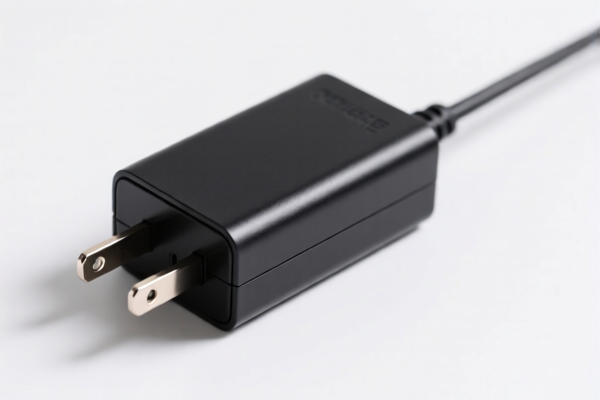
AI Analysis
⚡ Power Converters & Network Adapters (Static Converters, Data Interfaces & Telecommunications Equipment)
🌐 HS Code Reference & Customs Clearance Guide | 2026 Latest Tariff Analysis | Professional Clearance Strategy
📌 I. Product Definition & Classification: What Exactly Are You Importing?
In international trade, "Power Converters" are a broad category that often causes classification errors. It is crucial to distinguish between Electrical Power Conversion (changing voltage/current) and Signal/Data Conversion (network/transmission adaptation).
1. Electrical Power Converters (Static Converters)
Used to transform AC/DC electricity. They fall under Chapter 85 (Electrical Machinery). The key factor is that they are static (no moving parts), unlike rotary converters.
2. Network/Signal Adapters
Used for data transmission, signal adaptation, or telecommunications. These fall under Chapter 84 (Machinery) or Chapter 85 (Telecommunications).
⚠️ Critical Distinction:
- If it converts Electricity (AC to DC, High Voltage to Low Voltage) → Look at 8504.
- If it converts Data/Signals (USB to HDMI, Serial to Ethernet) → Look at 8471 or 8517.
- Do not mix them up! Misclassification leads to severe penalties.
📦 II. HS Code Classification Details (2026 Latest Tariff Authority Comparison)
Based on the provided data, here are the 5 specific classifications for Power/Network Converters.
| HS Code | Product Description | Application Scenario | Functionality |
|---|---|---|---|
8504.40.60.01 |
Power Converter (Static) | Electrical power supply units (PSUs), Industrial power adapters | ✅ Static Converter |
8504.40.95.10 |
Power Converter (Static) | General static power conversion, material unspecified but compatible | ✅ Static Converter |
8504.40.85.00 |
Network/Telecom Converter | Telecom equipment, static conversion for signal/power hybrid | ✅ Static Converter |
8471.80.10.00 |
Network Adapter (Data) | Data transmission devices, signal adaptation for computers | ✅ Control/Adaptation Unit |
8517.62.00.20 |
Network Converter (Telecom) | Data transmission equipment, switching and routing functions | ✅ Switch/Router Device |
🔍 Key Insight:
- HS 8504 covers the electrical side (transforming power).
- HS 8471 covers data processing peripherals (adaptation).
- HS 8517 covers telecommunications infrastructure (switching/routing).
- Even though the summary mentions "Material unspecified" or "Power conflict," the function is the primary determinant for classification.
💰 III. 2026 Latest Tariff Rate Breakdown (Including Surcharges & Policy Add-ons)
✅ Applicable Country: United States (US)
✅ Origin: China (CN)
✅ Effective Date: As per current USITC/IEEPA regulations (2025/2026 context)
🎯 1. 8504.40.60.01 & 8504.40.95.10 & 8504.40.85.00
(Static Electrical Converters / Power Supplies)
| Item | Content |
|---|---|
| Base Tariff | 0.0% (Ad Valorem) |
| Section 301 Surcharge | +25.0% (From USITC Footnote 9903.88.01) |
| Section 122 Surcharge | +10.0% (Specific trade remedy/additional duty) |
| Total Tax Rate | 35.0% |
| Tax Calculation | CIF Value × 35% |
| De Minimis Exemption | ❌ NOT Eligible (Strictly controlled) |
| Legal Basis Path | Base: 0% → 301: 25% → 122: 10% → Total: 35% |
📌 Explanation:
- These codes fall under "Static Converters".
- The 25% is the standard Section 301 tariff on Chinese electrical machinery.
- The 10% is an additional "Section 122" tariff (often related to specific trade disputes or temporary measures).
- Total 35% is a significant cost burden. Accuracy in declaring "Power" vs. "Data" is critical.
🎯 2. 8471.80.10.00
(Network Adapter / Data Transmission Unit)
| Item | Content |
|---|---|
| Base Tariff | 0.0% |
| Section 301 Surcharge | +25.0% |
| Section 122 Surcharge | +10.0% |
| Total Tax Rate | 35.0% |
| Tax Calculation | CIF Value × 35% |
| De Minimis Exemption | ❌ NOT Eligible |
| Legal Basis Path | Base: 0% → 301: 25% → 122: 10% → Total: 35% |
📌 Explanation:
- Classified as "Other units for automatic data processing machines".
- Even though it's a "Network Adapter," if it's considered a peripheral to data processing, it inherits the same high tariff structure for Chinese origin.
🎯 3. 8517.62.00.20
(Network Converter / Switching & Routing Equipment)
| Item | Content |
|---|---|
| Base Tariff | 0.0% |
| Section 301 Surcharge | +25.0% |
| Section 122 Surcharge | +10.0% |
| Total Tax Rate | 35.0% |
| Tax Calculation | CIF Value × 35% |
| De Minimis Exemption | ❌ NOT Eligible |
| Legal Basis Path | Base: 0% → 301: 25% → 122: 10% → Total: 35% |
📌 Explanation:
- Classified under "Telecommunications apparatus" (Switches/Routers).
- Despite being a "Telecom" device, it is NOT exempt from the 301/122 surcharges.
- The 35% rate applies uniformly across all 5 HS codes provided in the data.
🛠️ IV. Customs Clearance Practical Advice (Real-World Pitfall Avoidance)
✅ 1. Essential Documentation Checklist (Non-Negotiable)
| Document | Required? | Description |
|---|---|---|
| ✅ Product Specification Sheet | ✔️ | Must clearly state: Input/Output Voltage, Power (Watts), or Data Rate (Mbps/Gbps). |
| ✅ Circuit Diagram / Block Diagram | ✔️ | Crucial to prove it is a "Static Converter" (8504) vs. "Data Processor" (8471/8517). |
| ✅ Product Photos (Label & Ports) | ✔️ | Show connectors (HDMI, USB, RJ45, DC Jack) to determine function. |
| ✅ Commercial Invoice | ✔️ | Must use precise language: "Power Supply Unit" vs. "Network Interface Converter." |
| ✅ Certificate of Origin (CO) | ✔️ | Confirm Chinese origin to apply correct 301/122 rates. |
✅ 2. Declaration Tips (Key Mantra)
🔥 "Function Rules, Don't Guess. Power = 8504, Data = 8471/8517. Both 35%."
| Scenario | Correct Declaration | Wrong Declaration |
|---|---|---|
| AC to DC Adapter (e.g., Laptop Charger) | 8504.40.60.01 |
Mislabeling as "Computer Part" → Audit risk |
| USB to Ethernet Adapter | 8471.80.10.00 or 8517.62.00.20 |
Mislabeling as "Power Supply" → Wrong HTS |
| Industrial Power Supply | 8504.40.95.10 |
Splitting parts → Complex scrutiny |
| Network Switch | 8517.62.00.20 |
Calling it "Converter" vaguely → Delay |
📌 Note: Since all codes result in a 35% total tax rate, the primary risk is not the rate difference, but the compliance risk of misclassification. Incorrect codes can lead to audits, fines, and cargo holds.
✅ 3. Special Handling Scenarios
| Scenario | Recommendation |
|---|---|
| Hybrid Devices (Power + Data) | If a device does both (e.g., PoE Injector), declare based on principal function. If power conversion is primary → 8504. |
| Material Ambiguity | The data states "Material not specified but no conflict." Ensure your spec sheet lists materials (e.g., PCB type, housing) to avoid "Material Conflict" flags. |
| De Minimis (Section 321) | ❌ NO EXEMPTION. All 35% rates apply. Do not attempt to split shipments under $800 to evade duties; CBP is aggressive on this. |
| Pre-Ruling | Strongly recommended. Since rates are uniform but codes differ, get a CBP Binding Ruling to confirm if your specific "Network Converter" is 8471 or 8517. |
🌍 V. Global Market Clearance Comparison (2026 Context)
| Country/Region | Recommended HS Code | Tariff Rate (China Origin) | Certification Required | Remarks |
|---|---|---|---|---|
| 🇺🇸 USA | See Data (35% Total) | 35% (Base 0% + 301 25% + 122 10%) | FCC, UL, RoHS | High duty. No de minimis. |
| 🇨🇳 China | 8504 / 8471 / 8517 | 0% - 5% (General) | CCC (if applicable) | Low duty. Standard import. |
| 🇪🇺 EU | 8504 / 8471 | 0% - 2.7% | CE, RoHS, REACH | No Section 301 equivalent. |
| 🇬🇧 UK | 8504 / 8471 | 0% - 4% | UKCA, CE | Post-Brexit rules apply. |
| 🇯🇵 Japan | 8504 / 8471 | 0% - 3% | PSE, TELEC | Low duty. High tech compliance. |
📌 Conclusion:
- The US market is the most challenging due to the 35% cumulative tariff.
- EU, UK, and Japan have significantly lower duties, making them more cost-effective for Chinese-origin electronics.
- Strategy: If targeting the US, ensure accurate classification to avoid penalties, and consider supply chain diversification if possible.
📌 VI. Common Errors & Pitfall Guide (Lessons Learned)
❌ Error 1: Calling a "Network Adapter" a "Power Converter" to avoid Section 301.
👉 Consequence: CBP will reject the declaration. Even if the code were different, the 35% rate applies to all 5 codes in the data. The risk is compliance failure, not just cost.
❌ Error 2: Omitting "Static" in the description for 8504 codes.
👉 Consequence: Customs may classify as rotary converters or other machinery, leading to longer delays for inspection.
❌ Error 3: Assuming "De Minimis" applies to small converters.
👉 Consequence: Severe penalties. US CBP explicitly excludes Section 301 and 122 goods from de minimis entry.
❌ Error 4: Confusing "Network Converter" (8517) with "Power Converter" (8504).
👉 Consequence: While the tax is the same (35%), the certification requirements differ. Power supplies need UL/IEC; Network gear needs FCC Part 15. Wrong code = Wrong Cert = Shipment Rejection.
✅ Correct Approach:
"Network Interface Converter, RJ45 to USB, Data Transmission, Model XYZ, FCC Certified, Made in China"
OR
"AC-DC Power Supply, 12V 5A, Static Converter, Model ABC, UL Certified, Made in China"
🎯 VII. Conclusion: Precision is Profit!
🎯 Remember the Mantra:
🔹 "All Codes 35%, Don't Split Shipments. Power vs. Data Determines the Code. Certifications Determine the Clearance."
🔹 "35% is the floor, not the ceiling. Misclassification adds fines and time."
📌 Pro Tip:
Since all the HS codes in the provided data result in a 35% total tax rate, your focus should shift from cost optimization via code switching to risk mitigation via accurate classification and compliance.
✅ Get a CBP Advance Ruling for your specific product.
✅ Ensure FCC/UL certifications match the declared HS code function.
✅ Keep detailed specs ready for customs audits.
📣 Action Item:
📞 Consult a licensed Customs Broker.
📄 Provide Datasheets and Photos.
🚀 Clear Customs Smoothly, Avoid Penalties, Protect Margins!
✨ Professional Clearance Starts with Accurate Classification!
💼 Every Duty Dollar Counts in 2026!
Customer Reviews
About HS Code Classification
The Harmonized System (HS) is an internationally standardized nomenclature developed by the World Customs Organization (WCO) to classify traded products. Over 200 countries use the HS system as the basis for customs tariffs, trade statistics, and import/export regulations.
Each HS code follows a hierarchical structure:
- Chapter (2 digits) — Broad category of goods (e.g., Chapter 84: Machinery and Mechanical Appliances)
- Heading (4 digits) — More specific grouping within the chapter
- Subheading (6 digits) — Internationally standardized breakdown, used by all WCO member countries
- National subdivisions (8-10 digits) — Country-specific extensions for further classification, such as US HTSUS 10-digit codes
Correct HS code classification is essential for smooth customs clearance, accurate duty payment, and compliance with trade regulations. Misclassification can lead to customs delays, overpayment of duties, or penalties.
When importing from CN to US, the applicable tariff rates may include:
- Most-Favored-Nation (MFN) rate — The standard duty rate applied to WTO members
- General rate — Applied to countries without trade agreements
- Trade remedy duties — Additional tariffs such as Section 301 (anti-dumping), Section 232 (national security), or countervailing duties
The information provided on this page is for reference purposes only. For official classification, please consult with your local customs authority or a licensed customs broker.