Premium Whole Grain Leather Lining
CN → US| HS编码 | 关税税率 | 原产国 | 目的国 | 文档 |
|---|---|---|---|---|
| 4113903000 | 38.3% | CN | US | 官方文档 |
| 4115100000 | 35.0% | CN | US | 官方文档 |
| 4113906000 | 36.6% | CN | US | 官方文档 |
| 4107191040 | 35.0% | CN | US | 官方文档 |
| 4107111040 | 35.0% | CN | US | 官方文档 |
商品图片
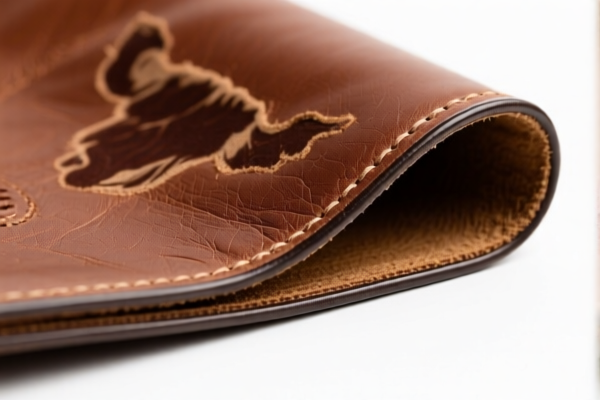
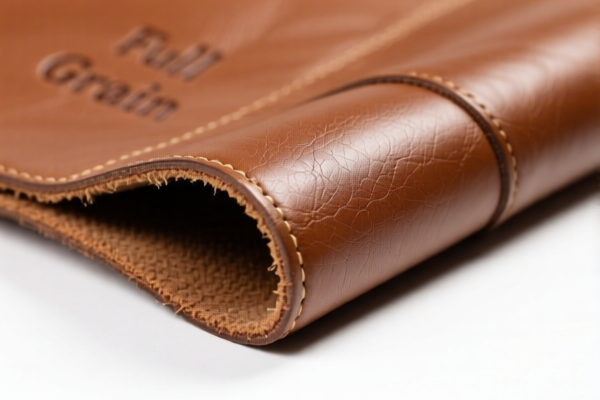
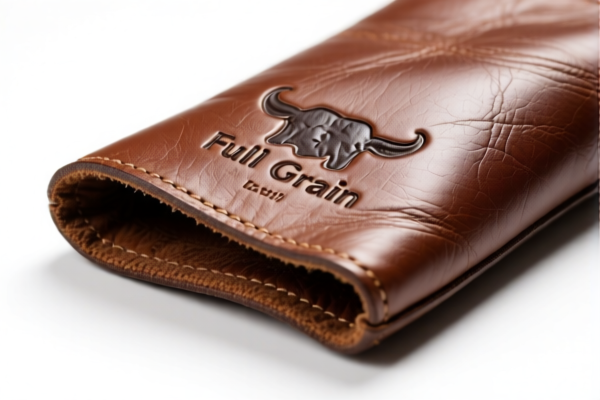
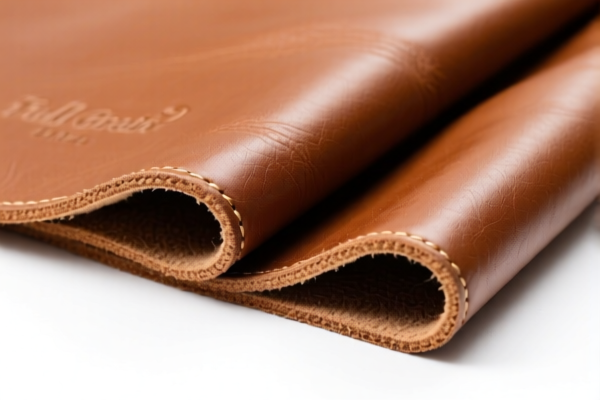
AI分析
🧵 Premium Whole Grain Leather Lining
🌐 HS Code Reference & Customs Clearance Guide | 2026 Latest Tariff Analysis | Professional Strategy for High-End Leather Goods
📌 1. Product Definition & Classification: Is Your "Lining" Really Just a Lining?
Premium Whole Grain Leather Lining refers to high-quality cowhide leather, retained in its natural full-grain state, used specifically as an internal layer, insert, or backing for shoes, bags, and upholstery. In international trade, this product is often misunderstood. It is not merely a "textile lining"; it is a processed animal hide.
The critical distinction lies in its form and finish: * As a Base/Sheet (4115): If the leather is processed specifically to serve as the substrate or backing for composite leather products, it may fall under Chapter 41.15. * As Finished Leather (4107/4113): If it is finished, dyed, or treated for direct use as a lining in garments or footwear, it falls under Chapter 41.07 (Dressed Leather) or 41.13 (Leather Further Prepared). * Patterned vs. Non-Patterned: The surface finish (plain vs. patterned/embossed) significantly impacts the specific HS code and, consequently, the tariff rate.
⚠️ Key Classification Point:
- If the leather is full-grain (保留了天然粒面) and used as a lining insert → It is often classified under 4107.11.10.40 or 4107.19.10.40.
- If it is a composite leather base (used to make composite leather) → It may fall under 4115.10.00.00.
- If it is patterned/embossed (花式) → It may fall under 4113.90.60.00.
- If it is non-patterned/plain further prepared leather → It may fall under 4113.90.30.00.
📦 2. HS Code Classification Details (2026 Latest Tariff Authority)
| HS Code | Product Description | Applicable Scenario | Key Classification Factor |
|---|---|---|---|
4107.11.10.40 |
Full-grain cowhide leather, dressed, used as lining/insert | High-end shoes, bags, direct lining use | ✅ Full-Grain (全粒面) + Lining Purpose |
4107.19.10.40 |
Other dressed cowhide leather, specifically for lining | Specialized lining leather, slightly different processing | ✅ Lining Purpose (衬里皮) Specificity |
4115.10.00.00 |
Leather for composite leather, in sheet form | Used as the base layer for synthetic composite leather | ✅ Composite Base (复合皮革基底) |
4113.90.30.00 |
Other animal leather, further prepared, non-patterned | General further-processed leather lining, plain surface | ✅ Non-Patterned (非花式) |
4113.90.60.00 |
Other animal leather, further prepared, patterned/embossed | Leather with embossed patterns or decorative finishes | ✅ Patterned (花式皮革) |
🔍 Critical Reminder:
- Do not classify this as "Textile Lining" (e.g., Chapter 60 or 63). It is leather.
- The term "Whole Grain" (全粒面) is crucial. It implies the natural grain surface is intact, which distinguishes it from corrected grain or split leather.
- "Lining" (内衬/衬里) is the functional determinant. If the leather is finished specifically to be a lining, codes like4107...are highly relevant. If it's a generic leather sheet used as a lining,4113may apply.
💰 3. 2026 Latest Tariff Rate Breakdown (Including Surtaxes & Policy Add-ons)
✅ Applicable Country: United States (US)
✅ Origin: China (CN)
✅ Effective Date: November 10, 2025 (and subsequent imports)
🎯 1. 4107.11.10.40 & 4107.19.10.40 —— Premium Lining Leather (Full-Grain)
| Item | Details |
|---|---|
| Base Tariff | 0.0% (ad valorem) |
| USITC Surtax | +25.0% (Under USITC Footnote for Section 301) |
| IEEPA Surtax | +10.0% (Under IEEPA for Chinese/Chinese-origin goods) |
| Total Tariff | 35.0% |
| Tax Calculation | CIF Value × 35% |
| De Minimis Exemption? | ❌ No (deny_de_minimis applies) |
| Legal Basis Path | IEEPA:9903.01.25 → IEEPA:9903.01.24 → USITC:4107.x1.10.40 |
📌 Explanation:
- The 0% base rate makes these codes attractive initially.
- However, the 25% (301 Tariff) and 10% (IEEPA) add-ons bring the total to 35%.
- This is a high-cost category for Chinese-origin leather linings. Proper documentation proving "full-grain" and "lining purpose" is essential to avoid being misclassified into higher-rate categories.
🎯 2. 4115.10.00.00 —— Leather for Composite Leather (Sheet Form)
| Item | Details |
|---|---|
| Base Tariff | 0.0% |
| USITC Surtax | +25.0% |
| IEEPA Surtax | +10.0% |
| Total Tariff | 35.0% |
| Tax Calculation | CIF Value × 35% |
| De Minimis Exemption? | ❌ No |
| Legal Basis Path | IEEPA:9901.25 → IEEPA:9903.01.24 → USITC:4115.10.00.00 |
📌 Note:
- If your product is sold to a manufacturer who will use it to make composite leather (leather + synthetic), this code is appropriate.
- The tariff burden is identical to the direct lining codes (35%).
🎯 3. 4113.90.30.00 —— Further Prepared Leather (Non-Patterned)
| Item | Details |
|---|---|
| Base Tariff | 3.3% |
| USITC Surtax | +25.0% |
| IEEPA Surtax | +10.0% |
| Total Tariff | 38.3% |
| Tax Calculation | CIF Value × 38.3% |
| De Minimis Exemption? | ❌ No |
| Legal Basis Path | IEEPA:9903.01.25 → IEEPA:9903.01.24 → USITC:4113.90.30.00 |
📌 Warning:
- This code incurs a higher total tax (38.3%) due to the 3.3% base rate.
- Use this only if the leather does not meet the specific "lining" criteria of 4107 or the "composite base" criteria of 4115.
- Misclassification here is costly.
🎯 4. 4113.90.60.00 —— Further Prepared Leather (Patterned)
| Item | Details |
|---|---|
| Base Tariff | 1.6% |
| USITC Surtax | +25.0% |
| IEEPA Surtax | +10.0% |
| Total Tariff | 36.6% |
| Tax Calculation | CIF Value × 36.6% |
| De Minimis Exemption? | ❌ No |
| Legal Basis Path | IEEPA:9903.01.25 → IEEPA:9903.01.24 → USITC:4113.90.60.00 |
📌 Note:
- If the leather has a pattern, embossing, or decorative finish, it falls under "patterned leather" (花式皮革).
- The total rate is 36.6%, which is lower than the non-patterned4113.90.30.00but still higher than the "special purpose" codes (4107/4115).
🛠️ 4. Customs Clearance Practical Advice (Real-World Pitfall Avoidance)
✅ 1. Documentation Checklist (Mandatory)
| Document | Required | Explanation |
|---|---|---|
| ✅ Product Specification Sheet | ✔️ | Must explicitly state "Full-Grain Cowhide", "Lining Purpose", and "No Pattern" (or "Patterned"). |
| ✅ Leather Type Certificate | ✔️ | Proof of origin and processing method (e.g., chrome-tanned, vegetable-tanned). |
| ✅ Product Photos (Clear Label) | ✔️ | Show the grain surface to prove "Whole Grain" status. |
| ✅ Commercial Invoice | ✔️ | Description must match HS code logic (e.g., "Full-Grain Cowhide Lining Leather"). |
| ✅ Packing List | ✔️ | Ensure no mixed shipments (e.g., don't mix lining leather with textile linings). |
✅ 2. Declaration Tips (Critical Keywords)
🔥 "Declare Purpose, Specify Grain, Avoid Ambiguity!"
| Scenario | Correct Declaration | Incorrect Declaration |
|---|---|---|
| Direct Lining Use | "Premium Whole Grain Cowhide Lining Leather, Full-Grain, No Pattern" | "Leather Sheet" or "Leather Lining" (too vague) |
| Composite Base | "Cowhide Leather for Composite Leather Base, Sheet Form" | "Leather for Shoes" (implies final product) |
| Patterned Lining | "Patterned Cowhide Lining Leather, Embossed Design" | "Plain Leather" (misleading) |
| Generic Prepared Leather | "Further Prepared Animal Leather, Non-Patterned" | "Lining Leather" (if it doesn't meet 4107 specs) |
✅ 3. Special Handling Scenarios
| Situation | Handling Advice |
|---|---|
| OEM Custom Lining | Provide client design specs showing "full-grain" requirement to justify 4107 codes. |
| Mixed Material Shipment | Do not combine with textile linings in one HS code. Declare separately to avoid audit flags. |
| Small Samples | Even for samples, de minimis does not apply for Chinese leather goods due to IEEPA. Pay the 35% tax or seek an exemption if available. |
| Pattern Uncertainty | If the pattern is subtle (e.g., natural grain variations), argue for non-patterned (4113.90.30.00) or special purpose (4107) to avoid the "patterned" classification if possible, but be honest. |
🌍 5. Global Market Comparison (2026)
| Country/Region | Recommended HS Code | Tariff (China Origin) | Certification Requirements | Notes |
|---|---|---|---|---|
| 🇺🇸 USA | 4107.11.10.40 / 4115.10.00.00 |
35% | None specific, but documentation is key | High tariff due to 301 + IEEPA |
| 🇨🇳 China | 4107.11.10.40 |
5% | N/A | Domestic consumption, lower duty |
| 🇪🇺 EU | 4107.11.10.00 |
6.4% | Ecolabel (if applicable) | No US-style surtaxes |
| 🇬🇧 UK | 4107.11.10.00 |
6.4% | N/A | Post-Brexit tariffs apply |
| 🇯🇵 Japan | 4107.11.10.00 |
6.0% | None | Low tariff base, no surtax |
📌 Conclusion:
- The US market is the most expensive for Chinese leather linings due to the 35% total tariff.
- EU, UK, and Japan offer significantly lower tariffs (~6%), making them more attractive for Chinese leather exporters.
- Cost Optimization Strategy: If your target market is the US, consider supply chain diversification (e.g., processing in Vietnam or Mexico) to mitigate the 301 + IEEPA taxes.
📌 6. Common Mistakes & Pitfalls (Lessons Learned)
❌ Mistake 1: Classifying "Whole Grain Leather Lining" as "Textile Lining" (Chapter 60)
👉 Consequence: Severe penalty, retroactive tariff application (up to 25%+), and potential seizure. Leather is Chapter 41.
❌ Mistake 2: Failing to specify "Full-Grain" on the invoice
👉 Consequence: Customs may reclassify to a lower-grade leather code, leading to disputes or higher base rates.
❌ Mistake 3: Ignoring the "Patterned" vs. "Non-Patterned" distinction
👉 Consequence: Misclassification between 4113.90.30.00 (38.3%) and 4113.90.60.00 (36.6%) or 4107 codes (35%). Small differences, but audits can flag inconsistencies.
❌ Mistake 4: Assuming De Minimis applies
👉 Consequence: Never. Chinese leather goods are subject to IEEPA surcharges and are excluded from de minimis relief. Every shipment must be fully declared and taxed.
✅ Correct Practice:
"Full-Grain Cowhide Leather Lining, Chromed Tanned, Non-Patterned, 1.2mm Thickness, For Shoe Interior Use"
🎯 7. Conclusion: Precision in Classification Saves Money
🎯 Remember:
🔹 "Leather is not Textile. Full-Grain is Key. Lining Purpose Matters."
🔹 "US Tariffs are High (35%). Document Everything. Avoid Misclassification."
📌 Pro Tip:
If your leather lining is used in high-end luxury goods, ensure the description emphasizes "Premium" and "Full-Grain" to justify the HS code choice and avoid downgrading.
For large volume imports, consider Advance Rulings from US Customs to secure classification certainty.
📣 Take Action:
📞 Contact a licensed customs broker + Provide detailed product specs + Apply for HS Code Advance Ruling
🚀 Ensure smooth clearance, avoid penalties, and protect your margins!
✨ Professional Classification is the First Step to Profitability!
💼 Every percentage point of tariff impacts your bottom line!
用户评价
关于 HS 编码归类
协调制度(HS)是由世界海关组织(WCO)制定的国际贸易商品分类标准。全球 200 多个国家采用 HS 系统作为海关关税、贸易统计和进出口监管的基础。
每个 HS 编码遵循以下层级结构:
- 章(2 位)——商品大类(例如:第 84 章:机器和机械设备)
- 品目(4 位)——章内的更具体分类
- 子目(6 位)——国际通用细分,所有 WCO 成员国统一使用
- 本国细分(8-10 位)——各国自行扩展的细分编码,如美国 HTSUS 10 位编码
正确的 HS 编码归类对于顺利通关、准确缴纳关税和遵守贸易法规至关重要。错误归类可能导致海关延误、多缴关税或罚款。
从CN进口到US时,适用的关税税率可能包括:
- 最惠国(MFN)税率——适用于 WTO 成员国的标准关税税率
- 普通税率——适用于无贸易协定国家
- 贸易救济关税——附加关税,如 301 条款(反倾销)、232 条款(国家安全)或反补贴税
本页内容仅供参考。如需正式归类,请咨询当地海关或持牌报关代理。