Premium Whole Grain Leather Lining
CN → US| HS Code | Tariff Rate | Origin | Destination | Doc |
|---|---|---|---|---|
| 4113903000 | 38.3% | CN | US | Official Doc |
| 4115100000 | 35.0% | CN | US | Official Doc |
| 4113906000 | 36.6% | CN | US | Official Doc |
| 4107191040 | 35.0% | CN | US | Official Doc |
| 4107111040 | 35.0% | CN | US | Official Doc |
Product Images
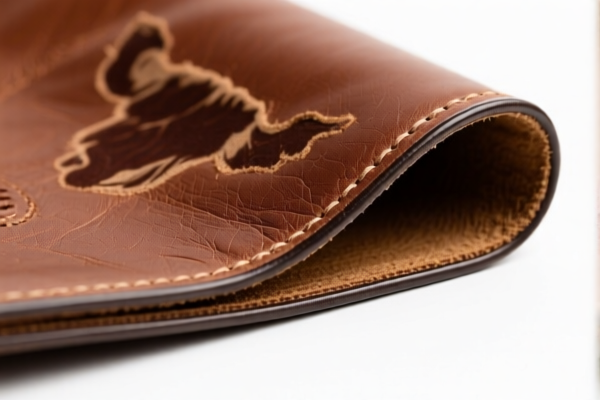
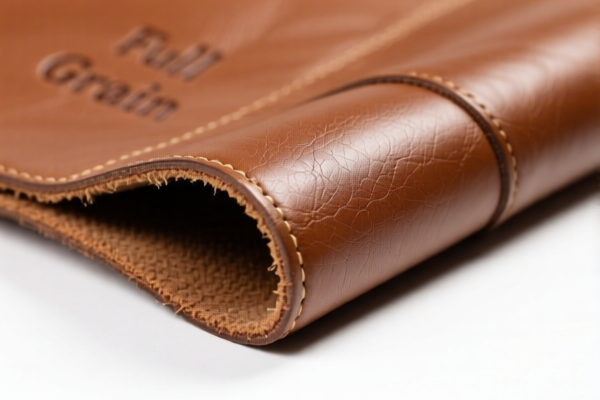
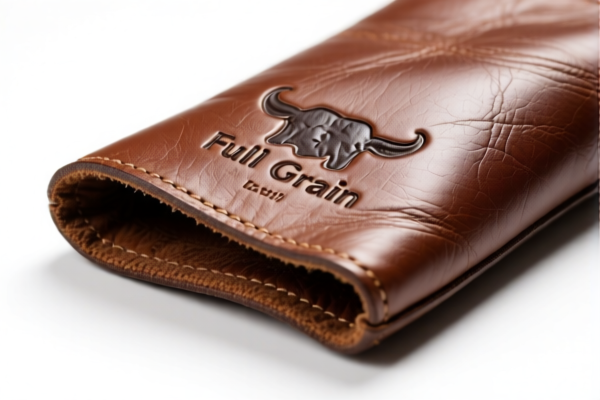
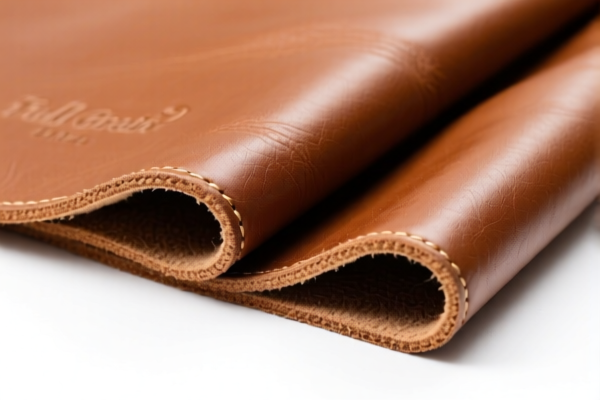
AI Analysis
🧵 Premium Whole Grain Leather Lining
🌐 HS Code Reference & Customs Clearance Guide | 2026 Latest Tariff Analysis | Professional Strategy for High-End Leather Goods
📌 1. Product Definition & Classification: Is Your "Lining" Really Just a Lining?
Premium Whole Grain Leather Lining refers to high-quality cowhide leather, retained in its natural full-grain state, used specifically as an internal layer, insert, or backing for shoes, bags, and upholstery. In international trade, this product is often misunderstood. It is not merely a "textile lining"; it is a processed animal hide.
The critical distinction lies in its form and finish: * As a Base/Sheet (4115): If the leather is processed specifically to serve as the substrate or backing for composite leather products, it may fall under Chapter 41.15. * As Finished Leather (4107/4113): If it is finished, dyed, or treated for direct use as a lining in garments or footwear, it falls under Chapter 41.07 (Dressed Leather) or 41.13 (Leather Further Prepared). * Patterned vs. Non-Patterned: The surface finish (plain vs. patterned/embossed) significantly impacts the specific HS code and, consequently, the tariff rate.
⚠️ Key Classification Point:
- If the leather is full-grain (保留了天然粒面) and used as a lining insert → It is often classified under 4107.11.10.40 or 4107.19.10.40.
- If it is a composite leather base (used to make composite leather) → It may fall under 4115.10.00.00.
- If it is patterned/embossed (花式) → It may fall under 4113.90.60.00.
- If it is non-patterned/plain further prepared leather → It may fall under 4113.90.30.00.
📦 2. HS Code Classification Details (2026 Latest Tariff Authority)
| HS Code | Product Description | Applicable Scenario | Key Classification Factor |
|---|---|---|---|
4107.11.10.40 |
Full-grain cowhide leather, dressed, used as lining/insert | High-end shoes, bags, direct lining use | ✅ Full-Grain (全粒面) + Lining Purpose |
4107.19.10.40 |
Other dressed cowhide leather, specifically for lining | Specialized lining leather, slightly different processing | ✅ Lining Purpose (衬里皮) Specificity |
4115.10.00.00 |
Leather for composite leather, in sheet form | Used as the base layer for synthetic composite leather | ✅ Composite Base (复合皮革基底) |
4113.90.30.00 |
Other animal leather, further prepared, non-patterned | General further-processed leather lining, plain surface | ✅ Non-Patterned (非花式) |
4113.90.60.00 |
Other animal leather, further prepared, patterned/embossed | Leather with embossed patterns or decorative finishes | ✅ Patterned (花式皮革) |
🔍 Critical Reminder:
- Do not classify this as "Textile Lining" (e.g., Chapter 60 or 63). It is leather.
- The term "Whole Grain" (全粒面) is crucial. It implies the natural grain surface is intact, which distinguishes it from corrected grain or split leather.
- "Lining" (内衬/衬里) is the functional determinant. If the leather is finished specifically to be a lining, codes like4107...are highly relevant. If it's a generic leather sheet used as a lining,4113may apply.
💰 3. 2026 Latest Tariff Rate Breakdown (Including Surtaxes & Policy Add-ons)
✅ Applicable Country: United States (US)
✅ Origin: China (CN)
✅ Effective Date: November 10, 2025 (and subsequent imports)
🎯 1. 4107.11.10.40 & 4107.19.10.40 —— Premium Lining Leather (Full-Grain)
| Item | Details |
|---|---|
| Base Tariff | 0.0% (ad valorem) |
| USITC Surtax | +25.0% (Under USITC Footnote for Section 301) |
| IEEPA Surtax | +10.0% (Under IEEPA for Chinese/Chinese-origin goods) |
| Total Tariff | 35.0% |
| Tax Calculation | CIF Value × 35% |
| De Minimis Exemption? | ❌ No (deny_de_minimis applies) |
| Legal Basis Path | IEEPA:9903.01.25 → IEEPA:9903.01.24 → USITC:4107.x1.10.40 |
📌 Explanation:
- The 0% base rate makes these codes attractive initially.
- However, the 25% (301 Tariff) and 10% (IEEPA) add-ons bring the total to 35%.
- This is a high-cost category for Chinese-origin leather linings. Proper documentation proving "full-grain" and "lining purpose" is essential to avoid being misclassified into higher-rate categories.
🎯 2. 4115.10.00.00 —— Leather for Composite Leather (Sheet Form)
| Item | Details |
|---|---|
| Base Tariff | 0.0% |
| USITC Surtax | +25.0% |
| IEEPA Surtax | +10.0% |
| Total Tariff | 35.0% |
| Tax Calculation | CIF Value × 35% |
| De Minimis Exemption? | ❌ No |
| Legal Basis Path | IEEPA:9901.25 → IEEPA:9903.01.24 → USITC:4115.10.00.00 |
📌 Note:
- If your product is sold to a manufacturer who will use it to make composite leather (leather + synthetic), this code is appropriate.
- The tariff burden is identical to the direct lining codes (35%).
🎯 3. 4113.90.30.00 —— Further Prepared Leather (Non-Patterned)
| Item | Details |
|---|---|
| Base Tariff | 3.3% |
| USITC Surtax | +25.0% |
| IEEPA Surtax | +10.0% |
| Total Tariff | 38.3% |
| Tax Calculation | CIF Value × 38.3% |
| De Minimis Exemption? | ❌ No |
| Legal Basis Path | IEEPA:9903.01.25 → IEEPA:9903.01.24 → USITC:4113.90.30.00 |
📌 Warning:
- This code incurs a higher total tax (38.3%) due to the 3.3% base rate.
- Use this only if the leather does not meet the specific "lining" criteria of 4107 or the "composite base" criteria of 4115.
- Misclassification here is costly.
🎯 4. 4113.90.60.00 —— Further Prepared Leather (Patterned)
| Item | Details |
|---|---|
| Base Tariff | 1.6% |
| USITC Surtax | +25.0% |
| IEEPA Surtax | +10.0% |
| Total Tariff | 36.6% |
| Tax Calculation | CIF Value × 36.6% |
| De Minimis Exemption? | ❌ No |
| Legal Basis Path | IEEPA:9903.01.25 → IEEPA:9903.01.24 → USITC:4113.90.60.00 |
📌 Note:
- If the leather has a pattern, embossing, or decorative finish, it falls under "patterned leather" (花式皮革).
- The total rate is 36.6%, which is lower than the non-patterned4113.90.30.00but still higher than the "special purpose" codes (4107/4115).
🛠️ 4. Customs Clearance Practical Advice (Real-World Pitfall Avoidance)
✅ 1. Documentation Checklist (Mandatory)
| Document | Required | Explanation |
|---|---|---|
| ✅ Product Specification Sheet | ✔️ | Must explicitly state "Full-Grain Cowhide", "Lining Purpose", and "No Pattern" (or "Patterned"). |
| ✅ Leather Type Certificate | ✔️ | Proof of origin and processing method (e.g., chrome-tanned, vegetable-tanned). |
| ✅ Product Photos (Clear Label) | ✔️ | Show the grain surface to prove "Whole Grain" status. |
| ✅ Commercial Invoice | ✔️ | Description must match HS code logic (e.g., "Full-Grain Cowhide Lining Leather"). |
| ✅ Packing List | ✔️ | Ensure no mixed shipments (e.g., don't mix lining leather with textile linings). |
✅ 2. Declaration Tips (Critical Keywords)
🔥 "Declare Purpose, Specify Grain, Avoid Ambiguity!"
| Scenario | Correct Declaration | Incorrect Declaration |
|---|---|---|
| Direct Lining Use | "Premium Whole Grain Cowhide Lining Leather, Full-Grain, No Pattern" | "Leather Sheet" or "Leather Lining" (too vague) |
| Composite Base | "Cowhide Leather for Composite Leather Base, Sheet Form" | "Leather for Shoes" (implies final product) |
| Patterned Lining | "Patterned Cowhide Lining Leather, Embossed Design" | "Plain Leather" (misleading) |
| Generic Prepared Leather | "Further Prepared Animal Leather, Non-Patterned" | "Lining Leather" (if it doesn't meet 4107 specs) |
✅ 3. Special Handling Scenarios
| Situation | Handling Advice |
|---|---|
| OEM Custom Lining | Provide client design specs showing "full-grain" requirement to justify 4107 codes. |
| Mixed Material Shipment | Do not combine with textile linings in one HS code. Declare separately to avoid audit flags. |
| Small Samples | Even for samples, de minimis does not apply for Chinese leather goods due to IEEPA. Pay the 35% tax or seek an exemption if available. |
| Pattern Uncertainty | If the pattern is subtle (e.g., natural grain variations), argue for non-patterned (4113.90.30.00) or special purpose (4107) to avoid the "patterned" classification if possible, but be honest. |
🌍 5. Global Market Comparison (2026)
| Country/Region | Recommended HS Code | Tariff (China Origin) | Certification Requirements | Notes |
|---|---|---|---|---|
| 🇺🇸 USA | 4107.11.10.40 / 4115.10.00.00 |
35% | None specific, but documentation is key | High tariff due to 301 + IEEPA |
| 🇨🇳 China | 4107.11.10.40 |
5% | N/A | Domestic consumption, lower duty |
| 🇪🇺 EU | 4107.11.10.00 |
6.4% | Ecolabel (if applicable) | No US-style surtaxes |
| 🇬🇧 UK | 4107.11.10.00 |
6.4% | N/A | Post-Brexit tariffs apply |
| 🇯🇵 Japan | 4107.11.10.00 |
6.0% | None | Low tariff base, no surtax |
📌 Conclusion:
- The US market is the most expensive for Chinese leather linings due to the 35% total tariff.
- EU, UK, and Japan offer significantly lower tariffs (~6%), making them more attractive for Chinese leather exporters.
- Cost Optimization Strategy: If your target market is the US, consider supply chain diversification (e.g., processing in Vietnam or Mexico) to mitigate the 301 + IEEPA taxes.
📌 6. Common Mistakes & Pitfalls (Lessons Learned)
❌ Mistake 1: Classifying "Whole Grain Leather Lining" as "Textile Lining" (Chapter 60)
👉 Consequence: Severe penalty, retroactive tariff application (up to 25%+), and potential seizure. Leather is Chapter 41.
❌ Mistake 2: Failing to specify "Full-Grain" on the invoice
👉 Consequence: Customs may reclassify to a lower-grade leather code, leading to disputes or higher base rates.
❌ Mistake 3: Ignoring the "Patterned" vs. "Non-Patterned" distinction
👉 Consequence: Misclassification between 4113.90.30.00 (38.3%) and 4113.90.60.00 (36.6%) or 4107 codes (35%). Small differences, but audits can flag inconsistencies.
❌ Mistake 4: Assuming De Minimis applies
👉 Consequence: Never. Chinese leather goods are subject to IEEPA surcharges and are excluded from de minimis relief. Every shipment must be fully declared and taxed.
✅ Correct Practice:
"Full-Grain Cowhide Leather Lining, Chromed Tanned, Non-Patterned, 1.2mm Thickness, For Shoe Interior Use"
🎯 7. Conclusion: Precision in Classification Saves Money
🎯 Remember:
🔹 "Leather is not Textile. Full-Grain is Key. Lining Purpose Matters."
🔹 "US Tariffs are High (35%). Document Everything. Avoid Misclassification."
📌 Pro Tip:
If your leather lining is used in high-end luxury goods, ensure the description emphasizes "Premium" and "Full-Grain" to justify the HS code choice and avoid downgrading.
For large volume imports, consider Advance Rulings from US Customs to secure classification certainty.
📣 Take Action:
📞 Contact a licensed customs broker + Provide detailed product specs + Apply for HS Code Advance Ruling
🚀 Ensure smooth clearance, avoid penalties, and protect your margins!
✨ Professional Classification is the First Step to Profitability!
💼 Every percentage point of tariff impacts your bottom line!
Customer Reviews
About HS Code Classification
The Harmonized System (HS) is an internationally standardized nomenclature developed by the World Customs Organization (WCO) to classify traded products. Over 200 countries use the HS system as the basis for customs tariffs, trade statistics, and import/export regulations.
Each HS code follows a hierarchical structure:
- Chapter (2 digits) — Broad category of goods (e.g., Chapter 84: Machinery and Mechanical Appliances)
- Heading (4 digits) — More specific grouping within the chapter
- Subheading (6 digits) — Internationally standardized breakdown, used by all WCO member countries
- National subdivisions (8-10 digits) — Country-specific extensions for further classification, such as US HTSUS 10-digit codes
Correct HS code classification is essential for smooth customs clearance, accurate duty payment, and compliance with trade regulations. Misclassification can lead to customs delays, overpayment of duties, or penalties.
When importing from CN to US, the applicable tariff rates may include:
- Most-Favored-Nation (MFN) rate — The standard duty rate applied to WTO members
- General rate — Applied to countries without trade agreements
- Trade remedy duties — Additional tariffs such as Section 301 (anti-dumping), Section 232 (national security), or countervailing duties
The information provided on this page is for reference purposes only. For official classification, please consult with your local customs authority or a licensed customs broker.