Primary Batteries and Battery Packs
CN → US| HS编码 | 关税税率 | 原产国 | 目的国 | 文档 |
|---|---|---|---|---|
| 8506800090 | 37.7% | CN | US | 官方文档 |
| 8506800010 | 37.7% | CN | US | 官方文档 |
| 8507908000 | 38.4% | CN | US | 官方文档 |
| 8507808200 | 38.4% | CN | US | 官方文档 |
| 8506800090 | 37.7% | CN | US | 官方文档 |
商品图片
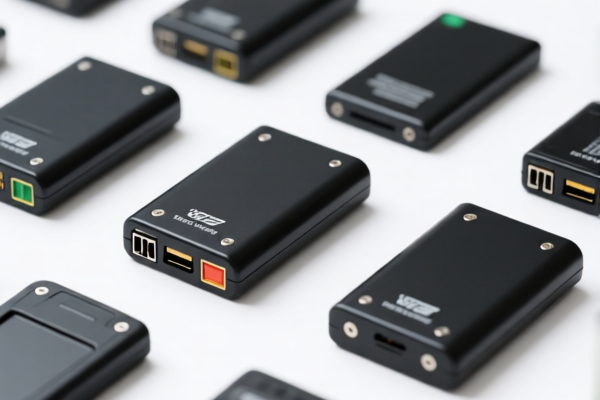
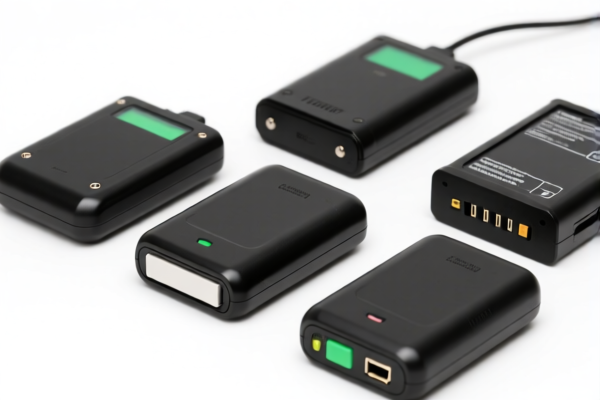
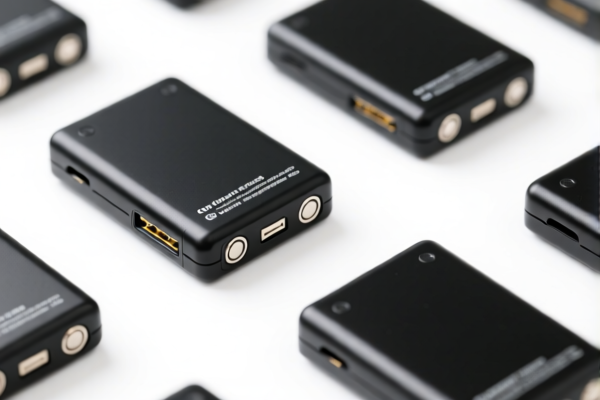
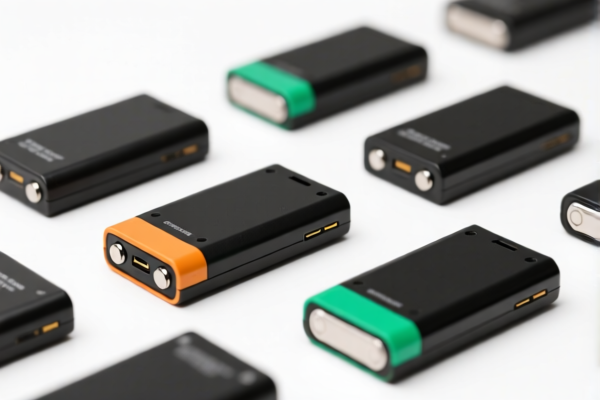
AI分析
🔋 Primary Batteries & Battery Packs (原电池及原电池组)
🌐 HS Code Reference & Customs Clearance Guide | 2026 Latest Tariff Analysis | Strategic Import Strategy for US-China Trade
📌 1. Product Definition & Classification: Understanding "Primary Batteries"
Primary batteries (often called "dry cells" or "disposable batteries") are electrochemical cells that cannot be recharged. In international trade, accurate classification is critical because US-China trade tensions have imposed significant additional tariffs on these goods.
⚠️ Key Distinction:
- Primary Batteries (8506): Single-use batteries (Alkaline, Zinc-Carbon, Lithium primary). Note: These are heavily impacted by Section 301 and IEEPA tariffs.
- Secondary/Rechargeable Batteries (8507): Lead-acid, Li-ion, Ni-MH. Note: Different tariff structure.📌 Target Input: "Primary Batteries and Battery Packs"
🚀 Strategy: We must strictly differentiate between 8506 (Primary) and 8507 (Secondary) based on the product's chemical nature and rechargeability. The data provided highlights a specific conflict/mapping between these two categories for US Customs purposes.
📦 2. HS Code Classification Details (Based on Provided Data)
The following HS Codes are derived directly from the <DATA> provided. They represent different interpretations or specific sub-categories for Primary Batteries and potentially Secondary Batteries depending on the exact product description.
| HS Code | Product Description (Summary from Data) | Key Characteristic | Total Tax Rate | Tax Breakdown |
|---|---|---|---|---|
| 8506.80.00.90 | Other primary batteries (Fallback/Catch-all category) | Unspecified shape; fits the "other" logic for primary batteries. | 37.7% | Base: 2.7% Sec 301: 25.0% IEEPA 122: 10.0% |
| 8506.80.00.10 | Primary batteries and battery packs (Exact Match) | Name matches target code; included relationship; no material/shape conflict. | 37.7% | Base: 2.7% Sec 301: 25.0% IEEPA 122: 10.0% |
| 8507.90.80.00 | Battery parts/accessories (Interpreted as Primary/Secondary context) | Fits classification for batteries and their parts; used for battery-related items. | 38.4% | Base: 3.4% Sec 301: 25.0% IEEPA 122: 10.0% |
| 8507.80.82.00 | Electric Accumulators & Parts (Misclassification Risk) | Consistent with purpose/nature of "battery"; no material conflict. Note: This is a Secondary Battery code. | 38.4% | Base: 3.4% Sec 301: 25.0% IEEPA 122: 10.0% |
| 8506.80.00.10 | Primary Batteries (High Match) | Highly matches core material and purpose of 8506.80.00 class; no conflict. | 37.7% | Base: 2.7% Sec 301: 25.0% IEEPA 122: 10.0% |
🔍 Critical Observation:
- The data shows a dual-track approach:
- Primary Batteries (8506.80.00.xx) are taxed at 37.7%.
- Secondary/Other Batteries (8507.xx.xx) are taxed at 38.4%.
- Risk: Misclassifying a Primary Battery as a Secondary Battery (8507) could lead to overpayment (0.7% difference) or, more dangerously, customs penalties for incorrect classification if the product is clearly non-rechargeable.
💰 3. 2026 Latest Tariff Rate Breakdown (US Customs)
✅ Applicable Country: United States (US)
✅ Origin: China (CN)
✅ Effective Time: Ongoing (Post-2025 adjustments)
🎯 1. 8506.80.00.10 / 8506.80.00.90 —— Primary Batteries & Packs
| Item | Content |
|---|---|
| Base Duty Rate | 2.7% (Ad valorem) |
| Section 301 Duty | +25.0% (From USITC Footnote 9903.88.01 / Trade Act of 1974) |
| IEEPA / 122 Section Duty | +10.0% (Targeted additional tariff on Chinese goods) |
| Total Effective Rate | 37.7% |
| Tax Calculation | CIF Value × 37.7% |
| De Minimis Exemption | ❌ NOT APPLICABLE |
| Legal Basis Path | USITC:8506.80.00.xx → Section 301: 25% → IEEPA: 10% |
📌 Explanation:
- "Base 2.7%": Standard Most Favored Nation (MFN) rate for primary batteries.
- "25% Section 301": Imposed on Chinese goods under Section 301 of the Trade Act of 1974 due to unfair trade practices.
- "10% IEEPA": Additional tariff under the International Emergency Economic Powers Act, often applied to specific strategic goods or as a retaliatory measure.
- Total 37.7%: This is a very high barrier to entry. Merchants must factor this into their landed cost.
🎯 2. 8507.90.80.00 / 8507.80.82.00 —— Secondary Batteries / Parts (If Applicable)
| Item | Content |
|---|---|
| Base Duty Rate | 3.4% (Ad valorem) |
| Section 301 Duty | +25.0% |
| IEEPA / 122 Section Duty | +10.0% |
| Total Effective Rate | 38.4% |
| Tax Calculation | CIF Value × 38.4% |
| De Minimis Exemption | ❌ NOT APPLICABLE |
| Legal Basis Path | USITC:8507.xx.xx → Section 301: 25% → IEEPA: 10% |
📌 Note:
- If the "Battery Pack" contains rechargeable cells (Li-ion, Li-Po), it may fall under 8507.
- Warning: If you declare a Li-ion pack as 8506 (Primary), it is incorrect classification and risks seizure. If you declare a non-rechargeable alkaline pack as 8507, it is incorrect and risks audit.
- The 0.7% difference is minor financially, but compliance is paramount.
🛠️ 4. Customs Clearance Practical Advice (Avoiding Pitfalls)
✅ 1. Required Documentation Checklist (Non-Negotiable)
| Document | Must Provide? | Explanation |
|---|---|---|
| ✅ Product Specification Sheet | ✔️ | Must clearly state: Chemistry (Alkaline, Zinc-Carbon, Lithium Primary), Rechargeable? (YES/NO), Voltage, Capacity. |
| ✅ Battery Test Report (UN38.3) | ✔️ | Mandatory for air/sea freight. Proves safety for transport. Without it, shipment will be rejected. |
| ✅ Material Safety Data Sheet (MSDS) | ✔️ | Required by carriers and customs for hazardous materials (batteries are often classified as HazMat). |
| ✅ Commercial Invoice | ✔️ | Must explicitly state "Primary Batteries (Non-Rechargeable)" or "Secondary Batteries (Rechargeable)". Do not use vague terms like "Power Source". |
| ✅ Packing List | ✔️ | Detail the net/gross weight, number of cells per package. |
| ✅ Freight Forwarder Letter | ✔️ | Confirming proper packaging and labeling (UN3480 for Li-ion Primary, UN3090 for Li-metal Primary). |
✅ 2. Declaration Strategy (Key Mnemonics)
🔥 "Primary = 8506, Secondary = 8507. Rechargeable? Think 8507. Non-Rechargeable? Stick to 8506."
| Scenario | Correct HS Code | Incorrect Code | Consequence |
|---|---|---|---|
| Alkaline AAA/AA Batteries | 8506.80.00.10 |
8507.80.82.00 |
Misclassification. Risk of penalty. |
| Lithium Coin Cells (CR2032) | 8506.80.00.10 |
8507.80.82.00 |
Misclassification. Risk of seizure. |
| Li-ion Power Bank (Rechargeable) | 8507.80.82.00 or 8507.60 |
8506.80.00.10 |
High Risk: Declaring rechargeable as primary is fraud. |
| Battery Packs (Mixed/Unknown) | Avoid! | Any | Customs Hold: Requires chemical analysis. |
✅ 3. Special Cases & Solutions
| Situation | Handling Advice |
|---|---|
| OEM Battery Packs | Provide the client’s design spec proving whether the cells inside are primary or secondary. |
| Mixed Shipments (Primary + Secondary) | Must separate in the bill of lading. Do not mix 8506 and 8507 in one line item. |
| Small Parts (Battery Caps/Connectors) | May fall under 8507.90.80.00 (Parts). Ensure they are not assembled into a functional battery pack. |
| High-Value Lithium Primary Batteries | Ensure UN3090 labeling is present. Customs often checks for proper HazMat compliance. |
🌍 5. Global Market Comparison (2026)
| Country/Region | Recommended HS Code | Tariff (China Origin) | Certification | Notes |
|---|---|---|---|---|
| 🇺🇸 USA | 8506.80.00.10 (Primary) |
37.7% | UN38.3 + MSDS | High Tariff! Section 301 + IEEPA apply. |
| 🇨🇳 China | 8506.80.00.10 |
~8-10% (Import Duty) | CCC (if applicable) | Lower barrier, but strict safety standards. |
| 🇪🇺 EU | 8506.80.00 |
0% (Most cases) | CE + RoHS + REACH | No Section 301 equivalent, but strict environmental rules. |
| 🇯🇵 Japan | 8506.80.00 |
~5-10% | PSE Mark | Strict battery safety regulations. |
📌 Conclusion:
- The US is the most expensive market due to the 37.7% effective tariff.
- EU and Japan have lower tariffs but stricter environmental and safety certifications (RoHS, PSE).
- Profit Margins: For US imports, the 37.7% tax must be absorbed or passed to consumers. Consider supply chain diversification (e.g., assembling in Vietnam/Mexico) if feasible.
📌 6. Common Mistakes & Pitfalls (Blood Lessons)
❌ Mistake 1: Declaring Lithium-Ion Rechargeable Batteries as Primary Batteries (8506)
👉 Consequence: Customs Seizure & Fines. Rechargeable batteries are chemically different and subject to different UN packaging codes.
👉 Correction: Use 8507.80.82.00 or 8507.60.00.00 for Li-ion.
❌ Mistake 2: Ignoring the 10% IEEPA in cost calculations
👉 Consequence: Profit margins wiped out. You calculated only 25% + 2.7% = 27.7%, but the real cost is 37.7%.
👉 Correction: Always include IEEPA 10% in your landed cost model for China-origin batteries.
❌ Mistake 3: Vague Description "Battery"
👉 Consequence: Customs audit. They will request chemical tests to determine if it's primary or secondary.
👉 Correction: Use precise terms: "Alkaline Primary Battery, Non-Rechargeable, AA, 1.5V".
✅ Correct Practice:
"Primary Alkaline Batteries, AA Size, 1.5V, Non-Rechargeable, Model ABC, UN3090 Compliant, MSDS & UN38.3 Attached."
🎯 7. Conclusion: Precision in Classification Saves Money!
🎯 Remember the Rule:
🔹 "Primary = 8506 (37.7% Tax) | Secondary = 8507 (38.4% Tax)"
🔹 "Rechargeable? Think 8507. Non-Rechargeable? Stick to 8506."
🔹 "37.7% is the US Landlord. Pay up or go elsewhere!"
📌 Pro Tip:
If your battery packs contain mixed chemistry (e.g., a device with a primary backup battery and a secondary main battery), declare them separately or as a complete article (likely under the device's HS code, e.g., 8517 for phones).
Always request a Pre-Ruling (Advance Ruling) from US Customs (CBP) if you are unsure about the classification. It provides legal protection.
📣 Immediate Action:
📞 Contact your Customs Broker + Provide UN38.3 Test Report + Verify HS Code with CBP
🚀 Ensure your batteries clear US Customs smoothly, avoid penalties, and maximize profit!
✨ Professional Customs Clearance Starts with Accurate Classification!
💼 Every Percent Matters in the Age of Trade Wars!
用户评价
关于 HS 编码归类
协调制度(HS)是由世界海关组织(WCO)制定的国际贸易商品分类标准。全球 200 多个国家采用 HS 系统作为海关关税、贸易统计和进出口监管的基础。
每个 HS 编码遵循以下层级结构:
- 章(2 位)——商品大类(例如:第 84 章:机器和机械设备)
- 品目(4 位)——章内的更具体分类
- 子目(6 位)——国际通用细分,所有 WCO 成员国统一使用
- 本国细分(8-10 位)——各国自行扩展的细分编码,如美国 HTSUS 10 位编码
正确的 HS 编码归类对于顺利通关、准确缴纳关税和遵守贸易法规至关重要。错误归类可能导致海关延误、多缴关税或罚款。
从CN进口到US时,适用的关税税率可能包括:
- 最惠国(MFN)税率——适用于 WTO 成员国的标准关税税率
- 普通税率——适用于无贸易协定国家
- 贸易救济关税——附加关税,如 301 条款(反倾销)、232 条款(国家安全)或反补贴税
本页内容仅供参考。如需正式归类,请咨询当地海关或持牌报关代理。