Primary Batteries and Battery Packs
CN → US| HS Code | Tariff Rate | Origin | Destination | Doc |
|---|---|---|---|---|
| 8506800090 | 37.7% | CN | US | Official Doc |
| 8506800010 | 37.7% | CN | US | Official Doc |
| 8507908000 | 38.4% | CN | US | Official Doc |
| 8507808200 | 38.4% | CN | US | Official Doc |
| 8506800090 | 37.7% | CN | US | Official Doc |
Product Images
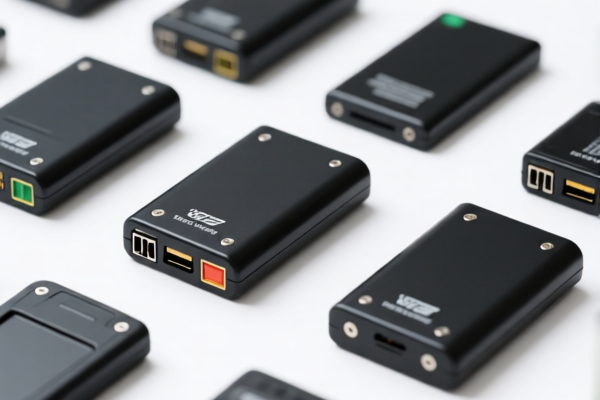
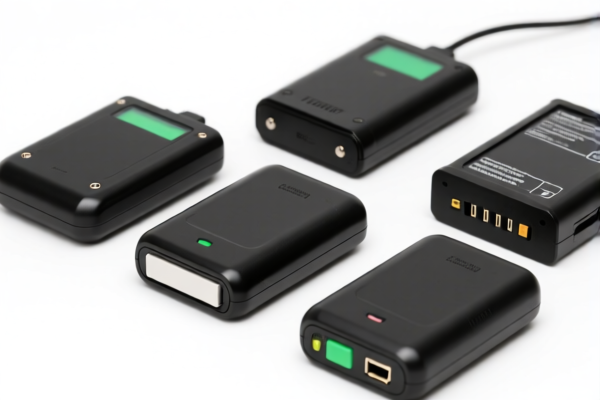
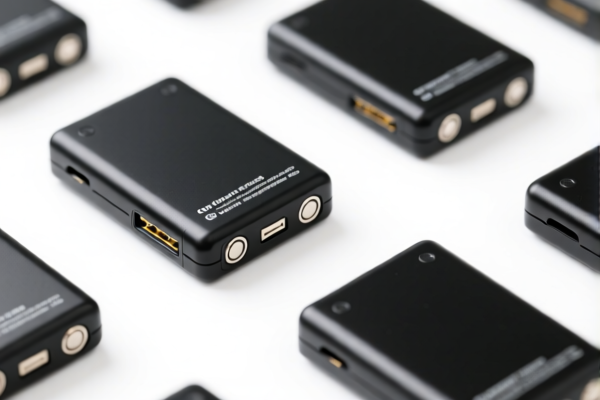
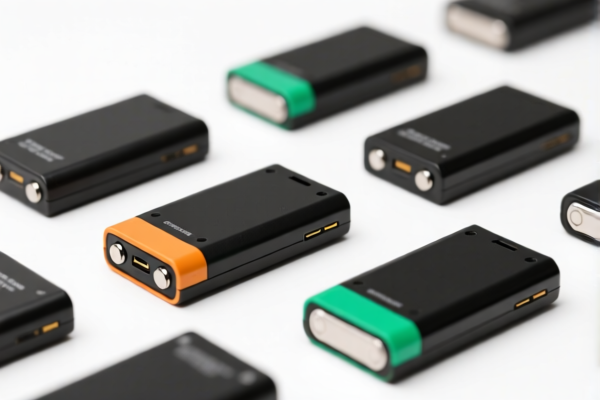
AI Analysis
🔋 Primary Batteries & Battery Packs (原电池及原电池组)
🌐 HS Code Reference & Customs Clearance Guide | 2026 Latest Tariff Analysis | Strategic Import Strategy for US-China Trade
📌 1. Product Definition & Classification: Understanding "Primary Batteries"
Primary batteries (often called "dry cells" or "disposable batteries") are electrochemical cells that cannot be recharged. In international trade, accurate classification is critical because US-China trade tensions have imposed significant additional tariffs on these goods.
⚠️ Key Distinction:
- Primary Batteries (8506): Single-use batteries (Alkaline, Zinc-Carbon, Lithium primary). Note: These are heavily impacted by Section 301 and IEEPA tariffs.
- Secondary/Rechargeable Batteries (8507): Lead-acid, Li-ion, Ni-MH. Note: Different tariff structure.📌 Target Input: "Primary Batteries and Battery Packs"
🚀 Strategy: We must strictly differentiate between 8506 (Primary) and 8507 (Secondary) based on the product's chemical nature and rechargeability. The data provided highlights a specific conflict/mapping between these two categories for US Customs purposes.
📦 2. HS Code Classification Details (Based on Provided Data)
The following HS Codes are derived directly from the <DATA> provided. They represent different interpretations or specific sub-categories for Primary Batteries and potentially Secondary Batteries depending on the exact product description.
| HS Code | Product Description (Summary from Data) | Key Characteristic | Total Tax Rate | Tax Breakdown |
|---|---|---|---|---|
| 8506.80.00.90 | Other primary batteries (Fallback/Catch-all category) | Unspecified shape; fits the "other" logic for primary batteries. | 37.7% | Base: 2.7% Sec 301: 25.0% IEEPA 122: 10.0% |
| 8506.80.00.10 | Primary batteries and battery packs (Exact Match) | Name matches target code; included relationship; no material/shape conflict. | 37.7% | Base: 2.7% Sec 301: 25.0% IEEPA 122: 10.0% |
| 8507.90.80.00 | Battery parts/accessories (Interpreted as Primary/Secondary context) | Fits classification for batteries and their parts; used for battery-related items. | 38.4% | Base: 3.4% Sec 301: 25.0% IEEPA 122: 10.0% |
| 8507.80.82.00 | Electric Accumulators & Parts (Misclassification Risk) | Consistent with purpose/nature of "battery"; no material conflict. Note: This is a Secondary Battery code. | 38.4% | Base: 3.4% Sec 301: 25.0% IEEPA 122: 10.0% |
| 8506.80.00.10 | Primary Batteries (High Match) | Highly matches core material and purpose of 8506.80.00 class; no conflict. | 37.7% | Base: 2.7% Sec 301: 25.0% IEEPA 122: 10.0% |
🔍 Critical Observation:
- The data shows a dual-track approach:
- Primary Batteries (8506.80.00.xx) are taxed at 37.7%.
- Secondary/Other Batteries (8507.xx.xx) are taxed at 38.4%.
- Risk: Misclassifying a Primary Battery as a Secondary Battery (8507) could lead to overpayment (0.7% difference) or, more dangerously, customs penalties for incorrect classification if the product is clearly non-rechargeable.
💰 3. 2026 Latest Tariff Rate Breakdown (US Customs)
✅ Applicable Country: United States (US)
✅ Origin: China (CN)
✅ Effective Time: Ongoing (Post-2025 adjustments)
🎯 1. 8506.80.00.10 / 8506.80.00.90 —— Primary Batteries & Packs
| Item | Content |
|---|---|
| Base Duty Rate | 2.7% (Ad valorem) |
| Section 301 Duty | +25.0% (From USITC Footnote 9903.88.01 / Trade Act of 1974) |
| IEEPA / 122 Section Duty | +10.0% (Targeted additional tariff on Chinese goods) |
| Total Effective Rate | 37.7% |
| Tax Calculation | CIF Value × 37.7% |
| De Minimis Exemption | ❌ NOT APPLICABLE |
| Legal Basis Path | USITC:8506.80.00.xx → Section 301: 25% → IEEPA: 10% |
📌 Explanation:
- "Base 2.7%": Standard Most Favored Nation (MFN) rate for primary batteries.
- "25% Section 301": Imposed on Chinese goods under Section 301 of the Trade Act of 1974 due to unfair trade practices.
- "10% IEEPA": Additional tariff under the International Emergency Economic Powers Act, often applied to specific strategic goods or as a retaliatory measure.
- Total 37.7%: This is a very high barrier to entry. Merchants must factor this into their landed cost.
🎯 2. 8507.90.80.00 / 8507.80.82.00 —— Secondary Batteries / Parts (If Applicable)
| Item | Content |
|---|---|
| Base Duty Rate | 3.4% (Ad valorem) |
| Section 301 Duty | +25.0% |
| IEEPA / 122 Section Duty | +10.0% |
| Total Effective Rate | 38.4% |
| Tax Calculation | CIF Value × 38.4% |
| De Minimis Exemption | ❌ NOT APPLICABLE |
| Legal Basis Path | USITC:8507.xx.xx → Section 301: 25% → IEEPA: 10% |
📌 Note:
- If the "Battery Pack" contains rechargeable cells (Li-ion, Li-Po), it may fall under 8507.
- Warning: If you declare a Li-ion pack as 8506 (Primary), it is incorrect classification and risks seizure. If you declare a non-rechargeable alkaline pack as 8507, it is incorrect and risks audit.
- The 0.7% difference is minor financially, but compliance is paramount.
🛠️ 4. Customs Clearance Practical Advice (Avoiding Pitfalls)
✅ 1. Required Documentation Checklist (Non-Negotiable)
| Document | Must Provide? | Explanation |
|---|---|---|
| ✅ Product Specification Sheet | ✔️ | Must clearly state: Chemistry (Alkaline, Zinc-Carbon, Lithium Primary), Rechargeable? (YES/NO), Voltage, Capacity. |
| ✅ Battery Test Report (UN38.3) | ✔️ | Mandatory for air/sea freight. Proves safety for transport. Without it, shipment will be rejected. |
| ✅ Material Safety Data Sheet (MSDS) | ✔️ | Required by carriers and customs for hazardous materials (batteries are often classified as HazMat). |
| ✅ Commercial Invoice | ✔️ | Must explicitly state "Primary Batteries (Non-Rechargeable)" or "Secondary Batteries (Rechargeable)". Do not use vague terms like "Power Source". |
| ✅ Packing List | ✔️ | Detail the net/gross weight, number of cells per package. |
| ✅ Freight Forwarder Letter | ✔️ | Confirming proper packaging and labeling (UN3480 for Li-ion Primary, UN3090 for Li-metal Primary). |
✅ 2. Declaration Strategy (Key Mnemonics)
🔥 "Primary = 8506, Secondary = 8507. Rechargeable? Think 8507. Non-Rechargeable? Stick to 8506."
| Scenario | Correct HS Code | Incorrect Code | Consequence |
|---|---|---|---|
| Alkaline AAA/AA Batteries | 8506.80.00.10 |
8507.80.82.00 |
Misclassification. Risk of penalty. |
| Lithium Coin Cells (CR2032) | 8506.80.00.10 |
8507.80.82.00 |
Misclassification. Risk of seizure. |
| Li-ion Power Bank (Rechargeable) | 8507.80.82.00 or 8507.60 |
8506.80.00.10 |
High Risk: Declaring rechargeable as primary is fraud. |
| Battery Packs (Mixed/Unknown) | Avoid! | Any | Customs Hold: Requires chemical analysis. |
✅ 3. Special Cases & Solutions
| Situation | Handling Advice |
|---|---|
| OEM Battery Packs | Provide the client’s design spec proving whether the cells inside are primary or secondary. |
| Mixed Shipments (Primary + Secondary) | Must separate in the bill of lading. Do not mix 8506 and 8507 in one line item. |
| Small Parts (Battery Caps/Connectors) | May fall under 8507.90.80.00 (Parts). Ensure they are not assembled into a functional battery pack. |
| High-Value Lithium Primary Batteries | Ensure UN3090 labeling is present. Customs often checks for proper HazMat compliance. |
🌍 5. Global Market Comparison (2026)
| Country/Region | Recommended HS Code | Tariff (China Origin) | Certification | Notes |
|---|---|---|---|---|
| 🇺🇸 USA | 8506.80.00.10 (Primary) |
37.7% | UN38.3 + MSDS | High Tariff! Section 301 + IEEPA apply. |
| 🇨🇳 China | 8506.80.00.10 |
~8-10% (Import Duty) | CCC (if applicable) | Lower barrier, but strict safety standards. |
| 🇪🇺 EU | 8506.80.00 |
0% (Most cases) | CE + RoHS + REACH | No Section 301 equivalent, but strict environmental rules. |
| 🇯🇵 Japan | 8506.80.00 |
~5-10% | PSE Mark | Strict battery safety regulations. |
📌 Conclusion:
- The US is the most expensive market due to the 37.7% effective tariff.
- EU and Japan have lower tariffs but stricter environmental and safety certifications (RoHS, PSE).
- Profit Margins: For US imports, the 37.7% tax must be absorbed or passed to consumers. Consider supply chain diversification (e.g., assembling in Vietnam/Mexico) if feasible.
📌 6. Common Mistakes & Pitfalls (Blood Lessons)
❌ Mistake 1: Declaring Lithium-Ion Rechargeable Batteries as Primary Batteries (8506)
👉 Consequence: Customs Seizure & Fines. Rechargeable batteries are chemically different and subject to different UN packaging codes.
👉 Correction: Use 8507.80.82.00 or 8507.60.00.00 for Li-ion.
❌ Mistake 2: Ignoring the 10% IEEPA in cost calculations
👉 Consequence: Profit margins wiped out. You calculated only 25% + 2.7% = 27.7%, but the real cost is 37.7%.
👉 Correction: Always include IEEPA 10% in your landed cost model for China-origin batteries.
❌ Mistake 3: Vague Description "Battery"
👉 Consequence: Customs audit. They will request chemical tests to determine if it's primary or secondary.
👉 Correction: Use precise terms: "Alkaline Primary Battery, Non-Rechargeable, AA, 1.5V".
✅ Correct Practice:
"Primary Alkaline Batteries, AA Size, 1.5V, Non-Rechargeable, Model ABC, UN3090 Compliant, MSDS & UN38.3 Attached."
🎯 7. Conclusion: Precision in Classification Saves Money!
🎯 Remember the Rule:
🔹 "Primary = 8506 (37.7% Tax) | Secondary = 8507 (38.4% Tax)"
🔹 "Rechargeable? Think 8507. Non-Rechargeable? Stick to 8506."
🔹 "37.7% is the US Landlord. Pay up or go elsewhere!"
📌 Pro Tip:
If your battery packs contain mixed chemistry (e.g., a device with a primary backup battery and a secondary main battery), declare them separately or as a complete article (likely under the device's HS code, e.g., 8517 for phones).
Always request a Pre-Ruling (Advance Ruling) from US Customs (CBP) if you are unsure about the classification. It provides legal protection.
📣 Immediate Action:
📞 Contact your Customs Broker + Provide UN38.3 Test Report + Verify HS Code with CBP
🚀 Ensure your batteries clear US Customs smoothly, avoid penalties, and maximize profit!
✨ Professional Customs Clearance Starts with Accurate Classification!
💼 Every Percent Matters in the Age of Trade Wars!
Customer Reviews
About HS Code Classification
The Harmonized System (HS) is an internationally standardized nomenclature developed by the World Customs Organization (WCO) to classify traded products. Over 200 countries use the HS system as the basis for customs tariffs, trade statistics, and import/export regulations.
Each HS code follows a hierarchical structure:
- Chapter (2 digits) — Broad category of goods (e.g., Chapter 84: Machinery and Mechanical Appliances)
- Heading (4 digits) — More specific grouping within the chapter
- Subheading (6 digits) — Internationally standardized breakdown, used by all WCO member countries
- National subdivisions (8-10 digits) — Country-specific extensions for further classification, such as US HTSUS 10-digit codes
Correct HS code classification is essential for smooth customs clearance, accurate duty payment, and compliance with trade regulations. Misclassification can lead to customs delays, overpayment of duties, or penalties.
When importing from CN to US, the applicable tariff rates may include:
- Most-Favored-Nation (MFN) rate — The standard duty rate applied to WTO members
- General rate — Applied to countries without trade agreements
- Trade remedy duties — Additional tariffs such as Section 301 (anti-dumping), Section 232 (national security), or countervailing duties
The information provided on this page is for reference purposes only. For official classification, please consult with your local customs authority or a licensed customs broker.