Primary Battery
CN → US| HS编码 | 关税税率 | 原产国 | 目的国 | 文档 |
|---|---|---|---|---|
| 8506800010 | 37.7% | CN | US | 官方文档 |
| 8507908000 | 38.4% | CN | US | 官方文档 |
| 8507808200 | 38.4% | CN | US | 官方文档 |
| 8506800090 | 37.7% | CN | US | 官方文档 |
| 8548000000 | 35.0% | CN | US | 官方文档 |
商品图片
AI分析
🔋 Primary Battery (Primary Cells & Batteries)
🌐 HS Code Reference & Customs Clearance Guide | 2026 Latest Tariff Analysis | Professional Clearance Strategy
📌 I. Product Definition & Classification: Do You Really Understand "Primary Batteries"?
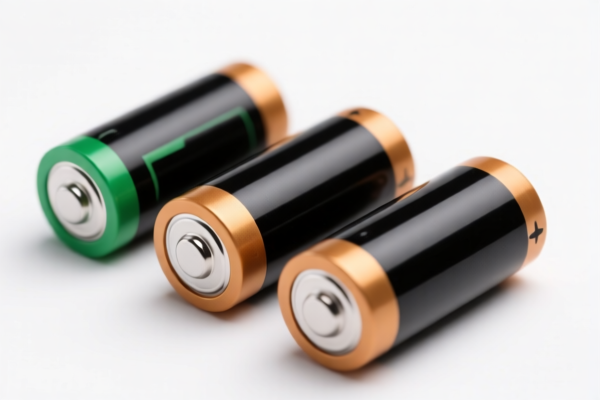
A Primary Battery is an electrochemical energy conversion device designed to be used once and discarded, or recharged only if specifically designed (though true primary batteries are non-rechargeable). In international trade, they are critical components for consumer electronics, IoT devices, medical equipment, and automotive key fobs.
Key Distinction: - Primary Batteries (8506): Non-rechargeable (e.g., Alkaline, Zinc-Carbon, Lithium Manganese Dioxide). They generate electricity through irreversible chemical reactions. - Secondary/Rechargeable Batteries (8507): Rechargeable (e.g., Li-ion, Lead-acid, Ni-MH). They allow reversible chemical reactions.
⚠️ Critical Classification Point:
- If the product is non-rechargeable and fits the definition of primary cells/batteries → It belongs to Chapter 8506.
- If it is rechargeable or classified as a "part" of a larger rechargeable system → It may fall under 8507 or 8548.
- Misclassification can lead to severe tax penalties due to the difference in duty rates and regulatory requirements.
📦 II. HS Code Classification Details (2026 Latest Tariff Authority Comparison)
| HS Code | Product Description | Logic & Summary from Data | Total Tax Rate | Tax Detail Breakdown |
|---|---|---|---|---|
8506.80.00.10 |
Primary Batteries - Specific Subheading | Perfect Match: The material and usage are completely consistent with the target code. No attribute conflicts based on missing descriptions. Default category logic applies. | 37.7% | Base Duty: 2.7% Section 301: 25.0% IEEPA (122): 10% |
8507.90.80.00 |
Parts of Electric Accumulators | Logical Link: Primary batteries are electrochemical cells; functionally related to electric accumulators (secondary batteries). No material/form conflict; fits parts classification logic. | 38.4% | Base Duty: 3.4% Section 301: 25.0% IEEPA (122): 10% |
8507.80.82.00 |
Other Electric Accumulators (Rechargeable) | Broad Category: Primary batteries are electrochemical energy conversion devices. Fits the broad category of "electric accumulators" under 8507. Functionally consistent, no material conflict. | 38.4% | Base Duty: 3.4% Section 301: 25.0% IEEPA (122): 10% |
8506.80.00.90 |
Primary Batteries - Other/Residual | Residual Category: Completely consistent in purpose/essence with "primary batteries." Fits the residual category rule for primary batteries. No material conflict. | 37.7% | Base Duty: 2.7% Section 301: 25.0% IEEPA (122): 10% |
8548.00.00.00 |
Waste and Scrap of Primary Cells/Batteries | Electrical Component/Scrap: Fits the scope of electrical parts/devices. Considered a core component of electrical installations. No material/form conflict. | 35.0% | Base Duty: 0.0% Section 301: 25.0% IEEPA (122): 10% |
🔍 Key Insight:
- 8506 vs. 8507: The fundamental difference is rechargeability. Primary batteries (8506) are generally cheaper to duty (2.7% base) than secondary battery parts (3.4% base).
- 8548: This is a lower-tax alternative (35.0%) but typically applies to waste/scrap or specific electrical parts not classified elsewhere. Ensure the product is not just "used" batteries but fits the specific definition of 8548 to avoid misdeclaration.
💰 III. 2026 Latest Tariff Rate Details (Including Add-ons & Policy Surcharges)
✅ Applicable Country: United States (US)
✅ Origin: China (CN)
✅ Effective Date: November 10, 2025 (for subsequent imports)
🎯 1. 8506.80.00.10 & 8506.80.00.90 —— Primary Batteries (Best Fit for New Primary Cells)
| Item | Content |
|---|---|
| Base Duty Rate | 2.7% (ad valorem) |
| USITC Section 301 Surcharge | +25% (For Chinese origin products) |
| IEEPA Surcharge (122 Clause) | +10% (For Chinese origin products, effective from Nov 10, 2025) |
| Total Effective Rate | 37.7% |
| Tax Calculation | CIF Value × 37.7% |
| De Minimis Exemption? | ❌ NO (Denied under current 301/IEEPA rules for these HS codes) |
| Legal Basis Path | IEEPA:9903.01.25 → USITC:8506.80.00.10 → FOOTNOTE:301 |
📌 Explanation:
- Base Duty (2.7%): Standard MFN rate for primary batteries.
- Section 301 (25%): The most significant cost driver for Chinese-origin goods.
- IEEPA (10%): Newer surcharge effective Nov 2025, adding to the burden.
- Total 37.7%: This is a high-cost import. Accurate classification is vital to avoid overpaying.
🎯 2. 8507.90.80.00 & 8507.80.82.00 —— Parts of Accumulators / Other Accumulators
| Item | Content |
|---|---|
| Base Duty Rate | 3.4% (ad valorem) |
| USITC Section 301 Surcharge | +25% |
| IEEPA Surcharge (122 Clause) | +10% |
| Total Effective Rate | 38.4% |
| Tax Calculation | CIF Value × 38.4% |
| De Minimis Exemption? | ❌ NO |
| Legal Basis Path | IEEPA:9903.01.24 → USITC:8507.80.82.00 → FOOTNOTE:301 |
📌 Note:
- Slightly higher (0.7%) than primary batteries due to a higher base duty (3.4% vs 2.7%).
- Only use if the battery is rechargeable or classified as a part of a larger system. Do not use for standard non-rechargeable primary cells unless specifically advised by a customs broker.
🎯 3. 8548.00.00.00 —— Electrical Parts / Waste
| Item | Content |
|---|---|
| Base Duty Rate | 0.0% (ad valorem) |
| USITC Section 301 Surcharge | +25% |
| IEEPA Surcharge (122 Clause) | +10% |
| Total Effective Rate | 35.0% |
| Tax Calculation | CIF Value × 35.0% |
| De Minimis Exemption? | ❌ NO |
| Legal Basis Path | IEEPA:9903.01.25 → USITC:8548.00.00.00 |
📌 Warning:
- While the lowest total rate (35.0%), this code is high-risk.
- It is often used for waste, scrap, or specific electrical components.
- Misdeclaring new primary batteries as 8548 can lead to customs audits, penalties, and shipment delays. Only use if the product genuinely fits the "electrical parts" or "scrap" definition.
🛠️ IV. Customs Clearance Practical Advice (Battle-Tested Pitfall Guide)
✅ 1. Required Documentation Checklist (Mandatory)
| Document | Must Provide | Explanation |
|---|---|---|
| ✅ Product Specification Sheet | ✔️ | Must specify: Chemistry (Alkaline, Lithium, etc.), Voltage, Capacity, Rechargeable/Non-Rechargeable. |
| ✅ Battery Test Report (UN38.3) | ✔️ | Mandatory for lithium batteries. Includes drop, vibration, thermal testing. |
| ✅ MSDS (Safety Data Sheet) | ✔️ | For safe handling and transport. |
| ✅ Commercial Invoice | ✔️ | Must clearly state "Primary Battery" or "Non-Rechargeable Battery". Avoid vague terms like "Power Source". |
| ✅ Packing List | ✔️ | Detail net/gross weight, number of units. |
| ✅ Carrier Certification | ✔️ | IATA/IMDG compliance for air/sea transport. |
✅ 2. Declaration Tips (Key Mantras)
🔥 “Specify Chemistry, Declare Non-Rechargeable, UN38.3 is a Must!”
| Scenario | Correct Declaration | Wrong Practice |
|---|---|---|
| Alkaline AA/AAA | 8506.80.00.10 - "Alkaline Primary Battery" |
Vague "Battery" → Risk of reclassification |
| Lithium Coin Cell | 8506.80.00.10 or 8506.80.00.90 |
Missing UN38.3 → Seizure |
| Rechargeable Li-ion | 8507.60.80.00 (or 8507 subheading) |
Misdeclare as Primary → Fraud Risk |
| Used/Scrap Batteries | 8548.00.00.00 |
New batteries → Penalty |
✅ 3. Special Situation Handling
| Situation | Handling Advice |
|---|---|
| OEM/Custom Batteries | Provide design drawings and test reports. Ensure chemistry is clearly stated. |
| Batteries Installed in Devices | If installed in a device (e.g., remote, watch), the device usually gets the HS code, not the battery. |
| Mixed Shipments (Primary + Secondary) | Declare separately. Do not combine under one HS code. |
| Low Value Shipments | Even under $800 (de minimis), Section 301 duties may still apply depending on current CBP enforcement. Check latest rules. |
🌍 V. Global Main Market Comparison (2026 Latest)
| Country/Region | Recommended HS Code | Est. Duty (China Origin) | Certification Requirements | Notes |
|---|---|---|---|---|
| 🇺🇸 USA | 8506.80.00.10 |
37.7% | UN38.3, IEC 62133 | Highest duty due to 301 + IEEPA |
| 🇨🇳 China | 8506.80.00.10 |
5-8% (Varies) | CCC (if applicable) | No Section 301 |
| 🇪🇺 EU | 8506.80.90 |
2.5% - 4.5% | CE, UN38.3, REACH | No Section 301. Strict recycling laws. |
| 🇬🇧 UK | 8506.80.90 |
2.5% - 4.5% | UKCA, UN38.3 | Post-Brexit rules apply. |
| 🇯🇵 Japan | 8506.80.90 |
3.3% - 4.4% | PSE, JIS | Strict safety standards. |
📌 Conclusion:
- The USA is the most expensive market for primary batteries due to 37.7% total duty.
- EU/UK/Japan offer significantly lower duties (2.5-4.5%) but require strict CE/UKCA/PSE certifications and environmental compliance.
📌 VI. Common Mistakes & Pitfall Guide (Lessons Learned the Hard Way)
❌ Mistake 1: Declaring "Primary Battery" as "Electric Accumulator Part" (8507)
👉 Consequence: Incorrect HS code → Potential penalty for misdeclaration.
👉 Fix: Ensure the battery is non-rechargeable to stay in 8506.
❌ Mistake 2: Omitting "Non-Rechargeable" in Description
👉 Consequence: Customs may suspect it's rechargeable → 38.4% duty or audit.
👉 Fix: Always state "Non-Rechargeable" or "Primary Cell" in the description.
❌ Mistake 3: No UN38.3 Test Report for Lithium Batteries
👉 Consequence: Shipment held, fines, or return. Dangerous goods compliance is critical.
👉 Fix: Provide valid UN38.3 report issued by an accredited lab.
❌ Mistake 4: Using 8548.00.00.00 for New Batteries to Save Tax
👉 Consequence: Severe penalty for fraud. 8548 is for waste/scrap or specific parts.
👉 Fix: Use 8506.80.00.10 for new primary batteries.
✅ Correct Practice:
"Primary Alkaline Battery, Non-Rechargeable, AA Size, 1.5V, UN38.3 Certified, Model XYZ"
🎯 VII. Conclusion: Professional Declaration, Save Time, Cut Costs!
🎯 Remember the Mantra:
🔹 "Primary = Non-Rechargeable = 8506"
🔹 "Rechargeable = Accumulator = 8507"
🔹 "USA Duty = 37.7%, EU Duty = ~3%"
🔹 "UN38.3 is Non-Negotiable for Lithium"
📌 Pro Tip:
If your batteries are non-rechargeable and you are shipping to the US, ensure you have:
1. Correct HS Code: 8506.80.00.10 or 8506.80.00.90
2. Accurate Description: "Primary Battery, Non-Rechargeable"
3. UN38.3 Report: For lithium content
4. Budget for 37.7% Duty: Include this in your landed cost calculation.
For EU/UK, focus on CE/UKCA and recycling compliance to avoid market access issues.
📣 Immediate Action:
📞 Consult a licensed customs broker
📄 Verify UN38.3 and MSDS
🚀 Clear Customs Smoothly, Avoid Penalties, Maximize Profit!
✨ Professional Clearance Starts with Accurate Classification!
💼 Every cent of duty counts—get it right the first time!
用户评价
关于 HS 编码归类
协调制度(HS)是由世界海关组织(WCO)制定的国际贸易商品分类标准。全球 200 多个国家采用 HS 系统作为海关关税、贸易统计和进出口监管的基础。
每个 HS 编码遵循以下层级结构:
- 章(2 位)——商品大类(例如:第 84 章:机器和机械设备)
- 品目(4 位)——章内的更具体分类
- 子目(6 位)——国际通用细分,所有 WCO 成员国统一使用
- 本国细分(8-10 位)——各国自行扩展的细分编码,如美国 HTSUS 10 位编码
正确的 HS 编码归类对于顺利通关、准确缴纳关税和遵守贸易法规至关重要。错误归类可能导致海关延误、多缴关税或罚款。
从CN进口到US时,适用的关税税率可能包括:
- 最惠国(MFN)税率——适用于 WTO 成员国的标准关税税率
- 普通税率——适用于无贸易协定国家
- 贸易救济关税——附加关税,如 301 条款(反倾销)、232 条款(国家安全)或反补贴税
本页内容仅供参考。如需正式归类,请咨询当地海关或持牌报关代理。