Printed Circuit Board
CN → US| HS编码 | 关税税率 | 原产国 | 目的国 | 文档 |
|---|---|---|---|---|
| 8534000080 | 35.0% | CN | US | 官方文档 |
| 8543906800 | 35.0% | CN | US | 官方文档 |
| 8543906500 | 35.0% | CN | US | 官方文档 |
| 8473302000 | 85.0% | CN | US | 官方文档 |
| 8537109170 | 37.7% | CN | US | 官方文档 |
商品图片


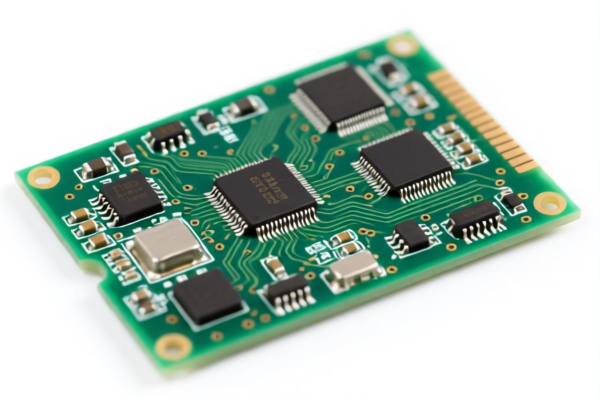
AI分析
⚡ Printed Circuit Board (PCB) 🖥️: The Ultimate 2026 HS Code & Tariff Survival Guide
🌐 HS Code Reference & Clearance Strategy | 2026 Tariff Deep Dive | Global Compliance Protocol
📌 I. Product Definition & Classification: Is Your PCB a "Board" or a "Component"?
The Printed Circuit Board (PCB) is the backbone of modern electronics, connecting components in everything from smartphones to industrial robots. However, in international trade, a PCB's classification depends entirely on its physical structure and functional integration.
Two Main Categories: 1. Substrate Only (Raw Board): A bare board with copper tracks, no components soldered. Often classified under 8534 (Other Printed Circuit Boards). 2. Assembled Board / Component: A board with integrated chips, resistors, and capacitors. Often classified under 8543 (Electrical Machines/Parts) or 8473 (Parts of Computers).
⚠️ Critical Distinction: * If the board is bare or simple assembly, it leans towards 8534 or 8543. * If the board is a specific functional unit (e.g., a control module), it may fall under 8473 or 8537. * Shape Matters: Flexible vs. Rigid can alter the "Other" (Dud) category application.
📦 II. 2026 HS Code Classification Matrix (Based on Your Data)
| HS Code | Product Description | Matching Logic | Total Tax Rate | Tax Composition (US/China Trade) |
|---|---|---|---|---|
8534.00.00.80 |
Other Printed Circuit Boards (Generic/Rigid) | MATCH: Name "PCB" aligns with "Printed Circuit". As a "catch-all" (Other) category, it applies when form (flex/rigid) is unspecified. No material conflicts. | 35.0% | Base: 0% + Trade War (25%) + Section 301/122 (10%) |
8543.90.68.00 |
Other Electrical Machines/Parts (Assembled PCBs) | MATCH: PCBs are considered "Printed Circuit Assemblies." Function and form align perfectly with this sub-heading. | 35.0% | Base: 0% + Trade War (25%) + Section 301/122 (10%) |
8543.90.65.00 |
Other Electrical Machines/Parts (Generic Assembly) | MATCH: Morphology matches "Printed Circuit Assembly". Lacks specific use case, so defaults to the "Catch-all" principle. No conflicts. | 35.0% | Base: 0% + Trade War (25%) + Section 301/122 (10%) |
8473.30.20.00 |
Parts of Automatic Data Processing Machines | MATCH: PCBs are parts of "8471 machines" (Computers). Fits the "PCB Assembly" usage attribute. ⚠️ High Risk: Specific material surcharges apply. | 85.0% | Base: 0% + Trade War (25%) + Section 301/122 (10%) + Steel/Al/Cu Surcharge (50%) |
8537.10.91.70 |
Other Electrical Control/Distribution Boards | MATCH: Inferred "Power Control/Distribution" function. "Other" category applies with no obvious material/shape conflicts. | 37.7% | Base: 2.7% + Trade War (25%) + Section 301/122 (10%) |
💰 III. 2026 Tariff Rate Breakdown (The "Shock" Details)
✅ Target Market: USA (US)
✅ Origin: China (CN)
✅ Policy Context: Section 301, Section 232, and IEEPA provisions (2026 Update)
🎯 Scenario A: The "Standard" PCB (Codes 8534, 8543)
Codes: 8534.00.00.80, 8543.90.68.00, 8543.90.65.00
| Tax Component | Rate | Legal Basis | Description |
|---|---|---|---|
| MFN Base Rate | 0.0% | General Most Favored Nation | Standard entry duty. |
| Section 301 (Trade War) | +25.0% | US Trade Act | 25% surcharge on Chinese electronics. |
| Section 122 / IEEPA | +10.0% | IEEPA:9903.01 | "122 Clause" tariff (10%) for specific Chinese tech items. |
| TOTAL | 35.0% | The Standard High-Tech Rate |
📌 Why 35%?
The combination of 0% Base + 25% Section 301 + 10% 122 Clause creates a massive 35% barrier. This applies to generic PCBs and assembled boards where no special "material" surcharge is triggered.
🎯 Scenario B: The "Danger Zone" PCB (Code 8473)
Code: 8473.30.20.00
| Tax Component | Rate | Legal Basis | Description |
|---|---|---|---|
| MFN Base Rate | 0.0% | General Most Favored Nation | Standard entry duty. |
| Section 301 (Trade War) | +25.0% | US Trade Act | 25% surcharge. |
| Section 122 / IEEPA | +10.0% | IEEPA:9903.01 | 10% surcharge. |
| Steel/Al/Cu Surcharge | +50.0% | Section 232 / IEEPA | Critical: If the board contains significant Steel, Aluminum, or Copper components classified under specific headings, this 50% adds up! |
| TOTAL | 85.0% | THE "KILLER" RATE |
⚠️ WARNING: If your PCB is classified as a part of a machine containing Steel, Aluminum, or Copper (which many do, especially heavy chassis or connectors), you face a 85% total tax! This is often due to the "Steel/Copper product" surcharge logic applied to parts of machines.
🎯 Scenario C: The "Control Board" (Code 8537)
Code: 8537.10.91.70
| Tax Component | Rate | Legal Basis | Description |
|---|---|---|---|
| MFN Base Rate | 2.7% | General Most Favored Nation | Unlike others, this has a non-zero base. |
| Section 301 (Trade War) | +25.0% | US Trade Act | 25% surcharge. |
| Section 122 / IEEPA | +10.0% | IEEPA:9903.01 | 10% surcharge. |
| TOTAL | 37.7% | Slightly higher due to base rate |
🛠️ IV. Customs Clearance Strategy (Avoid the 85% Trap!)
✅ 1. Material Declaration is KING
- The Trap: If you declare
8473.30.20.00and your PCB contains significant Steel, Aluminum, or Copper, you will be hit with the 50% surcharge, pushing you to 85%. - The Fix: Ensure your HS Code selection focuses on 8534 or 8543 (35% total) unless the board is strictly a "Control/Power Distribution Unit" (8537) or a part of a machine that cannot avoid the material surcharge.
- Action: Provide a Bill of Materials (BOM) explicitly stating if the board contains steel/aluminum components that trigger Section 232.
✅ 2. Naming & Description Precision
- Good: "Printed Circuit Board (Unassembled)", "PCB Assembly for Consumer Electronics", "Control Circuit Board".
- Bad: "Part of Computer Machine" (Triggers 8473 risk), "Copper Heavy Board".
- Tip: If the board is just a PCB without a complex machine function, avoid 8473. Use 8534 or 8543 to lock in the 35% rate instead of risking the 85% rate.
✅ 3. Documentation Checklist
| Document | Requirement | Purpose |
|---|---|---|
| Technical Datasheet | Must show no steel/aluminum structural parts | Proves eligibility for 35% vs 85% |
| Circuit Diagram | To prove it is a "Board" (8534/8543) not a "Machine Part" (8473) | Prevents "Part of Machine" reclassification |
| BOM List | Detailed material breakdown | Crucial for avoiding 50% surcharge |
| Commercial Invoice | Must say "Printed Circuit Board", NOT "Machine Part" | Avoids ambiguous classification |
| Certificate of Origin | Required for Section 301/122 determination | Confirms "Made in China" status |
🚨 V. Common Pitfalls & "How-To" Avoid Them
❌ Mistake 1: Over-classifying as "Machine Parts" (8473)
* Consequence: If your PCB is a simple board, declaring it as a part of a machine invites the 50% Steel/Cu/Al surcharge.
* Result: Tax jumps from 35% to 85%.
* Solution: Only use 8473.30.20.00 if the board is an integral, non-removable part of a larger machine that cannot be classified otherwise. Otherwise, stick to 8534 or 8543.
❌ Mistake 2: Ignoring the "122 Clause" * Consequence: Assuming only 25% tax. * Result: Unexpected 10% surcharge on all Chinese electronics. * Solution: Always budget for Base + 25% + 10%. Total is never just 25%.
❌ Mistake 3: Vague Product Names * Consequence: "Board" vs "Assembly". * Result: Customs may force you into the "Other" catch-all with higher scrutiny. * Solution: Be explicit: "Rigid PCB" or "Flexible PCB Assembly".
🌍 VI. Global Market Comparison (2026 Snapshot)
| Market | Recommended Code | Effective Rate (China Origin) | Notes |
|---|---|---|---|
| 🇺🇸 USA | 8534.00.00.80 or 8543.90.68.00 |
35.0% | Avoid 8473 (85% risk). |
| 🇺🇸 USA (Control Board) | 8537.10.91.70 |
37.7% | Slightly higher due to base rate. |
| 🇪🇺 EU | 8534.00 |
0% - 2% | Generally lower tariffs, no Section 301. |
| 🇨🇳 China (Import) | 8534.00 |
0% - 3% | Lower barriers for domestic import. |
📌 Conclusion: For the US market, 8534 and 8543 are your safest bets at 35%. The 8473 route is a minefield that can lead to 85% if material rules are not carefully managed.
🎯 VII. Final Verdict: The Smart Clearance Path
🔹 Rule #1: Do not declare PCBs as "Machine Parts" (
8473) unless absolutely necessary. The 50% material surcharge is the biggest profit killer. 🔹 Rule #2: Target8534.00.00.80or8543.90.68.00. These offer a predictable 35% total rate (Base 0% + 25% + 10%). 🔹 Rule #3: Prepare BOM & Circuit Diagrams. These are your shield against customs reclassification and the dreaded 85% tax.
📣 Call to Action:
🚀 Audit your BOM now. Check if your PCB contains steel/aluminum components that might trigger
8473surcharges. 📞 Contact your forwarder to apply for an Advance Ruling on8534or8543classification before shipping. 💡 Profit Protection: A 50% tax difference can destroy your margin. Choose the right code!
✨ Precision Classification = Profit Preservation. 💼 Don't let the 85% tax kill your PCB shipment!
用户评价
关于 HS 编码归类
协调制度(HS)是由世界海关组织(WCO)制定的国际贸易商品分类标准。全球 200 多个国家采用 HS 系统作为海关关税、贸易统计和进出口监管的基础。
每个 HS 编码遵循以下层级结构:
- 章(2 位)——商品大类(例如:第 84 章:机器和机械设备)
- 品目(4 位)——章内的更具体分类
- 子目(6 位)——国际通用细分,所有 WCO 成员国统一使用
- 本国细分(8-10 位)——各国自行扩展的细分编码,如美国 HTSUS 10 位编码
正确的 HS 编码归类对于顺利通关、准确缴纳关税和遵守贸易法规至关重要。错误归类可能导致海关延误、多缴关税或罚款。
从CN进口到US时,适用的关税税率可能包括:
- 最惠国(MFN)税率——适用于 WTO 成员国的标准关税税率
- 普通税率——适用于无贸易协定国家
- 贸易救济关税——附加关税,如 301 条款(反倾销)、232 条款(国家安全)或反补贴税
本页内容仅供参考。如需正式归类,请咨询当地海关或持牌报关代理。