Printed Circuit Board
CN → US| HS Code | Tariff Rate | Origin | Destination | Doc |
|---|---|---|---|---|
| 8534000080 | 35.0% | CN | US | Official Doc |
| 8543906800 | 35.0% | CN | US | Official Doc |
| 8543906500 | 35.0% | CN | US | Official Doc |
| 8473302000 | 85.0% | CN | US | Official Doc |
| 8537109170 | 37.7% | CN | US | Official Doc |
Product Images


AI Analysis
⚡ Printed Circuit Board (PCB) 🖥️: The Ultimate 2026 HS Code & Tariff Survival Guide
🌐 HS Code Reference & Clearance Strategy | 2026 Tariff Deep Dive | Global Compliance Protocol
📌 I. Product Definition & Classification: Is Your PCB a "Board" or a "Component"?
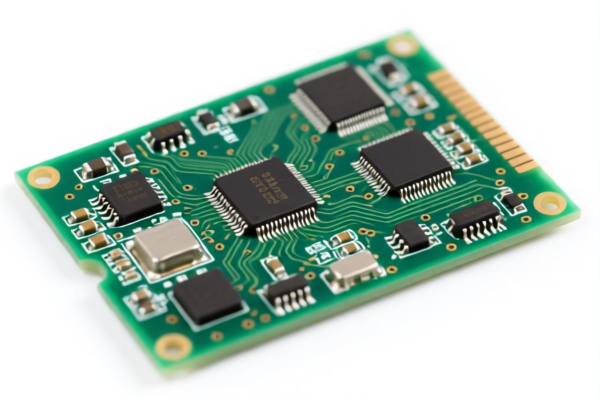
The Printed Circuit Board (PCB) is the backbone of modern electronics, connecting components in everything from smartphones to industrial robots. However, in international trade, a PCB's classification depends entirely on its physical structure and functional integration.
Two Main Categories: 1. Substrate Only (Raw Board): A bare board with copper tracks, no components soldered. Often classified under 8534 (Other Printed Circuit Boards). 2. Assembled Board / Component: A board with integrated chips, resistors, and capacitors. Often classified under 8543 (Electrical Machines/Parts) or 8473 (Parts of Computers).
⚠️ Critical Distinction: * If the board is bare or simple assembly, it leans towards 8534 or 8543. * If the board is a specific functional unit (e.g., a control module), it may fall under 8473 or 8537. * Shape Matters: Flexible vs. Rigid can alter the "Other" (Dud) category application.
📦 II. 2026 HS Code Classification Matrix (Based on Your Data)
| HS Code | Product Description | Matching Logic | Total Tax Rate | Tax Composition (US/China Trade) |
|---|---|---|---|---|
8534.00.00.80 |
Other Printed Circuit Boards (Generic/Rigid) | MATCH: Name "PCB" aligns with "Printed Circuit". As a "catch-all" (Other) category, it applies when form (flex/rigid) is unspecified. No material conflicts. | 35.0% | Base: 0% + Trade War (25%) + Section 301/122 (10%) |
8543.90.68.00 |
Other Electrical Machines/Parts (Assembled PCBs) | MATCH: PCBs are considered "Printed Circuit Assemblies." Function and form align perfectly with this sub-heading. | 35.0% | Base: 0% + Trade War (25%) + Section 301/122 (10%) |
8543.90.65.00 |
Other Electrical Machines/Parts (Generic Assembly) | MATCH: Morphology matches "Printed Circuit Assembly". Lacks specific use case, so defaults to the "Catch-all" principle. No conflicts. | 35.0% | Base: 0% + Trade War (25%) + Section 301/122 (10%) |
8473.30.20.00 |
Parts of Automatic Data Processing Machines | MATCH: PCBs are parts of "8471 machines" (Computers). Fits the "PCB Assembly" usage attribute. ⚠️ High Risk: Specific material surcharges apply. | 85.0% | Base: 0% + Trade War (25%) + Section 301/122 (10%) + Steel/Al/Cu Surcharge (50%) |
8537.10.91.70 |
Other Electrical Control/Distribution Boards | MATCH: Inferred "Power Control/Distribution" function. "Other" category applies with no obvious material/shape conflicts. | 37.7% | Base: 2.7% + Trade War (25%) + Section 301/122 (10%) |
💰 III. 2026 Tariff Rate Breakdown (The "Shock" Details)
✅ Target Market: USA (US)
✅ Origin: China (CN)
✅ Policy Context: Section 301, Section 232, and IEEPA provisions (2026 Update)
🎯 Scenario A: The "Standard" PCB (Codes 8534, 8543)
Codes: 8534.00.00.80, 8543.90.68.00, 8543.90.65.00
| Tax Component | Rate | Legal Basis | Description |
|---|---|---|---|
| MFN Base Rate | 0.0% | General Most Favored Nation | Standard entry duty. |
| Section 301 (Trade War) | +25.0% | US Trade Act | 25% surcharge on Chinese electronics. |
| Section 122 / IEEPA | +10.0% | IEEPA:9903.01 | "122 Clause" tariff (10%) for specific Chinese tech items. |
| TOTAL | 35.0% | The Standard High-Tech Rate |
📌 Why 35%?
The combination of 0% Base + 25% Section 301 + 10% 122 Clause creates a massive 35% barrier. This applies to generic PCBs and assembled boards where no special "material" surcharge is triggered.
🎯 Scenario B: The "Danger Zone" PCB (Code 8473)
Code: 8473.30.20.00
| Tax Component | Rate | Legal Basis | Description |
|---|---|---|---|
| MFN Base Rate | 0.0% | General Most Favored Nation | Standard entry duty. |
| Section 301 (Trade War) | +25.0% | US Trade Act | 25% surcharge. |
| Section 122 / IEEPA | +10.0% | IEEPA:9903.01 | 10% surcharge. |
| Steel/Al/Cu Surcharge | +50.0% | Section 232 / IEEPA | Critical: If the board contains significant Steel, Aluminum, or Copper components classified under specific headings, this 50% adds up! |
| TOTAL | 85.0% | THE "KILLER" RATE |
⚠️ WARNING: If your PCB is classified as a part of a machine containing Steel, Aluminum, or Copper (which many do, especially heavy chassis or connectors), you face a 85% total tax! This is often due to the "Steel/Copper product" surcharge logic applied to parts of machines.
🎯 Scenario C: The "Control Board" (Code 8537)
Code: 8537.10.91.70
| Tax Component | Rate | Legal Basis | Description |
|---|---|---|---|
| MFN Base Rate | 2.7% | General Most Favored Nation | Unlike others, this has a non-zero base. |
| Section 301 (Trade War) | +25.0% | US Trade Act | 25% surcharge. |
| Section 122 / IEEPA | +10.0% | IEEPA:9903.01 | 10% surcharge. |
| TOTAL | 37.7% | Slightly higher due to base rate |
🛠️ IV. Customs Clearance Strategy (Avoid the 85% Trap!)
✅ 1. Material Declaration is KING
- The Trap: If you declare
8473.30.20.00and your PCB contains significant Steel, Aluminum, or Copper, you will be hit with the 50% surcharge, pushing you to 85%. - The Fix: Ensure your HS Code selection focuses on 8534 or 8543 (35% total) unless the board is strictly a "Control/Power Distribution Unit" (8537) or a part of a machine that cannot avoid the material surcharge.
- Action: Provide a Bill of Materials (BOM) explicitly stating if the board contains steel/aluminum components that trigger Section 232.
✅ 2. Naming & Description Precision
- Good: "Printed Circuit Board (Unassembled)", "PCB Assembly for Consumer Electronics", "Control Circuit Board".
- Bad: "Part of Computer Machine" (Triggers 8473 risk), "Copper Heavy Board".
- Tip: If the board is just a PCB without a complex machine function, avoid 8473. Use 8534 or 8543 to lock in the 35% rate instead of risking the 85% rate.
✅ 3. Documentation Checklist
| Document | Requirement | Purpose |
|---|---|---|
| Technical Datasheet | Must show no steel/aluminum structural parts | Proves eligibility for 35% vs 85% |
| Circuit Diagram | To prove it is a "Board" (8534/8543) not a "Machine Part" (8473) | Prevents "Part of Machine" reclassification |
| BOM List | Detailed material breakdown | Crucial for avoiding 50% surcharge |
| Commercial Invoice | Must say "Printed Circuit Board", NOT "Machine Part" | Avoids ambiguous classification |
| Certificate of Origin | Required for Section 301/122 determination | Confirms "Made in China" status |
🚨 V. Common Pitfalls & "How-To" Avoid Them
❌ Mistake 1: Over-classifying as "Machine Parts" (8473)
* Consequence: If your PCB is a simple board, declaring it as a part of a machine invites the 50% Steel/Cu/Al surcharge.
* Result: Tax jumps from 35% to 85%.
* Solution: Only use 8473.30.20.00 if the board is an integral, non-removable part of a larger machine that cannot be classified otherwise. Otherwise, stick to 8534 or 8543.
❌ Mistake 2: Ignoring the "122 Clause" * Consequence: Assuming only 25% tax. * Result: Unexpected 10% surcharge on all Chinese electronics. * Solution: Always budget for Base + 25% + 10%. Total is never just 25%.
❌ Mistake 3: Vague Product Names * Consequence: "Board" vs "Assembly". * Result: Customs may force you into the "Other" catch-all with higher scrutiny. * Solution: Be explicit: "Rigid PCB" or "Flexible PCB Assembly".
🌍 VI. Global Market Comparison (2026 Snapshot)
| Market | Recommended Code | Effective Rate (China Origin) | Notes |
|---|---|---|---|
| 🇺🇸 USA | 8534.00.00.80 or 8543.90.68.00 |
35.0% | Avoid 8473 (85% risk). |
| 🇺🇸 USA (Control Board) | 8537.10.91.70 |
37.7% | Slightly higher due to base rate. |
| 🇪🇺 EU | 8534.00 |
0% - 2% | Generally lower tariffs, no Section 301. |
| 🇨🇳 China (Import) | 8534.00 |
0% - 3% | Lower barriers for domestic import. |
📌 Conclusion: For the US market, 8534 and 8543 are your safest bets at 35%. The 8473 route is a minefield that can lead to 85% if material rules are not carefully managed.
🎯 VII. Final Verdict: The Smart Clearance Path
🔹 Rule #1: Do not declare PCBs as "Machine Parts" (
8473) unless absolutely necessary. The 50% material surcharge is the biggest profit killer. 🔹 Rule #2: Target8534.00.00.80or8543.90.68.00. These offer a predictable 35% total rate (Base 0% + 25% + 10%). 🔹 Rule #3: Prepare BOM & Circuit Diagrams. These are your shield against customs reclassification and the dreaded 85% tax.
📣 Call to Action:
🚀 Audit your BOM now. Check if your PCB contains steel/aluminum components that might trigger
8473surcharges. 📞 Contact your forwarder to apply for an Advance Ruling on8534or8543classification before shipping. 💡 Profit Protection: A 50% tax difference can destroy your margin. Choose the right code!
✨ Precision Classification = Profit Preservation. 💼 Don't let the 85% tax kill your PCB shipment!
Customer Reviews
About HS Code Classification
The Harmonized System (HS) is an internationally standardized nomenclature developed by the World Customs Organization (WCO) to classify traded products. Over 200 countries use the HS system as the basis for customs tariffs, trade statistics, and import/export regulations.
Each HS code follows a hierarchical structure:
- Chapter (2 digits) — Broad category of goods (e.g., Chapter 84: Machinery and Mechanical Appliances)
- Heading (4 digits) — More specific grouping within the chapter
- Subheading (6 digits) — Internationally standardized breakdown, used by all WCO member countries
- National subdivisions (8-10 digits) — Country-specific extensions for further classification, such as US HTSUS 10-digit codes
Correct HS code classification is essential for smooth customs clearance, accurate duty payment, and compliance with trade regulations. Misclassification can lead to customs delays, overpayment of duties, or penalties.
When importing from CN to US, the applicable tariff rates may include:
- Most-Favored-Nation (MFN) rate — The standard duty rate applied to WTO members
- General rate — Applied to countries without trade agreements
- Trade remedy duties — Additional tariffs such as Section 301 (anti-dumping), Section 232 (national security), or countervailing duties
The information provided on this page is for reference purposes only. For official classification, please consult with your local customs authority or a licensed customs broker.