Printed Satin Fabric (Dyed)
CN → US| HS编码 | 关税税率 | 原产国 | 目的国 | 文档 |
|---|---|---|---|---|
| 5407820040 | 49.9% | CN | US | 官方文档 |
| 5407922050 | 49.9% | CN | US | 官方文档 |
| 5512990040 | 47.0% | CN | US | 官方文档 |
| 5408349050 | 47.0% | CN | US | 官方文档 |
| 6006340080 | 45.0% | CN | US | 官方文档 |
商品图片
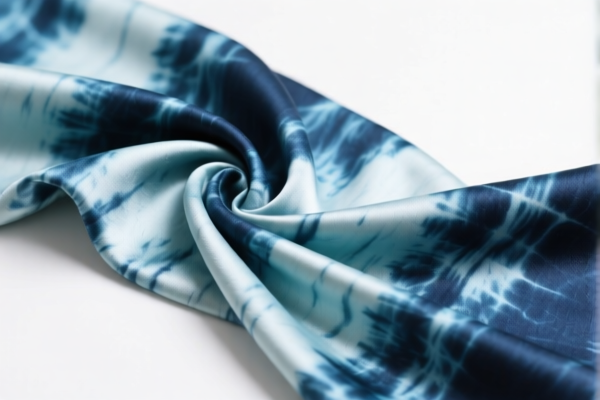
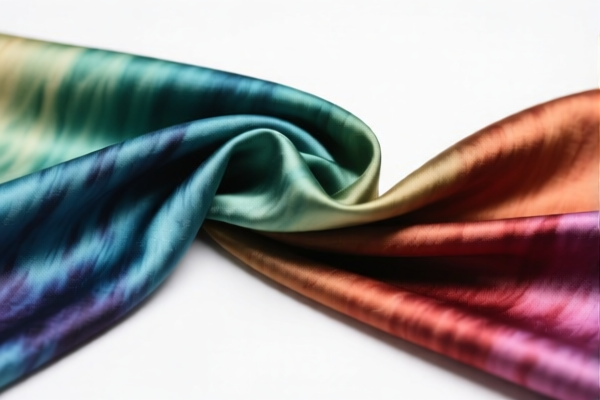
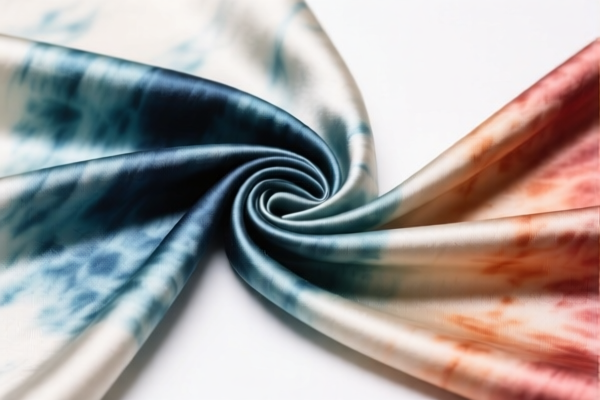

AI分析
🧵 Printed Satin Fabric (Dyed) | Textile Import Intelligence Report
🌐 HS Code Classification & Customs Clearance Guide | 2026 Tariff Analysis | Strategic Entry Strategy for US Imports
📌 I. Product Definition & Classification Logic: Decoding "Satin"
"Printed Satin Fabric (Dyed)" is a versatile textile widely used in apparel, home textiles, and linings. In international trade, the classification hinges on three critical factors: 1. Fiber Content: Is it synthetic (polyester, nylon) or natural (silk, rayon)? Satin is a weave structure, not a fiber. However, commercial "satin" is predominantly made from synthetic filaments (Polyester) due to cost and durability. 2. Weave Structure: Satin refers to the weaving pattern (long floats). 3. Processing Method: Printed (印花) vs. Dyed (染色).
⚠️ Critical Distinction:
- If the fabric is made of Synthetic Filament Yarns (e.g., Polyester), it falls under Chapter 54.
- If the fabric is made of Staple Fibers (e.g., Polyester staple fiber, Acrylic), it falls under Chapter 55.
- If it is a Knitted fabric (rare for traditional satin, but possible for stretch satin), it falls under Chapter 60.
📦 II. HS Code Classification Details (2026 Latest Tariff Alignment)
Based on the provided data, here are the most likely HS Codes depending on the precise fiber composition and structure.
| HS Code | Product Description | Application Scenario | Key Classification Logic |
|---|---|---|---|
5407.82.00.40 |
Woven fabrics of synthetic filaments, containing ≥85% synthetic filament by weight, Dyed, Other (Satin/Lining) | Synthetic satin lining, apparel fabric, high-volume commercial use | ✅ Match: Matches "Synthetic Filament", "Dyed", "Satin/Lining". |
5407.92.20.50 |
Woven fabrics of synthetic filaments, Dyed, Other (Satin/Fabric) | General synthetic satin fabric, not specifically categorized as lining | ✅ Match: Matches "Synthetic Filament", "Dyed", "Satin Fabric". |
5512.99.00.40 |
Woven fabrics of synthetic staple fibers, Dyed, Other | If the "Satin" is made from Polyester Staple Fiber (not filament) | ✅ Match: Matches "Synthetic Staple", "Dyed/Printed" logic, "Satin Weave". |
5408.34.90.50 |
Woven fabrics of synthetic filaments, Printed, Other | If the fabric is Printed rather than just Dyed | ✅ Match: Matches "Synthetic Filament", "Printed", "Satin". |
6006.34.00.80 |
Knitted or crocheted fabrics of synthetic fibers, Printed, Other | If the "Satin" is actually a Knitted Stretch Satin | ✅ Match: Matches "Synthetic", "Printed", "Knitted" structure. |
🔍 Key Insight:
- Chapter 54 (5407/5408) is the most common for standard Polyester Satin Fabric (Filament).
- Chapter 55 (5512) applies if the fabric is made from spun yarn (staple fibers).
- Chapter 60 (6006) applies only if the fabric is Knitted, not woven.
- The presence of "Printed" vs "Dyed" changes the specific subheading within the chapter.
💰 III. 2026 Latest Tariff Rate Breakdown (Including Surcharges & Policy Add-ons)
✅ Applicable Country: United States (US)
✅ Country of Origin: China (CN)
✅ Effective Date: Tariffs apply to imports from China (Subject to Section 301 & IEEPA rules).
🎯 1. 5407.82.00.40 & 5407.92.20.50 – Synthetic Filament Satin (Dyed)
| Item | Detail |
|---|---|
| Base Tariff Rate | 14.9% (ad valorem) |
| Section 301 Surcharge | +25.0% (USITC Footnote 9903.88.01) |
| IEEPA Surcharge | +10.0% (China-specific, effective Nov 10, 2025) |
| Total Tariff Rate | 49.9% |
| Tax Calculation | CIF Value × 49.9% |
| De Minimis Eligibility | ❌ Not Eligible (High tariff rates exceed thresholds; often denied) |
| Legal Basis | USITC:5407.82.00.40 → FOOTNOTE:9903.88.01 + IEEPA:9903.01.25 |
📌 Explanation:
- The 14.9% is the standard Most Favored Nation (MFN) rate for synthetic woven fabrics.
- The 25% is the Section 301 tariff for textile articles from China.
- The 10% is the new IEEPA surcharge targeting specific Chinese goods.
- Total Burden: ~50% – This is a high-cost item for importers.
🎯 2. 5408.34.90.50 – Synthetic Filament Satin (Printed)
| Item | Detail |
|---|---|
| Base Tariff Rate | 12.0% (ad valorem) |
| Section 301 Surcharge | +25.0% |
| IEEPA Surcharge | +10.0% |
| Total Tariff Rate | 47.0% |
| Tax Calculation | CIF Value × 47.0% |
| De Minimis Eligibility | ❌ Not Eligible |
| Legal Basis | USITC:5408.34.90.50 → FOOTNOTE:9903.88.01 + IEEPA:9903.01.24 |
📌 Note:
- Printed fabrics sometimes have slightly lower base rates than dyed ones, but the surcharges remain the same.
- Total Burden: ~47%.
🎯 3. 5512.99.00.40 – Synthetic Staple Fiber Satin
| Item | Detail |
|---|---|
| Base Tariff Rate | 12.0% (ad valorem) |
| Section 301 Surcharge | +25.0% |
| IEEPA Surcharge | +10.0% |
| Total Tariff Rate | 47.0% |
| Tax Calculation | CIF Value × 47.0% |
| De Minimis Eligibility | ❌ Not Eligible |
| Legal Basis | USITC:5512.99.00.40 → FOOTNOTE:9903.88.01 + IEEPA:9903.01.24 |
📌 Note:
- If your fabric is made from staple fibers (e.g., spun polyester), this code applies.
- Total Burden: ~47%.
🎯 4. 6006.34.00.80 – Knitted Printed Synthetic Fabric
| Item | Detail |
|---|---|
| Base Tariff Rate | 10.0% (ad valorem) |
| Section 301 Surcharge | +25.0% |
| IEEPA Surcharge | +10.0% |
| Total Tariff Rate | 45.0% |
| Tax Calculation | CIF Value × 45.0% |
| De Minimis Eligibility | ❌ Not Eligible |
| Legal Basis | USITC:6006.34.00.80 → FOOTNOTE:9903.88.01 + IEEPA:9903.01.24 |
📌 Note:
- Only applies if the fabric is Knitted (e.g., stretch satin).
- Total Burden: ~45% (Lowest among the options, but structurally different).
🛠️ IV. Customs Clearance Practical Advice (Actionable Pitfalls)
✅ 1. Documentation Checklist (Mandatory)
| Document | Required | Notes |
|---|---|---|
| ✅ Product Spec Sheet | ✔️ | Must specify: Fiber Content (% Polyester, etc.), Weave Type (Woven/Knitted), Weight (GSM), Width. |
| ✅ Fabric Composition Label | ✔️ | Clear statement: "100% Polyester, Woven, Satin Weave, Printed". |
| ✅ Commercial Invoice | ✔️ | Describe as "Synthetic Filament Woven Fabric, Printed/Dyed, for Apparel Use". Avoid vague terms like "Cloth". |
| ✅ Packing List | ✔️ | Include gross/net weight. |
| ✅ Origin Certificate (CO) | ✔️ | Essential for verifying China origin (triggers 301/IEEPA). |
| ✅ Photo of Fabric | ✔️ | Show texture, print pattern, and label. |
📌 Critical Tip:
- Fiber Content is King: If you misdeclare "Polyester Filament" as "Polyester Staple," you risk a reclassification penalty.
- Weave Type: If it's woven, do NOT use Chapter 60 (Knitted). If it's knitted, do NOT use Chapter 54.
✅ 2. Declaration Strategy (Key Rules)
| Scenario | Correct Declaration | Incorrect Declaration | Consequence |
|---|---|---|---|
| Standard Polyester Satin (Woven, Dyed) | 5407.82.00.40 |
5407.92.20.50 |
Minor difference, but be consistent. |
| Polyester Satin (Woven, Printed) | 5408.34.90.50 |
5407.82.00.40 (Dyed) |
Error: Print vs. Dyed changes code. |
| Stretch Satin (Knitted) | 6006.34.00.80 |
5407... (Woven) |
Major Error: Woven vs. Knitted is fundamental. |
| Silk Satin (Natural Fiber) | Not in Data | 5407... (Synthetic) |
Severe Error: Silk is Chapter 50. High risk of penalty. |
🔥 Golden Rule:
"Fiber First, Weave Second, Process Third!"
1. Identify Fiber (Synthetic vs. Natural).
2. Identify Structure (Woven vs. Knitted).
3. Identify Finish (Printed vs. Dyed).
✅ 3. Special Handling Cases
| Case | Recommendation |
|---|---|
| Blended Fabric | If >50% synthetic filament, use Chapter 54. If >50% staple, use Chapter 55. |
| Sample Shipment | Even samples are subject to full tariffs. Declare accurately. |
| Transshipment | Do NOT relabel as "Made in Vietnam" if originally from China. This is fraud. |
| Lining Fabric | If explicitly for "lining," 5407.82.00.40 may be more precise, but 5407.92.20.50 is also acceptable if not exclusively lining. |
🌍 V. Global Market Comparison (2026)
| Market | Recommended HS Code | Base Tariff | Surcharges | Total Tariff (China Origin) | Notes |
|---|---|---|---|---|---|
| 🇺🇸 USA | 5407.82.00.40 |
14.9% | +35% (301+IEEPA) | 49.9% | Highest cost. Plan pricing accordingly. |
| 🇨🇳 China | 5407.82.00.40 |
14.9% | 0% | 14.9% | Domestic trade or re-export. |
| 🇪🇺 EU | 5407.82.00.00 |
9.0% | 0% | 9.0% | No Section 301. Much lower cost. |
| 🇬🇧 UK | 5407.82.00.00 |
9.0% | 0% | 9.0% | Similar to EU. |
| 🇻🇳 Vietnam | 5407.82.00.00 |
0-15% | Varies | 0-25% | Potential for lower tariffs if processed in Vietnam (substantial transformation). |
📌 Conclusion:
- US Market: High tariff barrier (45-50%).
- EU/UK Market: Significantly lower tariffs (~9-12%).
- Strategy: Consider Vietnam or Cambodia manufacturing to avoid US surcharges, provided the substantial transformation rule is met.
📌 VI. Common Mistakes & Pitfalls (Lessons Learned)
❌ Mistake 1: Calling it "Silk Satin" when it's Polyester.
👉 Result: Misclassification (Chapter 50 vs 54). Penalty + Back Duties.
❌ Mistake 2: Ignoring "Printed" vs "Dyed".
👉 Result: Wrong subheading. May not trigger the exact duty breakdown correctly.
❌ Mistake 3: Assuming "Satin" is a fiber.
👉 Result:海关 will ask for fiber composition. If not provided, delayed clearance.
✅ Correct Declaration Example:
"Woven Fabric, 100% Polyester Filament, Satin Weave, Printed, for Apparel Lining, Width 60", HS Code 5408.34.90.50"
🎯 VII. Conclusion: Professional Clearance, Cost Efficiency
🎯 Key Takeaway:
🔹 "Satin is a Weave, Not a Fiber!"
🔹 "Check if Woven or Knitted First."
🔹 "Expect ~50% Total Tariff for China-origin Synthetics in the US."
🔹 "Prepare Spec Sheets with Fiber %, Weave Type, and Finish (Print/Dyed)."
📌 Pro Tip:
If your business volume is high, consider Advance Ruling from US Customs and Border Protection (CBP) to secure the correct HS Code and tariff rate in advance. This reduces audit risk.
📣 Immediate Action:
📞 Verify Fiber Content with your supplier.
📑 Confirm Weave Type (Woven vs. Knitted).
📄 Prepare Detailed Spec Sheet for customs broker.
🚀 Optimize Supply Chain – Consider non-China origins to mitigate 301/IEEPA tariffs.
✨ Precision in Classification, Profit in Clearance!
💼 Every percent of duty saved is profit earned!
用户评价
关于 HS 编码归类
协调制度(HS)是由世界海关组织(WCO)制定的国际贸易商品分类标准。全球 200 多个国家采用 HS 系统作为海关关税、贸易统计和进出口监管的基础。
每个 HS 编码遵循以下层级结构:
- 章(2 位)——商品大类(例如:第 84 章:机器和机械设备)
- 品目(4 位)——章内的更具体分类
- 子目(6 位)——国际通用细分,所有 WCO 成员国统一使用
- 本国细分(8-10 位)——各国自行扩展的细分编码,如美国 HTSUS 10 位编码
正确的 HS 编码归类对于顺利通关、准确缴纳关税和遵守贸易法规至关重要。错误归类可能导致海关延误、多缴关税或罚款。
从CN进口到US时,适用的关税税率可能包括:
- 最惠国(MFN)税率——适用于 WTO 成员国的标准关税税率
- 普通税率——适用于无贸易协定国家
- 贸易救济关税——附加关税,如 301 条款(反倾销)、232 条款(国家安全)或反补贴税
本页内容仅供参考。如需正式归类,请咨询当地海关或持牌报关代理。