Propyl Chloride Mixture, Condensation Stabilizer Additive
CN → US| HS编码 | 关税税率 | 原产国 | 目的国 | 文档 |
|---|---|---|---|---|
| 2903150000 | 40.5% | CN | US | 官方文档 |
| 2903196010 | 40.5% | CN | US | 官方文档 |
| 3824995000 | 41.5% | CN | US | 官方文档 |
| 3824995500 | 38.7% | CN | US | 官方文档 |
商品图片
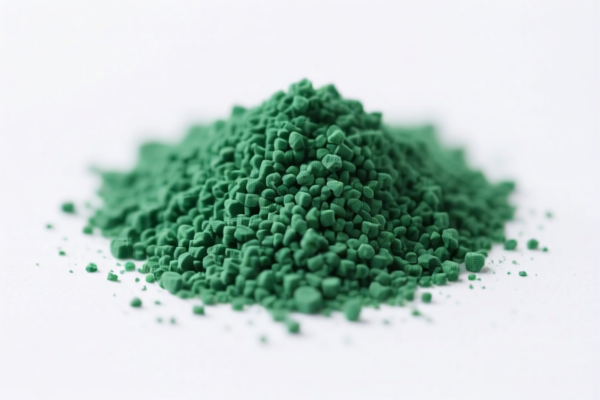
AI分析
🧪 Propyl Chloride Mixture, Condensation Stabilizer Additive
🌐 HS Code Reference & Customs Clearance Guide | 2026 Latest Tariff Analysis | Professional Entry Strategy
📌 I. Product Definition & Classification: What Exactly Is This Substance?
Propyl Chloride Mixture, specifically marketed as a "Condensation Stabilizer Additive," is a chemical substance primarily composed of chlorinated ethane derivatives (likely Ethyl Chloride or Dichloroethane isomers) and other halogenated hydrocarbons. In international trade, the classification hinges on two critical factors:
1. Chemical Structure: Is it a pure saturated halogenated hydrocarbon, or a complex mixture?
2. Composition: Is it a single defined compound or an undefined/mixed composition?
⚠️ Key Distinction Point:
- If the product is a pure saturated halogenated derivative of acyclic hydrocarbons (e.g., pure Ethyl Chloride) → It falls under Chapter 29.
- If the product is a mixture of halogenated hydrocarbons or used as a chemical preparation/mixture → It falls under Chapter 38.
📦 II. HS Code Classification Details (2026 Latest Tariff Authority对照)
Based on the provided data, the product is classified into four potential HS Codes depending on the specific chemical definition and mixture status.
| HS Code | Product Description | Application Scenario | Tax Rate Summary |
|---|---|---|---|
2903.15.00.00 |
Saturated acyclic halogenated derivatives; specifically Chlorinated Ethane (consistent with Dichloroethane structure). | Pure chemical form; fits material requirements for saturated halogenated acyclic hydrocarbons. | 40.5% |
2903.19.60.10 |
Saturated halogenated acyclic hydrocarbon derivatives; classified under "Other" based on material consistency principles. | Broad category for saturated halogenated acyclic derivatives not specified elsewhere; matches chemical structure. | 40.5% |
3824.99.50.00 |
Mixture of halogenated hydrocarbons; fits HS classification for halogenated hydrocarbon mixtures. | Industrial additive blends; defined as a mixture rather than a pure compound. | 41.5% |
3824.99.55.00 |
Halogenated hydrocarbon mixture; fits material definition for halogenated hydrocarbon mixtures; used as a chemical preparation. | Chemical制剂 category; mixed formulation for stabilization purposes. | 38.7% |
🔍 Key Reminder:
- Chapter 29 (2903.xx) applies when the substance is identified as a specific organic chemical compound (like Chlorinated Ethane).
- Chapter 38 (3824.xx) applies when the substance is a mixture or preparation that doesn't fit a single chemical heading, often used for industrial formulations.
- The tax rate varies significantly (38.7% to 41.5%) based on whether it is classified as a pure derivative or a mixture/preparation.
💰 III. 2026 Latest Tariff Rate Breakdown (Including Surtaxes & Policy Add-ons)
✅ Applicable Country: USA (US)
✅ Origin: China (CN)
✅ Effective Date: From November 10, 2025 (for subsequent imports)
🎯 1. 2903.15.00.00 – Chlorinated Ethane (Saturated Derivative)
| Item | Details |
|---|---|
| Base Duty Rate | 5.5% (Ad Valorem) |
| Section 301 Surcharge | +25.0% |
| Section 122 Tariff | +10.0% |
| Total Tariff Rate | 40.5% |
| Tax Calculation | CIF Value × 40.5% |
| De Minimis Eligibility | ❌ Not Eligible (High-duty items excluded) |
| Legal Basis Path | Base Tariff → Section 301 → Section 122 |
📌 Explanation:
- The 5.5% base duty applies to saturated halogenated derivatives of acyclic hydrocarbons.
- The 25% Section 301 surcharge is a standard penalty on many Chinese chemical imports.
- The 10% Section 122 tariff is an additional levy often applied to specific industrial chemicals.
- Total: 40.5%. This is a high-duty item. Proper documentation proving it is a pure chemical compound is crucial to avoid being misclassified as a mixture (which might have different rates).
🎯 2. 2903.19.60.10 – Other Saturated Halogenated Acyclic Derivatives
| Item | Details |
|---|---|
| Base Duty Rate | 5.5% |
| Section 301 Surcharge | +25.0% |
| Section 122 Tariff | +10.0% |
| Total Tariff Rate | 40.5% |
| Tax Calculation | CIF Value × 40.5% |
| De Minimis Eligibility | ❌ Not Eligible |
| Legal Basis Path | Base Tariff → Section 301 → Section 122 |
📌 Note:
- Similar to2903.15.00.00, this code captures "Other" saturated derivatives.
- The tax burden is identical (40.5%). Classification depends on precise chemical structure vs. the specific listing in2903.15.
🎯 3. 3824.99.50.00 – Mixture of Halogenated Hydrocarbons
| Item | Details |
|---|---|
| Base Duty Rate | 6.5% |
| Section 301 Surcharge | +25.0% |
| Section 122 Tariff | +10.0% |
| Total Tariff Rate | 41.5% |
| Tax Calculation | CIF Value × 41.5% |
| De Minimis Eligibility | ❌ Not Eligible |
| Legal Basis Path | Base Tariff → Section 301 → Section 122 |
📌 Explanation:
- If the product is deemed a mixture rather than a pure compound, it falls under Chapter 38.
- The base duty is slightly higher (6.5% vs. 5.5%), leading to a 41.5% total rate.
- This classification is common for "additives" that are blends of multiple chlorinated compounds.
🎯 4. 3824.99.55.00 – Halogenated Hydrocarbon Mixture (Chemical Preparation)
| Item | Details |
|---|---|
| Base Duty Rate | 3.7% |
| Section 301 Surcharge | +25.0% |
| Section 122 Tariff | +10.0% |
| Total Tariff Rate | 38.7% |
| Tax Calculation | CIF Value × 38.7% |
| De Minimis Eligibility | ❌ Not Eligible |
| Legal Basis Path | Base Tariff → Section 301 → Section 122 |
📌 Note:
- This code offers the lowest total tariff (38.7%) among the options provided.
- It applies to halogenated hydrocarbon mixtures used as chemical preparations or制剂.
- If your product can be legally defined as a "chemical preparation" rather than a specific halogenated derivative, this code may be advantageous. However, it requires strong justification that it is not a simple mixture of defined compounds but a formulated preparation.
🛠️ IV. Customs Clearance Practical Advice (Pitfall Avoidance Guide)
✅ 1. Documentation Checklist (Mandatory)
| Document | Required? | Description |
|---|---|---|
| ✅ Technical Data Sheet (TDS) | ✔️ | Must specify exact chemical composition, % of each component, and CAS numbers. |
| ✅ Formula/Composition Sheet | ✔️ | Crucial for distinguishing between "Pure Compound" (Ch 29) and "Mixture" (Ch 38). |
| ✅ Product Photographs | ✔️ | Clear label showing "Propyl Chloride Mixture" and any hazard symbols. |
| ✅ Safety Data Sheet (SDS) | ✔️ | Must comply with OSHA/HazCom standards; confirms chemical identity. |
| ✅ Commercial Invoice | ✔️ | Description should match HS Code rationale (e.g., "Saturated Chlorinated Hydrocarbon" vs. "Halogenated Mixture"). |
| ✅ Certificate of Origin (CO) | ✔️ | Required for determining origin-based surcharges. |
| ✅ Packing List | ✔️ | Details net/gross weight, dimensions, and packaging type. |
✅ 2. Declaration Strategy (Key Mantras)
🔥 "Clarify Structure, Prove Mixture, Match Description, Avoid Penalty!"
| Scenario | Correct Declaration | Wrong Practice |
|---|---|---|
| Pure Chlorinated Ethane/Dichloroethane | 2903.15.00.00 or 2903.19.60.10 |
Misdeclaring as a mixture → Risk of audit |
| Blend of Chlorinated Compounds | 3824.99.50.00 or 3824.99.55.00 |
Misdeclaring as pure compound → Inaccurate valuation |
| Chemical Additive Formulation | 3824.99.55.00 |
Vague description like "Industrial Chemical" → Delays |
| Undefined Halogenated Mix | 3824.99.50.00 |
Forgetting to disclose components → Penalties |
✅ 3. Special Situations Handling
| Situation | Handling Advice |
|---|---|
| OEM/Private Label | Provide client contract + formula sheet to prove composition. |
| Mixture of Known Compounds | If components are known, justify 3824 over 2903 if it's a blend, not a single compound. |
| Stabilizer Additive | Emphasize the "preparation" nature if aiming for 3824.99.55.00 (lower rate). |
| Hazardous Chemical | Ensure SDS is up-to-date; EPA/OSHA compliance may trigger additional reviews. |
🌍 V. Global Market Comparison (2026 Latest)
| Country/Region | Recommended HS Code | Tariff (China Origin) | Certification Req. | Remarks |
|---|---|---|---|---|
| 🇺🇸 USA | 2903.15.00.00 or 3824.99.55.00 |
38.7% – 41.5% | TSCA Compliance | High duties due to Section 301 & 122 |
| 🇨🇳 China | 2903.15.00.00 |
~5-6% | None (Imported) | Low base duty, no surcharges |
| 🇪🇺 EU | 2903.15.00 (approx.) |
Varies | REACH Registration | Requires REACH compliance for chlorinated organics |
| 🇦🇺 Australia | 2903.15.00 |
~5% | AICIS Assessment | Generally low tariffs, high regulatory scrutiny |
| 🇯🇵 Japan | 2903.15.00 |
~0-5% | CSCL Notification | Low tariffs, strict safety checks |
📌 Conclusion:
- USA imposes the highest burden due to 40.5%–41.5% total tariffs.
- Chapter 38 codes (3824) may offer slight savings (38.7%) if the product is legally a "preparation" rather than a pure compound.
- REACH (EU) and TSCA (USA) compliance are critical non-tariff barriers.
📌 VI. Common Errors & Pitfall Guide (Lessons Learned)
❌ Error 1: Declaring a mixture as a pure compound
👉 Consequence: Customs may reject the declaration, demand reclassification, and apply higher duties or penalties.
❌ Error 2: Using vague terms like "Chemical Additive" without composition details
👉 Consequence: Customs will request additional info, causing delays and potential storage fees.
❌ Error 3: Ignoring Section 122 and Section 301 surcharges
👉 Consequence: Underpayment of duties, leading to audits and back taxes.
❌ Error 4: Failing to provide SDS/TDS
👉 Consequence: Shipment hold until chemical identity is verified.
✅ Correct Approach:
"Propyl Chloride Mixture, Condensation Stabilizer Additive (Composition: Ethyl Chloride 80%, Other Halogenated Hydrocarbons 20%), TSCA Compliant, CAS No. [Insert]"
🎯 VII. Conclusion: Professional Declaration Saves Costs!
🎯 Remember the Mantra:
🔹 "Structure Determines Chapter, Mixture Drives Rate, Declare Precisely, Avoid Delay!"
🔹 "40.5% for Pure, 38.7% for Prep, Check Composition to Save Cash!"
📌 Pro Tip:
If your product qualifies as a chemical preparation (3824.99.55.00), the 38.7% rate is 1.8% lower than the pure compound rates. Ensure your formulation and marketing materials support this classification to optimize costs.
📣 Immediate Action Required:
📞 Consult a customs broker + Provide Formula Sheet + Apply for Pre-Ruling if high value
🚀 Ensure smooth clearance, minimize duty burden, and protect your supply chain!
✨ Professional Clearance Starts with Precise Classification!
💼 Every Percent Counts in Chemical Trade!
用户评价
关于 HS 编码归类
协调制度(HS)是由世界海关组织(WCO)制定的国际贸易商品分类标准。全球 200 多个国家采用 HS 系统作为海关关税、贸易统计和进出口监管的基础。
每个 HS 编码遵循以下层级结构:
- 章(2 位)——商品大类(例如:第 84 章:机器和机械设备)
- 品目(4 位)——章内的更具体分类
- 子目(6 位)——国际通用细分,所有 WCO 成员国统一使用
- 本国细分(8-10 位)——各国自行扩展的细分编码,如美国 HTSUS 10 位编码
正确的 HS 编码归类对于顺利通关、准确缴纳关税和遵守贸易法规至关重要。错误归类可能导致海关延误、多缴关税或罚款。
从CN进口到US时,适用的关税税率可能包括:
- 最惠国(MFN)税率——适用于 WTO 成员国的标准关税税率
- 普通税率——适用于无贸易协定国家
- 贸易救济关税——附加关税,如 301 条款(反倾销)、232 条款(国家安全)或反补贴税
本页内容仅供参考。如需正式归类,请咨询当地海关或持牌报关代理。