Propyl Chloride Mixture, Condensation Stabilizer Additive
CN → US| HS Code | Tariff Rate | Origin | Destination | Doc |
|---|---|---|---|---|
| 2903150000 | 40.5% | CN | US | Official Doc |
| 2903196010 | 40.5% | CN | US | Official Doc |
| 3824995000 | 41.5% | CN | US | Official Doc |
| 3824995500 | 38.7% | CN | US | Official Doc |
Product Images
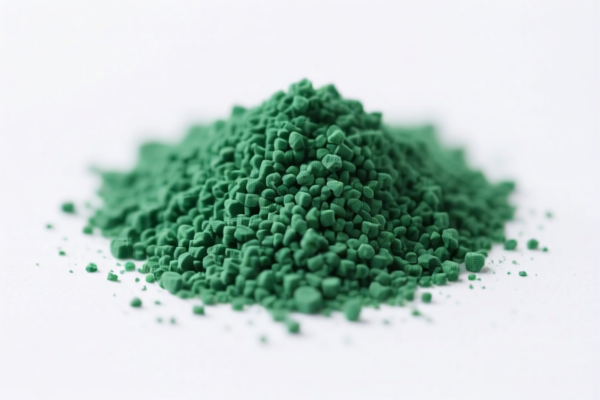

AI Analysis
🧪 Propyl Chloride Mixture, Condensation Stabilizer Additive
🌐 HS Code Reference & Customs Clearance Guide | 2026 Latest Tariff Analysis | Professional Entry Strategy
📌 I. Product Definition & Classification: What Exactly Is This Substance?
Propyl Chloride Mixture, specifically marketed as a "Condensation Stabilizer Additive," is a chemical substance primarily composed of chlorinated ethane derivatives (likely Ethyl Chloride or Dichloroethane isomers) and other halogenated hydrocarbons. In international trade, the classification hinges on two critical factors:
1. Chemical Structure: Is it a pure saturated halogenated hydrocarbon, or a complex mixture?
2. Composition: Is it a single defined compound or an undefined/mixed composition?
⚠️ Key Distinction Point:
- If the product is a pure saturated halogenated derivative of acyclic hydrocarbons (e.g., pure Ethyl Chloride) → It falls under Chapter 29.
- If the product is a mixture of halogenated hydrocarbons or used as a chemical preparation/mixture → It falls under Chapter 38.
📦 II. HS Code Classification Details (2026 Latest Tariff Authority对照)
Based on the provided data, the product is classified into four potential HS Codes depending on the specific chemical definition and mixture status.
| HS Code | Product Description | Application Scenario | Tax Rate Summary |
|---|---|---|---|
2903.15.00.00 |
Saturated acyclic halogenated derivatives; specifically Chlorinated Ethane (consistent with Dichloroethane structure). | Pure chemical form; fits material requirements for saturated halogenated acyclic hydrocarbons. | 40.5% |
2903.19.60.10 |
Saturated halogenated acyclic hydrocarbon derivatives; classified under "Other" based on material consistency principles. | Broad category for saturated halogenated acyclic derivatives not specified elsewhere; matches chemical structure. | 40.5% |
3824.99.50.00 |
Mixture of halogenated hydrocarbons; fits HS classification for halogenated hydrocarbon mixtures. | Industrial additive blends; defined as a mixture rather than a pure compound. | 41.5% |
3824.99.55.00 |
Halogenated hydrocarbon mixture; fits material definition for halogenated hydrocarbon mixtures; used as a chemical preparation. | Chemical制剂 category; mixed formulation for stabilization purposes. | 38.7% |
🔍 Key Reminder:
- Chapter 29 (2903.xx) applies when the substance is identified as a specific organic chemical compound (like Chlorinated Ethane).
- Chapter 38 (3824.xx) applies when the substance is a mixture or preparation that doesn't fit a single chemical heading, often used for industrial formulations.
- The tax rate varies significantly (38.7% to 41.5%) based on whether it is classified as a pure derivative or a mixture/preparation.
💰 III. 2026 Latest Tariff Rate Breakdown (Including Surtaxes & Policy Add-ons)
✅ Applicable Country: USA (US)
✅ Origin: China (CN)
✅ Effective Date: From November 10, 2025 (for subsequent imports)
🎯 1. 2903.15.00.00 – Chlorinated Ethane (Saturated Derivative)
| Item | Details |
|---|---|
| Base Duty Rate | 5.5% (Ad Valorem) |
| Section 301 Surcharge | +25.0% |
| Section 122 Tariff | +10.0% |
| Total Tariff Rate | 40.5% |
| Tax Calculation | CIF Value × 40.5% |
| De Minimis Eligibility | ❌ Not Eligible (High-duty items excluded) |
| Legal Basis Path | Base Tariff → Section 301 → Section 122 |
📌 Explanation:
- The 5.5% base duty applies to saturated halogenated derivatives of acyclic hydrocarbons.
- The 25% Section 301 surcharge is a standard penalty on many Chinese chemical imports.
- The 10% Section 122 tariff is an additional levy often applied to specific industrial chemicals.
- Total: 40.5%. This is a high-duty item. Proper documentation proving it is a pure chemical compound is crucial to avoid being misclassified as a mixture (which might have different rates).
🎯 2. 2903.19.60.10 – Other Saturated Halogenated Acyclic Derivatives
| Item | Details |
|---|---|
| Base Duty Rate | 5.5% |
| Section 301 Surcharge | +25.0% |
| Section 122 Tariff | +10.0% |
| Total Tariff Rate | 40.5% |
| Tax Calculation | CIF Value × 40.5% |
| De Minimis Eligibility | ❌ Not Eligible |
| Legal Basis Path | Base Tariff → Section 301 → Section 122 |
📌 Note:
- Similar to2903.15.00.00, this code captures "Other" saturated derivatives.
- The tax burden is identical (40.5%). Classification depends on precise chemical structure vs. the specific listing in2903.15.
🎯 3. 3824.99.50.00 – Mixture of Halogenated Hydrocarbons
| Item | Details |
|---|---|
| Base Duty Rate | 6.5% |
| Section 301 Surcharge | +25.0% |
| Section 122 Tariff | +10.0% |
| Total Tariff Rate | 41.5% |
| Tax Calculation | CIF Value × 41.5% |
| De Minimis Eligibility | ❌ Not Eligible |
| Legal Basis Path | Base Tariff → Section 301 → Section 122 |
📌 Explanation:
- If the product is deemed a mixture rather than a pure compound, it falls under Chapter 38.
- The base duty is slightly higher (6.5% vs. 5.5%), leading to a 41.5% total rate.
- This classification is common for "additives" that are blends of multiple chlorinated compounds.
🎯 4. 3824.99.55.00 – Halogenated Hydrocarbon Mixture (Chemical Preparation)
| Item | Details |
|---|---|
| Base Duty Rate | 3.7% |
| Section 301 Surcharge | +25.0% |
| Section 122 Tariff | +10.0% |
| Total Tariff Rate | 38.7% |
| Tax Calculation | CIF Value × 38.7% |
| De Minimis Eligibility | ❌ Not Eligible |
| Legal Basis Path | Base Tariff → Section 301 → Section 122 |
📌 Note:
- This code offers the lowest total tariff (38.7%) among the options provided.
- It applies to halogenated hydrocarbon mixtures used as chemical preparations or制剂.
- If your product can be legally defined as a "chemical preparation" rather than a specific halogenated derivative, this code may be advantageous. However, it requires strong justification that it is not a simple mixture of defined compounds but a formulated preparation.
🛠️ IV. Customs Clearance Practical Advice (Pitfall Avoidance Guide)
✅ 1. Documentation Checklist (Mandatory)
| Document | Required? | Description |
|---|---|---|
| ✅ Technical Data Sheet (TDS) | ✔️ | Must specify exact chemical composition, % of each component, and CAS numbers. |
| ✅ Formula/Composition Sheet | ✔️ | Crucial for distinguishing between "Pure Compound" (Ch 29) and "Mixture" (Ch 38). |
| ✅ Product Photographs | ✔️ | Clear label showing "Propyl Chloride Mixture" and any hazard symbols. |
| ✅ Safety Data Sheet (SDS) | ✔️ | Must comply with OSHA/HazCom standards; confirms chemical identity. |
| ✅ Commercial Invoice | ✔️ | Description should match HS Code rationale (e.g., "Saturated Chlorinated Hydrocarbon" vs. "Halogenated Mixture"). |
| ✅ Certificate of Origin (CO) | ✔️ | Required for determining origin-based surcharges. |
| ✅ Packing List | ✔️ | Details net/gross weight, dimensions, and packaging type. |
✅ 2. Declaration Strategy (Key Mantras)
🔥 "Clarify Structure, Prove Mixture, Match Description, Avoid Penalty!"
| Scenario | Correct Declaration | Wrong Practice |
|---|---|---|
| Pure Chlorinated Ethane/Dichloroethane | 2903.15.00.00 or 2903.19.60.10 |
Misdeclaring as a mixture → Risk of audit |
| Blend of Chlorinated Compounds | 3824.99.50.00 or 3824.99.55.00 |
Misdeclaring as pure compound → Inaccurate valuation |
| Chemical Additive Formulation | 3824.99.55.00 |
Vague description like "Industrial Chemical" → Delays |
| Undefined Halogenated Mix | 3824.99.50.00 |
Forgetting to disclose components → Penalties |
✅ 3. Special Situations Handling
| Situation | Handling Advice |
|---|---|
| OEM/Private Label | Provide client contract + formula sheet to prove composition. |
| Mixture of Known Compounds | If components are known, justify 3824 over 2903 if it's a blend, not a single compound. |
| Stabilizer Additive | Emphasize the "preparation" nature if aiming for 3824.99.55.00 (lower rate). |
| Hazardous Chemical | Ensure SDS is up-to-date; EPA/OSHA compliance may trigger additional reviews. |
🌍 V. Global Market Comparison (2026 Latest)
| Country/Region | Recommended HS Code | Tariff (China Origin) | Certification Req. | Remarks |
|---|---|---|---|---|
| 🇺🇸 USA | 2903.15.00.00 or 3824.99.55.00 |
38.7% – 41.5% | TSCA Compliance | High duties due to Section 301 & 122 |
| 🇨🇳 China | 2903.15.00.00 |
~5-6% | None (Imported) | Low base duty, no surcharges |
| 🇪🇺 EU | 2903.15.00 (approx.) |
Varies | REACH Registration | Requires REACH compliance for chlorinated organics |
| 🇦🇺 Australia | 2903.15.00 |
~5% | AICIS Assessment | Generally low tariffs, high regulatory scrutiny |
| 🇯🇵 Japan | 2903.15.00 |
~0-5% | CSCL Notification | Low tariffs, strict safety checks |
📌 Conclusion:
- USA imposes the highest burden due to 40.5%–41.5% total tariffs.
- Chapter 38 codes (3824) may offer slight savings (38.7%) if the product is legally a "preparation" rather than a pure compound.
- REACH (EU) and TSCA (USA) compliance are critical non-tariff barriers.
📌 VI. Common Errors & Pitfall Guide (Lessons Learned)
❌ Error 1: Declaring a mixture as a pure compound
👉 Consequence: Customs may reject the declaration, demand reclassification, and apply higher duties or penalties.
❌ Error 2: Using vague terms like "Chemical Additive" without composition details
👉 Consequence: Customs will request additional info, causing delays and potential storage fees.
❌ Error 3: Ignoring Section 122 and Section 301 surcharges
👉 Consequence: Underpayment of duties, leading to audits and back taxes.
❌ Error 4: Failing to provide SDS/TDS
👉 Consequence: Shipment hold until chemical identity is verified.
✅ Correct Approach:
"Propyl Chloride Mixture, Condensation Stabilizer Additive (Composition: Ethyl Chloride 80%, Other Halogenated Hydrocarbons 20%), TSCA Compliant, CAS No. [Insert]"
🎯 VII. Conclusion: Professional Declaration Saves Costs!
🎯 Remember the Mantra:
🔹 "Structure Determines Chapter, Mixture Drives Rate, Declare Precisely, Avoid Delay!"
🔹 "40.5% for Pure, 38.7% for Prep, Check Composition to Save Cash!"
📌 Pro Tip:
If your product qualifies as a chemical preparation (3824.99.55.00), the 38.7% rate is 1.8% lower than the pure compound rates. Ensure your formulation and marketing materials support this classification to optimize costs.
📣 Immediate Action Required:
📞 Consult a customs broker + Provide Formula Sheet + Apply for Pre-Ruling if high value
🚀 Ensure smooth clearance, minimize duty burden, and protect your supply chain!
✨ Professional Clearance Starts with Precise Classification!
💼 Every Percent Counts in Chemical Trade!
Customer Reviews
About HS Code Classification
The Harmonized System (HS) is an internationally standardized nomenclature developed by the World Customs Organization (WCO) to classify traded products. Over 200 countries use the HS system as the basis for customs tariffs, trade statistics, and import/export regulations.
Each HS code follows a hierarchical structure:
- Chapter (2 digits) — Broad category of goods (e.g., Chapter 84: Machinery and Mechanical Appliances)
- Heading (4 digits) — More specific grouping within the chapter
- Subheading (6 digits) — Internationally standardized breakdown, used by all WCO member countries
- National subdivisions (8-10 digits) — Country-specific extensions for further classification, such as US HTSUS 10-digit codes
Correct HS code classification is essential for smooth customs clearance, accurate duty payment, and compliance with trade regulations. Misclassification can lead to customs delays, overpayment of duties, or penalties.
When importing from CN to US, the applicable tariff rates may include:
- Most-Favored-Nation (MFN) rate — The standard duty rate applied to WTO members
- General rate — Applied to countries without trade agreements
- Trade remedy duties — Additional tariffs such as Section 301 (anti-dumping), Section 232 (national security), or countervailing duties
The information provided on this page is for reference purposes only. For official classification, please consult with your local customs authority or a licensed customs broker.