Rattan Utility Basket
CN → US| HS编码 | 关税税率 | 原产国 | 目的国 | 文档 |
|---|---|---|---|---|
| 3926909989 | 22.8% | CN | US | 官方文档 |
| 4602191700 | 35.0% | CN | US | 官方文档 |
| 4602196000 | 35.0% | CN | US | 官方文档 |
商品图片
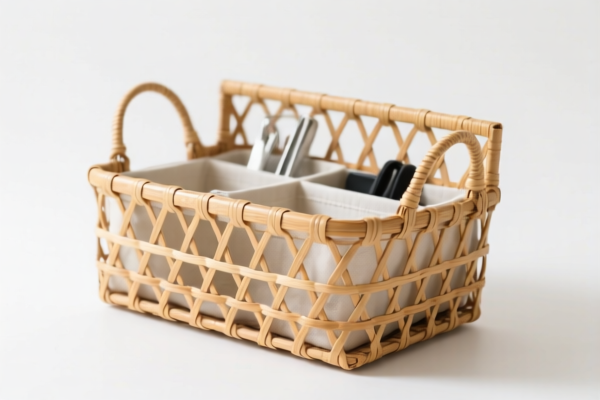
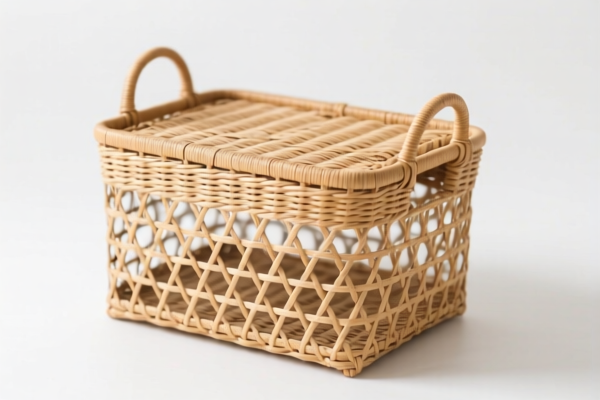
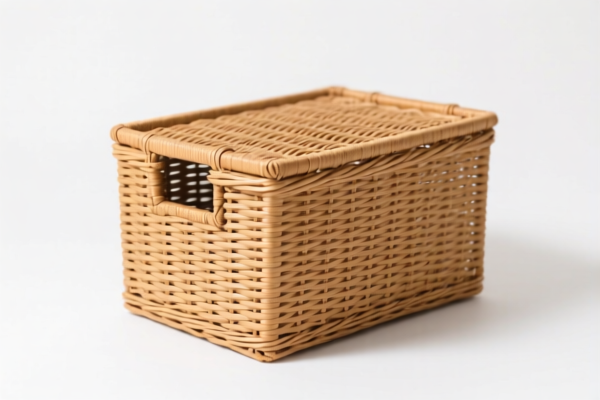
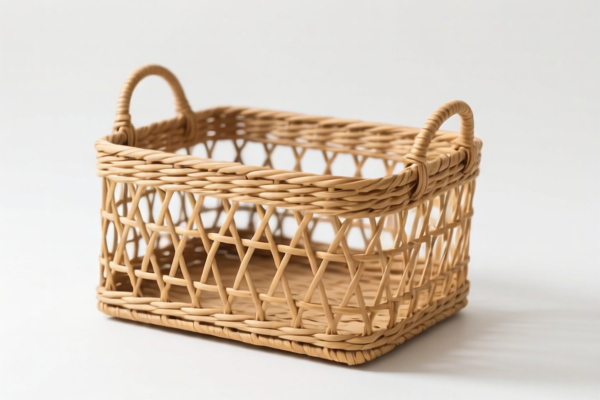
AI分析
🧺 Rattan Utility Basket (柳条收纳筐/柳编制品)
🌐 HS Code Reference & Customs Clearance Guide | 2026 Latest Tariff Analysis | Professional Strategy
📌 I. Product Definition: What Exactly is a "Rattan Utility Basket"?
A Rattan Utility Basket is a versatile container used for storage, organization, or decoration. In international trade, its classification hinges on two critical factors: Material Composition and Manufacturing Technique.
- True Wicker/Rattan (Chapter 46): Made from plant materials (rattan, willow, reed, straw) woven into shape. This is considered a "woven article of vegetable materials."
- Plastic/Mixed Material (Chapter 39): If the basket is made of molded plastic, or if plastic is the primary binding material that gives the product its essential character, it falls under plastics.
⚠️ Critical Distinction Point:
- If the basket is 100% plant-based (willow/rattan) and woven → Go to HS Code 4602.
- If the basket is plastic or a composite where plastic defines the essence → Go to HS Code 3926.
📦 II. HS Code Classification Details (2026 Latest Tariff Alignment)
Based on the provided data, here are the three potential classifications with their corresponding tax breakdowns.
🟢 Option 1: True Woven Plant Material (High Compatibility)
| HS Code | Product Description | Summary | Total Tax |
|---|---|---|---|
| 4602.19.17.00 | Woven articles of vegetable materials (willow/rattan). Match successful: Willow corresponds to plant material; utility basket fits the definition of woven basketware. | ✅ Match Success: Willow = Plant Material; Basket = Woven Article. | 35.0% |
| 4602.19.60.00 | Other woven articles of vegetable materials. Match successful: Willow and woven articles share material consistency; basket fits the woven product morphology. | ✅ Match Success: Willow = Woven Material; Basket = Woven Morphology. | 35.0% |
🔍 Key Insight:
- Both HS Codes under Chapter 46 assume the product is genuinely woven from natural plant fibers (like willow/rattan). - The difference between.17.00and.60.00often lies in specific sub-category nuances (e.g., specific type of weaving or exact plant species), but both carry the same tax burden.
🔴 Option 2: Plastic/Mixed Material (Alternative Classification)
| HS Code | Product Description | Summary | Total Tax |
|---|---|---|---|
| 3926.90.99.89 | Other articles of plastics. Judgment: Classified as "Other Articles," likely contains plastic material or is a composite of plastic with other materials. | ⚠️ Alternative: If plastic is dominant or it's a plastic imitation of rattan. | 22.8% |
🔍 Key Insight:
- This code applies if the product is not strictly "woven vegetable material" but rather plastic, resin, or a composite where plastic is the primary component. - Although the tax rate is lower, misclassifying a true rattan basket here can lead to customs penalties for incorrect declaration.
💰 III. 2026 Tariff Rate Breakdown (Detailed Analysis)
✅ Applicable Country: United States (US)
✅ Origin: China (CN)
✅ Effective Time: Current Rates Apply (Includes Section 301 & IEEPA Levies)
🎯 1. For HS Codes 4602.19.17.00 & 4602.19.60.00 (Woven Plant Materials)
| Item | Detail |
|---|---|
| Base Duty Rate | 0.0% (Free for many woven vegetable articles) |
| Section 301 Additional Duty | +25.0% (Standard penalty for Chinese origin under USITC Footnotes) |
| IEEPA Duty (Section 122) | +10.0% (Additional levy on Chinese imports) |
| Total Tax Rate | 35.0% |
| Tax Calculation | CIF Value × 35% |
| De Minimis Eligibility | ❌ NOT Eligible (High duty rates usually block $800 de minimis exemption for certain categories or trigger stricter scrutiny) |
| Legal Basis Path | USITC:4602.19.xx.xx → FOOTNOTE:Section 301 (25%) → IEEPA:10% |
📌 Explanation:
- Even though the base tariff is 0%, the Section 301 tariff (25%) and IEEPA tariff (10%) are added on top. - Total 35% is significantly high. This is a common "trap" for natural-looking products that are still manufactured in China.
🎯 2. For HS Code 3926.90.99.89 (Plastic/Composite Articles)
| Item | Detail |
|---|---|
| Base Duty Rate | 5.3% |
| Section 301 Additional Duty | +7.5% (Note: Some plastic items have different Section 301 lists) |
| IEEPA Duty (Section 122) | +10.0% |
| Total Tax Rate | 22.8% |
| Tax Calculation | CIF Value × 22.8% |
| De Minimis Eligibility | ❓ Check Specifics (Plastics may have different de minimis thresholds depending on current enforcement) |
| Legal Basis Path | USITC:3926.90.99.89 → Section 301 (7.5%) → IEEPA:10% |
📌 Explanation:
- The base rate is 5.3%, not 0%. - The Section 301 levy is 7.5% (lower than the 25% for baskets), resulting in a lower total (22.8%). - Risk: If this is actually a rattan basket, using this code is misclassification fraud.
🛠️ IV. Customs Clearance Practical Advice (Avoiding Pitfalls)
✅ 1. Documentation Checklist (Essential)
| Document | Requirement | Reason |
|---|---|---|
| Product Specifications | ✔️ Must Provide | Clearly state: "Willow/Rattan Woven Basket" or "Plastic Wicker-Style Basket." |
| Material Composition | ✔️ Must Provide | Percentage breakdown (e.g., 95% Willow, 5% Wood Base). Crucial for Chapter 46 vs 39. |
| Photos | ✔️ Must Provide | High-res photos showing the woven texture (proves Chapter 46) vs. molded seams (proves Chapter 39). |
| Bill of Lading/Invoice | ✔️ Must Provide | Consistent description with HS Code. |
| Fiber Analysis Report | ⚠️ Recommended | If customs questions the material, a lab report proving "vegetable fiber" is vital. |
✅ 2. Declaration Strategy (Key Tips)
🔥 "Material Dictates Code, Texture Confirms Truth!"
| Scenario | Recommended HS Code | Declaration Description |
|---|---|---|
| True Rattan/Willow Basket | 4602.19.17.00 or 4602.19.60.00 | "Handwoven Willow Storage Basket, Natural Vegetable Fiber" |
| Plastic Mimic (Wicker Style) | 3926.90.99.89 | "Plastic Wicker-Style Utility Basket" |
| Mixed Material (Plastic Frame + Rattan Sides) | 3926.90.99.89 | If plastic gives essential character |
| Mixed Material (Rattan Frame + Plastic Liner) | 4602.19.17.00 | If rattan gives essential character |
✅ 3. Special Considerations
| Issue | Advice |
|---|---|
| De Minimis ($800) | ❌ Likely Excluded: Due to the high Section 301 (25%) or IEEPA (10%) rates, many "basket" categories are explicitly excluded from de minimis entry. Check specific HTS exclusion lists. |
| Counterfeit Risk | Ensure the product is not misleadingly labeled as "Artisan Made" if it's mass-produced plastic, to avoid consumer protection issues. |
| Origin Labeling | Clearly mark "Made in China" to avoid Country of Origin fraud charges. |
🌍 V. Global Market Comparison (2026 Snapshot)
| Market | HS Code | Est. Total Duty | Key Requirement |
|---|---|---|---|
| 🇺🇸 USA | 4602.19.17.00 | 35.0% | Strict Section 301 + IEEPA enforcement |
| 🇺🇸 USA | 3926.90.99.89 | 22.8% | Requires proof of plastic composition |
| 🇪🇺 EU | 4602.19 | Varies (0-5%) | Low base duty, but strict anti-dumping on plastics |
| 🇨🇳 China | 4602.19 | 5-10% | Import duty on re-imported foreign goods |
📌 Conclusion for US Importers:
- True Rattan Baskets are expensive to import (35% total) due to political tariffs.
- Plastic Baskets are cheaper (22.8%) but only if they are legally plastic.
- DO NOT declare a plastic basket as rattan to save 12.2%—the risk of customs seizure, fines, and back-duties is too high.
📌 VI. Common Mistakes & Pitfalls (Lessons Learned)
❌ Mistake 1: Using "Rattan" in the description for a 100% Plastic basket.
👉 Consequence: Customs audit → Fines for Fraud → Back-duties + Penalty.
❌ Mistake 2: Assuming 0% Base Duty means 0% Total Tax.
👉 Consequence: Underestimating costs by 35%. Budget correctly for Section 301 + IEEPA.
❌ Mistake 3: Ignoring IEEPA Section 122.
👉 Consequence: Unexpected +10% charge at border if not pre-calculated.
✅ Correct Practice:
"Willow Woven Storage Basket, 100% Vegetable Fiber, Made in China. HS: 4602.19.17.00. Duty: 35% (0% Base + 25% Sec 301 + 10% IEEPA)."
🎯 VII. Conclusion: Professional Declaration, Cost Efficiency!
🎯 Remember the Rule:
🔹 "Natural Fiber = Chapter 46 (35% Total)."
🔹 "Plastic/Mixed = Chapter 39 (22.8% Total)."
🔹 "Don't Hide Plastic as Rattan—It Will Cost You More!"
📌 Pro Tip:
If your supply chain is flexible, consider sourcing from Vietnam or Thailand for woven baskets to potentially avoid the 25% Section 301 tariff (though IEEPA may still apply). Always request a binding ruling from US Customs before shipping large volumes.
📣 Take Action:
📞 Verify Material Composition → 📝 Select Correct HS Code → 🚚 Declare Accurately.
Avoid Customs Delays, Ensure Smooth Clearance, Protect Your Margins!
✨ Precision in Classification is the Key to Profitability!
💼 Every percentage point counts in global trade.
用户评价
关于 HS 编码归类
协调制度(HS)是由世界海关组织(WCO)制定的国际贸易商品分类标准。全球 200 多个国家采用 HS 系统作为海关关税、贸易统计和进出口监管的基础。
每个 HS 编码遵循以下层级结构:
- 章(2 位)——商品大类(例如:第 84 章:机器和机械设备)
- 品目(4 位)——章内的更具体分类
- 子目(6 位)——国际通用细分,所有 WCO 成员国统一使用
- 本国细分(8-10 位)——各国自行扩展的细分编码,如美国 HTSUS 10 位编码
正确的 HS 编码归类对于顺利通关、准确缴纳关税和遵守贸易法规至关重要。错误归类可能导致海关延误、多缴关税或罚款。
从CN进口到US时,适用的关税税率可能包括:
- 最惠国(MFN)税率——适用于 WTO 成员国的标准关税税率
- 普通税率——适用于无贸易协定国家
- 贸易救济关税——附加关税,如 301 条款(反倾销)、232 条款(国家安全)或反补贴税
本页内容仅供参考。如需正式归类,请咨询当地海关或持牌报关代理。