Rattan Utility Basket
CN → US| HS Code | Tariff Rate | Origin | Destination | Doc |
|---|---|---|---|---|
| 3926909989 | 22.8% | CN | US | Official Doc |
| 4602191700 | 35.0% | CN | US | Official Doc |
| 4602196000 | 35.0% | CN | US | Official Doc |
Product Images
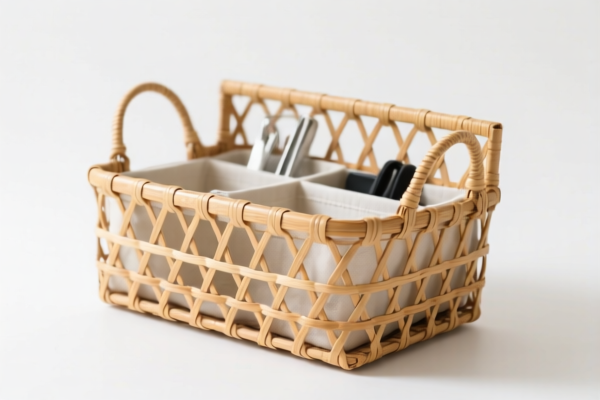
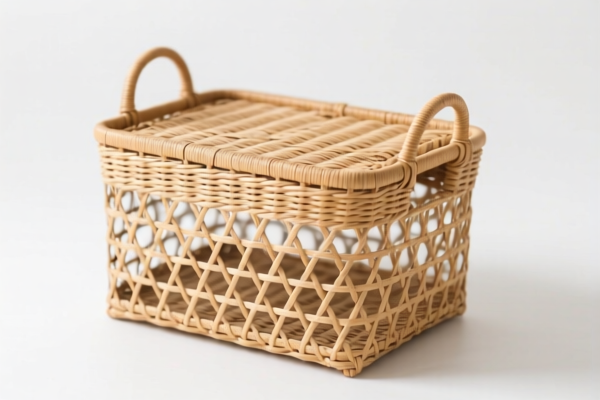
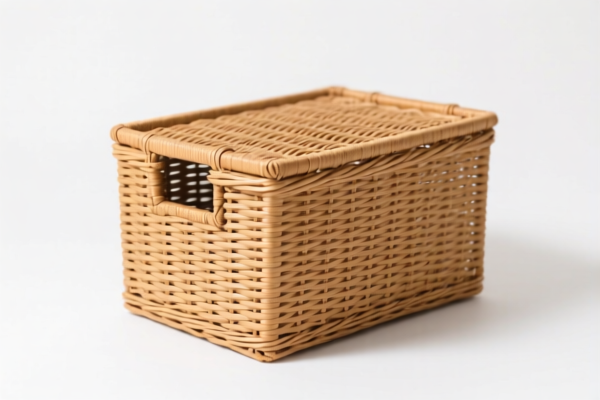
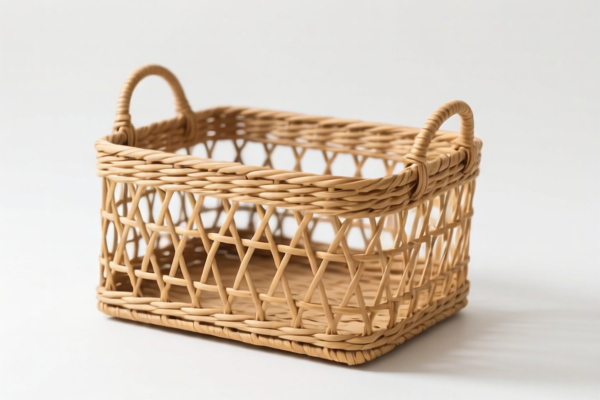
AI Analysis
🧺 Rattan Utility Basket (柳条收纳筐/柳编制品)
🌐 HS Code Reference & Customs Clearance Guide | 2026 Latest Tariff Analysis | Professional Strategy
📌 I. Product Definition: What Exactly is a "Rattan Utility Basket"?
A Rattan Utility Basket is a versatile container used for storage, organization, or decoration. In international trade, its classification hinges on two critical factors: Material Composition and Manufacturing Technique.
- True Wicker/Rattan (Chapter 46): Made from plant materials (rattan, willow, reed, straw) woven into shape. This is considered a "woven article of vegetable materials."
- Plastic/Mixed Material (Chapter 39): If the basket is made of molded plastic, or if plastic is the primary binding material that gives the product its essential character, it falls under plastics.
⚠️ Critical Distinction Point:
- If the basket is 100% plant-based (willow/rattan) and woven → Go to HS Code 4602.
- If the basket is plastic or a composite where plastic defines the essence → Go to HS Code 3926.
📦 II. HS Code Classification Details (2026 Latest Tariff Alignment)
Based on the provided data, here are the three potential classifications with their corresponding tax breakdowns.
🟢 Option 1: True Woven Plant Material (High Compatibility)
| HS Code | Product Description | Summary | Total Tax |
|---|---|---|---|
| 4602.19.17.00 | Woven articles of vegetable materials (willow/rattan). Match successful: Willow corresponds to plant material; utility basket fits the definition of woven basketware. | ✅ Match Success: Willow = Plant Material; Basket = Woven Article. | 35.0% |
| 4602.19.60.00 | Other woven articles of vegetable materials. Match successful: Willow and woven articles share material consistency; basket fits the woven product morphology. | ✅ Match Success: Willow = Woven Material; Basket = Woven Morphology. | 35.0% |
🔍 Key Insight:
- Both HS Codes under Chapter 46 assume the product is genuinely woven from natural plant fibers (like willow/rattan). - The difference between.17.00and.60.00often lies in specific sub-category nuances (e.g., specific type of weaving or exact plant species), but both carry the same tax burden.
🔴 Option 2: Plastic/Mixed Material (Alternative Classification)
| HS Code | Product Description | Summary | Total Tax |
|---|---|---|---|
| 3926.90.99.89 | Other articles of plastics. Judgment: Classified as "Other Articles," likely contains plastic material or is a composite of plastic with other materials. | ⚠️ Alternative: If plastic is dominant or it's a plastic imitation of rattan. | 22.8% |
🔍 Key Insight:
- This code applies if the product is not strictly "woven vegetable material" but rather plastic, resin, or a composite where plastic is the primary component. - Although the tax rate is lower, misclassifying a true rattan basket here can lead to customs penalties for incorrect declaration.
💰 III. 2026 Tariff Rate Breakdown (Detailed Analysis)
✅ Applicable Country: United States (US)
✅ Origin: China (CN)
✅ Effective Time: Current Rates Apply (Includes Section 301 & IEEPA Levies)
🎯 1. For HS Codes 4602.19.17.00 & 4602.19.60.00 (Woven Plant Materials)
| Item | Detail |
|---|---|
| Base Duty Rate | 0.0% (Free for many woven vegetable articles) |
| Section 301 Additional Duty | +25.0% (Standard penalty for Chinese origin under USITC Footnotes) |
| IEEPA Duty (Section 122) | +10.0% (Additional levy on Chinese imports) |
| Total Tax Rate | 35.0% |
| Tax Calculation | CIF Value × 35% |
| De Minimis Eligibility | ❌ NOT Eligible (High duty rates usually block $800 de minimis exemption for certain categories or trigger stricter scrutiny) |
| Legal Basis Path | USITC:4602.19.xx.xx → FOOTNOTE:Section 301 (25%) → IEEPA:10% |
📌 Explanation:
- Even though the base tariff is 0%, the Section 301 tariff (25%) and IEEPA tariff (10%) are added on top. - Total 35% is significantly high. This is a common "trap" for natural-looking products that are still manufactured in China.
🎯 2. For HS Code 3926.90.99.89 (Plastic/Composite Articles)
| Item | Detail |
|---|---|
| Base Duty Rate | 5.3% |
| Section 301 Additional Duty | +7.5% (Note: Some plastic items have different Section 301 lists) |
| IEEPA Duty (Section 122) | +10.0% |
| Total Tax Rate | 22.8% |
| Tax Calculation | CIF Value × 22.8% |
| De Minimis Eligibility | ❓ Check Specifics (Plastics may have different de minimis thresholds depending on current enforcement) |
| Legal Basis Path | USITC:3926.90.99.89 → Section 301 (7.5%) → IEEPA:10% |
📌 Explanation:
- The base rate is 5.3%, not 0%. - The Section 301 levy is 7.5% (lower than the 25% for baskets), resulting in a lower total (22.8%). - Risk: If this is actually a rattan basket, using this code is misclassification fraud.
🛠️ IV. Customs Clearance Practical Advice (Avoiding Pitfalls)
✅ 1. Documentation Checklist (Essential)
| Document | Requirement | Reason |
|---|---|---|
| Product Specifications | ✔️ Must Provide | Clearly state: "Willow/Rattan Woven Basket" or "Plastic Wicker-Style Basket." |
| Material Composition | ✔️ Must Provide | Percentage breakdown (e.g., 95% Willow, 5% Wood Base). Crucial for Chapter 46 vs 39. |
| Photos | ✔️ Must Provide | High-res photos showing the woven texture (proves Chapter 46) vs. molded seams (proves Chapter 39). |
| Bill of Lading/Invoice | ✔️ Must Provide | Consistent description with HS Code. |
| Fiber Analysis Report | ⚠️ Recommended | If customs questions the material, a lab report proving "vegetable fiber" is vital. |
✅ 2. Declaration Strategy (Key Tips)
🔥 "Material Dictates Code, Texture Confirms Truth!"
| Scenario | Recommended HS Code | Declaration Description |
|---|---|---|
| True Rattan/Willow Basket | 4602.19.17.00 or 4602.19.60.00 | "Handwoven Willow Storage Basket, Natural Vegetable Fiber" |
| Plastic Mimic (Wicker Style) | 3926.90.99.89 | "Plastic Wicker-Style Utility Basket" |
| Mixed Material (Plastic Frame + Rattan Sides) | 3926.90.99.89 | If plastic gives essential character |
| Mixed Material (Rattan Frame + Plastic Liner) | 4602.19.17.00 | If rattan gives essential character |
✅ 3. Special Considerations
| Issue | Advice |
|---|---|
| De Minimis ($800) | ❌ Likely Excluded: Due to the high Section 301 (25%) or IEEPA (10%) rates, many "basket" categories are explicitly excluded from de minimis entry. Check specific HTS exclusion lists. |
| Counterfeit Risk | Ensure the product is not misleadingly labeled as "Artisan Made" if it's mass-produced plastic, to avoid consumer protection issues. |
| Origin Labeling | Clearly mark "Made in China" to avoid Country of Origin fraud charges. |
🌍 V. Global Market Comparison (2026 Snapshot)
| Market | HS Code | Est. Total Duty | Key Requirement |
|---|---|---|---|
| 🇺🇸 USA | 4602.19.17.00 | 35.0% | Strict Section 301 + IEEPA enforcement |
| 🇺🇸 USA | 3926.90.99.89 | 22.8% | Requires proof of plastic composition |
| 🇪🇺 EU | 4602.19 | Varies (0-5%) | Low base duty, but strict anti-dumping on plastics |
| 🇨🇳 China | 4602.19 | 5-10% | Import duty on re-imported foreign goods |
📌 Conclusion for US Importers:
- True Rattan Baskets are expensive to import (35% total) due to political tariffs.
- Plastic Baskets are cheaper (22.8%) but only if they are legally plastic.
- DO NOT declare a plastic basket as rattan to save 12.2%—the risk of customs seizure, fines, and back-duties is too high.
📌 VI. Common Mistakes & Pitfalls (Lessons Learned)
❌ Mistake 1: Using "Rattan" in the description for a 100% Plastic basket.
👉 Consequence: Customs audit → Fines for Fraud → Back-duties + Penalty.
❌ Mistake 2: Assuming 0% Base Duty means 0% Total Tax.
👉 Consequence: Underestimating costs by 35%. Budget correctly for Section 301 + IEEPA.
❌ Mistake 3: Ignoring IEEPA Section 122.
👉 Consequence: Unexpected +10% charge at border if not pre-calculated.
✅ Correct Practice:
"Willow Woven Storage Basket, 100% Vegetable Fiber, Made in China. HS: 4602.19.17.00. Duty: 35% (0% Base + 25% Sec 301 + 10% IEEPA)."
🎯 VII. Conclusion: Professional Declaration, Cost Efficiency!
🎯 Remember the Rule:
🔹 "Natural Fiber = Chapter 46 (35% Total)."
🔹 "Plastic/Mixed = Chapter 39 (22.8% Total)."
🔹 "Don't Hide Plastic as Rattan—It Will Cost You More!"
📌 Pro Tip:
If your supply chain is flexible, consider sourcing from Vietnam or Thailand for woven baskets to potentially avoid the 25% Section 301 tariff (though IEEPA may still apply). Always request a binding ruling from US Customs before shipping large volumes.
📣 Take Action:
📞 Verify Material Composition → 📝 Select Correct HS Code → 🚚 Declare Accurately.
Avoid Customs Delays, Ensure Smooth Clearance, Protect Your Margins!
✨ Precision in Classification is the Key to Profitability!
💼 Every percentage point counts in global trade.
Customer Reviews
About HS Code Classification
The Harmonized System (HS) is an internationally standardized nomenclature developed by the World Customs Organization (WCO) to classify traded products. Over 200 countries use the HS system as the basis for customs tariffs, trade statistics, and import/export regulations.
Each HS code follows a hierarchical structure:
- Chapter (2 digits) — Broad category of goods (e.g., Chapter 84: Machinery and Mechanical Appliances)
- Heading (4 digits) — More specific grouping within the chapter
- Subheading (6 digits) — Internationally standardized breakdown, used by all WCO member countries
- National subdivisions (8-10 digits) — Country-specific extensions for further classification, such as US HTSUS 10-digit codes
Correct HS code classification is essential for smooth customs clearance, accurate duty payment, and compliance with trade regulations. Misclassification can lead to customs delays, overpayment of duties, or penalties.
When importing from CN to US, the applicable tariff rates may include:
- Most-Favored-Nation (MFN) rate — The standard duty rate applied to WTO members
- General rate — Applied to countries without trade agreements
- Trade remedy duties — Additional tariffs such as Section 301 (anti-dumping), Section 232 (national security), or countervailing duties
The information provided on this page is for reference purposes only. For official classification, please consult with your local customs authority or a licensed customs broker.