Rattan Webbing with Natural Finish
CN → US| HS编码 | 关税税率 | 原产国 | 目的国 | 文档 |
|---|---|---|---|---|
| 4601930100 | 35.0% | CN | US | 官方文档 |
| 4601930500 | 37.7% | CN | US | 官方文档 |
商品图片
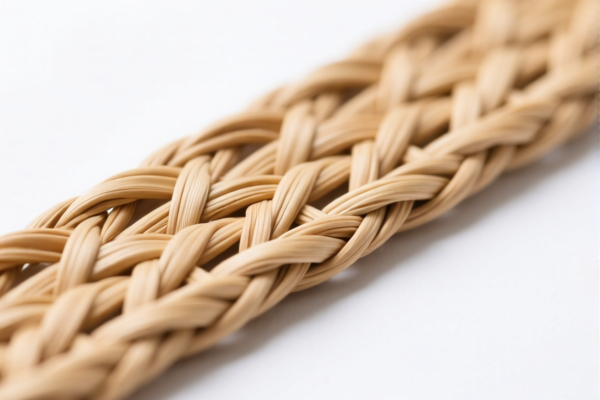
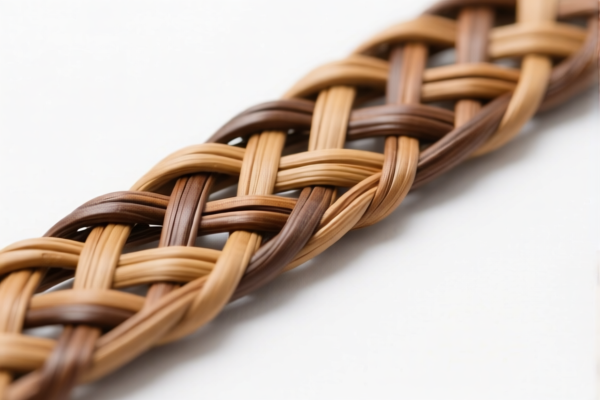
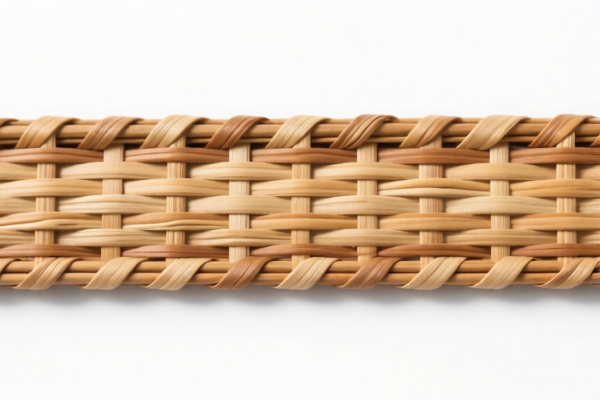
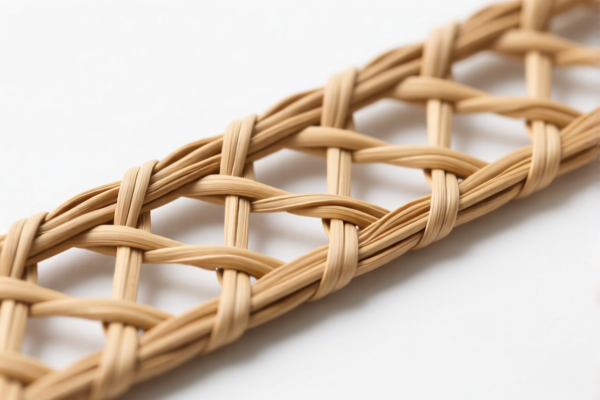
AI分析
🌿 Rattan Webbing with Natural Finish
🌐 HS Code Reference & Customs Clearance Guide | 2026 Latest Tariff Analysis | Professional Strategy for Natural Rattan Products
📌 I. Product Definition & Classification: What Exactly is "Rattan Webbing"?
Rattan Webbing, specifically with a natural finish, is a woven or plaited material made from rattan strips. It is primarily used for upholstery, furniture framing, basketry, and decorative crafts. In international trade, the key distinction lies in its form: * Webbing (Sheets): Materials bound together in parallel strands or woven into sheets. This includes mats, matting, and screens, whether finished articles or raw materials. * Plaits/Strips: Narrow bands of plaiting material, often assembled into strips.
⚠️ Key Distinction Point:
- If the rattan is woven or bound into a sheet form (e.g., wide straps, mats, screen-like structures) → Classified under 4601.93.01.00 (Webbing).
- If the rattan is formed into narrow strips or plaits (e.g., thin strands for weaving) → Classified under 4601.93.05.00 (Plaits/Strips).
📦 II. HS Code Classification Details (2026 Latest Tariff Authority Comparison)
| HS Code | Product Description | Applicable Scenario | Form Factor |
|---|---|---|---|
4601.93.01.00 |
Plaits & similar products; plaiting materials bound in parallel or woven in sheet form: Other: Of rattan: Webbing | Wide rattan straps, woven rattan mats, rattan screens, upholstery base layers | ✅ Sheet/Woven |
4601.93.05.00 |
Plaits & similar products; plaiting materials bound in parallel or woven in sheet form: Other: Of rattan: Plaits and similar products... assembled into strips | Narrow rattan strips, individual plaited strands for handcrafts | ✅ Strips/Plaits |
🔍 Critical Reminder:
- Webbing (4601.93.01.00): Generally refers to wider, sheet-like woven materials. Often has a 0% base tariff but carries a 25% additional tariff.
- Plaits/Strips (4601.93.05.00): Refers to narrower, linear plaiting materials. Carries a 2.7% base tariff plus a 25% additional tariff.
- Natural Finish: Does not change the HS code but must be clearly declared to avoid misclassification as "treated" or "painted" rattan, which might fall under different subheadings if not specified.
💰 III. 2026 Latest Tariff Rate Breakdown (Including Additional Duties)
✅ Applicable Country: United States (US)
✅ Country of Origin: China (CN)
✅ Effective Time: From November 10, 2025 onwards (including subsequent imports)
🎯 1. 4601.93.01.00 —— Rattan Webbing (Sheet Form)
| Item | Detail |
|---|---|
| Base Tariff | 0.0% |
| Additional Tariff (Section 301) | +25.0% |
| Total Tax Rate | 25.0% |
| Tax Calculation | CIF Value × 25% |
| De Minimis Exemption | ❌ Not Applicable (Subject to full duty assessment) |
| Legal Basis Path | USITC:4601.93.01.00 → Footnote: 9903.88.01 (Section 301) |
📌 Explanation:
- The 0% base rate reflects the standard Most Favored Nation (MFN) duty for woven rattan sheet materials.
- The 25% additional duty is imposed under Section 301 of the Trade Act of 1974 on goods from China.
- Total Burden: 25%. While lower than electronics, it significantly impacts low-margin natural fiber products.
🎯 2. 4601.93.05.00 —— Rattan Plaits & Strips
| Item | Detail |
|---|---|
| Base Tariff | 2.7% |
| Additional Tariff (Section 301) | +25.0% |
| Total Tax Rate | 27.7% |
| Tax Calculation | CIF Value × 27.7% |
| De Minimis Exemption | ❌ Not Applicable |
| Legal Basis Path | USITC:4601.93.05.00 → Footnote: 9903.88.01 (Section 301) |
📌 Note:
- The 2.7% base rate is slightly higher than webbing due to the finer processing involved in creating narrow strips.
- The 25% additional duty remains constant.
- Total Burden: 27.7%. This is 2.7 percentage points higher than webbing.
- Strategic Implication: If your product can be classified as "Webbing" (sheet form) rather than "Plaits" (strips), you may save 2.7% on the duty rate. However, customs will strictly scrutinize the width and form factor.
🛠️ IV. Customs Clearance Practical Advice (Actionable Pitfall Avoidance)
✅ 1. Essential Documentation Checklist
| Document | Mandatory | Explanation |
|---|---|---|
| ✅ Product Specifications | ✔️ | Must specify: Width, weave pattern, rattan type (natural), finish (natural/unpainted). |
| ✅ Photos of Product | ✔️ | Show both the wide sheet (webbing) and any strips. Clearly demonstrate the "sheet form" vs. "narrow strip" nature. |
| ✅ Commercial Invoice | ✔️ | Describe as "Natural Rattan Webbing, Woven Sheet Form" or "Natural Rattan Plaits, Strip Form". Avoid vague terms like "Rattan Material". |
| ✅ Packing List | ✔️ | Detail dimensions and weight. Ensure consistency with invoice. |
| ✅ Certificate of Origin (CO) | ✔️ | Required for origin verification. |
| ✅ Supply Chain Proof | ✔️ | Evidence of rattan sourcing and processing to prove Chinese origin (and thus applicability of 301 tariffs). |
✅ 2. Declaration Tips (Key Mnemonics)
🔥 "Width Determines Code: Sheets are 0%, Strips are 2.7%, Both Pay 25% Extra!"
| Scenario | Correct Declaration | Incorrect Practice |
|---|---|---|
| Wide, woven rattan mats/straps | 4601.93.01.00 (Webbing) | Misclassifying as "Plaits" → Higher base duty |
| Narrow, thin rattan strands for crafts | 4601.93.05.00 (Plaids/Strips) | Misclassifying as "Webbing" → Underpayment risk |
| Mixed shipment (both webbing and strips) | Split Declaration | Combining into one line item → Customs seizure/penalty |
| Treated/Painted Rattan | Different HS Code | Declaring as "Natural" → False declaration penalty |
✅ 3. Special Handling Cases
| Situation | Handling Advice |
|---|---|
| Mixed Orders | If shipping both webbing and plaits, declare them on separate lines with distinct HS codes. Do not combine. |
| "Natural Finish" Ambiguity | Clearly state "Unpainted," "Unstained," or "Natural Oiled." If any chemical treatment is used, it may fall under Chapter 46 or 47, not 46.01. |
| OEM Custom Weaving | Provide design specs to prove the form factor. Custom widths may blur the line between webbing and strips; consult a broker for borderline cases. |
| Origin Labeling | Ensure all packaging clearly states "Made in China" to comply with US customs marking requirements and avoid misdeclaration. |
🌍 V. Global Market Customs Comparison (2026 Latest)
| Country/Region | Recommended HS Code | Tariff Rate (China Origin) | Certification Requirements | Notes |
|---|---|---|---|---|
| 🇺🇸 United States | 4601.93.01.00 / 4601.93.05.00 |
25.0% / 27.7% | None specific for rattan | Section 301 tariffs apply. High duty burden. |
| 🇨🇳 China | 4601.93.01.00 / 4601.93.05.00 |
0% - 5% | None | Export from China usually has low/zero duty. |
| 🇪🇺 European Union | 4601.93.00 |
~3.5% (Standard MFN) | CE (if finished product), REACH | No Section 301 equivalent. Lower duty than US. |
| 🇬🇧 United Kingdom | 4601.93.00 |
~3.5% | UKCA | Post-Brexit rules apply. Similar to EU. |
| 🇦🇺 Australia | 4601.93.00 |
5.0% | None | Competitive tariff rate. |
📌 Conclusion:
- The US market is the most challenging due to the 25% additional tariff, bringing total duties to 25–27.7%.
- EU/UK/Australia offer significantly lower tariff burdens (~3.5–5%).
- Strategy: If targeting the US, consider pricing adjustments or supply chain diversification (e.g., processing in a third country, though origin rules are strict).
📌 VI. Common Errors & Pitfall Avoidance (Lessons Learned)
❌ Error 1: Classifying all rattan products under one HS code regardless of form.
👉 Consequence: Misclassification leads to 2.7% underpayment or audit penalties. Customs may reclassify and charge back duties.
❌ Error 2: Ignoring the "Natural Finish" specification.
👉 Consequence: If treated (painted/dyed), it may not qualify for Chapter 46.01. Incorrect declaration → False Entry Penalty.
❌ Error 3: Failing to account for the 25% Section 301 tariff in profit margins.
👉 Consequence: Profit erosion. A 25% duty hike can make low-margin rattan products uncompetitive in the US.
❌ Error 4: Combining webbing and strips in a single invoice line.
👉 Consequence: Customs hold. Each item requires separate HS code classification. Splitting documents later causes delays.
✅ Correct Approach:
"Natural Rattan Webbing, 30cm Width, Woven Sheet, Unfinished, Made in China"
"Natural Rattan Plait Strips, 1cm Width, Unfinished, Made in China"
🎯 VII. Conclusion: Precision in Classification Saves Money
🎯 Remember the Mantra:
🔹 "Webbing = 0% Base, Strips = 2.7% Base, Both = +25% US Duty."
🔹 "Form Factor is King: Sheet vs. Strip dictates the base rate."
🔹 "Natural Finish Must Be Clear: Don't let chemical treatments trigger wrong codes."
📌 Pro Tip:
For shipments to the US, pre-classify using a professional customs broker. Provide photos of the weave width and cross-sections to prove whether the product is "Webbing" or "Plaids." This can prevent costly audits and ensure accurate duty calculation.
📣 Immediate Action:
📞 Consult a licensed customs broker for Pre-Ruling on Form Factor (Webbing vs. Strips).
📊 Calculate Landed Cost including 25–27.7% duty for US market entry.
📦 Ensure Packaging Markings clearly indicate "Made in China" to avoid customs delays.
✨ Professional Clearance Starts with Accurate Classification!
💼 Your Margins Depend on Getting the HS Code Right!
用户评价
关于 HS 编码归类
协调制度(HS)是由世界海关组织(WCO)制定的国际贸易商品分类标准。全球 200 多个国家采用 HS 系统作为海关关税、贸易统计和进出口监管的基础。
每个 HS 编码遵循以下层级结构:
- 章(2 位)——商品大类(例如:第 84 章:机器和机械设备)
- 品目(4 位)——章内的更具体分类
- 子目(6 位)——国际通用细分,所有 WCO 成员国统一使用
- 本国细分(8-10 位)——各国自行扩展的细分编码,如美国 HTSUS 10 位编码
正确的 HS 编码归类对于顺利通关、准确缴纳关税和遵守贸易法规至关重要。错误归类可能导致海关延误、多缴关税或罚款。
从CN进口到US时,适用的关税税率可能包括:
- 最惠国(MFN)税率——适用于 WTO 成员国的标准关税税率
- 普通税率——适用于无贸易协定国家
- 贸易救济关税——附加关税,如 301 条款(反倾销)、232 条款(国家安全)或反补贴税
本页内容仅供参考。如需正式归类,请咨询当地海关或持牌报关代理。