Rattan Webbing with Natural Finish
CN → US| HS Code | Tariff Rate | Origin | Destination | Doc |
|---|---|---|---|---|
| 4601930100 | 35.0% | CN | US | Official Doc |
| 4601930500 | 37.7% | CN | US | Official Doc |
Product Images
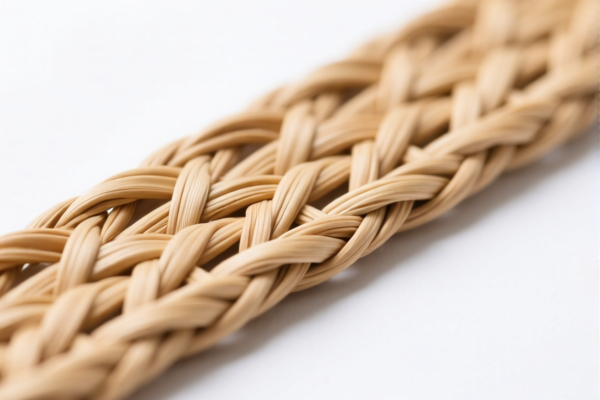

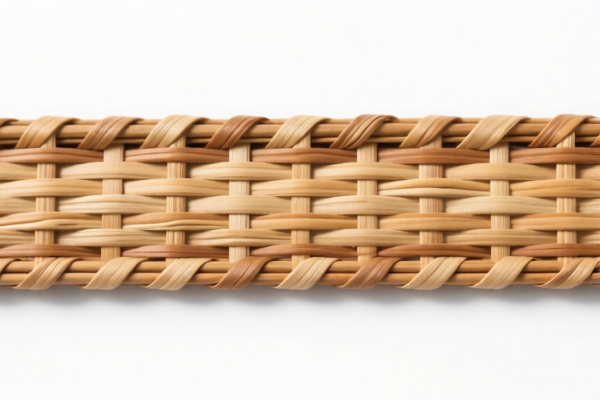
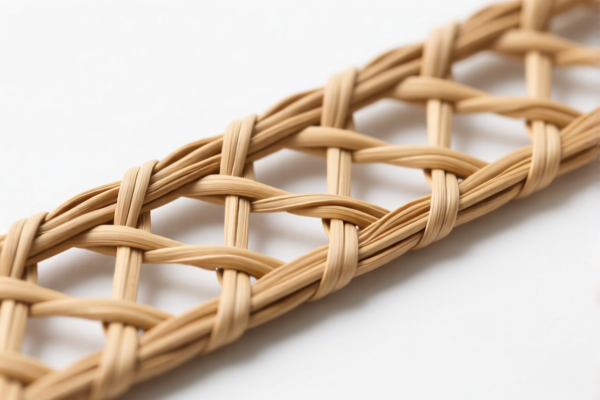
AI Analysis
🌿 Rattan Webbing with Natural Finish
🌐 HS Code Reference & Customs Clearance Guide | 2026 Latest Tariff Analysis | Professional Strategy for Natural Rattan Products
📌 I. Product Definition & Classification: What Exactly is "Rattan Webbing"?
Rattan Webbing, specifically with a natural finish, is a woven or plaited material made from rattan strips. It is primarily used for upholstery, furniture framing, basketry, and decorative crafts. In international trade, the key distinction lies in its form: * Webbing (Sheets): Materials bound together in parallel strands or woven into sheets. This includes mats, matting, and screens, whether finished articles or raw materials. * Plaits/Strips: Narrow bands of plaiting material, often assembled into strips.
⚠️ Key Distinction Point:
- If the rattan is woven or bound into a sheet form (e.g., wide straps, mats, screen-like structures) → Classified under 4601.93.01.00 (Webbing).
- If the rattan is formed into narrow strips or plaits (e.g., thin strands for weaving) → Classified under 4601.93.05.00 (Plaits/Strips).
📦 II. HS Code Classification Details (2026 Latest Tariff Authority Comparison)
| HS Code | Product Description | Applicable Scenario | Form Factor |
|---|---|---|---|
4601.93.01.00 |
Plaits & similar products; plaiting materials bound in parallel or woven in sheet form: Other: Of rattan: Webbing | Wide rattan straps, woven rattan mats, rattan screens, upholstery base layers | ✅ Sheet/Woven |
4601.93.05.00 |
Plaits & similar products; plaiting materials bound in parallel or woven in sheet form: Other: Of rattan: Plaits and similar products... assembled into strips | Narrow rattan strips, individual plaited strands for handcrafts | ✅ Strips/Plaits |
🔍 Critical Reminder:
- Webbing (4601.93.01.00): Generally refers to wider, sheet-like woven materials. Often has a 0% base tariff but carries a 25% additional tariff.
- Plaits/Strips (4601.93.05.00): Refers to narrower, linear plaiting materials. Carries a 2.7% base tariff plus a 25% additional tariff.
- Natural Finish: Does not change the HS code but must be clearly declared to avoid misclassification as "treated" or "painted" rattan, which might fall under different subheadings if not specified.
💰 III. 2026 Latest Tariff Rate Breakdown (Including Additional Duties)
✅ Applicable Country: United States (US)
✅ Country of Origin: China (CN)
✅ Effective Time: From November 10, 2025 onwards (including subsequent imports)
🎯 1. 4601.93.01.00 —— Rattan Webbing (Sheet Form)
| Item | Detail |
|---|---|
| Base Tariff | 0.0% |
| Additional Tariff (Section 301) | +25.0% |
| Total Tax Rate | 25.0% |
| Tax Calculation | CIF Value × 25% |
| De Minimis Exemption | ❌ Not Applicable (Subject to full duty assessment) |
| Legal Basis Path | USITC:4601.93.01.00 → Footnote: 9903.88.01 (Section 301) |
📌 Explanation:
- The 0% base rate reflects the standard Most Favored Nation (MFN) duty for woven rattan sheet materials.
- The 25% additional duty is imposed under Section 301 of the Trade Act of 1974 on goods from China.
- Total Burden: 25%. While lower than electronics, it significantly impacts low-margin natural fiber products.
🎯 2. 4601.93.05.00 —— Rattan Plaits & Strips
| Item | Detail |
|---|---|
| Base Tariff | 2.7% |
| Additional Tariff (Section 301) | +25.0% |
| Total Tax Rate | 27.7% |
| Tax Calculation | CIF Value × 27.7% |
| De Minimis Exemption | ❌ Not Applicable |
| Legal Basis Path | USITC:4601.93.05.00 → Footnote: 9903.88.01 (Section 301) |
📌 Note:
- The 2.7% base rate is slightly higher than webbing due to the finer processing involved in creating narrow strips.
- The 25% additional duty remains constant.
- Total Burden: 27.7%. This is 2.7 percentage points higher than webbing.
- Strategic Implication: If your product can be classified as "Webbing" (sheet form) rather than "Plaits" (strips), you may save 2.7% on the duty rate. However, customs will strictly scrutinize the width and form factor.
🛠️ IV. Customs Clearance Practical Advice (Actionable Pitfall Avoidance)
✅ 1. Essential Documentation Checklist
| Document | Mandatory | Explanation |
|---|---|---|
| ✅ Product Specifications | ✔️ | Must specify: Width, weave pattern, rattan type (natural), finish (natural/unpainted). |
| ✅ Photos of Product | ✔️ | Show both the wide sheet (webbing) and any strips. Clearly demonstrate the "sheet form" vs. "narrow strip" nature. |
| ✅ Commercial Invoice | ✔️ | Describe as "Natural Rattan Webbing, Woven Sheet Form" or "Natural Rattan Plaits, Strip Form". Avoid vague terms like "Rattan Material". |
| ✅ Packing List | ✔️ | Detail dimensions and weight. Ensure consistency with invoice. |
| ✅ Certificate of Origin (CO) | ✔️ | Required for origin verification. |
| ✅ Supply Chain Proof | ✔️ | Evidence of rattan sourcing and processing to prove Chinese origin (and thus applicability of 301 tariffs). |
✅ 2. Declaration Tips (Key Mnemonics)
🔥 "Width Determines Code: Sheets are 0%, Strips are 2.7%, Both Pay 25% Extra!"
| Scenario | Correct Declaration | Incorrect Practice |
|---|---|---|
| Wide, woven rattan mats/straps | 4601.93.01.00 (Webbing) | Misclassifying as "Plaits" → Higher base duty |
| Narrow, thin rattan strands for crafts | 4601.93.05.00 (Plaids/Strips) | Misclassifying as "Webbing" → Underpayment risk |
| Mixed shipment (both webbing and strips) | Split Declaration | Combining into one line item → Customs seizure/penalty |
| Treated/Painted Rattan | Different HS Code | Declaring as "Natural" → False declaration penalty |
✅ 3. Special Handling Cases
| Situation | Handling Advice |
|---|---|
| Mixed Orders | If shipping both webbing and plaits, declare them on separate lines with distinct HS codes. Do not combine. |
| "Natural Finish" Ambiguity | Clearly state "Unpainted," "Unstained," or "Natural Oiled." If any chemical treatment is used, it may fall under Chapter 46 or 47, not 46.01. |
| OEM Custom Weaving | Provide design specs to prove the form factor. Custom widths may blur the line between webbing and strips; consult a broker for borderline cases. |
| Origin Labeling | Ensure all packaging clearly states "Made in China" to comply with US customs marking requirements and avoid misdeclaration. |
🌍 V. Global Market Customs Comparison (2026 Latest)
| Country/Region | Recommended HS Code | Tariff Rate (China Origin) | Certification Requirements | Notes |
|---|---|---|---|---|
| 🇺🇸 United States | 4601.93.01.00 / 4601.93.05.00 |
25.0% / 27.7% | None specific for rattan | Section 301 tariffs apply. High duty burden. |
| 🇨🇳 China | 4601.93.01.00 / 4601.93.05.00 |
0% - 5% | None | Export from China usually has low/zero duty. |
| 🇪🇺 European Union | 4601.93.00 |
~3.5% (Standard MFN) | CE (if finished product), REACH | No Section 301 equivalent. Lower duty than US. |
| 🇬🇧 United Kingdom | 4601.93.00 |
~3.5% | UKCA | Post-Brexit rules apply. Similar to EU. |
| 🇦🇺 Australia | 4601.93.00 |
5.0% | None | Competitive tariff rate. |
📌 Conclusion:
- The US market is the most challenging due to the 25% additional tariff, bringing total duties to 25–27.7%.
- EU/UK/Australia offer significantly lower tariff burdens (~3.5–5%).
- Strategy: If targeting the US, consider pricing adjustments or supply chain diversification (e.g., processing in a third country, though origin rules are strict).
📌 VI. Common Errors & Pitfall Avoidance (Lessons Learned)
❌ Error 1: Classifying all rattan products under one HS code regardless of form.
👉 Consequence: Misclassification leads to 2.7% underpayment or audit penalties. Customs may reclassify and charge back duties.
❌ Error 2: Ignoring the "Natural Finish" specification.
👉 Consequence: If treated (painted/dyed), it may not qualify for Chapter 46.01. Incorrect declaration → False Entry Penalty.
❌ Error 3: Failing to account for the 25% Section 301 tariff in profit margins.
👉 Consequence: Profit erosion. A 25% duty hike can make low-margin rattan products uncompetitive in the US.
❌ Error 4: Combining webbing and strips in a single invoice line.
👉 Consequence: Customs hold. Each item requires separate HS code classification. Splitting documents later causes delays.
✅ Correct Approach:
"Natural Rattan Webbing, 30cm Width, Woven Sheet, Unfinished, Made in China"
"Natural Rattan Plait Strips, 1cm Width, Unfinished, Made in China"
🎯 VII. Conclusion: Precision in Classification Saves Money
🎯 Remember the Mantra:
🔹 "Webbing = 0% Base, Strips = 2.7% Base, Both = +25% US Duty."
🔹 "Form Factor is King: Sheet vs. Strip dictates the base rate."
🔹 "Natural Finish Must Be Clear: Don't let chemical treatments trigger wrong codes."
📌 Pro Tip:
For shipments to the US, pre-classify using a professional customs broker. Provide photos of the weave width and cross-sections to prove whether the product is "Webbing" or "Plaids." This can prevent costly audits and ensure accurate duty calculation.
📣 Immediate Action:
📞 Consult a licensed customs broker for Pre-Ruling on Form Factor (Webbing vs. Strips).
📊 Calculate Landed Cost including 25–27.7% duty for US market entry.
📦 Ensure Packaging Markings clearly indicate "Made in China" to avoid customs delays.
✨ Professional Clearance Starts with Accurate Classification!
💼 Your Margins Depend on Getting the HS Code Right!
Customer Reviews
About HS Code Classification
The Harmonized System (HS) is an internationally standardized nomenclature developed by the World Customs Organization (WCO) to classify traded products. Over 200 countries use the HS system as the basis for customs tariffs, trade statistics, and import/export regulations.
Each HS code follows a hierarchical structure:
- Chapter (2 digits) — Broad category of goods (e.g., Chapter 84: Machinery and Mechanical Appliances)
- Heading (4 digits) — More specific grouping within the chapter
- Subheading (6 digits) — Internationally standardized breakdown, used by all WCO member countries
- National subdivisions (8-10 digits) — Country-specific extensions for further classification, such as US HTSUS 10-digit codes
Correct HS code classification is essential for smooth customs clearance, accurate duty payment, and compliance with trade regulations. Misclassification can lead to customs delays, overpayment of duties, or penalties.
When importing from CN to US, the applicable tariff rates may include:
- Most-Favored-Nation (MFN) rate — The standard duty rate applied to WTO members
- General rate — Applied to countries without trade agreements
- Trade remedy duties — Additional tariffs such as Section 301 (anti-dumping), Section 232 (national security), or countervailing duties
The information provided on this page is for reference purposes only. For official classification, please consult with your local customs authority or a licensed customs broker.