Raw Preserved Sheepskin for Crafts
CN → US商品图片
AI分析
🐑 Raw Preserved Sheepskin for Crafts (Tanned/Preserved Leather Hides)
🌐 HS Code Reference & Clearance Guide | 2026 Latest Tariff Analysis | Professional Customs Strategy
📌 I. Product Definition & Classification: Do You Truly Understand "Raw Preserved Sheepskin"?
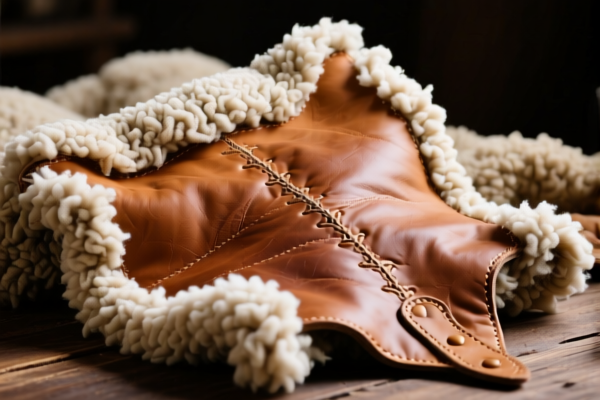
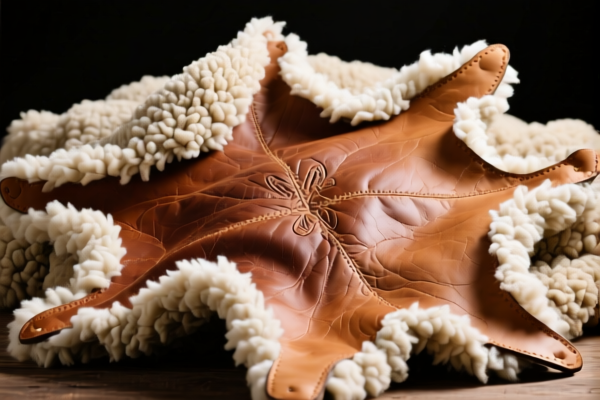
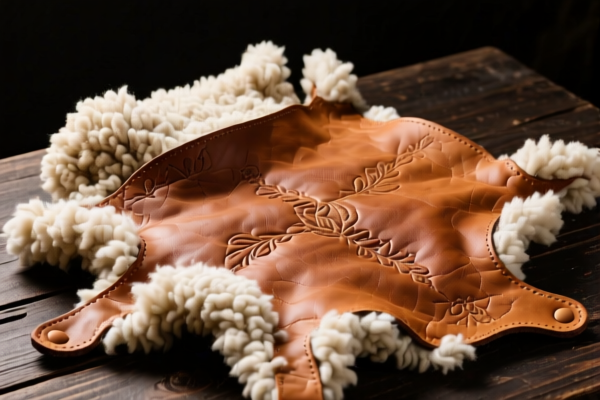
"Raw Preserved Sheepskin for Crafts" refers to sheepskins that have undergone a preservation process (such as salting, liming, or light tanning) to prevent decay, but have not undergone full vegetable or chrome tanning suitable for high-end footwear or apparel. These are primarily used for craft projects, rug making, insulation, or further processing.
In international trade, it is crucial to distinguish between: 1. Raw Sheepskin (Not Preserved): Unsuitable for long-term storage, usually classified under Chapter 41 but with different specific codes. 2. Preserved/Tanned Sheepskin (Light Tanning): The most common "craft" grade. If it is vegetable-tanned or chrome-tanned (even lightly), it falls under Chapter 41 (Leather). 3. Sheepskin for Fur Garments: If processed specifically for fur use, it may fall under Chapter 43 (Fur).
⚠️ Key Distinction Point:
- If the skin is only salted/dried (not chemically tanned) and is not for fur garments → 4106.21.10.00 (Sheepskin, salted or dried).
- If the skin is chemically tanned (even lightly for crafts) → 4106.31.00.00 (Sheepskin, vegetable-tanned) or 4106.40.00.00 (Sheepskin, chrome-tanned).
- If the skin is processed for fur garments (plucked, tanned for fur use) → 4301.10.00.00 (Fur skins).
📦 II. HS Code Classification Details (2026 Latest Tariff Authority Comparison)
| HS Code | Product Description | Application Scenario | Tanning Status |
|---|---|---|---|
4106.21.10.00 |
Sheepskin, salted or dried (not preserved for long-term tanning) | Bulk craft supplies, traditional tanning starting point | ❌ No chemical tanning |
4106.31.00.00 |
Sheepskin, vegetable-tanned | Eco-friendly crafts, bookbinding, upholstery underlayer | ✅ Vegetable tanned |
4106.40.00.00 |
Sheepskin, chrome-tanned | Standard craft hides, leather goods underlayer, rugs | ✅ Chrome tanned |
4301.10.00.00 |
Fur skins, whole (sheep), with or without head or paws | Fur coats, linings, high-end fashion crafts | ✅ Tanned for fur |
4115.20.00.00 |
Waste, leather and leather scraps | Low-grade craft scraps, glue production | ❌ Scrap/Waste |
🔍 Key Reminder:
- "Preserved" is a critical term. If your supplier says "preserved," it often means salting (4106.21). If it means tanned, it moves to 4106.31/4106.40.
- Customs Inspection: Officers will check for chemical residues. If you declare "salted" but test shows chromium, you face fraud penalties.
- Origin Matters: US tariffs vary significantly for Chinese vs. non-Chinese origins.
💰 III. 2026 Latest Tariff Rate Details (Including Surtaxes & Policy Add-ons)
✅ Applicable Country: United States (US)
✅ Origin: China (CN)
✅ Effective Date: November 10, 2025 onwards (for subsequent imports)
🎯 1. 4106.21.10.00 —— Sheepskin, Salted or Dried (Un-tanned or Lightly Preserved)
| Item | Content |
|---|---|
| Base Tariff | 4.5% (ad valorem) |
| USITC Surtax (Section 301) | +25% (Footnote 9903.88.01 applies to most leather hides) |
| IEEPA Surtax | +10% (China/HK origin, effective Nov 10, 2025) |
| Total Tariff Rate | ~40.2% (Calculated as: 4.5% + 25% + 10% ≈ 40.2%, note: rates are additive in effect) |
| Tax Calculation | CIF Value × ~40.2% |
| De Minimis Eligibility | ❌ No (deny_de_minimis applies to Section 301 goods) |
| Legal Basis Path | IEEPA:9903.01.25 → IEEPA:9903.01.24 → USITC:4106.21.10.00 → FOOTNOTE:9903.88.01 |
📌 Explanation:
- Base Rate: 4.5% is standard for un-tanned leather hides.
- Section 301 25%: Applies to most leather and fur skins from China.
- IEEPA 10%: New surtax for Chinese origin goods effective late 2025.
- Total Impact: Over 40% tariff! This significantly impacts margin for low-value craft goods.
🎯 2. 4106.40.00.00 —— Sheepskin, Chrome-Tanned (Common "Craft" Grade)
| Item | Content |
|---|---|
| Base Tariff | 5.3% |
| USITC Surtax (Section 301) | +25% |
| IEEPA Surtax | +10% |
| Total Tariff Rate | ~41.8% |
| Tax Calculation | CIF Value × ~41.8% |
| De Minimis Eligibility | ❌ No |
📌 Note:
- Tanned leather (chrome) often has a slightly higher base rate but same surtaxes.
- If your "craft sheepskin" is actually chrome-tanned, do not declare it as "salted" to avoid lower tariffs; customs will test and penalize.
🛠️ IV. Customs Clearance Practical Advice (Battle-Tested Pitfall Avoidance Guide)
✅ 1. Required Documentation Checklist (Missing One = Delay)
| Document | Mandatory? | Description |
|---|---|---|
| ✅ Commercial Invoice | ✔️ | Must specify "Raw Preserved Sheepskin," weight, country of origin, and tanning status (salted vs. chrome). |
| ✅ Packing List | ✔️ | Detail gross/net weight, number of hides, and packaging material. |
| ✅ Bill of Lading/Air Waybill | ✔️ | Standard shipping document. |
| ✅ Tanning Certificate | ✔️ | Crucial! Provided by supplier to prove tanning method (vegetable, chrome, or salted). Prevents misclassification. |
| ✅ Fumigation Certificate | ✔️ | Mandatory for animal products. Proves no pests/diseases. |
| ✅ USDA Import Permit | ✔️ | Required for all animal hides. Applied for via APHIS online before shipment. |
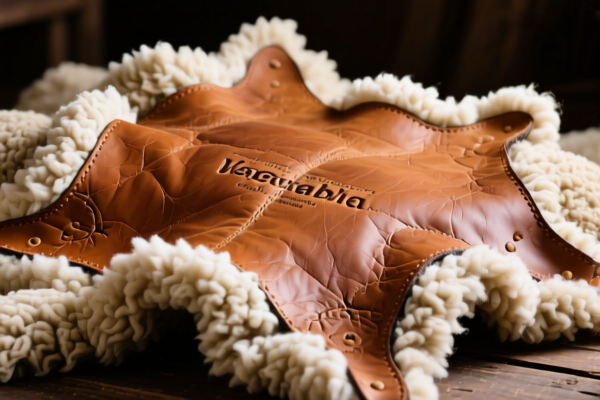
| ✅ Product Photos | ✔️ | Show texture, salt residue (if any), and brand/marking. |
✅ 2. Declaration Tips (Critical Keywords)
🔥 "Declare Accurately, Tanning Type, USDA Permit, Avoid Seizure!"
| Scenario | Correct Declaration | Wrong Approach |
|---|---|---|
| Salted/Dried Sheepskin | 4106.21.10.00 - "Sheepskin, Salted, for Craft" |
Declare as "Textile" or "Leather Finished" |
| Chrome-Tanned Craft Skin | 4106.40.00.00 - "Sheepskin, Chrome-Tanned" |
Declare as "Salted" to save tax → Fraud |
| Sheepskin for Fur Garments | 4301.10.00.00 - "Fur Skins, Sheep" |
Declare as "Leather Hides" → Wrong Chapter |
| Sheepskin Scraps/Offcuts | 4115.20.00.00 - "Leather Waste" |
Declare as "Whole Hides" → Overpay Tax |
✅ 3. Special Circumstances Handling
| Situation | Handling Advice |
|---|---|
| Small Sample Shipments (<$800) | Still NOT eligible for de minimis due to Section 301 surtaxes on animal products. |
| USDA Permit Delay | Apply 30 days in advance. USDA permits are mandatory for animal hides; customs will hold shipment without it. |
| Mixed Hides (Sheep + Goat) | Must separate or declare "Mixed Livestock Hides" with percentage breakdown. |
| Smell/Residue | Ensure no strong chemical odors that could trigger "Hazardous Material" review. |
🌍 V. Global Market Customs Comparison (2026 Latest)
| Country/Region | Recommended HS Code | Tariff Rate (China Origin) | Certification Requirement | Note |
|---|---|---|---|---|
| 🇺🇸 USA | 4106.21.10.00 or 4106.40.00.00 |
~40-42% (incl. Surtaxes) | USDA Permit + Fumigation | Highest barriers due to 301/IEEPA |
| 🇨🇳 China | 4106.21.10.00 or 4106.40.00.00 |
5-12% | None (Import is free) | Low barrier for raw materials |
| 🇪🇺 EU | 4106.21 or 4106.40 |
6.5% | REACH Compliance | No surtaxes, but strict chemical testing |
| 🇦🇺 Australia | 4106.21.10.00 |
5% | Biosecurity Approval | Strict biosecurity on animal products |
| 🇯🇵 Japan | 4106.21.10.00 |
5-10% | Phytosanitary Certificate | Standard tariffs |
📌 Conclusion:
- USA is the most expensive market for raw/sheepskin due to 40%+ effective tariffs.
- Biosecurity (USDA/APHIS) is the biggest hurdle globally for animal hides.
- Non-Chinese origins (e.g., Vietnam, India) may avoid Section 301/IEEPA surtaxes, reducing US tariffs to ~5-10%.
📌 VI. Common Mistakes & Pitfall Guide (Lessons Learned)
❌ Mistake 1: No USDA Permit
👉 Consequence: Shipment quarantined or destroyed at port. Delays: 2-4 weeks.
❌ Mistake 2: Declaring "Salted" for Chrome-Tanned Goods
👉 Consequence: Customs test finds chromium → Fine for Misdeclaration + Back Payment of Tariffs.
❌ Mistake 3: Ignoring Fumigation Certificate
👉 Consequence: Rejected entry by USDA APHIS. Cost: Fumigation at port + Storage fees.
❌ Mistake 4: Misclassifying as "Textile" or "Other"
👉 Consequence: Duty evasion detection → Penalties up to 3x the duty evaded.
✅ Correct Practice:
"Sheepskin, Salted/Dried, for Leather Crafts, 50 Hides, 150kg Gross, Fumigated, USDA Permit #XXXXXX, Origin: China"
🎯 VII. Conclusion: Professional Declaration, Cost Control, Smooth Clearance!
🎯 Remember the Mantra:
🔹 "USDA Permit First, Tanning Type Correct, 301 Surtax is High, De Minimis is Off!"
🔹 "HS Code Determines Duty, Tariff Difference is 40%, One Mistake Costs Thousands!"
📌 Pro Tip:
If your sheepskin is tanned in Vietnam, India, or Turkey, you can avoid US Section 301/IEEPA surtaxes.
Total US Tariff drops from ~40% to ~5-10%.
Consider third-country manufacturing for high-volume craft supply chains.
📣 Immediate Action:
📞 Contact USDA APHIS for Import Permit → Hire a Customs Broker → Verify Tanning Method with Supplier
🚀 Ensure Your Sheepskin Passes US Customs Smoothly, Minimizes Tax, and Maximizes Profit!
✨ Professional Customs Clearance Starts with Accurate Classification!
💼 Every Percent of Tariff is Your Profit Margin!
用户评价
关于 HS 编码归类
协调制度(HS)是由世界海关组织(WCO)制定的国际贸易商品分类标准。全球 200 多个国家采用 HS 系统作为海关关税、贸易统计和进出口监管的基础。
每个 HS 编码遵循以下层级结构:
- 章(2 位)——商品大类(例如:第 84 章:机器和机械设备)
- 品目(4 位)——章内的更具体分类
- 子目(6 位)——国际通用细分,所有 WCO 成员国统一使用
- 本国细分(8-10 位)——各国自行扩展的细分编码,如美国 HTSUS 10 位编码
正确的 HS 编码归类对于顺利通关、准确缴纳关税和遵守贸易法规至关重要。错误归类可能导致海关延误、多缴关税或罚款。
从CN进口到US时,适用的关税税率可能包括:
- 最惠国(MFN)税率——适用于 WTO 成员国的标准关税税率
- 普通税率——适用于无贸易协定国家
- 贸易救济关税——附加关税,如 301 条款(反倾销)、232 条款(国家安全)或反补贴税
本页内容仅供参考。如需正式归类,请咨询当地海关或持牌报关代理。