Raw Preserved Sheepskin for Crafts
CN → USProduct Images
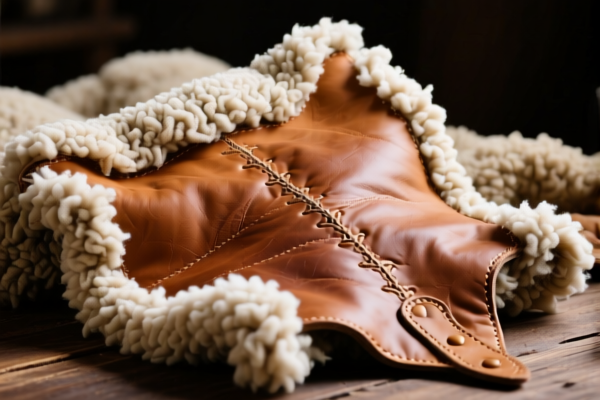
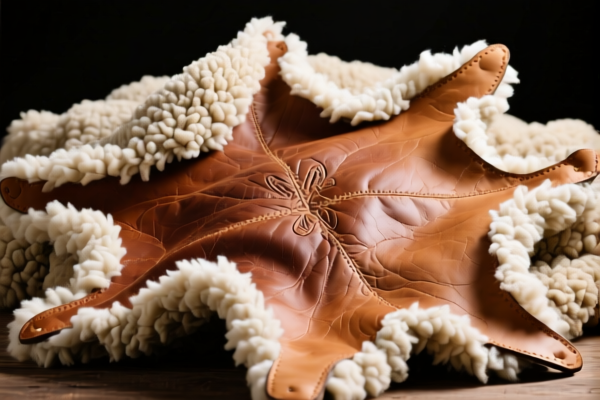
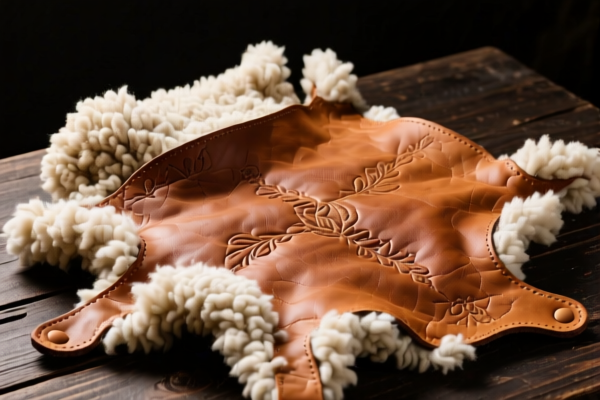
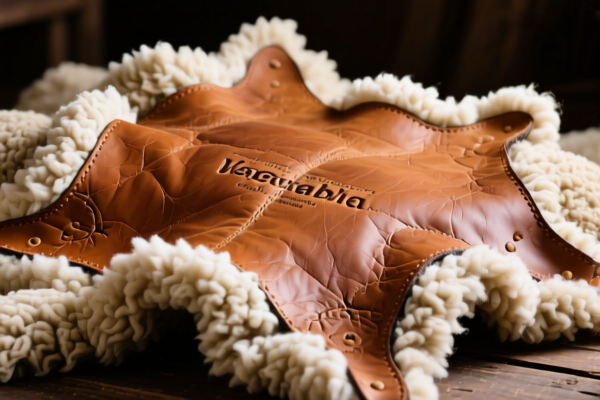
AI Analysis
🐑 Raw Preserved Sheepskin for Crafts (Tanned/Preserved Leather Hides)
🌐 HS Code Reference & Clearance Guide | 2026 Latest Tariff Analysis | Professional Customs Strategy
📌 I. Product Definition & Classification: Do You Truly Understand "Raw Preserved Sheepskin"?
"Raw Preserved Sheepskin for Crafts" refers to sheepskins that have undergone a preservation process (such as salting, liming, or light tanning) to prevent decay, but have not undergone full vegetable or chrome tanning suitable for high-end footwear or apparel. These are primarily used for craft projects, rug making, insulation, or further processing.
In international trade, it is crucial to distinguish between: 1. Raw Sheepskin (Not Preserved): Unsuitable for long-term storage, usually classified under Chapter 41 but with different specific codes. 2. Preserved/Tanned Sheepskin (Light Tanning): The most common "craft" grade. If it is vegetable-tanned or chrome-tanned (even lightly), it falls under Chapter 41 (Leather). 3. Sheepskin for Fur Garments: If processed specifically for fur use, it may fall under Chapter 43 (Fur).
⚠️ Key Distinction Point:
- If the skin is only salted/dried (not chemically tanned) and is not for fur garments → 4106.21.10.00 (Sheepskin, salted or dried).
- If the skin is chemically tanned (even lightly for crafts) → 4106.31.00.00 (Sheepskin, vegetable-tanned) or 4106.40.00.00 (Sheepskin, chrome-tanned).
- If the skin is processed for fur garments (plucked, tanned for fur use) → 4301.10.00.00 (Fur skins).
📦 II. HS Code Classification Details (2026 Latest Tariff Authority Comparison)
| HS Code | Product Description | Application Scenario | Tanning Status |
|---|---|---|---|
4106.21.10.00 |
Sheepskin, salted or dried (not preserved for long-term tanning) | Bulk craft supplies, traditional tanning starting point | ❌ No chemical tanning |
4106.31.00.00 |
Sheepskin, vegetable-tanned | Eco-friendly crafts, bookbinding, upholstery underlayer | ✅ Vegetable tanned |
4106.40.00.00 |
Sheepskin, chrome-tanned | Standard craft hides, leather goods underlayer, rugs | ✅ Chrome tanned |
4301.10.00.00 |
Fur skins, whole (sheep), with or without head or paws | Fur coats, linings, high-end fashion crafts | ✅ Tanned for fur |
4115.20.00.00 |
Waste, leather and leather scraps | Low-grade craft scraps, glue production | ❌ Scrap/Waste |
🔍 Key Reminder:
- "Preserved" is a critical term. If your supplier says "preserved," it often means salting (4106.21). If it means tanned, it moves to 4106.31/4106.40.
- Customs Inspection: Officers will check for chemical residues. If you declare "salted" but test shows chromium, you face fraud penalties.
- Origin Matters: US tariffs vary significantly for Chinese vs. non-Chinese origins.
💰 III. 2026 Latest Tariff Rate Details (Including Surtaxes & Policy Add-ons)
✅ Applicable Country: United States (US)
✅ Origin: China (CN)
✅ Effective Date: November 10, 2025 onwards (for subsequent imports)
🎯 1. 4106.21.10.00 —— Sheepskin, Salted or Dried (Un-tanned or Lightly Preserved)
| Item | Content |
|---|---|
| Base Tariff | 4.5% (ad valorem) |
| USITC Surtax (Section 301) | +25% (Footnote 9903.88.01 applies to most leather hides) |
| IEEPA Surtax | +10% (China/HK origin, effective Nov 10, 2025) |
| Total Tariff Rate | ~40.2% (Calculated as: 4.5% + 25% + 10% ≈ 40.2%, note: rates are additive in effect) |
| Tax Calculation | CIF Value × ~40.2% |
| De Minimis Eligibility | ❌ No (deny_de_minimis applies to Section 301 goods) |
| Legal Basis Path | IEEPA:9903.01.25 → IEEPA:9903.01.24 → USITC:4106.21.10.00 → FOOTNOTE:9903.88.01 |
📌 Explanation:
- Base Rate: 4.5% is standard for un-tanned leather hides.
- Section 301 25%: Applies to most leather and fur skins from China.
- IEEPA 10%: New surtax for Chinese origin goods effective late 2025.
- Total Impact: Over 40% tariff! This significantly impacts margin for low-value craft goods.
🎯 2. 4106.40.00.00 —— Sheepskin, Chrome-Tanned (Common "Craft" Grade)
| Item | Content |
|---|---|
| Base Tariff | 5.3% |
| USITC Surtax (Section 301) | +25% |
| IEEPA Surtax | +10% |
| Total Tariff Rate | ~41.8% |
| Tax Calculation | CIF Value × ~41.8% |
| De Minimis Eligibility | ❌ No |
📌 Note:
- Tanned leather (chrome) often has a slightly higher base rate but same surtaxes.
- If your "craft sheepskin" is actually chrome-tanned, do not declare it as "salted" to avoid lower tariffs; customs will test and penalize.
🛠️ IV. Customs Clearance Practical Advice (Battle-Tested Pitfall Avoidance Guide)
✅ 1. Required Documentation Checklist (Missing One = Delay)
| Document | Mandatory? | Description |
|---|---|---|
| ✅ Commercial Invoice | ✔️ | Must specify "Raw Preserved Sheepskin," weight, country of origin, and tanning status (salted vs. chrome). |
| ✅ Packing List | ✔️ | Detail gross/net weight, number of hides, and packaging material. |
| ✅ Bill of Lading/Air Waybill | ✔️ | Standard shipping document. |
| ✅ Tanning Certificate | ✔️ | Crucial! Provided by supplier to prove tanning method (vegetable, chrome, or salted). Prevents misclassification. |
| ✅ Fumigation Certificate | ✔️ | Mandatory for animal products. Proves no pests/diseases. |
| ✅ USDA Import Permit | ✔️ | Required for all animal hides. Applied for via APHIS online before shipment. |
| ✅ Product Photos | ✔️ | Show texture, salt residue (if any), and brand/marking. |
✅ 2. Declaration Tips (Critical Keywords)
🔥 "Declare Accurately, Tanning Type, USDA Permit, Avoid Seizure!"
| Scenario | Correct Declaration | Wrong Approach |
|---|---|---|
| Salted/Dried Sheepskin | 4106.21.10.00 - "Sheepskin, Salted, for Craft" |
Declare as "Textile" or "Leather Finished" |
| Chrome-Tanned Craft Skin | 4106.40.00.00 - "Sheepskin, Chrome-Tanned" |
Declare as "Salted" to save tax → Fraud |
| Sheepskin for Fur Garments | 4301.10.00.00 - "Fur Skins, Sheep" |
Declare as "Leather Hides" → Wrong Chapter |
| Sheepskin Scraps/Offcuts | 4115.20.00.00 - "Leather Waste" |
Declare as "Whole Hides" → Overpay Tax |
✅ 3. Special Circumstances Handling
| Situation | Handling Advice |
|---|---|
| Small Sample Shipments (<$800) | Still NOT eligible for de minimis due to Section 301 surtaxes on animal products. |
| USDA Permit Delay | Apply 30 days in advance. USDA permits are mandatory for animal hides; customs will hold shipment without it. |
| Mixed Hides (Sheep + Goat) | Must separate or declare "Mixed Livestock Hides" with percentage breakdown. |
| Smell/Residue | Ensure no strong chemical odors that could trigger "Hazardous Material" review. |
🌍 V. Global Market Customs Comparison (2026 Latest)
| Country/Region | Recommended HS Code | Tariff Rate (China Origin) | Certification Requirement | Note |
|---|---|---|---|---|
| 🇺🇸 USA | 4106.21.10.00 or 4106.40.00.00 |
~40-42% (incl. Surtaxes) | USDA Permit + Fumigation | Highest barriers due to 301/IEEPA |
| 🇨🇳 China | 4106.21.10.00 or 4106.40.00.00 |
5-12% | None (Import is free) | Low barrier for raw materials |
| 🇪🇺 EU | 4106.21 or 4106.40 |
6.5% | REACH Compliance | No surtaxes, but strict chemical testing |
| 🇦🇺 Australia | 4106.21.10.00 |
5% | Biosecurity Approval | Strict biosecurity on animal products |
| 🇯🇵 Japan | 4106.21.10.00 |
5-10% | Phytosanitary Certificate | Standard tariffs |
📌 Conclusion:
- USA is the most expensive market for raw/sheepskin due to 40%+ effective tariffs.
- Biosecurity (USDA/APHIS) is the biggest hurdle globally for animal hides.
- Non-Chinese origins (e.g., Vietnam, India) may avoid Section 301/IEEPA surtaxes, reducing US tariffs to ~5-10%.
📌 VI. Common Mistakes & Pitfall Guide (Lessons Learned)
❌ Mistake 1: No USDA Permit
👉 Consequence: Shipment quarantined or destroyed at port. Delays: 2-4 weeks.
❌ Mistake 2: Declaring "Salted" for Chrome-Tanned Goods
👉 Consequence: Customs test finds chromium → Fine for Misdeclaration + Back Payment of Tariffs.
❌ Mistake 3: Ignoring Fumigation Certificate
👉 Consequence: Rejected entry by USDA APHIS. Cost: Fumigation at port + Storage fees.
❌ Mistake 4: Misclassifying as "Textile" or "Other"
👉 Consequence: Duty evasion detection → Penalties up to 3x the duty evaded.
✅ Correct Practice:
"Sheepskin, Salted/Dried, for Leather Crafts, 50 Hides, 150kg Gross, Fumigated, USDA Permit #XXXXXX, Origin: China"
🎯 VII. Conclusion: Professional Declaration, Cost Control, Smooth Clearance!
🎯 Remember the Mantra:
🔹 "USDA Permit First, Tanning Type Correct, 301 Surtax is High, De Minimis is Off!"
🔹 "HS Code Determines Duty, Tariff Difference is 40%, One Mistake Costs Thousands!"
📌 Pro Tip:
If your sheepskin is tanned in Vietnam, India, or Turkey, you can avoid US Section 301/IEEPA surtaxes.
Total US Tariff drops from ~40% to ~5-10%.
Consider third-country manufacturing for high-volume craft supply chains.
📣 Immediate Action:
📞 Contact USDA APHIS for Import Permit → Hire a Customs Broker → Verify Tanning Method with Supplier
🚀 Ensure Your Sheepskin Passes US Customs Smoothly, Minimizes Tax, and Maximizes Profit!
✨ Professional Customs Clearance Starts with Accurate Classification!
💼 Every Percent of Tariff is Your Profit Margin!
Customer Reviews
About HS Code Classification
The Harmonized System (HS) is an internationally standardized nomenclature developed by the World Customs Organization (WCO) to classify traded products. Over 200 countries use the HS system as the basis for customs tariffs, trade statistics, and import/export regulations.
Each HS code follows a hierarchical structure:
- Chapter (2 digits) — Broad category of goods (e.g., Chapter 84: Machinery and Mechanical Appliances)
- Heading (4 digits) — More specific grouping within the chapter
- Subheading (6 digits) — Internationally standardized breakdown, used by all WCO member countries
- National subdivisions (8-10 digits) — Country-specific extensions for further classification, such as US HTSUS 10-digit codes
Correct HS code classification is essential for smooth customs clearance, accurate duty payment, and compliance with trade regulations. Misclassification can lead to customs delays, overpayment of duties, or penalties.
When importing from CN to US, the applicable tariff rates may include:
- Most-Favored-Nation (MFN) rate — The standard duty rate applied to WTO members
- General rate — Applied to countries without trade agreements
- Trade remedy duties — Additional tariffs such as Section 301 (anti-dumping), Section 232 (national security), or countervailing duties
The information provided on this page is for reference purposes only. For official classification, please consult with your local customs authority or a licensed customs broker.