Raw Silk (1401100000)
CN → US| HS编码 | 关税税率 | 原产国 | 目的国 | 文档 |
|---|---|---|---|---|
| 5002000000 | 35.0% | CN | US | 官方文档 |
| 5001000000 | 35.0% | CN | US | 官方文档 |
商品图片
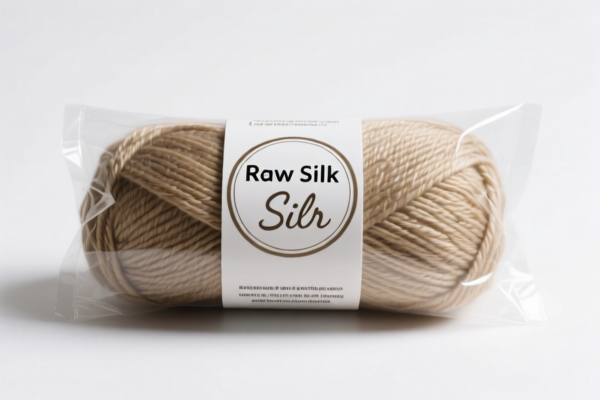
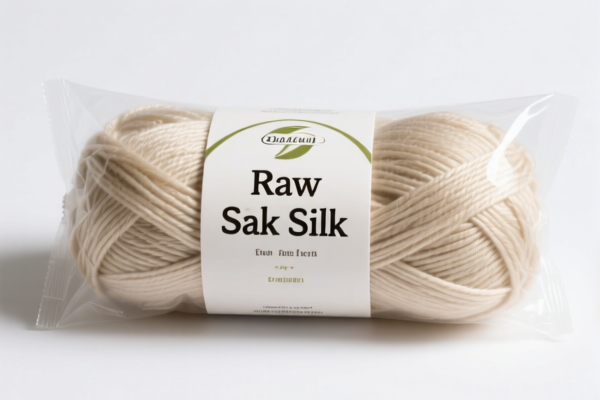
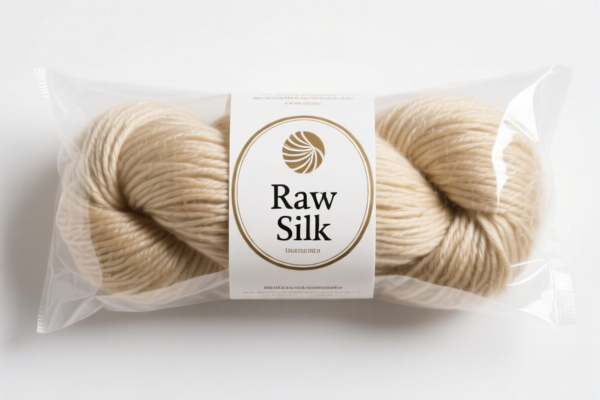
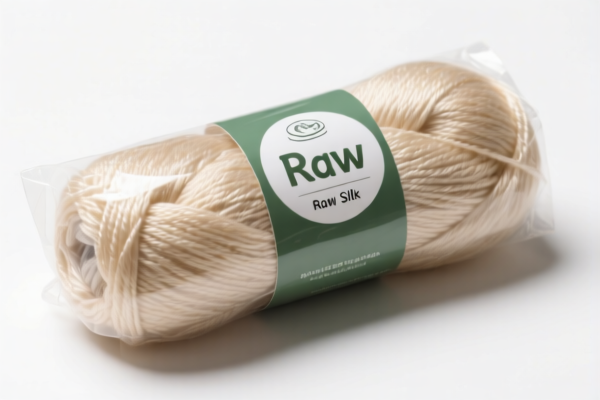
AI分析
🧵 Raw Silk (Raw Silk, Not Thrown) – HS Code 5002.00.00.00
🌐 HS Code Reference & Customs Clearance Guide | 2026 Latest Tariff Analysis | Professional Clearance Strategy
📌 I. Product Definition & Classification: Do You Truly Understand “Raw Silk”?
Raw silk (often referred to as filature silk or greige silk) is the unprocessed, natural protein fiber harvested from silkworm cocoons. It is not thrown (i.e., not twisted or spun into yarn) and serves as the primary raw material for silk weaving and knitting industries.
In international trade, raw silk is strictly categorized by its processing state:
Raw Silk (Not Thrown): * Consists of continuous filaments obtained from cocoons. * May be degummed or undegummed. * Key Characteristic: It has not been spun into yarn or thread. It is sold in skeins, hanks, or coils as single strands or small bundles. * Exclusions: Silk waste, thrown silk (yarn), and silk fabric are not included here.
⚠️ Critical Distinction:
- If the silk is twisted/spun into yarn → It becomes “Thrown Silk” and may fall under HS 5001 (depending on origin/status) or other yarn codes.
- If the silk is broken, spun waste, or short fibers → It falls under HS 5001.00.00.00 (Silk Waste).
- If the silk is processed into fabric → It falls under Chapter 51–54.
📦 II. HS Code Classification Details (2026 Latest Tariff Authority Comparison)
| HS Code | Product Description | Applicable Scenario | Processing State |
|---|---|---|---|
5002.00.00.00 |
Raw Silk (Not Thrown) | Pure, continuous filament silk from cocoons, unsold, undyed, unspun | ✅ Raw, Continuous Filament |
5001.00.00.00 |
Silk Waste and Other Waste of Silk | Broken cocoons, spun waste, noils, waste from reeling or spinning | ❌ Waste, Broken, No Filament |
🔍 Key Reminder:
- HS 5002 is for high-quality, continuous filament raw silk suitable for direct weaving.
- HS 5001 is for low-quality, broken, or recycled silk materials.
- Misclassification leads to severe customs penalties, as the tax treatment differs significantly.
💰 III. 2026 Latest Tariff Rate Breakdown (Including Additional Taxes, Policy Surcharges)
✅ Applicable Country: United States (US)
✅ Country of Origin: China (CN)
✅ Effective Date: November 10, 2025 onwards (including subsequent imports)
🎯 1. 5002.00.00.00 —— Raw Silk (Not Thrown)
| Item | Detail |
|---|---|
| Base Tariff Rate | 0% (ad valorem) |
| USITC Surcharge | +25% (from USITC Footnote 9903.88.01) |
| IEEPA Surcharge | +10% (for Chinese/HK products, effective Nov 10, 2025) |
| Total Tax Rate | 25.0% |
| Tax Calculation | CIF Value × 25% |
| De Minimis Exemption Eligible | ❌ No (deny_de_minimis) |
| Legal Basis Path | IEEPA:9903.01.25 → IEEPA:9903.01.24 → USITC:5002.00.00.00 → FOOTNOTE:9903.88.01 |
📌 Explanation:
- “USITC Surcharge 25%” stems from the “Additional Duties” under Section 301 of the U.S. Trade Act;
- “IEEPA 10%” is the “Surcharge Tariff” imposed on Chinese products under the International Emergency Economic Powers Act;
- Total 25%, which is a high tariff for raw materials. Must be anticipated in advance!
🎯 2. 5001.00.00.00 —— Silk Waste and Other Waste of Silk
| Item | Detail |
|---|---|
| Base Tariff Rate | 0% |
| USITC Surcharge | +25% |
| IEEPA Surcharge | +10% |
| Total Tax Rate | 25.0% |
| Tax Calculation | CIF × 25% |
| De Minimis Exemption Eligible | ❌ No |
| Legal Basis Path | IEEPA:9901.25 → IEEPA:9903.01.24 → USITC:5001.00.00.00 → FOOTNOTE:9903.88.01 |
📌 Note:
- Same tax rate as Raw Silk;
- Even if it is “recycled silk,” “noil silk,” or “spun waste,” as long as it is classified as “waste,” it applies this tariff.
🛠️ IV. Customs Clearance Practical Advice (实战避坑指南)
✅ 1. Preparation Checklist (All Documents Mandatory)
| Document | Required | Description |
|---|---|---|
| ✅ Product Specification Sheet | ✔️ | Includes fiber length, denier, color (natural/white/cream), yield |
| ✅ Certificate of Origin (CO) | ✔️ | Essential for proving origin (China) and tax applicability |
| ✅ Commercial Invoice | ✔️ | Must clearly state “Raw Silk, Not Thrown” and HS Code 5002.00.00.00 |
| ✅ Packing List | ✔️ | Detail net/gross weight, packaging type (skeins, hanks) |
| ✅ Third-Party Inspection Report | ✔️ | Quality certificate (e.g., from SGS, BV) proving filament continuity |
| ✅ Silk Reeling Certificate | ✔️ | Proof that silk was not thrown/spun (critical for HS 5002 vs 5001) |
✅ 2. Declaration Techniques (Key Rules)
🔥 “Raw Silk Must Be ‘Not Thrown’, Waste Is ‘Broken’, Name Precise, Tax Avoids Surprise!”
| Scenario | Correct Declaration Method | Error Practice |
|---|---|---|
| High-quality continuous filament silk | 5002.00.00.00 |
Misdeclare as “yarn” → Higher scrutiny |
| Broken cocoons or noil silk | 5001.00.00.00 |
Misdeclare as “raw silk” → Potential fraud penalty |
| Silk yarn/thread | Not 5002 | Declaring as “raw silk” → 0% base, but actual tax may differ + penalty |
| Silk fabric | Chapter 50–54 | Declaring as “raw silk” → Severe misclassification |
✅ 3. Special Situations Handling
| Situation | Handling Advice |
|---|---|
| Raw Silk Dyed or Bleached | If dyed, may still be 5002 if not thrown. Provide color proof. |
| Raw Silk Mixed with Synthetic Fibers | Not pure silk → May fall under Chapter 54 (Man-made fibers). Provide blend ratio. |
| Small Sample Shipments | Even for samples, 25% tax applies if from China. No de minimis. |
| OEM Raw Silk Supply | Provide buyer’s contract and specification sheet to prove “not thrown” status. |
🌍 V. Global Main Market Clearance Comparison (2026 Latest)
| Country/Region | Recommended HS Code | Tariff (China Origin) | Certification Requirement | Notes |
|---|---|---|---|---|
| 🇺🇸 United States | 5002.00.00.00 |
25% (Total: 0% Base + 25% Surcharge) | CO, Quality Cert | High tax due to Section 301 |
| 🇨🇳 China | 5002.00.00.00 |
0% (Import Tariff) | CCC (if applicable) | No surcharge |
| 🇪🇺 European Union | 5002.00.00.00 |
0% (Most Favored Nation) | CE (if processed) | No surcharge |
| 🇦🇺 Australia | 5002.00.00.00 |
5% | RCM | No surcharge |
| 🇯🇵 Japan | 5002.00.00.00 |
0% | PSE | No surcharge |
📌 Conclusion:
- USA is the only major market imposing high additional tariffs on raw silk;
- Chinese raw silk imports to the US face a 25% total tax, significantly impacting cost. Consider supply chain adjustments if targeting the US market.
📌 VI. Common Mistakes & Pitfalls (Lessons Learned)
❌ Mistake 1: Declaring “Silk Yarn” as “Raw Silk”
👉 Consequence: Customs may reject as misclassification → Delay + Penalty
❌ Mistake 2: Declaring “Silk Waste” as “Raw Silk”
👉 Consequence: HS 5001 vs 5002 difference → Potential fraud investigation
❌ Mistake 3: Not providing “Not Thrown” proof
👉 Consequence: Customs may reclassify as yarn → Higher scrutiny or tax dispute
❌ Mistake 4: Ignoring Section 301 Surcharge
👉 Consequence: Underpaid tax by 25% → Back taxes + Interest
✅ Correct Practice:
“Raw Silk, Not Thrown, Natural Color, 20/22 Denier, Continuous Filament, from Cocoons, Model XYZ, CO Origin CN”
🎯 VII. Conclusion: Professional Declaration Saves Time and Money!
🎯 Remember the Rules:
🔹 “Raw Silk: Not Thrown, Continuous Filament”
🔹 “Waste: Broken, Noil, Spun Waste”
🔹 “USA Tax: 25% Total for Both”
🔹 “Declaration Must Be Precise!”
📌 Tips:
If your raw silk is originally from India, Vietnam, Thailand, or Malaysia, you may qualify for zero or lower tariffs due to FTAs or MFN status.
建议提前申请预裁定(Advance Ruling) to avoid clearance risks.
📣 Immediate Action:
📞 Contact Professional Customs Broker + Provide Product Photos + Apply for HS Code Advance Ruling
🚀 Let your raw silk clear customs smoothly, export efficiently, and maximize profits!
✨ Professional Clearance Starts with Accurate Classification!
💼 Every Cost You Pay Deserves to Be Precisely Calculated!
用户评价
关于 HS 编码归类
协调制度(HS)是由世界海关组织(WCO)制定的国际贸易商品分类标准。全球 200 多个国家采用 HS 系统作为海关关税、贸易统计和进出口监管的基础。
每个 HS 编码遵循以下层级结构:
- 章(2 位)——商品大类(例如:第 84 章:机器和机械设备)
- 品目(4 位)——章内的更具体分类
- 子目(6 位)——国际通用细分,所有 WCO 成员国统一使用
- 本国细分(8-10 位)——各国自行扩展的细分编码,如美国 HTSUS 10 位编码
正确的 HS 编码归类对于顺利通关、准确缴纳关税和遵守贸易法规至关重要。错误归类可能导致海关延误、多缴关税或罚款。
从CN进口到US时,适用的关税税率可能包括:
- 最惠国(MFN)税率——适用于 WTO 成员国的标准关税税率
- 普通税率——适用于无贸易协定国家
- 贸易救济关税——附加关税,如 301 条款(反倾销)、232 条款(国家安全)或反补贴税
本页内容仅供参考。如需正式归类,请咨询当地海关或持牌报关代理。