Raw Timber (Sawn or Rough cut Coniferous Wood)
CN → US| HS编码 | 关税税率 | 原产国 | 目的国 | 文档 |
|---|---|---|---|---|
| 4407190092 | 35.0% | CN | US | 官方文档 |
| 4407120017 | 35.0% | CN | US | 官方文档 |
| 4403240104 | 35.0% | CN | US | 官方文档 |
| 4403210112 | 35.0% | CN | US | 官方文档 |
| 4403240104 | 35.0% | CN | US | 官方文档 |
商品图片
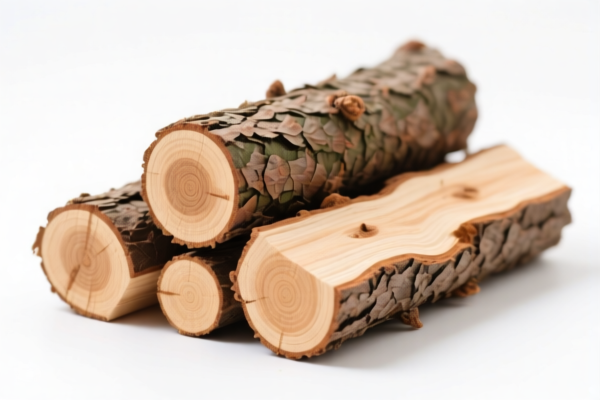
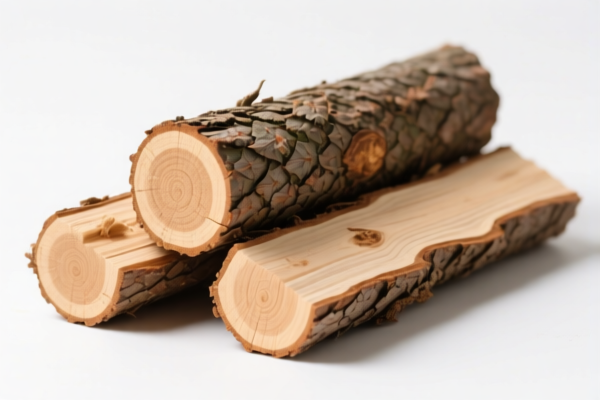
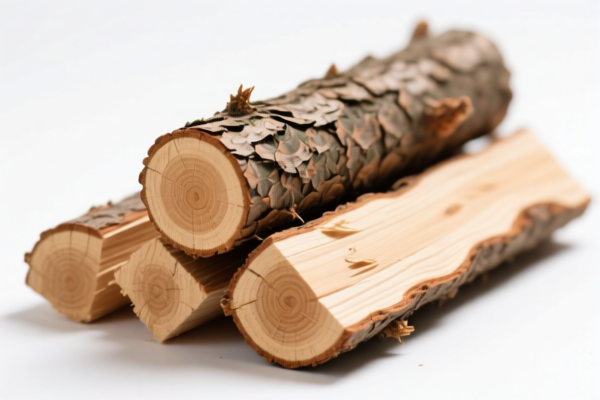
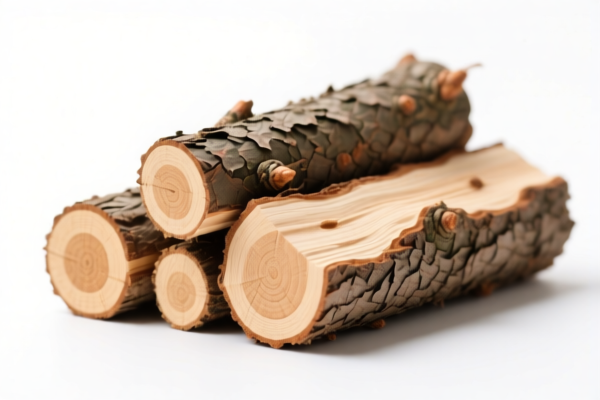
AI分析
🌲 Raw Timber: Sawn or Rough Cut Coniferous Wood
🌐 HS Code Classification & Customs Clearance Guide | 2026 Updated Tariff Analysis | Professional Clearance Strategy
📌 I. Product Definition & Classification: What is "Raw Timber"?
Raw Timber (Sawn or Roughly Shaped Coniferous Wood) refers to wood that has undergone initial processing but remains in a natural, unrefined state. It is distinct from finished lumber, plywood, or charcoal.
In international trade, this category is strictly defined by two key factors: 1. Material: Coniferous (Softwood) – e.g., Pine, Spruce, Fir, Larch. 2. State: Raw/Sawn – The wood is longitudinally sawn, roughly shaped, or peeled, but not planed, sandpapered, or chemically treated. Thickness is typically >6mm for sawn wood.
⚠️ Key Distinction:
- If the wood is peeled (for veneer), it falls under different codes.
- If it is charred or chemically preserved, it is excluded.
- If it is finished (sanded/painted), it moves to Chapter 4404 or 4409.
- "Raw" + "Coniferous" + "Sawn/Rough" = HS Codes 4407.19 / 4407.12 / 4403.24 / 4403.21
📦 II. HS Code Classification Details (2026 Latest Tariff Authority)
Based on the provided data, the following HS Codes are matched for "Raw Timber (Sawn or Rough cut Coniferous Wood)". All options indicate a high tax burden due to current trade policies.
| HS Code | Product Description | Key Matching Logic | Tax Status |
|---|---|---|---|
4407.19.00.92 |
Sawn wood of coniferous species, not further worked than simply sawn or chipped lengthwise. | "Raw Timber" matches "Coniferous"; "Sawn or Roughly Shaped" matches "Sawn or Roughly Shaped". Thickness >6mm, untreated, rough state. | 35.0% |
4407.12.00.17 |
Sawn wood of coniferous species, not further worked than simply sawn... | "Raw Timber" matches "Unworked"; "Sawn" matches "Longitudinally sawn". High consistency in material and shape. | 35.0% |
4403.24.01.04 |
Coniferous wood, rough (not planed, tongued, grooved, etc.) | "Raw Timber" matches "Rough Wood"; "Coniferous" matches "Coniferous". Material and shape fit perfectly. | 35.0% |
4403.21.01.12 |
Coniferous wood, rough, in a state suitable for use as timber. | Coniferous material fits; Raw Timber (Logs/Rough state) fits "Rough Timber" characteristics. | 35.0% |
🔍 Critical Note:
- All four codes target Coniferous (Softwood) timber.
- All codes imply the wood is not further processed (no planing, sanding, or chemical treatment).
- The distinction between4407(Sawn/Less than 6mm or processed) and4403(Logs/Rough) depends on specific dimensional and processing details not fully specified here, but both result in the same total tax rate in this scenario.
💰 III. 2026 Latest Tariff Rate Breakdown (Including Surtaxes & Policy Surcharges)
✅ Applicable Country: United States (US)
✅ Origin: China (CN) (Implied by the specific surtax details)
✅ Effective Date: Current (Post-2025 Policies)
🎯 1. Universal Tax Structure for Coniferous Timber (All Listed HS Codes)
| Item | Content |
|---|---|
| Base Tariff Rate | 0.0% (Ad Valorem) Standard MFN rate for many softwood timber products. |
| Section 301 Surcharge | +25.0% Added via USITC Footnote, targeting specific Chinese wood products. |
| Section 122 Tariff | +10.0% Additional surcharge applied to Chinese imports under specific trade provisions. |
| Total Effective Tax Rate | 35.0% |
| Tax Calculation | CIF Value × 35% |
| De Minimis Eligibility | ❌ Not Eligible (Deny De Minimis) High-value industrial materials are excluded from $800 de minimis exemptions. |
| Legal Path | Base Rate: 0% → USITC Surtax: 25% → Section 122: 10% → Total: 35% |
📌 Explanation:
- The 0% base rate might seem attractive, but the 35% total rate is a significant cost barrier.
- The 25% Section 301 and 10% Section 122 are punitive tariffs aimed at reducing reliance on Chinese raw material imports.
- No De Minimis: You cannot ship small quantities of this timber under $800 to avoid taxes. Every shipment is subject to the 35% levy.
🛠️ IV. Customs Clearance Practical Advice (Pitfall Avoidance Guide)
✅ 1. Required Documentation Checklist (Mandatory)
| Document | Required | Purpose |
|---|---|---|
| ✅ Commercial Invoice | ✔️ | Must explicitly state "Coniferous Wood", "Raw/Sawn", and Country of Origin. |
| ✅ Packing List | ✔️ | Detail dimensions, weight, and number of planks/logs. |
| ✅ Phytosanitary Certificate | ✔️ | Critical! Issued by the exporting country's plant protection agency to prove freedom from pests/diseases. |
| ✅ ISPM 15 Marking | ✔️ | If wood is in pallets/crates, it must be heat-treated or fumigated and marked with the ISPM 15 stamp. |
| ✅ Bill of Lading/Air Waybill | ✔️ | Standard transport document. |
| ✅ Product Specifications | ✔️ | Confirm thickness (>6mm for sawn), treatment status (untreated), and species (Coniferous). |
✅ 2. Declaration Tips (Key Mnemonics)
🔥 “Raw & Rough, Coniferous, 35% Tax No Escape!”
| Scenario | Correct Declaration | Wrong Practice |
|---|---|---|
| Untreated Softwood Planks | 4407.19.00.92 or 4407.12.00.17 |
Declaring as "Finished Wood" → Higher scrutiny + potential misclassification. |
| Raw Logs (Not Sawn) | 4403.24.01.04 or 4403.21.01.12 |
Declaring as "Sawn Wood" → Risk of penalty for inaccurate description. |
| Treated/Painted Wood | NOT these codes. Re-classify. | Using "Raw Timber" codes for treated wood → Severe Penalty + Retention. |
| Non-Coniferous (Hardwood) | NOT these codes. Re-classify. | Using "Coniferous" codes for Oak/Mahogany → Customs Rejection. |
✅ 3. Special Circumstances Handling
| Situation | Handling Advice |
|---|---|
| Pest Control Issues | Ensure Phytosanitary Certificate is valid. Without it, goods will be quarantined or destroyed. |
| Mixed Species Shipment | Must declare the primary species or split the declaration. Misdeclaring hardwood as softwood can lead to audits. |
| Wood Packaging Material | Pallets must be ISPM 15 compliant. Non-compliant pallets can delay cargo by weeks. |
| Value Declaration | Ensure CIF value is accurate. Under-declaration is common but risky due to the high 35% rate. |
🌍 V. Global Market Comparison (2026 Latest)
| Country/Region | Recommended HS Code | Tariff (China Origin) | Certification | Notes |
|---|---|---|---|---|
| 🇺🇸 United States | 4407.19 / 4403.24 |
35% (0% Base + 25% Sec 301 + 10% Sec 122) | Phytosanitary + ISPM 15 | Highest barrier. Heavy surcharges. |
| 🇨🇳 China | 4407.19 / 4403.24 |
0-5% (Varies) | None typically for export | Major exporter. |
| 🇪🇺 EU | 4407.19 |
0% (If FLEGT compliant) | FLEGT / EUTR | Strict due diligence on legality. |
| 🇯🇵 Japan | 4407.19 |
0-5% | Phytosanitary | Strict pest control. |
📌 Conclusion:
- The US market is exceptionally expensive for Chinese coniferous timber due to the 35% blended rate.
- EU and Japan focus more on legality and pest control than high tariffs, but require strict documentation.
- Profit Margin Alert: A 35% tariff can erase margins unless the product is premium or volume-based.
📌 VI. Common Mistakes & Pitfall Guide (Lessons Learned)
❌ Mistake 1: Declaring "Wood" without specifying "Coniferous" or "Sawn"
👉 Consequence: Customs may reject the classification, leading to delays and re-assessment at higher duties.
❌ Mistake 2: Ignoring Phytosanitary Requirements
👉 Consequence: Cargo detained for fumigation or destruction. Costs can exceed the value of the goods.
❌ Mistake 3: Assuming "De Minimis" applies
👉 Consequence: 35% Tax + Penalties. Raw timber is not eligible for $800 exemption.
❌ Mistake 4: Misidentifying Hardwood as Softwood (Coniferous)
👉 Consequence: Customs Audit. Hardwoods often have different tariff codes and lower/zero surtaxes, but misclassification is seen as fraud.
✅ Correct Approach:
"Coniferous Timber, Sawn, Roughly Shaped, Untreated, Origin: China, HS Code: 4407.19.00.92, Phytosanitary Cert Attached."
🎯 VII. Conclusion: Professional Declaration, Save Costs, Ensure Speed!
🎯 Remember the Rules:
🔹 "Coniferous + Raw + Sawn = 35% Tax in US!"
🔹 "Phytosanitary is King, ISPM 15 is Queen!"
🔹 "No De Minimis for Timber, Pay Up or Don't Ship!"
📌 Pro Tip:
- If possible, consider supplying from non-China origins (e.g., Canada, Russia, EU) to avoid the 25% Section 301 and 10% Section 122 surcharges.
- For US imports, pre-classification rulings are highly recommended to avoid surprises.
📣 Immediate Action:
📞 Consult a licensed customs broker.
📦 Verify Phytosanitary Certificates before shipping.
📊 Calculate landed cost with 35% tax included in your pricing model.
✨ Professional clearance starts with accurate classification!
💼 Your bottom line depends on every percent of duty!
用户评价
关于 HS 编码归类
协调制度(HS)是由世界海关组织(WCO)制定的国际贸易商品分类标准。全球 200 多个国家采用 HS 系统作为海关关税、贸易统计和进出口监管的基础。
每个 HS 编码遵循以下层级结构:
- 章(2 位)——商品大类(例如:第 84 章:机器和机械设备)
- 品目(4 位)——章内的更具体分类
- 子目(6 位)——国际通用细分,所有 WCO 成员国统一使用
- 本国细分(8-10 位)——各国自行扩展的细分编码,如美国 HTSUS 10 位编码
正确的 HS 编码归类对于顺利通关、准确缴纳关税和遵守贸易法规至关重要。错误归类可能导致海关延误、多缴关税或罚款。
从CN进口到US时,适用的关税税率可能包括:
- 最惠国(MFN)税率——适用于 WTO 成员国的标准关税税率
- 普通税率——适用于无贸易协定国家
- 贸易救济关税——附加关税,如 301 条款(反倾销)、232 条款(国家安全)或反补贴税
本页内容仅供参考。如需正式归类,请咨询当地海关或持牌报关代理。