Raw Timber (Sawn or Rough cut Coniferous Wood)
CN → US| HS Code | Tariff Rate | Origin | Destination | Doc |
|---|---|---|---|---|
| 4407190092 | 35.0% | CN | US | Official Doc |
| 4407120017 | 35.0% | CN | US | Official Doc |
| 4403240104 | 35.0% | CN | US | Official Doc |
| 4403210112 | 35.0% | CN | US | Official Doc |
| 4403240104 | 35.0% | CN | US | Official Doc |
Product Images
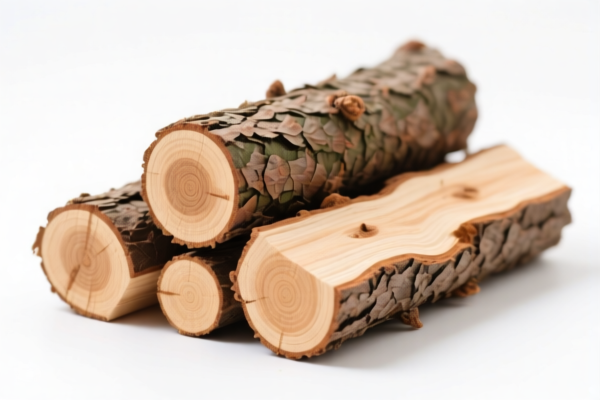
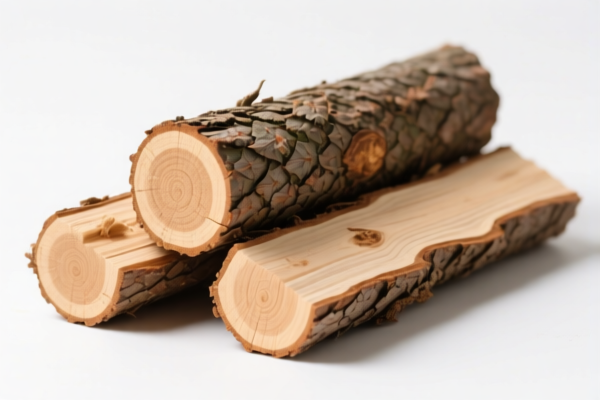
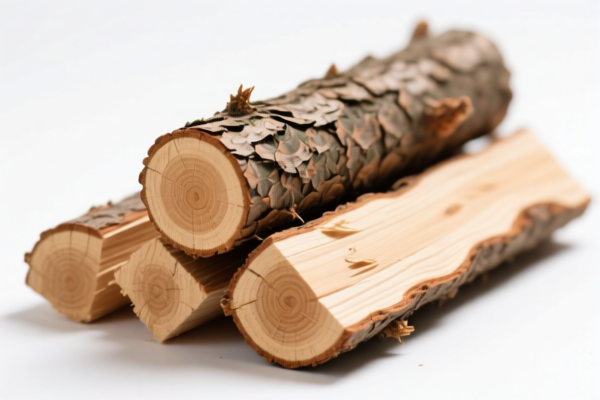
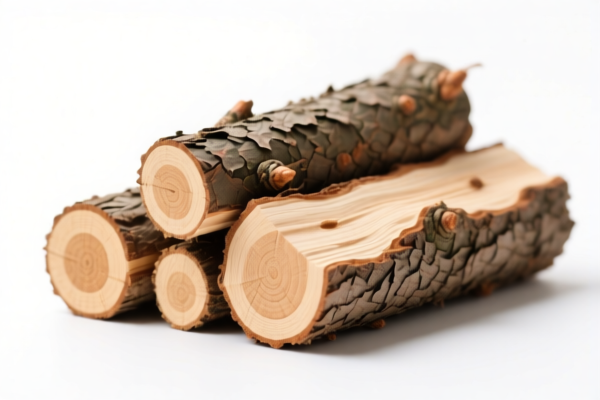
AI Analysis
🌲 Raw Timber: Sawn or Rough Cut Coniferous Wood
🌐 HS Code Classification & Customs Clearance Guide | 2026 Updated Tariff Analysis | Professional Clearance Strategy
📌 I. Product Definition & Classification: What is "Raw Timber"?
Raw Timber (Sawn or Roughly Shaped Coniferous Wood) refers to wood that has undergone initial processing but remains in a natural, unrefined state. It is distinct from finished lumber, plywood, or charcoal.
In international trade, this category is strictly defined by two key factors: 1. Material: Coniferous (Softwood) – e.g., Pine, Spruce, Fir, Larch. 2. State: Raw/Sawn – The wood is longitudinally sawn, roughly shaped, or peeled, but not planed, sandpapered, or chemically treated. Thickness is typically >6mm for sawn wood.
⚠️ Key Distinction:
- If the wood is peeled (for veneer), it falls under different codes.
- If it is charred or chemically preserved, it is excluded.
- If it is finished (sanded/painted), it moves to Chapter 4404 or 4409.
- "Raw" + "Coniferous" + "Sawn/Rough" = HS Codes 4407.19 / 4407.12 / 4403.24 / 4403.21
📦 II. HS Code Classification Details (2026 Latest Tariff Authority)
Based on the provided data, the following HS Codes are matched for "Raw Timber (Sawn or Rough cut Coniferous Wood)". All options indicate a high tax burden due to current trade policies.
| HS Code | Product Description | Key Matching Logic | Tax Status |
|---|---|---|---|
4407.19.00.92 |
Sawn wood of coniferous species, not further worked than simply sawn or chipped lengthwise. | "Raw Timber" matches "Coniferous"; "Sawn or Roughly Shaped" matches "Sawn or Roughly Shaped". Thickness >6mm, untreated, rough state. | 35.0% |
4407.12.00.17 |
Sawn wood of coniferous species, not further worked than simply sawn... | "Raw Timber" matches "Unworked"; "Sawn" matches "Longitudinally sawn". High consistency in material and shape. | 35.0% |
4403.24.01.04 |
Coniferous wood, rough (not planed, tongued, grooved, etc.) | "Raw Timber" matches "Rough Wood"; "Coniferous" matches "Coniferous". Material and shape fit perfectly. | 35.0% |
4403.21.01.12 |
Coniferous wood, rough, in a state suitable for use as timber. | Coniferous material fits; Raw Timber (Logs/Rough state) fits "Rough Timber" characteristics. | 35.0% |
🔍 Critical Note:
- All four codes target Coniferous (Softwood) timber.
- All codes imply the wood is not further processed (no planing, sanding, or chemical treatment).
- The distinction between4407(Sawn/Less than 6mm or processed) and4403(Logs/Rough) depends on specific dimensional and processing details not fully specified here, but both result in the same total tax rate in this scenario.
💰 III. 2026 Latest Tariff Rate Breakdown (Including Surtaxes & Policy Surcharges)
✅ Applicable Country: United States (US)
✅ Origin: China (CN) (Implied by the specific surtax details)
✅ Effective Date: Current (Post-2025 Policies)
🎯 1. Universal Tax Structure for Coniferous Timber (All Listed HS Codes)
| Item | Content |
|---|---|
| Base Tariff Rate | 0.0% (Ad Valorem) Standard MFN rate for many softwood timber products. |
| Section 301 Surcharge | +25.0% Added via USITC Footnote, targeting specific Chinese wood products. |
| Section 122 Tariff | +10.0% Additional surcharge applied to Chinese imports under specific trade provisions. |
| Total Effective Tax Rate | 35.0% |
| Tax Calculation | CIF Value × 35% |
| De Minimis Eligibility | ❌ Not Eligible (Deny De Minimis) High-value industrial materials are excluded from $800 de minimis exemptions. |
| Legal Path | Base Rate: 0% → USITC Surtax: 25% → Section 122: 10% → Total: 35% |
📌 Explanation:
- The 0% base rate might seem attractive, but the 35% total rate is a significant cost barrier.
- The 25% Section 301 and 10% Section 122 are punitive tariffs aimed at reducing reliance on Chinese raw material imports.
- No De Minimis: You cannot ship small quantities of this timber under $800 to avoid taxes. Every shipment is subject to the 35% levy.
🛠️ IV. Customs Clearance Practical Advice (Pitfall Avoidance Guide)
✅ 1. Required Documentation Checklist (Mandatory)
| Document | Required | Purpose |
|---|---|---|
| ✅ Commercial Invoice | ✔️ | Must explicitly state "Coniferous Wood", "Raw/Sawn", and Country of Origin. |
| ✅ Packing List | ✔️ | Detail dimensions, weight, and number of planks/logs. |
| ✅ Phytosanitary Certificate | ✔️ | Critical! Issued by the exporting country's plant protection agency to prove freedom from pests/diseases. |
| ✅ ISPM 15 Marking | ✔️ | If wood is in pallets/crates, it must be heat-treated or fumigated and marked with the ISPM 15 stamp. |
| ✅ Bill of Lading/Air Waybill | ✔️ | Standard transport document. |
| ✅ Product Specifications | ✔️ | Confirm thickness (>6mm for sawn), treatment status (untreated), and species (Coniferous). |
✅ 2. Declaration Tips (Key Mnemonics)
🔥 “Raw & Rough, Coniferous, 35% Tax No Escape!”
| Scenario | Correct Declaration | Wrong Practice |
|---|---|---|
| Untreated Softwood Planks | 4407.19.00.92 or 4407.12.00.17 |
Declaring as "Finished Wood" → Higher scrutiny + potential misclassification. |
| Raw Logs (Not Sawn) | 4403.24.01.04 or 4403.21.01.12 |
Declaring as "Sawn Wood" → Risk of penalty for inaccurate description. |
| Treated/Painted Wood | NOT these codes. Re-classify. | Using "Raw Timber" codes for treated wood → Severe Penalty + Retention. |
| Non-Coniferous (Hardwood) | NOT these codes. Re-classify. | Using "Coniferous" codes for Oak/Mahogany → Customs Rejection. |
✅ 3. Special Circumstances Handling
| Situation | Handling Advice |
|---|---|
| Pest Control Issues | Ensure Phytosanitary Certificate is valid. Without it, goods will be quarantined or destroyed. |
| Mixed Species Shipment | Must declare the primary species or split the declaration. Misdeclaring hardwood as softwood can lead to audits. |
| Wood Packaging Material | Pallets must be ISPM 15 compliant. Non-compliant pallets can delay cargo by weeks. |
| Value Declaration | Ensure CIF value is accurate. Under-declaration is common but risky due to the high 35% rate. |
🌍 V. Global Market Comparison (2026 Latest)
| Country/Region | Recommended HS Code | Tariff (China Origin) | Certification | Notes |
|---|---|---|---|---|
| 🇺🇸 United States | 4407.19 / 4403.24 |
35% (0% Base + 25% Sec 301 + 10% Sec 122) | Phytosanitary + ISPM 15 | Highest barrier. Heavy surcharges. |
| 🇨🇳 China | 4407.19 / 4403.24 |
0-5% (Varies) | None typically for export | Major exporter. |
| 🇪🇺 EU | 4407.19 |
0% (If FLEGT compliant) | FLEGT / EUTR | Strict due diligence on legality. |
| 🇯🇵 Japan | 4407.19 |
0-5% | Phytosanitary | Strict pest control. |
📌 Conclusion:
- The US market is exceptionally expensive for Chinese coniferous timber due to the 35% blended rate.
- EU and Japan focus more on legality and pest control than high tariffs, but require strict documentation.
- Profit Margin Alert: A 35% tariff can erase margins unless the product is premium or volume-based.
📌 VI. Common Mistakes & Pitfall Guide (Lessons Learned)
❌ Mistake 1: Declaring "Wood" without specifying "Coniferous" or "Sawn"
👉 Consequence: Customs may reject the classification, leading to delays and re-assessment at higher duties.
❌ Mistake 2: Ignoring Phytosanitary Requirements
👉 Consequence: Cargo detained for fumigation or destruction. Costs can exceed the value of the goods.
❌ Mistake 3: Assuming "De Minimis" applies
👉 Consequence: 35% Tax + Penalties. Raw timber is not eligible for $800 exemption.
❌ Mistake 4: Misidentifying Hardwood as Softwood (Coniferous)
👉 Consequence: Customs Audit. Hardwoods often have different tariff codes and lower/zero surtaxes, but misclassification is seen as fraud.
✅ Correct Approach:
"Coniferous Timber, Sawn, Roughly Shaped, Untreated, Origin: China, HS Code: 4407.19.00.92, Phytosanitary Cert Attached."
🎯 VII. Conclusion: Professional Declaration, Save Costs, Ensure Speed!
🎯 Remember the Rules:
🔹 "Coniferous + Raw + Sawn = 35% Tax in US!"
🔹 "Phytosanitary is King, ISPM 15 is Queen!"
🔹 "No De Minimis for Timber, Pay Up or Don't Ship!"
📌 Pro Tip:
- If possible, consider supplying from non-China origins (e.g., Canada, Russia, EU) to avoid the 25% Section 301 and 10% Section 122 surcharges.
- For US imports, pre-classification rulings are highly recommended to avoid surprises.
📣 Immediate Action:
📞 Consult a licensed customs broker.
📦 Verify Phytosanitary Certificates before shipping.
📊 Calculate landed cost with 35% tax included in your pricing model.
✨ Professional clearance starts with accurate classification!
💼 Your bottom line depends on every percent of duty!
Customer Reviews
About HS Code Classification
The Harmonized System (HS) is an internationally standardized nomenclature developed by the World Customs Organization (WCO) to classify traded products. Over 200 countries use the HS system as the basis for customs tariffs, trade statistics, and import/export regulations.
Each HS code follows a hierarchical structure:
- Chapter (2 digits) — Broad category of goods (e.g., Chapter 84: Machinery and Mechanical Appliances)
- Heading (4 digits) — More specific grouping within the chapter
- Subheading (6 digits) — Internationally standardized breakdown, used by all WCO member countries
- National subdivisions (8-10 digits) — Country-specific extensions for further classification, such as US HTSUS 10-digit codes
Correct HS code classification is essential for smooth customs clearance, accurate duty payment, and compliance with trade regulations. Misclassification can lead to customs delays, overpayment of duties, or penalties.
When importing from CN to US, the applicable tariff rates may include:
- Most-Favored-Nation (MFN) rate — The standard duty rate applied to WTO members
- General rate — Applied to countries without trade agreements
- Trade remedy duties — Additional tariffs such as Section 301 (anti-dumping), Section 232 (national security), or countervailing duties
The information provided on this page is for reference purposes only. For official classification, please consult with your local customs authority or a licensed customs broker.