Raw Timber or Roughly Shaped Wood
CN → US| HS编码 | 关税税率 | 原产国 | 目的国 | 文档 |
|---|---|---|---|---|
| 4407110043 | 35.0% | CN | US | 官方文档 |
| 4407190055 | 35.0% | CN | US | 官方文档 |
商品图片
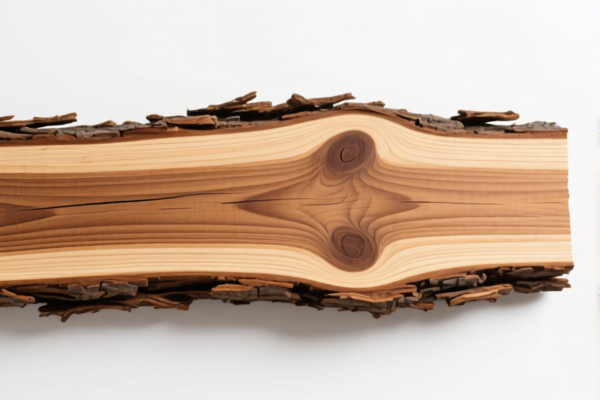
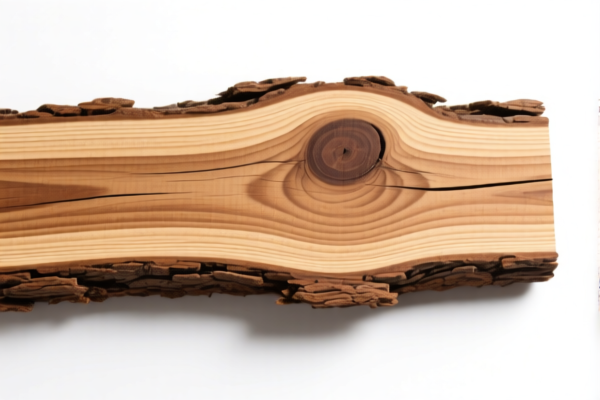
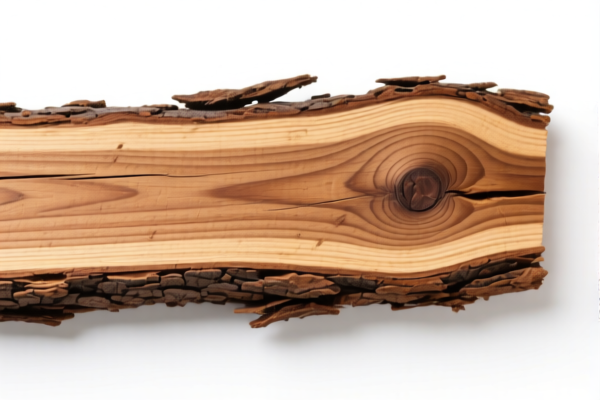
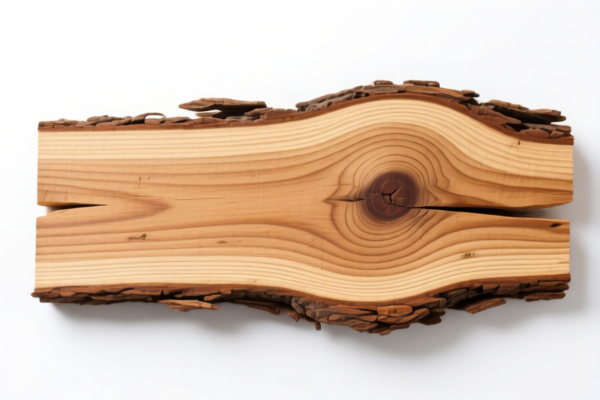
AI分析
🪵 Raw Timber or Roughly Shaped Wood (Coniferous)
🌐 HS Code Reference & Customs Clearance Guide | 2026 Latest Tariff Analysis | Professional Clearance Strategy
📌 1. Product Definition & Classification: What Exactly is "Rough Timber"?
Rough timber refers to wood that has been sawn, chipped lengthwise, sliced, or peeled, with a thickness exceeding 6 mm. It may be planed, sanded, or end-jointed but remains in a "rough" or untreated state. In international trade, this category is strictly divided based on wood species and treatment status.
⚠️ Key Distinction Points:
- If the wood is treated, painted, or finished, it does NOT fall under these rough timber codes.
- If the wood is smooth, sanded, or planed to a specific finish, it may fall under different subheadings, but for "Rough" designation, we focus on untreated, basic structural lumber.
- Species matters: Pine vs. Douglas-fir have different HS codes and potentially different trade implications.
📦 2. HS Code Classification Details (2026 Latest Tariff Authority Comparison)
| HS Code | Product Description | Applicable Scenario | Wood Species | Treatment Status |
|---|---|---|---|---|
4407.11.00.43 |
Wood, sawn/chipped lengthwise, sliced, or peeled, thickness > 6mm: Coniferous, Pine spp., Eastern white pine (Pinus strobus) and red pine (Pinus resinosa): Rough | Construction lumber, basic framing, untreated pine beams | Eastern White Pine, Red Pine | ❌ Not Treated |
4407.19.00.55 |
Wood, sawn/chipped lengthwise, sliced, or peeled, thickness > 6mm: Coniferous, Other (Douglas-fir): Rough, Min dimension ≥ 5.1 cm but < 12.7 cm | Structural timber, industrial use, untreated Douglas-fir | Douglas-fir (Pseudotsuga menziesii) | ❌ Not Treated |
🔍 Key Reminders:
- Thickness: Must exceed 6 mm to be classified under Chapter 44 (Sawn Wood). Thinner wood may fall under Chapter 47 (Wood Pulp) or other categories.
- "Rough" Definition: The wood has NOT been further processed into finished products (e.g., furniture, flooring). It is essentially raw lumber.
- Species Specificity: Customs requires precise species identification. "Pine" is too broad; you must specify Pinus strobus or Pinus resinosa for4407.11.00.43. For other conifers like Douglas-fir, use4407.19.00.55.
💰 3. 2026 Latest Tariff Rate Breakdown (Including Additional Duties & Policy Surcharges)
✅ Applicable Country: United States (US)
✅ Country of Origin: China (CN)
✅ Effective Date: November 10, 2025 onwards (including subsequent imports)
🎯 1. 4407.11.00.43 —— Eastern White Pine & Red Pine (Rough, Untreated)
| Item | Content |
|---|---|
| Base Tariff Rate | 0% (ad valorem) |
| Section 301 Additional Tariff | +25% (From USITC Footnote) |
| Total Tariff Rate | 25% |
| Tax Calculation | CIF Value × 25% |
| De Minimis Exemption | ❌ Not Eligible (Deny de minimis) |
| Legal Basis Path | USITC:4407.11.00.43 → FOOTNOTE:301_Section |
📌 Explanation:
- The 25% additional tariff is imposed under Section 301 of the Trade Act of 1974, targeting specific Chinese imports including raw timber and wood products.
- No base tariff is applied because the US has a 0% base duty for most rough coniferous wood.
- Total cost impact: Importers must budget for 25% of the CIF value as pure tariff cost.
🎯 2. 4407.19.00.55 —— Douglas-fir (Rough, Untreated, Specific Dimensions)
| Item | Content |
|---|---|
| Base Tariff Rate | 0% (ad valorem) |
| Section 301 Additional Tariff | +25% (From USITC Footnote) |
| Total Tariff Rate | 25% |
| Tax Calculation | CIF Value × 25% |
| De Minimis Exemption | ❌ Not Eligible (Deny de minimis) |
| Legal Basis Path | USITC:4407.19.00.55 → FOOTNOTE:301_Section |
📌 Note:
- Identical tariff structure to the Pine category.
- Dimensional Constraint: This specific code applies to Douglas-fir with a minimum dimension ≥ 5.1 cm but < 12.7 cm. If dimensions exceed 12.7 cm, a different HS code may apply, but likely still subject to 25% under Section 301.
- Species Precision: Must clearly label as Pseudotsuga menziesii (Douglas-fir). Mislabeling as generic "fir" or "spruce" can lead to customs delays or penalties.
🛠️ 4. Customs Clearance Practical Advice (Real-World Pitfall Avoidance Guide)
✅ 1. Required Documentation Checklist (All Mandatory)
| Document | Mandatory? | Notes |
|---|---|---|
| ✅ Commercial Invoice | ✔️ | Must specify exact species (e.g., Pinus strobus), dimensions, and "Rough, Untreated" status. |
| ✅ Packing List | ✔️ | Detail weight, volume, and dimensions of each bundle. |
| ✅ Phytosanitary Certificate | ✔️ | Required by USDA to prevent pest introduction. Must be issued by the country of origin. |
| ✅ Species Declaration | ✔️ | Scientific name required (e.g., Pinus strobus, Pseudotsuga menziesii). Common names alone are insufficient. |
| ✅ Bill of Lading/Air Waybill | ✔️ | Standard transport document. |
| ✅ ISF Filing (10+2) | ✔️ | Must be filed 24 hours before loading at origin for US ocean imports. |
📌 Critical Warning:
- Phytosanitary Certificate is non-negotiable for raw wood. Without it, shipments will be detained, fumigated at importer’s expense, or rejected.
- Species Mislabeling: If customs suspects mislabeling (e.g., declaring cheap pine as expensive hardwood, or vice versa), they may impose penalties + back-tariffs.
✅ 2. Declaration Tips (Key Mantra)
🔥 "Species Precise, Dimensions Clear, Phytosanitary Ready, Tariff 25% is Key!"
| Scenario | Correct Declaration | Wrong Approach |
|---|---|---|
| Eastern White Pine Lumber | 4407.11.00.43, Pinus strobus, Rough, Untreated |
Generic "Pine Wood" → Delay + Penalty |
| Douglas-fir Planks (5.1–12.7 cm) | 4407.19.00.55, Pseudotsuga menziesii, Rough, Untreated |
Generic "Douglas Fir" → Possible Rejection if species not scientific |
| Treated Wood (e.g., Pressure-Treated) | NOT these codes | Declaring treated wood as rough/untreated → Fraud + Seizure |
| Wood Thickness < 6mm | NOT Chapter 44 | Declaring thin wood under rough timber codes → Misclassification |
✅ 3. Special Circumstances Handling
| Situation | Handling Advice |
|---|---|
| Mixed Species Container | Do NOT mix different species in one declaration. Separate shipments by HS code. Mixed shipments will cause major delays. |
| Dimensional Ambiguity | Provide certified measurement reports from a third-party inspector. Disputes over dimensions (e.g., is it 12.6 cm or 12.8 cm?) can change HS codes. |
| Origin Fraud | If wood is sourced from China but declared as Vietnam/Thailand, you face Section 301 penalties + anti-dumping duties. Use Country of Origin Certificate. |
| End-Jointed Wood | If end-jointed, it still falls under rough timber if not further processed. Declare as "End-Jointed, Rough". |
🌍 5. Global Main Market Customs Comparison (2026 Latest)
| Country/Region | Recommended HS Code | Tariff (China Origin) | Certification Requirements | Notes |
|---|---|---|---|---|
| 🇺🇸 USA | 4407.11.00.43 / 4407.19.00.55 |
25% (Section 301) | Phytosanitary, ISF | High tariff impact. |
| 🇨🇳 China | 4407.11.00.43 / 4407.19.00.55 |
0% ~ 5% (Varies) | Phytosanitary (Export) | Lower tariffs for import/export. |
| 🇪🇺 EU | 4407.10.50 / 4407.10.90 |
0% (GSP/FTA Eligible) | Phytosanitary, Fytosanitary | Generally no additional tariffs if FTA compliant. |
| 🇬🇧 UK | 4407.11.00.43 / 4407.19.00.55 |
0% ~ 5% | Phytosanitary | Post-Brexit rules apply. |
| 🇯🇵 Japan | 4407.11.00.43 / 4407.19.00.55 |
0% ~ 5% | Phytosanitary | Low tariffs, strict inspection. |
📌 Conclusion:
- USA imposes a 25% additional tariff on these specific rough timber products from China.
- EU and Japan generally have lower or zero tariffs, but strict phytosanitary requirements apply.
- Cost Optimization: If possible, source wood from non-China origins (e.g., Vietnam, Thailand) to avoid Section 301 tariffs, but ensure origin documentation is impeccable.
📌 6. Common Errors & Pitfall Guide (Lessons Learned)
❌ Error 1: Declaring "Pine" without specifying Pinus strobus or Pinus resinosa
👉 Consequence: Customs will reject the declaration or assign a default higher-duty code.
👉 Solution: Always use scientific names in commercial invoices and packing lists.
❌ Error 2: Failing to provide a Phytosanitary Certificate
👉 Consequence: Shipments will be held at port, fumigated, or returned. Costs: Fumigation ($500–$2000) + Demurrage.
👉 Solution: Obtain the certificate before shipment. Ensure it matches the invoice species.
❌ Error 3: Misdeclaring "Treated" wood as "Untreated"
👉 Consequence: Seizure + Penalty. Treated wood requires different handling and may have different tariffs.
👉 Solution: Accurately declare treatment status. If treated, it does not qualify for these rough timber codes.
❌ Error 4: Ignoring Dimensional Constraints for Douglas-fir
👉 Consequence: If dimensions are ≥ 12.7 cm, the code 4407.19.00.55 is invalid.
👉 Solution: Verify dimensions. For > 12.7 cm, consult a customs broker for the correct subheading (likely still 25% under Section 301, but different code).
✅ Correct Approach:
"Eastern White Pine Lumber, Rough, Untreated, Thickness 25mm, Dimensions 50mm x 100mm, Scientific Name: Pinus strobus, Phytosanitary Certificate #ABC123, Section 301 Applicable"
🎯 7. Conclusion: Professional Declaration, Cost Savings, Risk Mitigation
🎯 Remember the Mantra:
🔹 "Species Scientific, Dimensions Precise, Phytosanitary Ready, 25% Tariff is Key!"
🔹 "HS Code Determines Duty, Species Matters, Mislabeling Means Penalty!"
📌 Pro Tip:
If your timber is sourced from Vietnam, Thailand, or Malaysia, you avoid the 25% Section 301 tariff. However, ensure no Chinese components or processing were involved to claim non-origin status.
Apply for an Advance Ruling from CBP to confirm HS code classification before shipping.
📣 Immediate Action:
📞 Contact a licensed customs broker + Provide product photos + Obtain Phytosanitary Certificate
🚀 Ensure your raw timber clears customs smoothly, avoids penalties, and maximizes profit margins!
✨ Professional Customs Clearance Starts with Accurate Classification!
💼 Every cent of tariff cost is worth calculating precisely!
用户评价
关于 HS 编码归类
协调制度(HS)是由世界海关组织(WCO)制定的国际贸易商品分类标准。全球 200 多个国家采用 HS 系统作为海关关税、贸易统计和进出口监管的基础。
每个 HS 编码遵循以下层级结构:
- 章(2 位)——商品大类(例如:第 84 章:机器和机械设备)
- 品目(4 位)——章内的更具体分类
- 子目(6 位)——国际通用细分,所有 WCO 成员国统一使用
- 本国细分(8-10 位)——各国自行扩展的细分编码,如美国 HTSUS 10 位编码
正确的 HS 编码归类对于顺利通关、准确缴纳关税和遵守贸易法规至关重要。错误归类可能导致海关延误、多缴关税或罚款。
从CN进口到US时,适用的关税税率可能包括:
- 最惠国(MFN)税率——适用于 WTO 成员国的标准关税税率
- 普通税率——适用于无贸易协定国家
- 贸易救济关税——附加关税,如 301 条款(反倾销)、232 条款(国家安全)或反补贴税
本页内容仅供参考。如需正式归类,请咨询当地海关或持牌报关代理。