Raw Wood (Other)
CN → US| HS编码 | 关税税率 | 原产国 | 目的国 | 文档 |
|---|---|---|---|---|
| 4403260165 | 35.0% | CN | US | 官方文档 |
| 4403910040 | 35.0% | CN | US | 官方文档 |
| 4403240104 | 35.0% | CN | US | 官方文档 |
| 4403260108 | 35.0% | CN | US | 官方文档 |
| 4403260165 | 35.0% | CN | US | 官方文档 |
商品图片
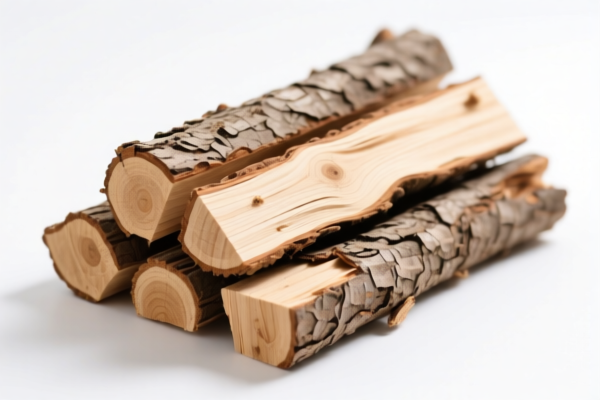
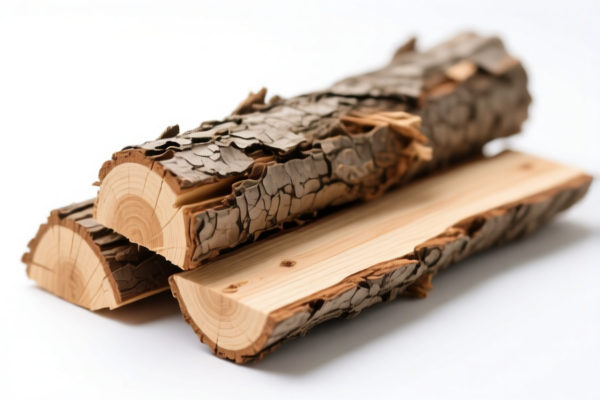
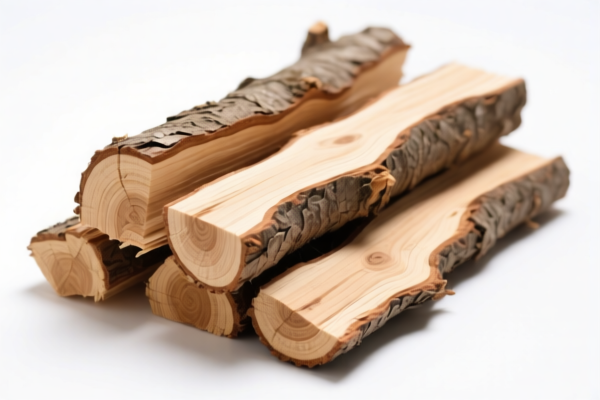
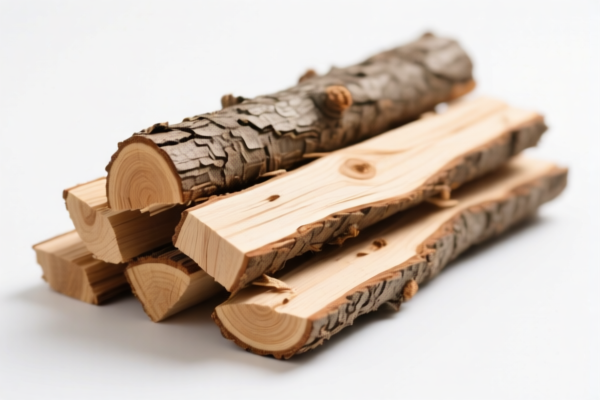
AI分析
🌲 Raw Wood (Other) | Rough-Sawn Timber & Logs
🌐 HS Code Reference & Customs Clearance Guide | 2026 Latest Tariff Analysis | Professional-Level Entry Strategy
📌 Part I: Product Definition & Classification: What is "Raw Wood"?
"Raw Wood" in international trade refers to timber that has not undergone significant processing. It generally falls under two main categories:
1. Rough-Sawn/Unprocessed Logs (Logs in the rough):
Wood that is stripped of bark or sapwood, or roughly squared, but not shaped or planed. This includes:
* Hardwoods (Non-coniferous): e.g., Oak (Quercus spp.), Walnut, Cherry.
* Softwoods (Coniferous): e.g., Pine, Spruce, Fir, Douglas Fir.
⚠️ Key Distinction Point:
- If the wood is roughly squared or just debarked, it is considered "Raw Wood" under Chapter 44.
- If it is further planed, sanded, or molded into specific shapes (like beams, planks with precise dimensions), it may fall under 4407 (Wood Continuously Sawn) or 4409 (Wood Shaped).
- For this guide, we focus strictly on "Rough" or "Unprocessed" wood as per your input.
📦 Part II: HS Code Classification Details (2026 Latest Tariff Authoritative对照)
Based on your input "Raw Wood (Other)", there are two primary HS Codes depending on the wood species (Hardwood vs. Softwood).
| HS Code | Product Description | Application Scenario | Wood Type |
|---|---|---|---|
4403.91.00.40 |
Wood in the rough, whether or not stripped of bark or sap-wood, or roughly squared: Other: Of oak (Quercus spp.) Other | Oak logs, rough-sawn oak timbers, non-oak hardwoods (e.g., maple, birch, walnut) | Hardwood (Non-coniferous) |
4403.26.01.65 |
Wood in the rough, whether or not stripped of bark or sap-wood, or roughly squared: Other, coniferous: Other Other | Pine, spruce, fir logs, rough-sawn softwood timber | Softwood (Coniferous) |
🔍 Critical Reminder:
- "Oak" is a specific sub-category. If your "Other Raw Wood" is Oak (Quercus spp.), use4403.91.00.40.
- All other hardwoods (e.g., maple, beech, cherry) that are not oak also fall under4403.91.00.40(as "Other" under non-coniferous).
- All coniferous woods (pine, spruce, fir, etc.) fall under4403.26.01.65.
- Do not confuse with4407(Sawn Wood) — this applies only to wood that has been continuously sawn and planed, not "rough" logs.
💰 Part III: 2026 Latest Tariff Rate Breakdown (Detailed Tax Clauses)
✅ Applicable Country: United States (US)
✅ Origin: China (CN)
✅ Effective Date: 2025+ (Current US Trade Policy)
🎯 1. 4403.91.00.40 —— Raw Wood (Hardwood: Oak & Other Non-Coniferous)
| Item | Details |
|---|---|
| Base Tariff Rate | 0% (ad valorem) |
| Section 301 Additional Tariff | +25% (from USITC Footnote 9903.44.03) |
| Total Tariff Rate | 25.0% |
| Tax Calculation | CIF Value × 25% |
| De Minimis Exemption | ❌ Not Eligible (Deny de minimis for HS 4403) |
| Legal Basis Path | USITC:4403.91.00.40 → FOOTNOTE:9903.44.03 |
📌 Explanation:
- Base Rate 0%: Raw wood has a low base tariff due to lack of value-added processing.
- Section 301 Tariff 25%: This is the critical cost driver. All Chinese-origin raw wood under HS 4403 is subject to a 25% additional tariff.
- Total Cost Impact: A $10,000 shipment will incur $2,500 in duties.
- No De Minimis: Shipments under $800 do not qualify for tax exemption. Duties apply from the first unit.
🎯 2. 4403.26.01.65 —— Raw Wood (Softwood: Coniferous)
| Item | Details |
|---|---|
| Base Tariff Rate | 0% (ad valorem) |
| Section 301 Additional Tariff | +25% (from USITC Footnote 9903.44.03) |
| Total Tariff Rate | 25.0% |
| Tax Calculation | CIF Value × 25% |
| De Minimis Exemption | ❌ Not Eligible (Deny de minimis for HS 4403) |
| Legal Basis Path | USITC:4403.26.01.65 → FOOTNOTE:9903.44.03 |
📌 Explanation:
- Same as Hardwood: Despite being a different species, softwood raw wood faces the same 25% Section 301 tariff.
- Total Cost Impact: Identical to hardwood — 25% of CIF value.
- Note: Some softwood products (like plywood) may have different codes, but rough raw wood is uniformly 25%.
🛠️ Part IV: Customs Clearance Practical Advice (Pitfall Avoidance Guide)
✅ 1. Required Documentation Checklist (Non-Negotiable)
| Document | Required? | Purpose |
|---|---|---|
| ✅ Commercial Invoice | ✔️ | Must clearly state "Raw Wood," species (e.g., Oak, Pine), and HS Code. |
| ✅ Packing List | ✔️ | Detail weight, volume, and number of logs/planks. |
| ✅ Phytosanitary Certificate | ✔️ | Crucial! Issued by the exporting country’s plant protection agency. Certifies no pests/diseases. |
| ✅ Fumigation Certificate | ✔️ | Proof of treatment (ISPM 15 standard) if wood is in solid wood packaging or requires treatment. |
| ✅ Bill of Lading/Air Waybill | ✔️ | Transport document. |
| ✅ Wood Species Declaration | ✔️ | Specific declaration of genus/species (e.g., Quercus robur for Oak). |
⚠️ Warning: Missing a Phytosanitary Certificate will result in shipment detention, re-export, or destruction by USDA/APHIS.
✅ 2. Declaration Tips (Key Mantra)
🔥 "Species Clear, Phytosanitary Valid, Rough is Rough, Not Processed!"
| Scenario | Correct Declaration | Incorrect Declaration |
|---|---|---|
| Oak Logs | 4403.91.00.40 - "Rough-sawn Oak (Quercus spp.)" |
"Lumber" or "Timber" (too vague) |
| Pine Logs | 4403.26.01.65 - "Rough-sawn Coniferous Wood (Pine)" |
"Wood Planks" (implies processing) |
| Mixed Species | Separate HS Codes per species. Do not group "Mixed Wood." | "Mixed Raw Wood" → Customs may deny clearance. |
✅ 3. Special Circumstances Handling
| Situation | Handling Advice |
|---|---|
| Insect Infestation Risk | Ensure wood is dry (moisture content <20%) and properly fumigated. Wet wood may be rejected. |
| Endangered Species (CITES) | If the "Other" hardwood is from a CITES-listed species (e.g., some tropical hardwoods), you need CITES Permits. |
| Anti-Dumping | Currently, no anti-dumping duty applies to raw wood (HS 4403). Only the 25% Section 301 tariff. |
| Origin Substitution | If wood is harvested in China but processed in Vietnam, origin is still China for raw wood. No tariff reduction. |
🌍 Part V: Global Market Comparison (2026 Latest)
| Country/Region | Recommended HS Code | Tariff (China Origin) | Certification | Remarks |
|---|---|---|---|---|
| 🇺🇸 USA | 4403.91.00.40 / 4403.26.01.65 |
25% (Section 301) | Phytosanitary + ISPM 15 | Highest barrier due to tariffs. |
| 🇨🇳 China | 4403.91.00.40 / 4403.26.01.65 |
0% | None | Domestic trade, no import duty. |
| 🇪🇺 EU | 4403.91 / 4403.26 |
0% | FLEGT License (for hardwoods) | No additional tariffs if legal. |
| 🇯🇵 Japan | 4403.91 / 4403.26 |
0% ~ 1.5% | Phytosanitary | Very low tariffs. |
| 🇲🇽 Mexico | 4403.91 / 4403.26 |
0% (USMCA) | Phytosanitary | Zero tariff if compliant. |
📌 Conclusion:
- USA is the most expensive market due to the 25% Section 301 tariff.
- EU, Japan, Mexico offer 0% or low tariffs, making them more attractive for Chinese raw wood exporters.
- Consider supply chain adjustment: If exporting to the US, consider importing finished wood products (which may have different duties) or sourcing from non-China origins.
📌 Part VI: Common Errors & Pitfalls (Lessons Learned)
❌ Error 1: Declaring "Rough Wood" as "Sawn Wood" (HS 4407)
👉 Consequence: Wrong classification → Potential overpayment of tariff or underpayment leading to penalties. HS 4407 may have different duties.
❌ Error 2: Missing Phytosanitary Certificate
👉 Consequence: Shipment rejected by USDA. Costs include storage, re-export, or destruction fees ($$).
❌ Error 3: Misidentifying Species (e.g., calling Oak "Pine")
👉 Consequence: Customs audit → Back taxes + fines. Species identification is strict.
❌ Error 4: Assuming De Minimis applies
👉 Consequence: For HS 4403, de minimis is denied. Even small shipments pay 25% duty.
✅ Correct Approach:
"Rough-sawn Oak (Quercus spp.), stripped of bark, 2m length, untreated. HS: 4403.91.00.40. Origin: China."
🎯 Part VII: Conclusion: Professional Declaration, Save Costs!
🎯 Remember Mantra:
🔹 "Species First, Phytosanitary Second, 25% Tariff is Inevitable for USA!"
🔹 "Raw Wood is Heavy, Duty is 25%, Plan Ahead!"
📌 Tips:
- If your wood is not from China, the 25% Section 301 tariff does not apply.
- For small samples, consider using express courier but still declare correctly; de minimis does not apply.
- Pre-clearance: Request a Binding Tariff Information (BTI) or US Customs Ruling if you have large volumes.
📣 Immediate Action:
📞 Consult a licensed customs broker.
📄 Ensure Phytosanitary Certificate is obtained before shipping.
🚀 Optimize your supply chain to mitigate the 25% US tariff impact.
✨ Professional Customs Clearance Starts with Accurate Classification!
💼 Every 25% saved is pure profit!
用户评价
关于 HS 编码归类
协调制度(HS)是由世界海关组织(WCO)制定的国际贸易商品分类标准。全球 200 多个国家采用 HS 系统作为海关关税、贸易统计和进出口监管的基础。
每个 HS 编码遵循以下层级结构:
- 章(2 位)——商品大类(例如:第 84 章:机器和机械设备)
- 品目(4 位)——章内的更具体分类
- 子目(6 位)——国际通用细分,所有 WCO 成员国统一使用
- 本国细分(8-10 位)——各国自行扩展的细分编码,如美国 HTSUS 10 位编码
正确的 HS 编码归类对于顺利通关、准确缴纳关税和遵守贸易法规至关重要。错误归类可能导致海关延误、多缴关税或罚款。
从CN进口到US时,适用的关税税率可能包括:
- 最惠国(MFN)税率——适用于 WTO 成员国的标准关税税率
- 普通税率——适用于无贸易协定国家
- 贸易救济关税——附加关税,如 301 条款(反倾销)、232 条款(国家安全)或反补贴税
本页内容仅供参考。如需正式归类,请咨询当地海关或持牌报关代理。