Raw Wood (Other)
CN → US| HS Code | Tariff Rate | Origin | Destination | Doc |
|---|---|---|---|---|
| 4403260165 | 35.0% | CN | US | Official Doc |
| 4403910040 | 35.0% | CN | US | Official Doc |
| 4403240104 | 35.0% | CN | US | Official Doc |
| 4403260108 | 35.0% | CN | US | Official Doc |
| 4403260165 | 35.0% | CN | US | Official Doc |
Product Images
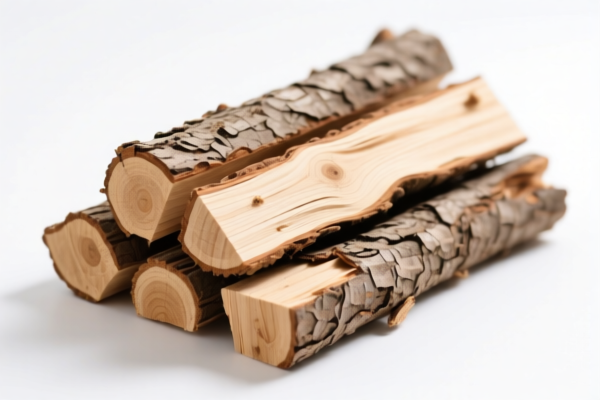
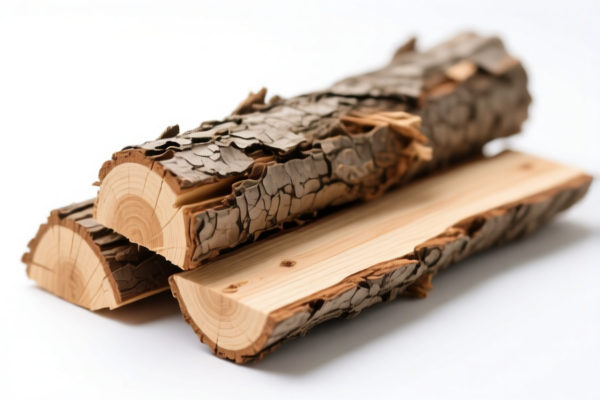
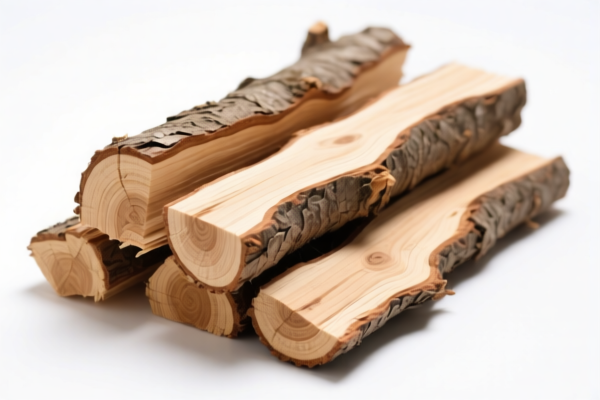
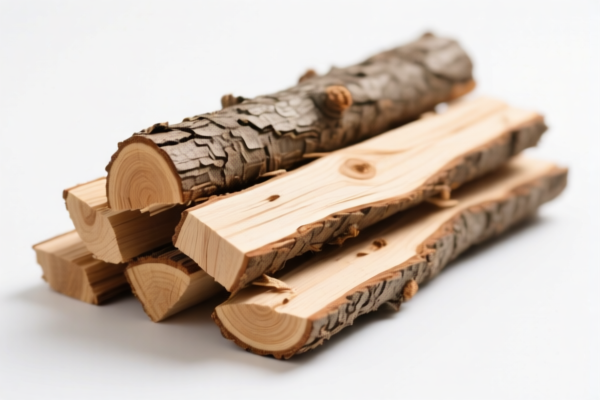
AI Analysis
🌲 Raw Wood (Other) | Rough-Sawn Timber & Logs
🌐 HS Code Reference & Customs Clearance Guide | 2026 Latest Tariff Analysis | Professional-Level Entry Strategy
📌 Part I: Product Definition & Classification: What is "Raw Wood"?
"Raw Wood" in international trade refers to timber that has not undergone significant processing. It generally falls under two main categories:
1. Rough-Sawn/Unprocessed Logs (Logs in the rough):
Wood that is stripped of bark or sapwood, or roughly squared, but not shaped or planed. This includes:
* Hardwoods (Non-coniferous): e.g., Oak (Quercus spp.), Walnut, Cherry.
* Softwoods (Coniferous): e.g., Pine, Spruce, Fir, Douglas Fir.
⚠️ Key Distinction Point:
- If the wood is roughly squared or just debarked, it is considered "Raw Wood" under Chapter 44.
- If it is further planed, sanded, or molded into specific shapes (like beams, planks with precise dimensions), it may fall under 4407 (Wood Continuously Sawn) or 4409 (Wood Shaped).
- For this guide, we focus strictly on "Rough" or "Unprocessed" wood as per your input.
📦 Part II: HS Code Classification Details (2026 Latest Tariff Authoritative对照)
Based on your input "Raw Wood (Other)", there are two primary HS Codes depending on the wood species (Hardwood vs. Softwood).
| HS Code | Product Description | Application Scenario | Wood Type |
|---|---|---|---|
4403.91.00.40 |
Wood in the rough, whether or not stripped of bark or sap-wood, or roughly squared: Other: Of oak (Quercus spp.) Other | Oak logs, rough-sawn oak timbers, non-oak hardwoods (e.g., maple, birch, walnut) | Hardwood (Non-coniferous) |
4403.26.01.65 |
Wood in the rough, whether or not stripped of bark or sap-wood, or roughly squared: Other, coniferous: Other Other | Pine, spruce, fir logs, rough-sawn softwood timber | Softwood (Coniferous) |
🔍 Critical Reminder:
- "Oak" is a specific sub-category. If your "Other Raw Wood" is Oak (Quercus spp.), use4403.91.00.40.
- All other hardwoods (e.g., maple, beech, cherry) that are not oak also fall under4403.91.00.40(as "Other" under non-coniferous).
- All coniferous woods (pine, spruce, fir, etc.) fall under4403.26.01.65.
- Do not confuse with4407(Sawn Wood) — this applies only to wood that has been continuously sawn and planed, not "rough" logs.
💰 Part III: 2026 Latest Tariff Rate Breakdown (Detailed Tax Clauses)
✅ Applicable Country: United States (US)
✅ Origin: China (CN)
✅ Effective Date: 2025+ (Current US Trade Policy)
🎯 1. 4403.91.00.40 —— Raw Wood (Hardwood: Oak & Other Non-Coniferous)
| Item | Details |
|---|---|
| Base Tariff Rate | 0% (ad valorem) |
| Section 301 Additional Tariff | +25% (from USITC Footnote 9903.44.03) |
| Total Tariff Rate | 25.0% |
| Tax Calculation | CIF Value × 25% |
| De Minimis Exemption | ❌ Not Eligible (Deny de minimis for HS 4403) |
| Legal Basis Path | USITC:4403.91.00.40 → FOOTNOTE:9903.44.03 |
📌 Explanation:
- Base Rate 0%: Raw wood has a low base tariff due to lack of value-added processing.
- Section 301 Tariff 25%: This is the critical cost driver. All Chinese-origin raw wood under HS 4403 is subject to a 25% additional tariff.
- Total Cost Impact: A $10,000 shipment will incur $2,500 in duties.
- No De Minimis: Shipments under $800 do not qualify for tax exemption. Duties apply from the first unit.
🎯 2. 4403.26.01.65 —— Raw Wood (Softwood: Coniferous)
| Item | Details |
|---|---|
| Base Tariff Rate | 0% (ad valorem) |
| Section 301 Additional Tariff | +25% (from USITC Footnote 9903.44.03) |
| Total Tariff Rate | 25.0% |
| Tax Calculation | CIF Value × 25% |
| De Minimis Exemption | ❌ Not Eligible (Deny de minimis for HS 4403) |
| Legal Basis Path | USITC:4403.26.01.65 → FOOTNOTE:9903.44.03 |
📌 Explanation:
- Same as Hardwood: Despite being a different species, softwood raw wood faces the same 25% Section 301 tariff.
- Total Cost Impact: Identical to hardwood — 25% of CIF value.
- Note: Some softwood products (like plywood) may have different codes, but rough raw wood is uniformly 25%.
🛠️ Part IV: Customs Clearance Practical Advice (Pitfall Avoidance Guide)
✅ 1. Required Documentation Checklist (Non-Negotiable)
| Document | Required? | Purpose |
|---|---|---|
| ✅ Commercial Invoice | ✔️ | Must clearly state "Raw Wood," species (e.g., Oak, Pine), and HS Code. |
| ✅ Packing List | ✔️ | Detail weight, volume, and number of logs/planks. |
| ✅ Phytosanitary Certificate | ✔️ | Crucial! Issued by the exporting country’s plant protection agency. Certifies no pests/diseases. |
| ✅ Fumigation Certificate | ✔️ | Proof of treatment (ISPM 15 standard) if wood is in solid wood packaging or requires treatment. |
| ✅ Bill of Lading/Air Waybill | ✔️ | Transport document. |
| ✅ Wood Species Declaration | ✔️ | Specific declaration of genus/species (e.g., Quercus robur for Oak). |
⚠️ Warning: Missing a Phytosanitary Certificate will result in shipment detention, re-export, or destruction by USDA/APHIS.
✅ 2. Declaration Tips (Key Mantra)
🔥 "Species Clear, Phytosanitary Valid, Rough is Rough, Not Processed!"
| Scenario | Correct Declaration | Incorrect Declaration |
|---|---|---|
| Oak Logs | 4403.91.00.40 - "Rough-sawn Oak (Quercus spp.)" |
"Lumber" or "Timber" (too vague) |
| Pine Logs | 4403.26.01.65 - "Rough-sawn Coniferous Wood (Pine)" |
"Wood Planks" (implies processing) |
| Mixed Species | Separate HS Codes per species. Do not group "Mixed Wood." | "Mixed Raw Wood" → Customs may deny clearance. |
✅ 3. Special Circumstances Handling
| Situation | Handling Advice |
|---|---|
| Insect Infestation Risk | Ensure wood is dry (moisture content <20%) and properly fumigated. Wet wood may be rejected. |
| Endangered Species (CITES) | If the "Other" hardwood is from a CITES-listed species (e.g., some tropical hardwoods), you need CITES Permits. |
| Anti-Dumping | Currently, no anti-dumping duty applies to raw wood (HS 4403). Only the 25% Section 301 tariff. |
| Origin Substitution | If wood is harvested in China but processed in Vietnam, origin is still China for raw wood. No tariff reduction. |
🌍 Part V: Global Market Comparison (2026 Latest)
| Country/Region | Recommended HS Code | Tariff (China Origin) | Certification | Remarks |
|---|---|---|---|---|
| 🇺🇸 USA | 4403.91.00.40 / 4403.26.01.65 |
25% (Section 301) | Phytosanitary + ISPM 15 | Highest barrier due to tariffs. |
| 🇨🇳 China | 4403.91.00.40 / 4403.26.01.65 |
0% | None | Domestic trade, no import duty. |
| 🇪🇺 EU | 4403.91 / 4403.26 |
0% | FLEGT License (for hardwoods) | No additional tariffs if legal. |
| 🇯🇵 Japan | 4403.91 / 4403.26 |
0% ~ 1.5% | Phytosanitary | Very low tariffs. |
| 🇲🇽 Mexico | 4403.91 / 4403.26 |
0% (USMCA) | Phytosanitary | Zero tariff if compliant. |
📌 Conclusion:
- USA is the most expensive market due to the 25% Section 301 tariff.
- EU, Japan, Mexico offer 0% or low tariffs, making them more attractive for Chinese raw wood exporters.
- Consider supply chain adjustment: If exporting to the US, consider importing finished wood products (which may have different duties) or sourcing from non-China origins.
📌 Part VI: Common Errors & Pitfalls (Lessons Learned)
❌ Error 1: Declaring "Rough Wood" as "Sawn Wood" (HS 4407)
👉 Consequence: Wrong classification → Potential overpayment of tariff or underpayment leading to penalties. HS 4407 may have different duties.
❌ Error 2: Missing Phytosanitary Certificate
👉 Consequence: Shipment rejected by USDA. Costs include storage, re-export, or destruction fees ($$$$).
❌ Error 3: Misidentifying Species (e.g., calling Oak "Pine")
👉 Consequence: Customs audit → Back taxes + fines. Species identification is strict.
❌ Error 4: Assuming De Minimis applies
👉 Consequence: For HS 4403, de minimis is denied. Even small shipments pay 25% duty.
✅ Correct Approach:
"Rough-sawn Oak (Quercus spp.), stripped of bark, 2m length, untreated. HS: 4403.91.00.40. Origin: China."
🎯 Part VII: Conclusion: Professional Declaration, Save Costs!
🎯 Remember Mantra:
🔹 "Species First, Phytosanitary Second, 25% Tariff is Inevitable for USA!"
🔹 "Raw Wood is Heavy, Duty is 25%, Plan Ahead!"
📌 Tips:
- If your wood is not from China, the 25% Section 301 tariff does not apply.
- For small samples, consider using express courier but still declare correctly; de minimis does not apply.
- Pre-clearance: Request a Binding Tariff Information (BTI) or US Customs Ruling if you have large volumes.
📣 Immediate Action:
📞 Consult a licensed customs broker.
📄 Ensure Phytosanitary Certificate is obtained before shipping.
🚀 Optimize your supply chain to mitigate the 25% US tariff impact.
✨ Professional Customs Clearance Starts with Accurate Classification!
💼 Every 25% saved is pure profit!
Customer Reviews
About HS Code Classification
The Harmonized System (HS) is an internationally standardized nomenclature developed by the World Customs Organization (WCO) to classify traded products. Over 200 countries use the HS system as the basis for customs tariffs, trade statistics, and import/export regulations.
Each HS code follows a hierarchical structure:
- Chapter (2 digits) — Broad category of goods (e.g., Chapter 84: Machinery and Mechanical Appliances)
- Heading (4 digits) — More specific grouping within the chapter
- Subheading (6 digits) — Internationally standardized breakdown, used by all WCO member countries
- National subdivisions (8-10 digits) — Country-specific extensions for further classification, such as US HTSUS 10-digit codes
Correct HS code classification is essential for smooth customs clearance, accurate duty payment, and compliance with trade regulations. Misclassification can lead to customs delays, overpayment of duties, or penalties.
When importing from CN to US, the applicable tariff rates may include:
- Most-Favored-Nation (MFN) rate — The standard duty rate applied to WTO members
- General rate — Applied to countries without trade agreements
- Trade remedy duties — Additional tariffs such as Section 301 (anti-dumping), Section 232 (national security), or countervailing duties
The information provided on this page is for reference purposes only. For official classification, please consult with your local customs authority or a licensed customs broker.