Rebar and Deformed Steel Bar
CN → US| HS编码 | 关税税率 | 原产国 | 目的国 | 文档 |
|---|---|---|---|---|
| 7214200000 | 10.0% | CN | US | 官方文档 |
| 7214990060 | 10.0% | CN | US | 官方文档 |
| 7215500016 | 35.0% | CN | US | 官方文档 |
| 7215500018 | 35.0% | CN | US | 官方文档 |
商品图片
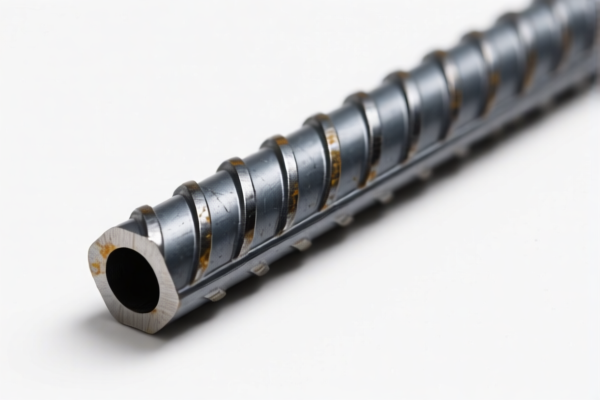
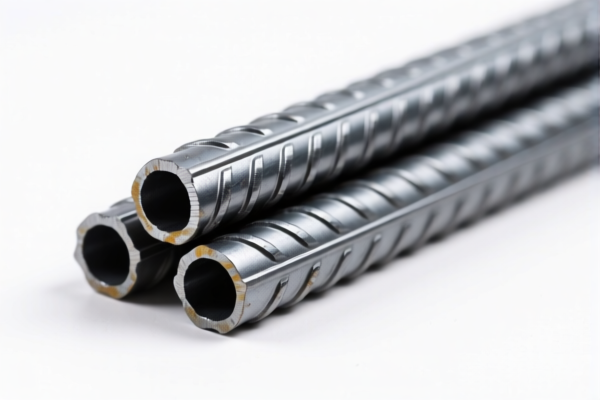
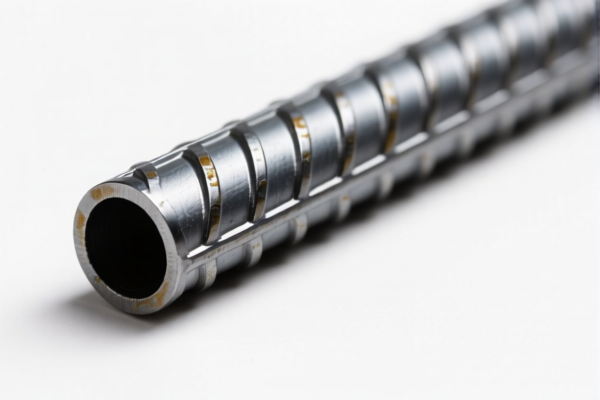
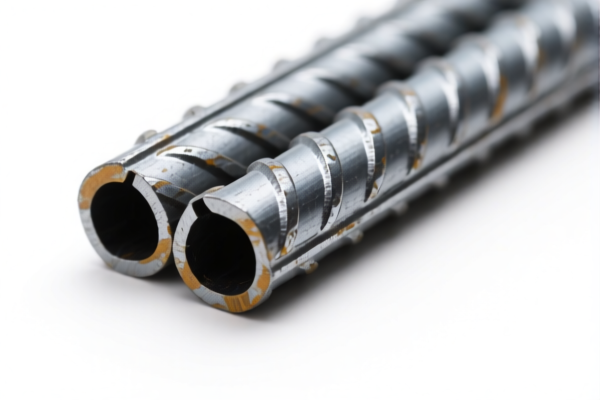
AI分析
🏗️ Concrete Reinforcing Bars & Deformed Steel Bars (Iron/Non-Alloy Steel)
🌐 HS Code Reference & Clearance Guide | 2026 Latest Tariff Analysis | Professional Customs Strategy
📌 I. Product Definition: What Are You Actually Shipping?
Rebars (Reinforcing Bars) and Deformed Steel Bars are the skeletal muscle of modern construction. In international trade, their classification depends strictly on two factors: 1. Processing Method: Is it hot-worked (forged, rolled, drawn) or cold-worked (cold-formed/cold-finished)? 2. Chemical Composition: Specifically, the carbon content by weight.
⚠️ Critical Distinction:
- If the bar is twisted after rolling (common for concrete reinforcement), it still falls under hot-rolled categories if no further cold working is applied.
- If the bar has been cold-formed or cold-finished (e.g., cold-drawn wire mesh rods, cold-twisted bars used for structural integrity beyond basic concrete reinforcement), it falls under 7215.
- Carbon Content < 0.25% vs ≥ 0.25% determines the specific subheading under "Other bars and rods."
📦 II. HS Code Classification Matrix (2026 Latest Tariff Alignment)
Based on the provided data, here is the precise classification for Rebar and Deformed Steel Bars:
| HS Code | Product Description | Key Characteristics | Applicable Scenario |
|---|---|---|---|
7214.20.00.00 |
Concrete reinforcing bars and rods | Not further worked than forged, hot-rolled, hot-drawn, or hot-extruded. Includes twisted after rolling. | Standard construction rebar, twisted after rolling, no further cold processing. |
7214.99.00.60 |
Other bars and rods... Containing < 0.25% Carbon | Hot-worked (forged/rolled/drawn/extruded). Low Carbon. "Other" (not for concrete reinforcement). | Low-carbon steel rods, structural shapes, non-reinforcement applications, hot-processed. |
7215.50.00.16 |
Cold-formed/cold-finished bars... < 0.25% Carbon | Cold-processed. Diameter/Cross-section < 76 mm. | Cold-drawn rods, cold-twisted bars, small-diameter low-carbon steel bars. |
7215.50.00.18 |
Cold-formed/cold-finished bars... < 0.25% Carbon | Cold-processed. Diameter/Cross-section ≥ 76 mm but ≤ 228 mm. | Large-diameter cold-processed low-carbon steel bars (e.g., heavy-duty shafts, cold-rolled structural rods). |
🔍 Key Warning:
- "Concrete Reinforcing Bars" is a specific legal description under7214.20. If your product is explicitly labeled and used as such, use this code.
- "Deformed" bars (with ribs/lugs) are typically classified under7214.20if they are hot-rolled and intended for concrete.
- If the bars are cold-drawn or cold-rolled (even if deformed), they move to Chapter 7215, triggering different tariff risks!
💰 III. 2026 Tariff Rate Breakdown (Detailed Tax Analysis)
✅ Applicable Country: United States (US)
✅ Origin: China (CN) (Assumed based on typical trade context; verify if origin differs)
✅ Effective Date: 2025–2026 Tariff Regime
🎯 1. 7214.20.00.00 — Concrete Reinforcing Bars
| Item | Details |
|---|---|
| Base Tariff | 0.0% |
| Additional Tariff (Section 301/Retaliatory) | 0.0% |
| Total Tax Rate | 0.0% |
| Tax Breakdown | No additional duties apply to standard concrete rebar in this dataset. |
| Legal Basis | HTSUS 7214.20.00 |
📌 Explanation:
- Standard concrete reinforcing bars enjoy a zero tariff rate in this specific data set.
- This makes them highly competitive compared to processed steel products.
- No IEEPA or USITC additional duties are listed for this specific code in the provided data.
🎯 2. 7214.99.00.60 — Other Hot-Rolled Bars (< 0.25% Carbon)
| Item | Details |
|---|---|
| Base Tariff | 0.0% |
| Additional Tariff | 0.0% |
| Total Tax Rate | 0.0% |
| Tax Breakdown | Low-carbon, hot-worked bars (non-rebar) are also duty-free in this dataset. |
| Legal Basis | HTSUS 7214.99.00.60 |
📌 Explanation:
- If your "deformed bar" is not classified as "concrete reinforcing" (e.g., it's a generic structural rod with low carbon), it falls here.
- Still 0% total tax in the provided data.
- Risk: Misclassification from7215(cold-processed) to7214(hot-processed) can lead to disputes if documentation proves cold working.
🎯 3. 7215.50.00.16 — Cold-Formed Bars (< 0.25% Carbon, < 76 mm)
| Item | Details |
|---|---|
| Base Tariff | 0.0% |
| Additional Tariff (Section 301/Retaliatory) | +25.0% |
| Total Tax Rate | 25.0% |
| Tax Breakdown | High Tariff! Applies to small-diameter cold-processed low-carbon steel. |
| Legal Basis | HTSUS 7215.50.00.16 |
⚠️ CRITICAL WARNING:
- If your rebar is cold-drawn or cold-twisted and has a diameter under 76 mm, you face a 25% tariff.
- This is a major cost driver. Many exporters mistakenly assume all steel bars are 0%. Cold processing changes everything.
🎯 4. 7215.50.00.18 — Cold-Formed Bars (< 0.25% Carbon, 76–228 mm)
| Item | Details |
|---|---|
| Base Tariff | 0.0% |
| Additional Tariff (Section 301/Retaliatory) | +25.0% |
| Total Tax Rate | 25.0% |
| Tax Breakdown | High Tariff! Applies to larger cold-processed low-carbon steel bars. |
| Legal Basis | HTSUS 7215.50.00.18 |
⚠️ CRITICAL WARNING:
- Even if the bar is large (76–228 mm), if it is cold-worked, the 25% tariff applies.
- Do not confuse "Hot-Rolled" with "Cold-Finished." The visual difference is subtle (surface finish, dimensional precision), but the tariff impact is massive (0% vs. 25%).
🛠️ IV. Customs Clearance Practical Advice (Avoiding Pitfalls)
✅ 1. Documentation Checklist (Non-Negotiable)
| Document | Must Provide | Purpose |
|---|---|---|
| Product Spec Sheet | ✔️ | Clearly states: Hot-Rolled vs. Cold-Drawn/Cold-Finished. |
| Carbon Content Test Report | ✔️ | Certified lab report confirming < 0.25% Carbon (for 7215 codes). |
| Diameter/Cross-Section Measurement | ✔️ | Precise mm measurements to determine if < 76 mm or ≥ 76 mm. |
| Statement of Use | ✔️ | "For concrete reinforcement" → Justifies 7214.20.00.00. |
| Commercial Invoice | ✔️ | Must describe as "Concrete Reinforcing Bar" or "Steel Bar, Hot-Rolled." |
| Bill of Lading | ✔️ | Consistent with invoice description. |
✅ 2. Classification Strategy (The Golden Rules)
🔥 “Hot is Free, Cold is Costly!”
| Scenario | Correct HS Code | Tariff | Risk Level |
|---|---|---|---|
| Standard Rebar (Twisted after rolling, hot-worked) | 7214.20.00.00 |
0% | ✅ Low |
| Cold-Drawn Rod (< 76 mm, < 0.25% C) | 7215.50.00.16 |
25% | ❌ High (Cost) |
| Cold-Drawn Rod (76–228 mm, < 0.25% C) | 7215.50.00.18 |
25% | ❌ High (Cost) |
| Hot-Rolled Non-Rebar Bar (< 0.25% C) | 7214.99.00.60 |
0% | ✅ Low |
📌 Key Insight:
- If you are shipping cold-drawn steel bars, do not try to classify them as "concrete reinforcing bars" unless they meet the legal definition of such (which typically requires hot-rolling).
- Misclassification can lead to 25% duty evasion penalties, not just back taxes.
✅ 3. Special Scenarios & Mitigation
| Scenario | Advice |
|---|---|
| "Deformed" Bars | Deformation (ribs/lugs) does not change the tariff if it’s hot-rolled. Use 7214.20.00.00. |
| Cold-Twisted Bars | If the bar was hot-rolled then cold-twisted, it may still be considered "cold-finished." High risk for 25% tariff. Consult a customs broker. |
| Mixed Shipments | If a container has both hot-rolled rebar (0%) and cold-drawn rods (25%), separate them. Mixed classification may trigger audits. |
| Origin Verification | Ensure the Certificate of Origin matches. If origin is not China, additional tariffs (e.g., Section 232) may apply. |
🌍 V. Global Market Comparison (2026 Outlook)
| Market | Recommended HS Code | Tariff (China Origin) | Notes |
|---|---|---|---|
| 🇺🇸 USA | 7214.20.00.00 |
0% | Best for concrete rebar. |
| 🇺🇸 USA | 7215.50.00.16/18 |
25% | Avoid if possible; high cost. |
| 🇨🇳 China | 7214.20.00.00 |
0–5% | Varies by trade agreement. |
| 🇪🇺 EU | 7214.20.00.00 |
0% | Generally duty-free for rebar. |
| 🇮🇳 India | 7214.20.00.00 |
0–7.5% | Check anti-dumping duties. |
📌 Conclusion:
- The USA offers 0% duty for standard hot-rolled concrete rebar, making it a competitive market.
- However, cold-processed steel bars face a 25% penalty, drastically reducing margins.
- Focus on hot-rolled, cold-finished rebar for maximum profit.
📌 VI. Common Errors & Pitfalls (Learn from Others' Mistakes)
❌ Error 1: Classifying cold-drawn bars as hot-rolled rebar.
👉 Consequence: 25% underpaid duty + penalties. Customs will test the microstructure.
❌ Error 2: Ignoring carbon content.
👉 Consequence: If carbon ≥ 0.25%, it falls under different subheadings (7214.99.00.80 etc.) with potentially different tariffs. Test reports are mandatory.
❌ Error 3: Using "Steel Bar" as a generic description.
👉 Consequence: Customs may classify it under the highest duty category due to ambiguity. Be specific: "Hot-Rolled Concrete Reinforcing Bar, 12mm, ASTM A615."
✅ Correct Declaration Example:
"Concrete Reinforcing Steel Bars, Hot-Rolled, Twisted After Rolling, 16mm Diameter, ASTM A615 Grade 60, Origin: China"
🎯 VII. Conclusion: Smart Classification, Maximized Profit
🎯 Remember the Mantra:
🔹 "Hot is Free, Cold is Costly!"
🔹 "Rebar = 0%, Cold Rods = 25%!"
🔹 "Document the Process, Not Just the Product!"
📌 Pro Tip:
If your product is cold-drawn, consider:
1. Re-engineering to be hot-rolled if possible.
2. Source from third countries (e.g., Vietnam, Turkey) to mitigate US tariffs.
3. Apply for Exclusions if applicable (check USTR lists).
📣 Immediate Action:
📞 Engage a licensed customs broker before shipment.
📄 Request a Binding Tariff Information (BTI) or Advance Ruling from US CBP.
🚀 Ensure your factory provides mill test reports proving processing method and carbon content.
✨ Precision in Classification is the Key to Profitability!
💼 Don't Let 25% Tariffs Eat Your Margins!
用户评价
关于 HS 编码归类
协调制度(HS)是由世界海关组织(WCO)制定的国际贸易商品分类标准。全球 200 多个国家采用 HS 系统作为海关关税、贸易统计和进出口监管的基础。
每个 HS 编码遵循以下层级结构:
- 章(2 位)——商品大类(例如:第 84 章:机器和机械设备)
- 品目(4 位)——章内的更具体分类
- 子目(6 位)——国际通用细分,所有 WCO 成员国统一使用
- 本国细分(8-10 位)——各国自行扩展的细分编码,如美国 HTSUS 10 位编码
正确的 HS 编码归类对于顺利通关、准确缴纳关税和遵守贸易法规至关重要。错误归类可能导致海关延误、多缴关税或罚款。
从CN进口到US时,适用的关税税率可能包括:
- 最惠国(MFN)税率——适用于 WTO 成员国的标准关税税率
- 普通税率——适用于无贸易协定国家
- 贸易救济关税——附加关税,如 301 条款(反倾销)、232 条款(国家安全)或反补贴税
本页内容仅供参考。如需正式归类,请咨询当地海关或持牌报关代理。