Rebar and Deformed Steel Bar
CN → US| HS Code | Tariff Rate | Origin | Destination | Doc |
|---|---|---|---|---|
| 7214200000 | 10.0% | CN | US | Official Doc |
| 7214990060 | 10.0% | CN | US | Official Doc |
| 7215500016 | 35.0% | CN | US | Official Doc |
| 7215500018 | 35.0% | CN | US | Official Doc |
Product Images
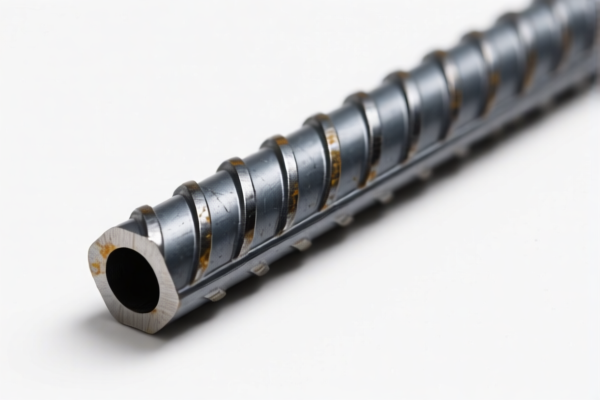
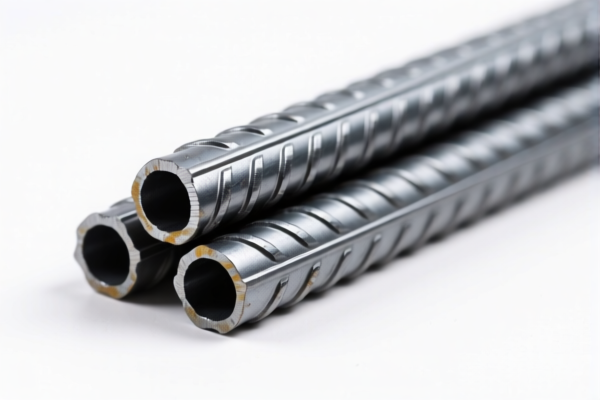
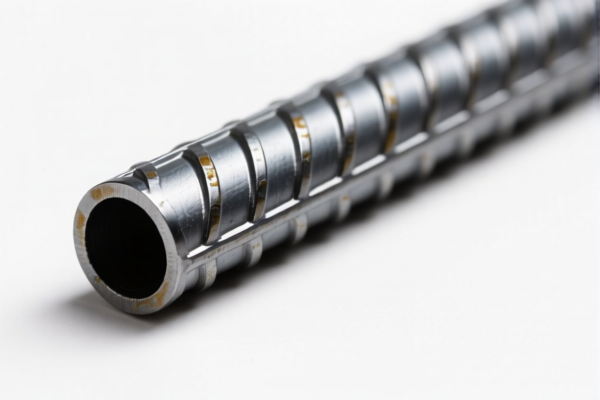
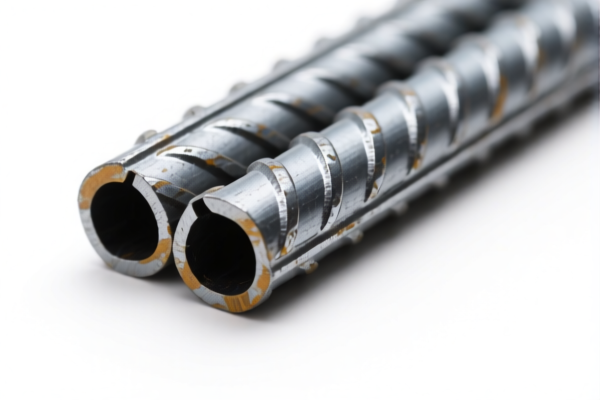
AI Analysis
🏗️ Concrete Reinforcing Bars & Deformed Steel Bars (Iron/Non-Alloy Steel)
🌐 HS Code Reference & Clearance Guide | 2026 Latest Tariff Analysis | Professional Customs Strategy
📌 I. Product Definition: What Are You Actually Shipping?
Rebars (Reinforcing Bars) and Deformed Steel Bars are the skeletal muscle of modern construction. In international trade, their classification depends strictly on two factors: 1. Processing Method: Is it hot-worked (forged, rolled, drawn) or cold-worked (cold-formed/cold-finished)? 2. Chemical Composition: Specifically, the carbon content by weight.
⚠️ Critical Distinction:
- If the bar is twisted after rolling (common for concrete reinforcement), it still falls under hot-rolled categories if no further cold working is applied.
- If the bar has been cold-formed or cold-finished (e.g., cold-drawn wire mesh rods, cold-twisted bars used for structural integrity beyond basic concrete reinforcement), it falls under 7215.
- Carbon Content < 0.25% vs ≥ 0.25% determines the specific subheading under "Other bars and rods."
📦 II. HS Code Classification Matrix (2026 Latest Tariff Alignment)
Based on the provided data, here is the precise classification for Rebar and Deformed Steel Bars:
| HS Code | Product Description | Key Characteristics | Applicable Scenario |
|---|---|---|---|
7214.20.00.00 |
Concrete reinforcing bars and rods | Not further worked than forged, hot-rolled, hot-drawn, or hot-extruded. Includes twisted after rolling. | Standard construction rebar, twisted after rolling, no further cold processing. |
7214.99.00.60 |
Other bars and rods... Containing < 0.25% Carbon | Hot-worked (forged/rolled/drawn/extruded). Low Carbon. "Other" (not for concrete reinforcement). | Low-carbon steel rods, structural shapes, non-reinforcement applications, hot-processed. |
7215.50.00.16 |
Cold-formed/cold-finished bars... < 0.25% Carbon | Cold-processed. Diameter/Cross-section < 76 mm. | Cold-drawn rods, cold-twisted bars, small-diameter low-carbon steel bars. |
7215.50.00.18 |
Cold-formed/cold-finished bars... < 0.25% Carbon | Cold-processed. Diameter/Cross-section ≥ 76 mm but ≤ 228 mm. | Large-diameter cold-processed low-carbon steel bars (e.g., heavy-duty shafts, cold-rolled structural rods). |
🔍 Key Warning:
- "Concrete Reinforcing Bars" is a specific legal description under7214.20. If your product is explicitly labeled and used as such, use this code.
- "Deformed" bars (with ribs/lugs) are typically classified under7214.20if they are hot-rolled and intended for concrete.
- If the bars are cold-drawn or cold-rolled (even if deformed), they move to Chapter 7215, triggering different tariff risks!
💰 III. 2026 Tariff Rate Breakdown (Detailed Tax Analysis)
✅ Applicable Country: United States (US)
✅ Origin: China (CN) (Assumed based on typical trade context; verify if origin differs)
✅ Effective Date: 2025–2026 Tariff Regime
🎯 1. 7214.20.00.00 — Concrete Reinforcing Bars
| Item | Details |
|---|---|
| Base Tariff | 0.0% |
| Additional Tariff (Section 301/Retaliatory) | 0.0% |
| Total Tax Rate | 0.0% |
| Tax Breakdown | No additional duties apply to standard concrete rebar in this dataset. |
| Legal Basis | HTSUS 7214.20.00 |
📌 Explanation:
- Standard concrete reinforcing bars enjoy a zero tariff rate in this specific data set.
- This makes them highly competitive compared to processed steel products.
- No IEEPA or USITC additional duties are listed for this specific code in the provided data.
🎯 2. 7214.99.00.60 — Other Hot-Rolled Bars (< 0.25% Carbon)
| Item | Details |
|---|---|
| Base Tariff | 0.0% |
| Additional Tariff | 0.0% |
| Total Tax Rate | 0.0% |
| Tax Breakdown | Low-carbon, hot-worked bars (non-rebar) are also duty-free in this dataset. |
| Legal Basis | HTSUS 7214.99.00.60 |
📌 Explanation:
- If your "deformed bar" is not classified as "concrete reinforcing" (e.g., it's a generic structural rod with low carbon), it falls here.
- Still 0% total tax in the provided data.
- Risk: Misclassification from7215(cold-processed) to7214(hot-processed) can lead to disputes if documentation proves cold working.
🎯 3. 7215.50.00.16 — Cold-Formed Bars (< 0.25% Carbon, < 76 mm)
| Item | Details |
|---|---|
| Base Tariff | 0.0% |
| Additional Tariff (Section 301/Retaliatory) | +25.0% |
| Total Tax Rate | 25.0% |
| Tax Breakdown | High Tariff! Applies to small-diameter cold-processed low-carbon steel. |
| Legal Basis | HTSUS 7215.50.00.16 |
⚠️ CRITICAL WARNING:
- If your rebar is cold-drawn or cold-twisted and has a diameter under 76 mm, you face a 25% tariff.
- This is a major cost driver. Many exporters mistakenly assume all steel bars are 0%. Cold processing changes everything.
🎯 4. 7215.50.00.18 — Cold-Formed Bars (< 0.25% Carbon, 76–228 mm)
| Item | Details |
|---|---|
| Base Tariff | 0.0% |
| Additional Tariff (Section 301/Retaliatory) | +25.0% |
| Total Tax Rate | 25.0% |
| Tax Breakdown | High Tariff! Applies to larger cold-processed low-carbon steel bars. |
| Legal Basis | HTSUS 7215.50.00.18 |
⚠️ CRITICAL WARNING:
- Even if the bar is large (76–228 mm), if it is cold-worked, the 25% tariff applies.
- Do not confuse "Hot-Rolled" with "Cold-Finished." The visual difference is subtle (surface finish, dimensional precision), but the tariff impact is massive (0% vs. 25%).
🛠️ IV. Customs Clearance Practical Advice (Avoiding Pitfalls)
✅ 1. Documentation Checklist (Non-Negotiable)
| Document | Must Provide | Purpose |
|---|---|---|
| Product Spec Sheet | ✔️ | Clearly states: Hot-Rolled vs. Cold-Drawn/Cold-Finished. |
| Carbon Content Test Report | ✔️ | Certified lab report confirming < 0.25% Carbon (for 7215 codes). |
| Diameter/Cross-Section Measurement | ✔️ | Precise mm measurements to determine if < 76 mm or ≥ 76 mm. |
| Statement of Use | ✔️ | "For concrete reinforcement" → Justifies 7214.20.00.00. |
| Commercial Invoice | ✔️ | Must describe as "Concrete Reinforcing Bar" or "Steel Bar, Hot-Rolled." |
| Bill of Lading | ✔️ | Consistent with invoice description. |
✅ 2. Classification Strategy (The Golden Rules)
🔥 “Hot is Free, Cold is Costly!”
| Scenario | Correct HS Code | Tariff | Risk Level |
|---|---|---|---|
| Standard Rebar (Twisted after rolling, hot-worked) | 7214.20.00.00 |
0% | ✅ Low |
| Cold-Drawn Rod (< 76 mm, < 0.25% C) | 7215.50.00.16 |
25% | ❌ High (Cost) |
| Cold-Drawn Rod (76–228 mm, < 0.25% C) | 7215.50.00.18 |
25% | ❌ High (Cost) |
| Hot-Rolled Non-Rebar Bar (< 0.25% C) | 7214.99.00.60 |
0% | ✅ Low |
📌 Key Insight:
- If you are shipping cold-drawn steel bars, do not try to classify them as "concrete reinforcing bars" unless they meet the legal definition of such (which typically requires hot-rolling).
- Misclassification can lead to 25% duty evasion penalties, not just back taxes.
✅ 3. Special Scenarios & Mitigation
| Scenario | Advice |
|---|---|
| "Deformed" Bars | Deformation (ribs/lugs) does not change the tariff if it’s hot-rolled. Use 7214.20.00.00. |
| Cold-Twisted Bars | If the bar was hot-rolled then cold-twisted, it may still be considered "cold-finished." High risk for 25% tariff. Consult a customs broker. |
| Mixed Shipments | If a container has both hot-rolled rebar (0%) and cold-drawn rods (25%), separate them. Mixed classification may trigger audits. |
| Origin Verification | Ensure the Certificate of Origin matches. If origin is not China, additional tariffs (e.g., Section 232) may apply. |
🌍 V. Global Market Comparison (2026 Outlook)
| Market | Recommended HS Code | Tariff (China Origin) | Notes |
|---|---|---|---|
| 🇺🇸 USA | 7214.20.00.00 |
0% | Best for concrete rebar. |
| 🇺🇸 USA | 7215.50.00.16/18 |
25% | Avoid if possible; high cost. |
| 🇨🇳 China | 7214.20.00.00 |
0–5% | Varies by trade agreement. |
| 🇪🇺 EU | 7214.20.00.00 |
0% | Generally duty-free for rebar. |
| 🇮🇳 India | 7214.20.00.00 |
0–7.5% | Check anti-dumping duties. |
📌 Conclusion:
- The USA offers 0% duty for standard hot-rolled concrete rebar, making it a competitive market.
- However, cold-processed steel bars face a 25% penalty, drastically reducing margins.
- Focus on hot-rolled, cold-finished rebar for maximum profit.
📌 VI. Common Errors & Pitfalls (Learn from Others' Mistakes)
❌ Error 1: Classifying cold-drawn bars as hot-rolled rebar.
👉 Consequence: 25% underpaid duty + penalties. Customs will test the microstructure.
❌ Error 2: Ignoring carbon content.
👉 Consequence: If carbon ≥ 0.25%, it falls under different subheadings (7214.99.00.80 etc.) with potentially different tariffs. Test reports are mandatory.
❌ Error 3: Using "Steel Bar" as a generic description.
👉 Consequence: Customs may classify it under the highest duty category due to ambiguity. Be specific: "Hot-Rolled Concrete Reinforcing Bar, 12mm, ASTM A615."
✅ Correct Declaration Example:
"Concrete Reinforcing Steel Bars, Hot-Rolled, Twisted After Rolling, 16mm Diameter, ASTM A615 Grade 60, Origin: China"
🎯 VII. Conclusion: Smart Classification, Maximized Profit
🎯 Remember the Mantra:
🔹 "Hot is Free, Cold is Costly!"
🔹 "Rebar = 0%, Cold Rods = 25%!"
🔹 "Document the Process, Not Just the Product!"
📌 Pro Tip:
If your product is cold-drawn, consider:
1. Re-engineering to be hot-rolled if possible.
2. Source from third countries (e.g., Vietnam, Turkey) to mitigate US tariffs.
3. Apply for Exclusions if applicable (check USTR lists).
📣 Immediate Action:
📞 Engage a licensed customs broker before shipment.
📄 Request a Binding Tariff Information (BTI) or Advance Ruling from US CBP.
🚀 Ensure your factory provides mill test reports proving processing method and carbon content.
✨ Precision in Classification is the Key to Profitability!
💼 Don't Let 25% Tariffs Eat Your Margins!
Customer Reviews
About HS Code Classification
The Harmonized System (HS) is an internationally standardized nomenclature developed by the World Customs Organization (WCO) to classify traded products. Over 200 countries use the HS system as the basis for customs tariffs, trade statistics, and import/export regulations.
Each HS code follows a hierarchical structure:
- Chapter (2 digits) — Broad category of goods (e.g., Chapter 84: Machinery and Mechanical Appliances)
- Heading (4 digits) — More specific grouping within the chapter
- Subheading (6 digits) — Internationally standardized breakdown, used by all WCO member countries
- National subdivisions (8-10 digits) — Country-specific extensions for further classification, such as US HTSUS 10-digit codes
Correct HS code classification is essential for smooth customs clearance, accurate duty payment, and compliance with trade regulations. Misclassification can lead to customs delays, overpayment of duties, or penalties.
When importing from CN to US, the applicable tariff rates may include:
- Most-Favored-Nation (MFN) rate — The standard duty rate applied to WTO members
- General rate — Applied to countries without trade agreements
- Trade remedy duties — Additional tariffs such as Section 301 (anti-dumping), Section 232 (national security), or countervailing duties
The information provided on this page is for reference purposes only. For official classification, please consult with your local customs authority or a licensed customs broker.