Rebar and Deformed Steel Bars
CN → US| HS编码 | 关税税率 | 原产国 | 目的国 | 文档 |
|---|---|---|---|---|
| 7214200000 | 10.0% | CN | US | 官方文档 |
商品图片
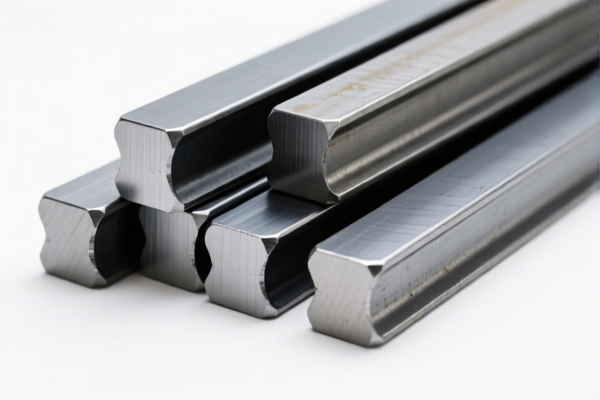
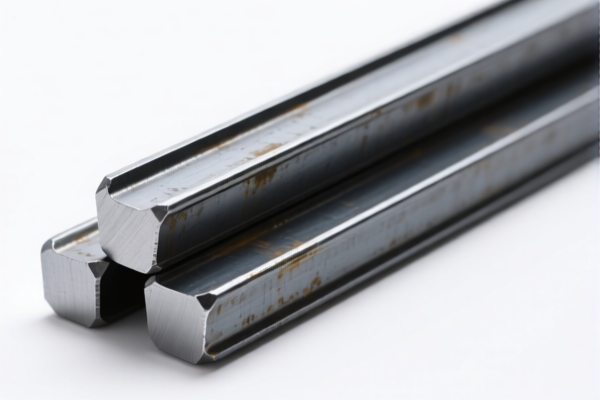
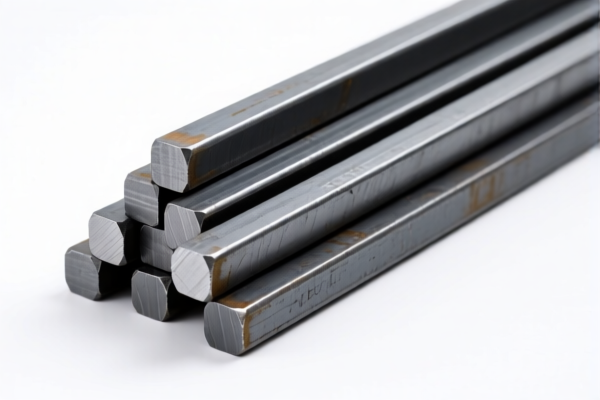
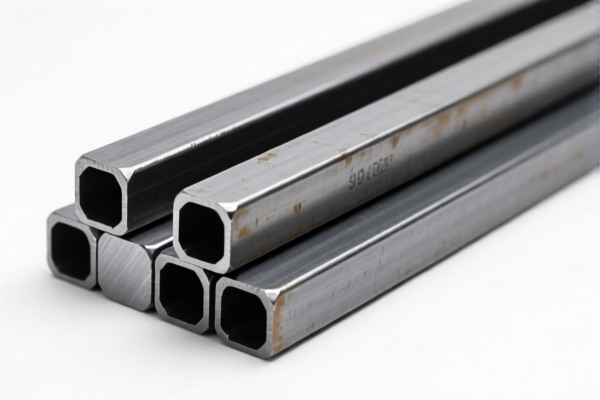
AI分析
🔩 Rebar and Deformed Steel Bars (Concrete Reinforcing Bars)
🌐 HS Code Reference & Customs Clearance Guide | 2026 Latest Tariff Analysis | Professional Clearance Strategy
📌 1. Product Definition & Classification: What Exactly Is "Rebar"?
Rebar (short for reinforcing bar), also known as deformed steel bars, are steel bars used as a tensile strength device in reinforced concrete and reinforced masonry structures. They are a crucial component in civil engineering, providing structural integrity to buildings, bridges, and dams.
Key Characteristics: * Material: Iron or non-alloy steel. * Surface: Typically "deformed" (ribbed, lugged, or helical) to improve bonding with concrete, though the HS code provided covers bars not further worked than forged, hot-rolled, hot-drawn, or hot-extruded, including those twisted after rolling. * Primary Use: Concrete reinforcement.
⚠️ Critical Distinction:
- If the product is specifically designed and labeled as Concrete Reinforcing Bars, it falls under 7214.20.00.00.
- If the bars are not for concrete reinforcement (e.g., general structural steel bars, angle bars, or channels), they may fall under different subheadings (e.g., 7214.10, 7214.30, etc.).
- The provided data specifically targets "Concrete reinforcing bars and rods."
📦 2. HS Code Classification Details (2026 Latest Tariff Authority Match)
Based on the provided <DATA>, the specific classification is as follows:
| HS Code | Product Description | Key Features | Tax Rate |
|---|---|---|---|
7214.20.00.00 |
Other bars and rods of iron or nonalloy steel, not further worked than forged, hot-rolled, hot-drawn or hot-extruded, but including those twisted after rolling: Concrete reinforcing bars and rods | Ribbed/Deformed bars for concrete; Hot-rolled; Not further processed (e.g., no heat treatment, coating, or cutting to specific finished shapes beyond standard lengths) | 0.0% |
🔍 Key Insight:
- This HS code applies to uncoated, unalloyed steel bars used specifically for reinforcing concrete.
- It includes bars that have been twisted after rolling (a common process to increase strength or aid in installation).
- It excludes bars made of alloy steel, coated bars (like epoxy-coated rebar, which may have different classifications), or bars that have undergone significant further working (like forging into shapes other than simple rods).
💰 3. 2026 Latest Tariff Rate Breakdown
✅ Applicable Country: United States (US)
✅ Origin: China (CN) (Note: While the data shows 0%, always verify specific trade policies as they can change. The provided data explicitly states 0%.)
✅ Effective Date: Current (as per provided data)
🎯 1. 7214.20.00.00 —— Concrete Reinforcing Bars and Rods
| Item | Content |
|---|---|
| Basic Tariff | 0.0% (ad valorem) |
| Additional Tariffs (Section 301/IEEPA) | 0.0% (As per provided data) |
| Total Tariff Rate | 0.0% |
| Tax Calculation | CIF Value × 0.0% = $0 |
| De Minimis Exemption | ❓ Not Typically Applicable (Construction materials are rarely eligible for de minimis; verify with carrier) |
| Legal Basis | HTSUS 7214.20.00.00 |
📌 Explanation:
- The provided data indicates a 0.0% total tariff. This is unusual for steel products from China due to historical Section 301 tariffs, which have often applied to steel bars.
- Crucial Note: Users must verify this rate with current US Customs and Border Protection (CBP) rulings or a licensed customs broker, as steel tariffs from China are subject to frequent policy changes. The provided data reflects a specific snapshot where no additional tariffs were applied.
- Do not assume 0% is permanent. Check for any recent executive orders or USITC exclusions.
🛠️ 4. Customs Clearance Practical Advice (Real-World Pitfall Guide)
✅ 1. Required Documentation Checklist (Non-Negotiable)
| Document | Required | Notes |
|---|---|---|
| ✅ Commercial Invoice | ✔️ | Must clearly state "Concrete Reinforcing Bar" and material specification (e.g., ASTM A615 Grade 60). |
| ✅ Packing List | ✔️ | Detail weight, dimensions, and bundle configuration. |
| ✅ Bill of Lading (B/L) | ✔️ | Clean on-board B/L required. |
| ✅ Product Specifications | ✔️ | Include material grade, diameter, length, and surface type (deformed/ribbed). |
| ✅ Certificate of Origin (CO) | ✔️ | To prove origin and potentially claim duty-free status if applicable under FTAs (though less common for US-China steel). |
| ✅ Test Reports | ✔️ | Mill test certificates (MTC) proving chemical composition and mechanical properties (tensile strength, yield strength). |
| ✅ ISF Filing (10+2) | ✔️ | Required for ocean shipments to the US. Must be filed 24 hours before loading. |
✅ 2. Declaration Tips (Key Mnemonics)
🔥 "Specify the Grade, Declare the Use, Prove the Material!"
| Scenario | Correct Declaration | Incorrect Practice |
|---|---|---|
| Standard Rebar | 7214.20.00.00 – Concrete Reinforcing Bar, ASTM A615 Gr 60 |
Vague description: "Steel Bars" → May trigger manual examination & audit. |
| Alloy Steel Bar | Do NOT use 7214.20.00.00 | Using 7214.20.00.00 for alloy steel → Misclassification Penalty. |
| Coated Rebar | Verify specific code (e.g., epoxy-coated may differ) | Assuming all rebar is 7214.20.00.00 → Potential duty underpayment if coated variant has higher rate. |
| Non-Reinforcement Bar | Correct HS for general structural steel | Using 7214.20.00.00 for non-reinforcement bars → Customs rejection. |
✅ 3. Special Considerations
| Situation | Handling Advice |
|---|---|
| ASTM Compliance | Ensure products meet ASTM A615 or A706 standards. US Customs may request proof of compliance. |
| Origin Verification | Be prepared to provide mill test certificates to prove the steel is truly "nonalloy" and not "alloy," as this affects classification. |
| Anti-Dumping/Countervailing Duties (AD/CVD) | CRITICAL CHECK: Steel bars from China may be subject to AD/CVD orders. Even if the basic tariff is 0%, AD/CVD rates can be significant. Verify if your specific manufacturer and product type are covered by any active AD/CVD orders. |
| ISF Filing | Late or inaccurate ISF filings can result in $5,000 penalties. Ensure seller and manufacturer info is accurate. |
🌍 5. Global Customs Comparison (2026 Latest)
| Country/Region | Recommended HS Code | Tariff Rate | Certification | Notes |
|---|---|---|---|---|
| 🇺🇸 USA | 7214.20.00.00 |
0.0% (Per provided data) | ASTM Compliance | Verify AD/CVD status! |
| 🇨🇳 China | 7214.20.00.00 |
Varies (Export) | GB Standards | Domestic trade common. |
| 🇪🇺 EU | 7326.20.00 (Often) |
~4.5% + VAT | CE/EN 10080 | EU may classify rebar differently; verify with EU customs. |
| 🇨🇦 Canada | 7214.20.00 |
0% (if under CUSMA) | CSA G30.1 | CUSMA may apply for US/Mexico origin. |
| 🇲🇽 Mexico | 7214.20.00 |
0% (under USMCA if qualifying) | NMX Standards | Check USMCA rules of origin. |
📌 Conclusion:
- The USA currently shows a 0% tariff for this specific HS code per the provided data.
- EU and other markets may have different classifications and rates.
- Always verify AD/CVD applicability for steel products from China into the US, as this is a high-risk area for customs disputes.
📌 6. Common Mistakes & Pitfalls (Lessons Learned)
❌ Mistake 1: Declaring "Steel Bars" without specifying "Concrete Reinforcing"
👉 Consequence: Customs may misclassify, leading to delays or penalties.
✅ Fix: Always use precise language: "Concrete Reinforcing Bar, Deformed, Hot-Rolled."
❌ Mistake 2: Ignoring Anti-Dumping/Countervailing Duties (AD/CVD)
👉 Consequence: Even if basic tariff is 0%, AD/CVD rates can be 100-300%.
✅ Fix: Check CBP AD/CVD list for your specific manufacturer and product type before shipping.
❌ Mistake 3: Providing Incomplete Mill Test Certificates
👉 Consequence: Customs may hold shipment for verification, causing demurrage charges.
✅ Fix: Include full MTCs with commercial invoice or provide them upon request.
❌ Mistake 4: Misclassifying Alloy Steel as Non-Alloy
👉 Consequence: If the steel contains significant alloying elements, it may not qualify for 7214.20.00.00.
✅ Fix: Ensure material specification confirms "non-alloy steel."
🎯 7. Conclusion: Professional Clearance for Steel Products
🎯 Remember the Golden Rules:
🔹 "Specify ASTM Grade, Declare Concrete Use, Check AD/CVD!"
🔹 "HS Code 7214.20.00.00 is for non-alloy, concrete-specific, hot-rolled rebar."
🔹 "0% Basic Tariff ≠ No Duties. Verify AD/CVD!"
📌 Pro Tip:
If your rebar is epoxy-coated, galvanized, or made of alloy steel, it does not fall under
7214.20.00.00. Seek alternative HS codes and verify applicable tariffs.
Recommendation: Obtain a CBP Advance Ruling before shipping high-volume steel products to mitigate classification risk.
📣 Immediate Action:
📞 Contact your customs broker to verify AD/CVD status for your specific rebar supplier.
🚀 Ensure ISF filing is accurate and Mill Test Certificates are ready.
Let your steel products clear smoothly, avoiding costly delays and unexpected duties!
✨ Professional Clearance Starts with Precise Classification!
💼 Every dollar saved in duties is pure profit!
用户评价
关于 HS 编码归类
协调制度(HS)是由世界海关组织(WCO)制定的国际贸易商品分类标准。全球 200 多个国家采用 HS 系统作为海关关税、贸易统计和进出口监管的基础。
每个 HS 编码遵循以下层级结构:
- 章(2 位)——商品大类(例如:第 84 章:机器和机械设备)
- 品目(4 位)——章内的更具体分类
- 子目(6 位)——国际通用细分,所有 WCO 成员国统一使用
- 本国细分(8-10 位)——各国自行扩展的细分编码,如美国 HTSUS 10 位编码
正确的 HS 编码归类对于顺利通关、准确缴纳关税和遵守贸易法规至关重要。错误归类可能导致海关延误、多缴关税或罚款。
从CN进口到US时,适用的关税税率可能包括:
- 最惠国(MFN)税率——适用于 WTO 成员国的标准关税税率
- 普通税率——适用于无贸易协定国家
- 贸易救济关税——附加关税,如 301 条款(反倾销)、232 条款(国家安全)或反补贴税
本页内容仅供参考。如需正式归类,请咨询当地海关或持牌报关代理。