Rebar and Deformed Steel Bars
CN → US| HS Code | Tariff Rate | Origin | Destination | Doc |
|---|---|---|---|---|
| 7214200000 | 10.0% | CN | US | Official Doc |
Product Images
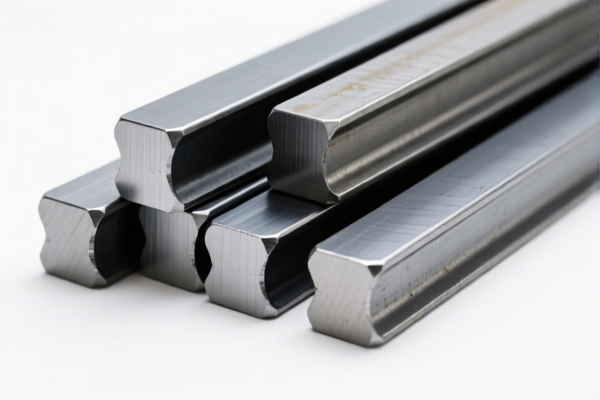
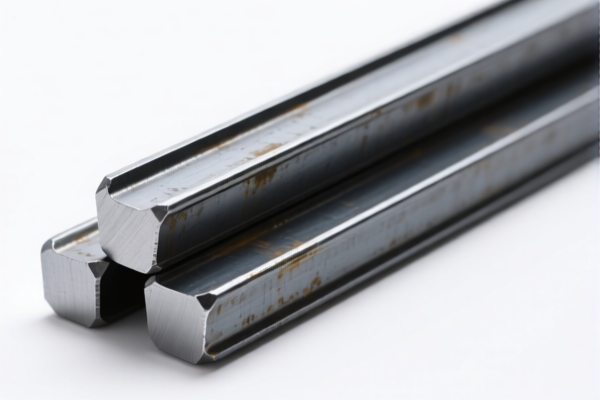
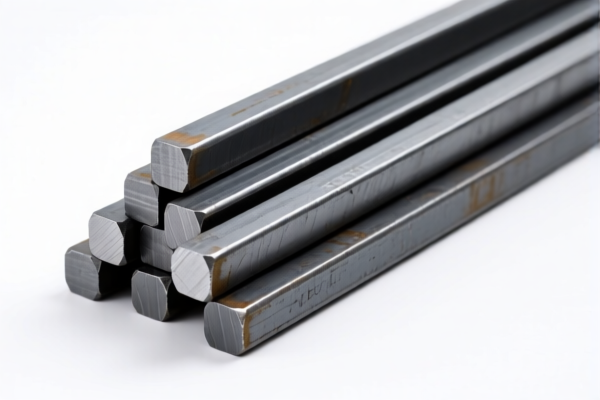
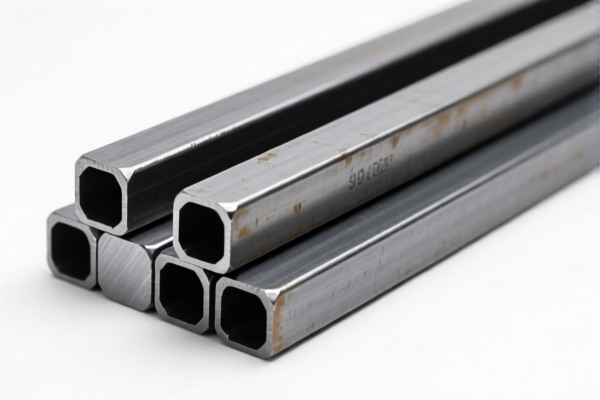
AI Analysis
🔩 Rebar and Deformed Steel Bars (Concrete Reinforcing Bars)
🌐 HS Code Reference & Customs Clearance Guide | 2026 Latest Tariff Analysis | Professional Clearance Strategy
📌 1. Product Definition & Classification: What Exactly Is "Rebar"?
Rebar (short for reinforcing bar), also known as deformed steel bars, are steel bars used as a tensile strength device in reinforced concrete and reinforced masonry structures. They are a crucial component in civil engineering, providing structural integrity to buildings, bridges, and dams.
Key Characteristics: * Material: Iron or non-alloy steel. * Surface: Typically "deformed" (ribbed, lugged, or helical) to improve bonding with concrete, though the HS code provided covers bars not further worked than forged, hot-rolled, hot-drawn, or hot-extruded, including those twisted after rolling. * Primary Use: Concrete reinforcement.
⚠️ Critical Distinction:
- If the product is specifically designed and labeled as Concrete Reinforcing Bars, it falls under 7214.20.00.00.
- If the bars are not for concrete reinforcement (e.g., general structural steel bars, angle bars, or channels), they may fall under different subheadings (e.g., 7214.10, 7214.30, etc.).
- The provided data specifically targets "Concrete reinforcing bars and rods."
📦 2. HS Code Classification Details (2026 Latest Tariff Authority Match)
Based on the provided <DATA>, the specific classification is as follows:
| HS Code | Product Description | Key Features | Tax Rate |
|---|---|---|---|
7214.20.00.00 |
Other bars and rods of iron or nonalloy steel, not further worked than forged, hot-rolled, hot-drawn or hot-extruded, but including those twisted after rolling: Concrete reinforcing bars and rods | Ribbed/Deformed bars for concrete; Hot-rolled; Not further processed (e.g., no heat treatment, coating, or cutting to specific finished shapes beyond standard lengths) | 0.0% |
🔍 Key Insight:
- This HS code applies to uncoated, unalloyed steel bars used specifically for reinforcing concrete.
- It includes bars that have been twisted after rolling (a common process to increase strength or aid in installation).
- It excludes bars made of alloy steel, coated bars (like epoxy-coated rebar, which may have different classifications), or bars that have undergone significant further working (like forging into shapes other than simple rods).
💰 3. 2026 Latest Tariff Rate Breakdown
✅ Applicable Country: United States (US)
✅ Origin: China (CN) (Note: While the data shows 0%, always verify specific trade policies as they can change. The provided data explicitly states 0%.)
✅ Effective Date: Current (as per provided data)
🎯 1. 7214.20.00.00 —— Concrete Reinforcing Bars and Rods
| Item | Content |
|---|---|
| Basic Tariff | 0.0% (ad valorem) |
| Additional Tariffs (Section 301/IEEPA) | 0.0% (As per provided data) |
| Total Tariff Rate | 0.0% |
| Tax Calculation | CIF Value × 0.0% = $0 |
| De Minimis Exemption | ❓ Not Typically Applicable (Construction materials are rarely eligible for de minimis; verify with carrier) |
| Legal Basis | HTSUS 7214.20.00.00 |
📌 Explanation:
- The provided data indicates a 0.0% total tariff. This is unusual for steel products from China due to historical Section 301 tariffs, which have often applied to steel bars.
- Crucial Note: Users must verify this rate with current US Customs and Border Protection (CBP) rulings or a licensed customs broker, as steel tariffs from China are subject to frequent policy changes. The provided data reflects a specific snapshot where no additional tariffs were applied.
- Do not assume 0% is permanent. Check for any recent executive orders or USITC exclusions.
🛠️ 4. Customs Clearance Practical Advice (Real-World Pitfall Guide)
✅ 1. Required Documentation Checklist (Non-Negotiable)
| Document | Required | Notes |
|---|---|---|
| ✅ Commercial Invoice | ✔️ | Must clearly state "Concrete Reinforcing Bar" and material specification (e.g., ASTM A615 Grade 60). |
| ✅ Packing List | ✔️ | Detail weight, dimensions, and bundle configuration. |
| ✅ Bill of Lading (B/L) | ✔️ | Clean on-board B/L required. |
| ✅ Product Specifications | ✔️ | Include material grade, diameter, length, and surface type (deformed/ribbed). |
| ✅ Certificate of Origin (CO) | ✔️ | To prove origin and potentially claim duty-free status if applicable under FTAs (though less common for US-China steel). |
| ✅ Test Reports | ✔️ | Mill test certificates (MTC) proving chemical composition and mechanical properties (tensile strength, yield strength). |
| ✅ ISF Filing (10+2) | ✔️ | Required for ocean shipments to the US. Must be filed 24 hours before loading. |
✅ 2. Declaration Tips (Key Mnemonics)
🔥 "Specify the Grade, Declare the Use, Prove the Material!"
| Scenario | Correct Declaration | Incorrect Practice |
|---|---|---|
| Standard Rebar | 7214.20.00.00 – Concrete Reinforcing Bar, ASTM A615 Gr 60 |
Vague description: "Steel Bars" → May trigger manual examination & audit. |
| Alloy Steel Bar | Do NOT use 7214.20.00.00 | Using 7214.20.00.00 for alloy steel → Misclassification Penalty. |
| Coated Rebar | Verify specific code (e.g., epoxy-coated may differ) | Assuming all rebar is 7214.20.00.00 → Potential duty underpayment if coated variant has higher rate. |
| Non-Reinforcement Bar | Correct HS for general structural steel | Using 7214.20.00.00 for non-reinforcement bars → Customs rejection. |
✅ 3. Special Considerations
| Situation | Handling Advice |
|---|---|
| ASTM Compliance | Ensure products meet ASTM A615 or A706 standards. US Customs may request proof of compliance. |
| Origin Verification | Be prepared to provide mill test certificates to prove the steel is truly "nonalloy" and not "alloy," as this affects classification. |
| Anti-Dumping/Countervailing Duties (AD/CVD) | CRITICAL CHECK: Steel bars from China may be subject to AD/CVD orders. Even if the basic tariff is 0%, AD/CVD rates can be significant. Verify if your specific manufacturer and product type are covered by any active AD/CVD orders. |
| ISF Filing | Late or inaccurate ISF filings can result in $5,000 penalties. Ensure seller and manufacturer info is accurate. |
🌍 5. Global Customs Comparison (2026 Latest)
| Country/Region | Recommended HS Code | Tariff Rate | Certification | Notes |
|---|---|---|---|---|
| 🇺🇸 USA | 7214.20.00.00 |
0.0% (Per provided data) | ASTM Compliance | Verify AD/CVD status! |
| 🇨🇳 China | 7214.20.00.00 |
Varies (Export) | GB Standards | Domestic trade common. |
| 🇪🇺 EU | 7326.20.00 (Often) |
~4.5% + VAT | CE/EN 10080 | EU may classify rebar differently; verify with EU customs. |
| 🇨🇦 Canada | 7214.20.00 |
0% (if under CUSMA) | CSA G30.1 | CUSMA may apply for US/Mexico origin. |
| 🇲🇽 Mexico | 7214.20.00 |
0% (under USMCA if qualifying) | NMX Standards | Check USMCA rules of origin. |
📌 Conclusion:
- The USA currently shows a 0% tariff for this specific HS code per the provided data.
- EU and other markets may have different classifications and rates.
- Always verify AD/CVD applicability for steel products from China into the US, as this is a high-risk area for customs disputes.
📌 6. Common Mistakes & Pitfalls (Lessons Learned)
❌ Mistake 1: Declaring "Steel Bars" without specifying "Concrete Reinforcing"
👉 Consequence: Customs may misclassify, leading to delays or penalties.
✅ Fix: Always use precise language: "Concrete Reinforcing Bar, Deformed, Hot-Rolled."
❌ Mistake 2: Ignoring Anti-Dumping/Countervailing Duties (AD/CVD)
👉 Consequence: Even if basic tariff is 0%, AD/CVD rates can be 100-300%.
✅ Fix: Check CBP AD/CVD list for your specific manufacturer and product type before shipping.
❌ Mistake 3: Providing Incomplete Mill Test Certificates
👉 Consequence: Customs may hold shipment for verification, causing demurrage charges.
✅ Fix: Include full MTCs with commercial invoice or provide them upon request.
❌ Mistake 4: Misclassifying Alloy Steel as Non-Alloy
👉 Consequence: If the steel contains significant alloying elements, it may not qualify for 7214.20.00.00.
✅ Fix: Ensure material specification confirms "non-alloy steel."
🎯 7. Conclusion: Professional Clearance for Steel Products
🎯 Remember the Golden Rules:
🔹 "Specify ASTM Grade, Declare Concrete Use, Check AD/CVD!"
🔹 "HS Code 7214.20.00.00 is for non-alloy, concrete-specific, hot-rolled rebar."
🔹 "0% Basic Tariff ≠ No Duties. Verify AD/CVD!"
📌 Pro Tip:
If your rebar is epoxy-coated, galvanized, or made of alloy steel, it does not fall under
7214.20.00.00. Seek alternative HS codes and verify applicable tariffs.
Recommendation: Obtain a CBP Advance Ruling before shipping high-volume steel products to mitigate classification risk.
📣 Immediate Action:
📞 Contact your customs broker to verify AD/CVD status for your specific rebar supplier.
🚀 Ensure ISF filing is accurate and Mill Test Certificates are ready.
Let your steel products clear smoothly, avoiding costly delays and unexpected duties!
✨ Professional Clearance Starts with Precise Classification!
💼 Every dollar saved in duties is pure profit!
Customer Reviews
About HS Code Classification
The Harmonized System (HS) is an internationally standardized nomenclature developed by the World Customs Organization (WCO) to classify traded products. Over 200 countries use the HS system as the basis for customs tariffs, trade statistics, and import/export regulations.
Each HS code follows a hierarchical structure:
- Chapter (2 digits) — Broad category of goods (e.g., Chapter 84: Machinery and Mechanical Appliances)
- Heading (4 digits) — More specific grouping within the chapter
- Subheading (6 digits) — Internationally standardized breakdown, used by all WCO member countries
- National subdivisions (8-10 digits) — Country-specific extensions for further classification, such as US HTSUS 10-digit codes
Correct HS code classification is essential for smooth customs clearance, accurate duty payment, and compliance with trade regulations. Misclassification can lead to customs delays, overpayment of duties, or penalties.
When importing from CN to US, the applicable tariff rates may include:
- Most-Favored-Nation (MFN) rate — The standard duty rate applied to WTO members
- General rate — Applied to countries without trade agreements
- Trade remedy duties — Additional tariffs such as Section 301 (anti-dumping), Section 232 (national security), or countervailing duties
The information provided on this page is for reference purposes only. For official classification, please consult with your local customs authority or a licensed customs broker.