Rechargeable Lithium Battery Kit 8+8
CN → US| HS编码 | 关税税率 | 原产国 | 目的国 | 文档 |
|---|---|---|---|---|
| 8507600020 | 0.0% | CN | US | 官方文档 |
| 8507600010 | 20.9% | CN | US | 官方文档 |
商品图片
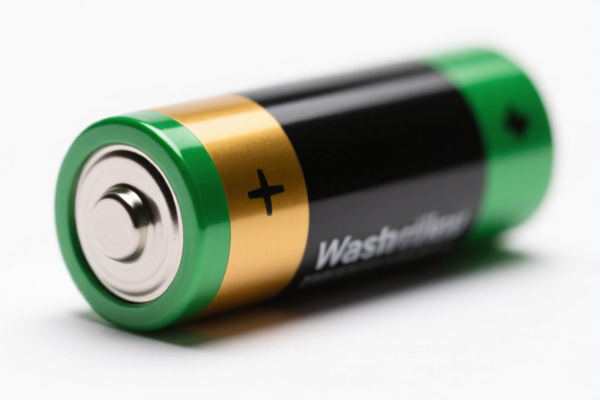
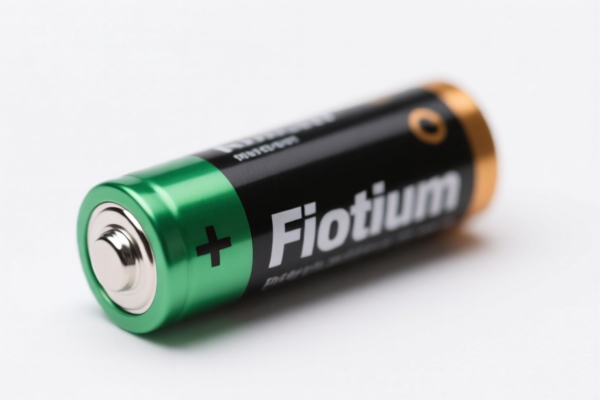
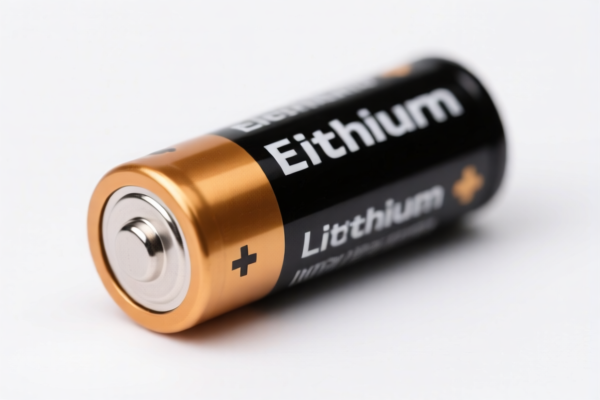
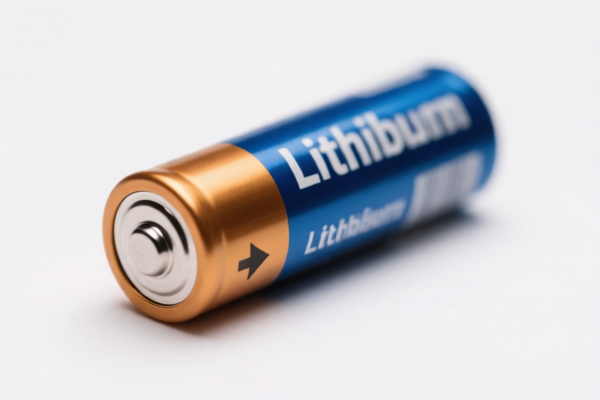
AI分析
🔋 Rechargeable Lithium Battery Kit 8+8 (HS Code Classification Guide)
🌐 HS Code Reference & Customs Clearance Strategy | 2026 Latest Tariff Analysis | Professional通关 Strategy
📌 I. Product Definition & Classification: Do You Really Understand "Lithium Battery Kits"?
A "Rechargeable Lithium Battery Kit 8+8" typically refers to a set of lithium-ion cells, often configured for specific high-power applications (e.g., electric vehicles, power tools, or stationary storage). In international trade, lithium-ion batteries are strictly regulated under Chapter 85 of the Harmonized System (HS).
The classification depends entirely on the primary application of the battery: 1. Generic Storage Batteries: Used for general electronic devices, tools, or standalone storage. 2. Vehicle Power Batteries: Specifically designed as the primary source of electrical power for electrically powered vehicles (EVs, hybrids, etc.).
⚠️ Key Distinction Point:
- If the battery is intended for general electronics, power tools, or off-grid storage → HS 8507.60.00.20
- If the battery is specifically designed and marketed as the main power source for an electric vehicle (subheadings 8703.40–8703.80) → HS 8507.60.00.10
📦 II. HS Code Classification Details (2026 Latest Tariff Authority Comparison)
Based on the provided data, here are the two relevant HS codes for Lithium-ion batteries:
| HS Code | Product Description | Application Scenario | Tax Status |
|---|---|---|---|
8507.60.00.20 |
Electric storage batteries; Lithium-ion batteries; Other | General purpose, power tools, electronics, industrial equipment | ❌ Failed to retrieve tax information |
8507.60.00.10 |
Electric storage batteries; Lithium-ion batteries; Of a kind used as the primary source of electrical power for electrically powered vehicles (8703.40, 8703.50, 8703.60, 8703.70, 8703.80) | Electric cars, e-bikes, electric motorcycles, hybrid vehicles | ✅ Total Tax: 0.0% |
🔍 Critical Reminder:
- The description "8+8" suggests a specific pack configuration. If these are automotive-grade battery packs (e.g., for an EV or hybrid car), they MUST be classified under 8507.60.00.10.
- If they are consumer electronics batteries or power tool batteries, they fall under 8507.60.00.20.
- Misclassification Risk: Declaring an EV battery as "general lithium battery" (8507.60.00.20) can lead to customs audits, penalties, and incorrect duty assessments.
💰 III. 2026 Latest Tariff Rate Details (Detailed Breakdown)
✅ Applicable Country: United States (US)
✅ Origin: China (CN) (Note: Tax data reflects standard US-China trade context unless specified otherwise)
✅ Effective Time: Current Tariff Schedule
🎯 1. 8507.60.00.20 —— Lithium-ion Batteries (Other / General Use)
| Item | Content |
|---|---|
| Base Tariff | Standard MFN Rate (Not explicitly listed in provided data) |
| Section 301 Surcharge | Likely 25% (Standard for many electronics/batteries from China) |
| IEEPA Surcharge | Likely 10% (Specific to China origin, if applicable) |
| Total Tax Status | ⚠️ Failed to retrieve tax information |
| Tax Detail | Failed to retrieve tax information |
| Risk Level | 🔴 High |
| Action Required | Mandatory Pre-classification Ruling. Due to the lack of retrieved tax data, you cannot accurately calculate landed cost. Customs may delay shipment for manual assessment. |
📌 Explanation:
- The system indicates"Failed to retrieve tax information"for this code. This is a red flag.
- In reality, most lithium-ion batteries not for vehicles are subject to Section 301 tariffs (25%) and potentially IEEPA tariffs (10%), bringing the total effective rate to 35% or higher.
- Do not assume 0%. Assume a high tax burden until confirmed by a broker.
🎯 2. 8507.60.00.10 —— Lithium-ion Batteries for Electric Vehicles
| Item | Content |
|---|---|
| Base Tariff | 0.0% |
| Surcharge (Section 301) | 0.0% |
| Surcharge (IEEPA) | 0.0% |
| Total Tax Rate | ✅ 0.0% |
| Tax Detail | 基础关税: 0.0%, 加征关税: 0.0% |
| Risk Level | 🟢 Low (for tax) |
| Condition | Must prove the battery is specifically designed for vehicles under subheadings 8703.40–8703.80. |
📌 Important Note:
- This code offers a 0% tariff rate, which is highly advantageous.
- However, strict proof of application is required. You must provide:
- Technical specifications showing voltage/current matching vehicle standards.
- Intended use declaration (e.g., "Battery pack for Electric Vehicle Model X").
- If used in a non-vehicle application, customs will reclassify to8507.60.00.20and impose back duties + penalties.
🛠️ IV. Customs Clearance Practical Advice (Avoid Pitfalls)
✅ 1. Document Checklist (Non-negotiable)
| Document | Required? | Purpose |
|---|---|---|
| ✅ Product Specification Sheet | ✔️ | Must detail cell chemistry (Li-ion), voltage, capacity, and intended end-use (Vehicle vs. General). |
| ✅ Battery Test Report | ✔️ | UN38.3 certification is mandatory for air/sea freight of lithium batteries. |
| ✅ MSDS (Material Safety Data Sheet) | ✔️ | Required for hazardous material classification. |
| ✅ Declaration of Use | ✔️ | Explicitly state: "This battery is designed and used as the primary power source for electric vehicles" (for 8507.60.00.10). |
| ✅ Commercial Invoice | ✔️ | Clearly describe as "Lithium-ion Battery Pack for EV" or "Lithium-ion Battery for Industrial Equipment". |
| ✅ Packing List | ✔️ | Show weight/volume for hazmat handling. |
✅ 2. Classification Strategy (Key Tips)
🔥 “Use Determines Code: Vehicle = 0%, Other = Uncertain”
| Scenario | Correct HS Code | Risk |
|---|---|---|
| Battery pack for Tesla/BYD/Nissan | 8507.60.00.10 |
✅ Safe if documentation matches vehicle specs. |
| Battery pack for power tools, e-bikes (non-road), or home storage | 8507.60.00.20 |
⚠️ High risk of tax uncertainty; assume 25-35%. |
| Generic "Lithium Battery Kit" without clear use | Customs Audit | 🔴 High risk of reclassification and penalties. |
📌 Advice:
- If your "8+8" kit is for electric vehicles, ensure your invoice and specs explicitly mention "For Electric Vehicle Use" and reference the relevant vehicle subheading (8703.x).
- If it is for general use, do not try to classify it as 8507.60.00.10 to save taxes. Customs has data to check end-use. Misuse leads to severe penalties.
✅ 3. Special Situations
| Situation | Recommendation |
|---|---|
| UN38.3 Test Missing | DO NOT SHIP. Lithium batteries require UN38.3 certification for transport. Failure results in immediate rejection or fines. |
| Mixed Shipment (Vehicle + Non-Vehicle) | Split the declaration. Do not mix HS codes in one line item. |
| "8+8" Configuration Ambiguity | Clarify in specs: Are these 8 cells in series + 8 in parallel? Or two separate 8-cell packs? Technical clarity helps customs verify use. |
| Origin Non-China | If the battery is made in Vietnam/Mexico/Thailand, check for IEEPA exemptions. Even for vehicles, origin matters for surcharges. |
🌍 V. Global Market Comparison (2026)
| Country | HS Code | Tariff Rate | Certification | Notes |
|---|---|---|---|---|
| 🇺🇸 USA | 8507.60.00.10 |
0.0% | UN38.3, DOT | Requires strict proof of vehicle use. |
| 🇺🇸 USA | 8507.60.00.20 |
Uncertain (Likely 25-35%) | UN38.3, FCC (if applicable) | Tax data missing; expect high duties. |
| 🇨🇳 China | 8507.60.00 |
Varies (0-10%) | CCC (if applicable) | Import duties may apply depending on exact code. |
| 🇪🇺 EU | 8507.60.00 |
0% | CE, RoHS, REACH | No duty under standard WTO rates, but strict environmental regulations. |
| 🇬🇧 UK | 8507.60.00 |
0% | UKCA, CE | Post-Brexit alignment with EU standards. |
📌 Conclusion:
- USA is the most complex market due to Section 301/IEEPA tariffs and the 0% vs. Uncertain dichotomy.
- EU/UK are more straightforward with 0% duties but strict compliance requirements (CE/UKCA).
📌 VI. Common Errors & Pitfalls (Lessons Learned)
❌ Error 1: Using HS 8507.60.00.10 for non-vehicle batteries to avoid taxes.
👉 Consequence: Customs detects mismatch in product description vs. HS code. Penalties + Back Duties.
❌ Error 2: Failing to provide UN38.3 test report.
👉 Consequence: Shipment rejected at port. Return or destruction at exporter’s cost.
❌ Error 3: Vague description "Lithium Battery Kit".
👉 Consequence: Customs cannot determine use → Manual Classification Delay (1-4 weeks).
❌ Error 4: Assuming "8+8" is a standard code.
👉 Consequence: "8+8" is a configuration, not a classification. Must classify by function/use.
✅ Correct Approach:
"Lithium-Ion Battery Pack, 48V, 20Ah, Designed for Electric Vehicle Propulsion, Model XYZ, UN38.3 Certified."
🎯 VII. Conclusion: Professional Classification Saves Money!
🎯 Key Takeaways:
🔹 "Vehicle Use = 0% Tax (8507.60.00.10)"
🔹 "General Use = High Tax & Data Gap (8507.60.00.20)"
🔹 "Documentation is King": Without proof of vehicle use, do not claim 0%.
🔹 "UN38.3 is Mandatory": No test report = No shipment.
📌 Pro Tip:
If your "8+8" kit is for electric scooters or e-bikes, check if your country classifies these under "Electric Vehicles" (8703) or "Bicycles" (8711). This changes the HS code eligibility for 0% tax.
📣 Immediate Action:
📞 Contact your customs broker with:
1. Product specs (Voltage, Ah, Chemistry)
2. Intended End-Use Declaration
3. UN38.3 Test Report
🚀 Get an Advance Ruling if possible to mitigate tax uncertainty for8507.60.00.20.
✨ Precision in Classification, Clarity in Customs!
💼 Your battery’s value depends on how you describe its purpose!
用户评价
关于 HS 编码归类
协调制度(HS)是由世界海关组织(WCO)制定的国际贸易商品分类标准。全球 200 多个国家采用 HS 系统作为海关关税、贸易统计和进出口监管的基础。
每个 HS 编码遵循以下层级结构:
- 章(2 位)——商品大类(例如:第 84 章:机器和机械设备)
- 品目(4 位)——章内的更具体分类
- 子目(6 位)——国际通用细分,所有 WCO 成员国统一使用
- 本国细分(8-10 位)——各国自行扩展的细分编码,如美国 HTSUS 10 位编码
正确的 HS 编码归类对于顺利通关、准确缴纳关税和遵守贸易法规至关重要。错误归类可能导致海关延误、多缴关税或罚款。
从CN进口到US时,适用的关税税率可能包括:
- 最惠国(MFN)税率——适用于 WTO 成员国的标准关税税率
- 普通税率——适用于无贸易协定国家
- 贸易救济关税——附加关税,如 301 条款(反倾销)、232 条款(国家安全)或反补贴税
本页内容仅供参考。如需正式归类,请咨询当地海关或持牌报关代理。