Rechargeable Lithium ion Battery Pack 8+8AA
CN → US| HS编码 | 关税税率 | 原产国 | 目的国 | 文档 |
|---|---|---|---|---|
| 8504409580 | 35.0% | CN | US | 官方文档 |
| 8507600010 | 20.9% | CN | US | 官方文档 |
| 8507808200 | 38.4% | CN | US | 官方文档 |
商品图片
AI分析
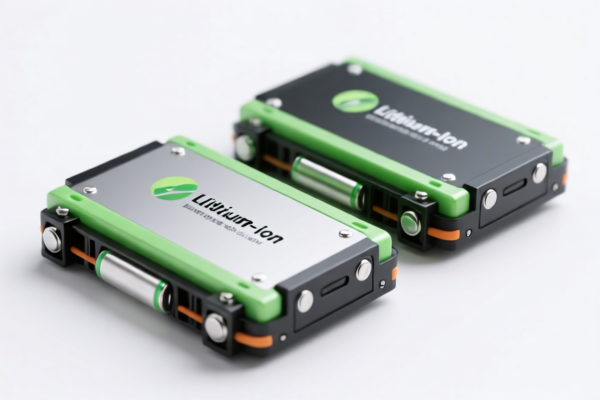
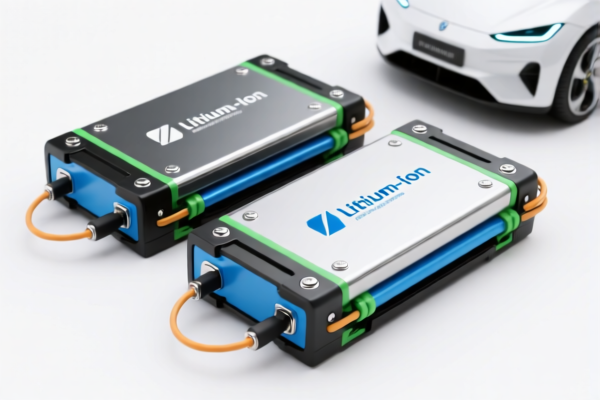
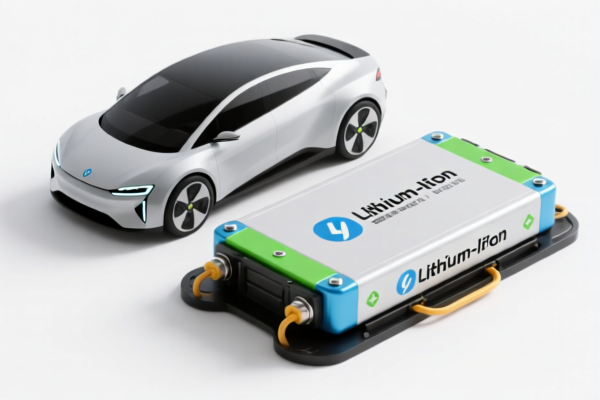
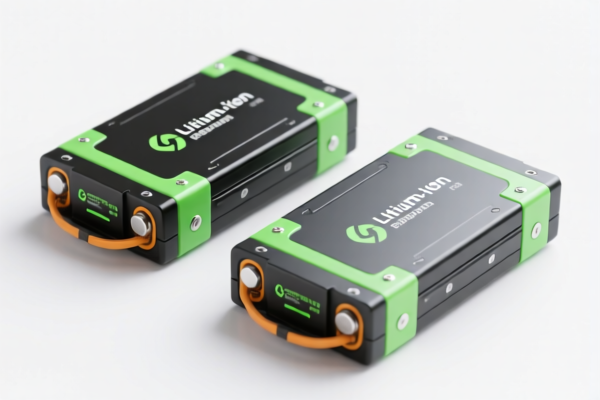
🔋 Rechargeable Lithium-ion Battery Pack (8+8 AA Format)
🌐 HS Code Reference & Customs Clearance Guide | 2026 Latest Tariff Analysis | Strategic Clearance Strategy
📌 I. Product Definition & Classification: Do You Really Understand "Lithium Battery Packs"?
This product, described as "Rechargeable Lithium ion Battery Pack 8+8 AA", falls under the critical category of energy storage and conversion in international trade. It is not merely a simple battery but a structured power system. In customs classification, the distinction between power conversion equipment, primary/secondary lithium cells, and general storage batteries dictates the tariff burden.
Key Classification Ambiguities: 1. Power Converter vs. Battery: If the pack includes complex electronics for AC/DC conversion or voltage regulation beyond simple charging, it may be classified as a static converter (HS 8504). 2. Lithium-ion Specifics: If it strictly contains Lithium-ion cells in the AA format, it falls under Lithium-ion batteries (HS 8507.60). 3. General Secondary Battery: If the chemistry is not purely Li-ion (e.g., NiMH hybrid) or lacks specific Li-ion regulatory markers, it may default to Other Secondary Cells/Batteries (HS 8507.80).
⚠️ Critical Distinction Point:
- If the device is primarily a charger/converter unit with battery storage → 8504.40.95.80
- If the device is purely Lithium-ion cells in AA casing → 8507.60.00.10
- If the device is a general rechargeable battery (non-Li-ion or ambiguous) → 8507.80.82.00
📦 II. HS Code Classification Details (2026 Latest Tariff Authority Comparison)
Based on the provided data, here are the three potential classifications and their corresponding tax structures:
| HS Code | Product Description | Applicable Scenario | Tax Rate (Total) |
|---|---|---|---|
8504.40.95.80 |
Static Converters: Other; Other; Other | Classified as a power conversion/storage device. Likely includes charging circuitry or is treated as a "power bank" type converter. | 35.0% |
8507.60.00.10 |
Lithium-Ion Secondary Cells/Piles: Other; Other | Strictly defined as Lithium-ion rechargeable batteries. Matches the "Li-ion" keyword in the product name. | 20.9% |
8507.80.82.00 |
Other Secondary Cells and Batteries: Other; Other | Classified as a general rechargeable battery. "AA" form factor suggests a secondary battery. If Li-ion specs are unverified, it defaults here. | 38.4% |
🔍 Key Reminder:
- 8507.60.00.10 offers the lowest tax burden (20.9%) IF the product is confirmed as Lithium-ion.
- 8504.40.95.80 attracts a higher rate (35.0%) because it is viewed as a converter (often associated with higher value-added electronics).
- 8507.80.82.00 has the highest rate (38.4%) due to significant Section 301 tariffs (25%) and base duties, assuming it falls under "Other" batteries.
💰 III. 2026 Latest Tariff Rate Breakdown (Including Additional Taxes & Policy Surcharges)
✅ Applicable Country: United States (US)
✅ Origin: China (CN)
✅ Effective Date: 2025/2026 (Current Trade War Regulations)
🎯 1. 8507.60.00.10 —— Lithium-Ion Battery (The "Sweet Spot")
| Item | Details |
|---|---|
| Base Duty Rate | 3.4% (Ad Valorem) |
| Section 301 Surcharge | +7.5% (USITC Footnote applicable to Li-ion batteries from China) |
| IEEPA Section 122 Surcharge | +10.0% (Targeted China-specific tariff) |
| Total Tax Rate | 20.9% |
| Tax Calculation | CIF Value × 20.9% |
| De Minimis Eligibility | ❌ No (Lithium batteries are generally excluded from Section 321 de minimis due to safety/regulatory restrictions) |
| Legal Path | USITC:8507.60.00.10 → Section 301: 7.5% → IEEPA: 10% |
📌 Explanation:
- This is the most favorable classification if your product is strictly Lithium-ion.
- The 7.5% Section 301 rate is specific to Li-ion batteries.
- The 10% IEEPA rate is a fixed add-on for Chinese-origin goods in this category.
🎯 2. 8504.40.95.80 —— Static Converter (The "Electronics" Trap)
| Item | Details |
|---|---|
| Base Duty Rate | 0.0% (Ad Valorem) |
| Section 301 Surcharge | +25.0% (High-level tariff for converter/electronics categories) |
| IEEPA Section 122 Surcharge | +10.0% |
| Total Tax Rate | 35.0% |
| Tax Calculation | CIF Value × 35.0% |
| De Minimis Eligibility | ❌ No |
| Legal Path | USITC:8504.40.95.80 → Section 301: 25% → IEEPA: 10% |
📌 Warning:
- Even with a 0% base duty, the 25% Section 301 surcharge makes this classification expensive.
- This classification is often triggered if the battery is sold as a "Power Bank" or includes AC/DC charging bricks as part of the main unit.
- Avoid this if possible unless the product's primary function is voltage conversion, not just storage.
🎯 3. 8507.80.82.00 —— Other Secondary Battery (The "Penalty" Category)
| Item | Details |
|---|---|
| Base Duty Rate | 3.4% (Ad Valorem) |
| Section 301 Surcharge | +25.0% (Maximum surcharge for "Other" batteries) |
| IEEPA Section 122 Surcharge | +10.0% |
| Total Tax Rate | 38.4% |
| Tax Calculation | CIF Value × 38.4% |
| De Minimis Eligibility | ❌ No |
| Legal Path | USITC:8507.80.82.00 → Section 301: 25% → IEEPA: 10% |
📌 Critical Note:
- This is the most expensive classification.
- It applies if the product is NOT classified as Lithium-ion (HS 8507.60) or a Converter (HS 8504).
- This is the "catch-all" for rechargeable batteries (e.g., NiMH, Lead-Acid, or unverified chemistry).
- Do not use this HS Code if your product is confirmed Li-ion; you will pay 17.5% more than necessary.
🛠️ IV. Customs Clearance Practical Advice (Avoid Pitfalls)
✅ 1. Documentation Checklist (Non-Negotiable)
| Document | Must Provide | Explanation |
|---|---|---|
| ✅ Product Spec Sheet | ✔️ | Must explicitly state: "Lithium-Ion Chemistry", Voltage, Capacity (mAh), Cell Type (AA). |
| ✅ UN38.3 Test Report | ✔️ | Mandatory for all Li-ion shipments. Without it, shipment will be held or rejected. |
| ✅ MSDS (Material Safety Data Sheet) | ✔️ | Required for air/sea freight classification as Dangerous Goods (Class 9). |
| ✅ Commercial Invoice | ✔️ | Must clearly describe as "Lithium-Ion Rechargeable Battery Pack, AA Format, 8+8 Cells" – NOT "Battery Charger" or "Power Bank". |
| ✅ Packing List | ✔️ | Detail individual cell counts and packaging type (non-metallic, insulated). |
✅ 2. Declaration Tips (Key Mantras)
🔥 “Li-ion is Key, Avoid Converter Label, AA Format Needs Proof!”
| Scenario | Correct Declaration | Incorrect Declaration |
|---|---|---|
| Product is Li-ion cells | HS 8507.60.00.10 | Declared as "Power Bank" → 8504.40.95.80 (35%) |
| Product includes AC Adapter | Separate Line Item | Bundled as one unit → Risk of 8504 classification (35%) |
| Chemistry is Unclear | Provide UN38.3 | Guessing "Other Battery" → 8507.80.82.00 (38.4%) |
📌 Strategy:
- Ensure the Product Name on the invoice matches HS 8507.60.00.10.
- Do NOT include "Charger" or "Converter" in the main product description if you want to qualify for the 20.9% rate. If a charger is included, declare it separately under 8504.40.95.80 (35%) if necessary, but this increases average tax.
- Best Practice: Ship Batteries Only under 8507.60.00.10. Ship chargers separately or as accessories with clear distinction.
✅ 3. Special Cases
| Scenario | Handling Advice |
|---|---|
| OEM Custom Battery | Provide OEM agreement + Design Specs to prove Li-ion chemistry. |
| Battery + Charger Kit | Declare separately. Batteries: 8507.60.00.10 (20.9%). Chargers: 8504.40.95.80 (35%). Do NOT bundle as one item unless you accept the blended rate. |
| Sample Shipment | Even samples require UN38.3 and MSDS. De minimis does NOT apply to Lithium batteries. |
| Misclassification Risk | If customs questions the "Li-ion" claim, they may downgrade to 8507.80.82.00 (38.4%). Always have test reports ready. |
🌍 V. Global Market Clearance Comparison (2026 Latest)
| Country/Region | Recommended HS Code | Tariff (China Origin) | Certification Required | Notes |
|---|---|---|---|---|
| 🇺🇸 USA | 8507.60.00.10 |
20.9% | UN38.3 + MSDS | Best Option. Avoid 8504/8507.80 due to high 25% tariffs. |
| 🇨🇳 China | 8507.60.00.10 |
0% (if eligible) | CCC (if applicable) | Low duty, but check for new environmental levies. |
| 🇪🇺 EU | 8507.60.00.10 |
~0-4% | CE + UN38.3 + IEC 62133 | No Section 301. Lower risk. |
| 🇬🇧 UK | 8507.60.00.10 |
~0-4% | UKCA + UN38.3 | Post-Brexit rules align with EU. |
| 🇯🇵 Japan | 8507.60.00.10 |
~0% | PSE + UN38.3 | Strict safety standards, low duty. |
📌 Conclusion:
- USA is the most challenging market due to Section 301 tariffs.
- 8507.60.00.10 is the ONLY viable option for Li-ion batteries to keep taxes at 20.9% instead of 35-38.4%.
- Accurate product description and UN38.3 compliance are non-negotiable.
📌 VI. Common Errors & Pitfalls (Lessons Learned)
❌ Error 1: Declaring Li-ion batteries as "Power Banks" or "Converters"
👉 Result: Classifies under 8504.40.95.80 (35%) → 14.1% higher tax.
❌ Error 2: Failing to provide UN38.3 Report
👉 Result: Shipment held, rejected, or forced reclassification to general batteries (8507.80.82.00, 38.4%).
❌ Error 3: Bundling Charger + Battery in one HS Code
👉 Result: Customs may assess the higher rate (35%) for the entire shipment if the primary function is ambiguous.
❌ Error 4: Ignoring "122 Clause" (IEEPA)
👉 Result: Underestimating the 10% fixed surcharge on all Chinese Li-ion imports.
✅ Correct Action:
"Lithium-Ion Rechargeable Battery Pack, AA Format, 8+8 Cells, No Charger Included, UN38.3 Certified, MSDS Attached"
🎯 VII. Conclusion: Precision Classification Saves Money!
🎯 Remember the Mantra:
🔹 "Li-ion is 20.9%, Converter is 35%, Other is 38.4%. Don't guess, specify!"
🔹 "UN38.3 is mandatory, De Minimis is off, Charger and Battery separate!"
📌 Pro Tip:
If your product is Li-ion, always insist on HS 8507.60.00.10.
If you are unsure of the chemistry, test it. Declaring "Other" batteries (8507.80.82.00) is a 17.5% penalty compared to Li-ion.
📣 Immediate Action Required:
📞 Contact your customs broker to confirm HS Code 8507.60.00.10.
📄 Prepare UN38.3 and MSDS before shipping.
🚀 Save 17.5-18% in taxes by accurate classification!
✨ Professional Clearance, Starting with Accurate Classification!
💼 Every dollar of tax saved is pure profit!
用户评价
关于 HS 编码归类
协调制度(HS)是由世界海关组织(WCO)制定的国际贸易商品分类标准。全球 200 多个国家采用 HS 系统作为海关关税、贸易统计和进出口监管的基础。
每个 HS 编码遵循以下层级结构:
- 章(2 位)——商品大类(例如:第 84 章:机器和机械设备)
- 品目(4 位)——章内的更具体分类
- 子目(6 位)——国际通用细分,所有 WCO 成员国统一使用
- 本国细分(8-10 位)——各国自行扩展的细分编码,如美国 HTSUS 10 位编码
正确的 HS 编码归类对于顺利通关、准确缴纳关税和遵守贸易法规至关重要。错误归类可能导致海关延误、多缴关税或罚款。
从CN进口到US时,适用的关税税率可能包括:
- 最惠国(MFN)税率——适用于 WTO 成员国的标准关税税率
- 普通税率——适用于无贸易协定国家
- 贸易救济关税——附加关税,如 301 条款(反倾销)、232 条款(国家安全)或反补贴税
本页内容仅供参考。如需正式归类,请咨询当地海关或持牌报关代理。