Rechargeable Lithium ion Battery Pack 8+8AA
CN → US| HS Code | Tariff Rate | Origin | Destination | Doc |
|---|---|---|---|---|
| 8504409580 | 35.0% | CN | US | Official Doc |
| 8507600010 | 20.9% | CN | US | Official Doc |
| 8507808200 | 38.4% | CN | US | Official Doc |
Product Images
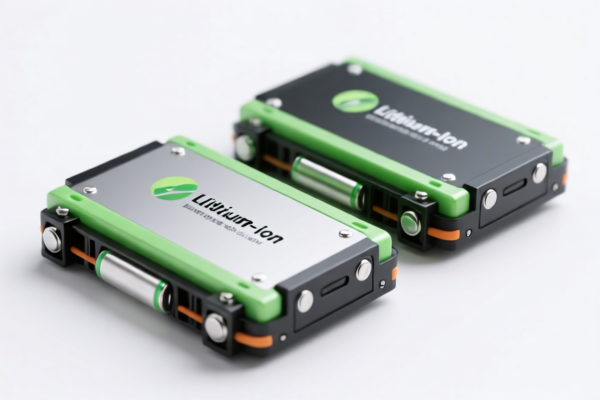
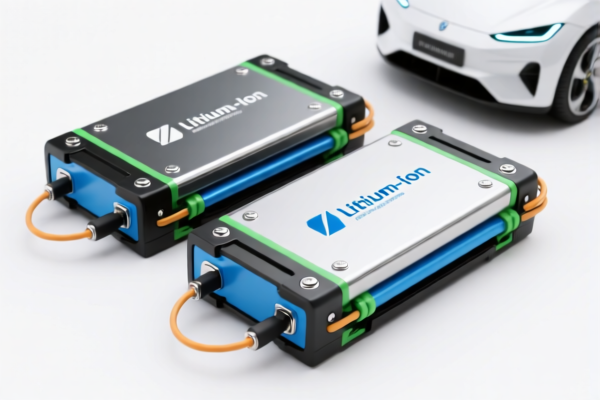
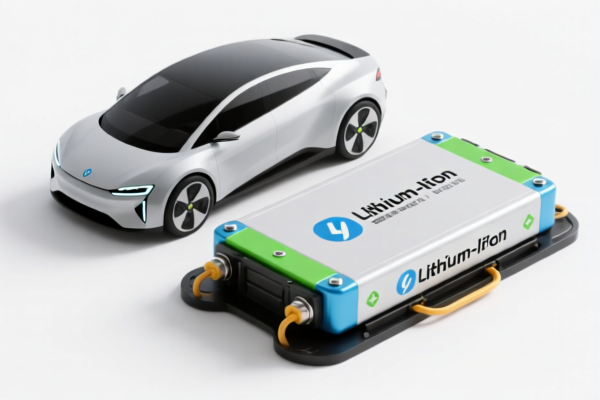
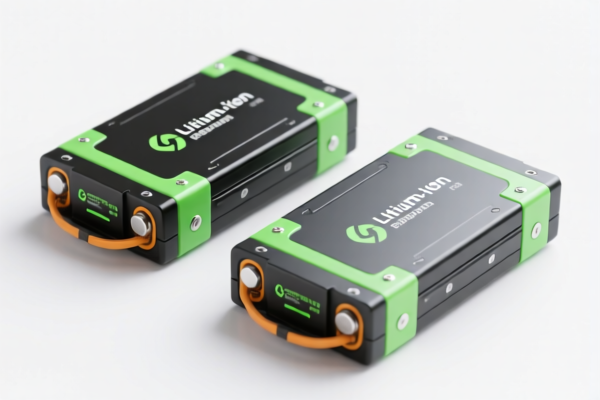
AI Analysis
🔋 Rechargeable Lithium-ion Battery Pack (8+8 AA Format)
🌐 HS Code Reference & Customs Clearance Guide | 2026 Latest Tariff Analysis | Strategic Clearance Strategy
📌 I. Product Definition & Classification: Do You Really Understand "Lithium Battery Packs"?
This product, described as "Rechargeable Lithium ion Battery Pack 8+8 AA", falls under the critical category of energy storage and conversion in international trade. It is not merely a simple battery but a structured power system. In customs classification, the distinction between power conversion equipment, primary/secondary lithium cells, and general storage batteries dictates the tariff burden.
Key Classification Ambiguities: 1. Power Converter vs. Battery: If the pack includes complex electronics for AC/DC conversion or voltage regulation beyond simple charging, it may be classified as a static converter (HS 8504). 2. Lithium-ion Specifics: If it strictly contains Lithium-ion cells in the AA format, it falls under Lithium-ion batteries (HS 8507.60). 3. General Secondary Battery: If the chemistry is not purely Li-ion (e.g., NiMH hybrid) or lacks specific Li-ion regulatory markers, it may default to Other Secondary Cells/Batteries (HS 8507.80).
⚠️ Critical Distinction Point:
- If the device is primarily a charger/converter unit with battery storage → 8504.40.95.80
- If the device is purely Lithium-ion cells in AA casing → 8507.60.00.10
- If the device is a general rechargeable battery (non-Li-ion or ambiguous) → 8507.80.82.00
📦 II. HS Code Classification Details (2026 Latest Tariff Authority Comparison)
Based on the provided data, here are the three potential classifications and their corresponding tax structures:
| HS Code | Product Description | Applicable Scenario | Tax Rate (Total) |
|---|---|---|---|
8504.40.95.80 |
Static Converters: Other; Other; Other | Classified as a power conversion/storage device. Likely includes charging circuitry or is treated as a "power bank" type converter. | 35.0% |
8507.60.00.10 |
Lithium-Ion Secondary Cells/Piles: Other; Other | Strictly defined as Lithium-ion rechargeable batteries. Matches the "Li-ion" keyword in the product name. | 20.9% |
8507.80.82.00 |
Other Secondary Cells and Batteries: Other; Other | Classified as a general rechargeable battery. "AA" form factor suggests a secondary battery. If Li-ion specs are unverified, it defaults here. | 38.4% |
🔍 Key Reminder:
- 8507.60.00.10 offers the lowest tax burden (20.9%) IF the product is confirmed as Lithium-ion.
- 8504.40.95.80 attracts a higher rate (35.0%) because it is viewed as a converter (often associated with higher value-added electronics).
- 8507.80.82.00 has the highest rate (38.4%) due to significant Section 301 tariffs (25%) and base duties, assuming it falls under "Other" batteries.
💰 III. 2026 Latest Tariff Rate Breakdown (Including Additional Taxes & Policy Surcharges)
✅ Applicable Country: United States (US)
✅ Origin: China (CN)
✅ Effective Date: 2025/2026 (Current Trade War Regulations)
🎯 1. 8507.60.00.10 —— Lithium-Ion Battery (The "Sweet Spot")
| Item | Details |
|---|---|
| Base Duty Rate | 3.4% (Ad Valorem) |
| Section 301 Surcharge | +7.5% (USITC Footnote applicable to Li-ion batteries from China) |
| IEEPA Section 122 Surcharge | +10.0% (Targeted China-specific tariff) |
| Total Tax Rate | 20.9% |
| Tax Calculation | CIF Value × 20.9% |
| De Minimis Eligibility | ❌ No (Lithium batteries are generally excluded from Section 321 de minimis due to safety/regulatory restrictions) |
| Legal Path | USITC:8507.60.00.10 → Section 301: 7.5% → IEEPA: 10% |
📌 Explanation:
- This is the most favorable classification if your product is strictly Lithium-ion.
- The 7.5% Section 301 rate is specific to Li-ion batteries.
- The 10% IEEPA rate is a fixed add-on for Chinese-origin goods in this category.
🎯 2. 8504.40.95.80 —— Static Converter (The "Electronics" Trap)
| Item | Details |
|---|---|
| Base Duty Rate | 0.0% (Ad Valorem) |
| Section 301 Surcharge | +25.0% (High-level tariff for converter/electronics categories) |
| IEEPA Section 122 Surcharge | +10.0% |
| Total Tax Rate | 35.0% |
| Tax Calculation | CIF Value × 35.0% |
| De Minimis Eligibility | ❌ No |
| Legal Path | USITC:8504.40.95.80 → Section 301: 25% → IEEPA: 10% |
📌 Warning:
- Even with a 0% base duty, the 25% Section 301 surcharge makes this classification expensive.
- This classification is often triggered if the battery is sold as a "Power Bank" or includes AC/DC charging bricks as part of the main unit.
- Avoid this if possible unless the product's primary function is voltage conversion, not just storage.
🎯 3. 8507.80.82.00 —— Other Secondary Battery (The "Penalty" Category)
| Item | Details |
|---|---|
| Base Duty Rate | 3.4% (Ad Valorem) |
| Section 301 Surcharge | +25.0% (Maximum surcharge for "Other" batteries) |
| IEEPA Section 122 Surcharge | +10.0% |
| Total Tax Rate | 38.4% |
| Tax Calculation | CIF Value × 38.4% |
| De Minimis Eligibility | ❌ No |
| Legal Path | USITC:8507.80.82.00 → Section 301: 25% → IEEPA: 10% |
📌 Critical Note:
- This is the most expensive classification.
- It applies if the product is NOT classified as Lithium-ion (HS 8507.60) or a Converter (HS 8504).
- This is the "catch-all" for rechargeable batteries (e.g., NiMH, Lead-Acid, or unverified chemistry).
- Do not use this HS Code if your product is confirmed Li-ion; you will pay 17.5% more than necessary.
🛠️ IV. Customs Clearance Practical Advice (Avoid Pitfalls)
✅ 1. Documentation Checklist (Non-Negotiable)
| Document | Must Provide | Explanation |
|---|---|---|
| ✅ Product Spec Sheet | ✔️ | Must explicitly state: "Lithium-Ion Chemistry", Voltage, Capacity (mAh), Cell Type (AA). |
| ✅ UN38.3 Test Report | ✔️ | Mandatory for all Li-ion shipments. Without it, shipment will be held or rejected. |
| ✅ MSDS (Material Safety Data Sheet) | ✔️ | Required for air/sea freight classification as Dangerous Goods (Class 9). |
| ✅ Commercial Invoice | ✔️ | Must clearly describe as "Lithium-Ion Rechargeable Battery Pack, AA Format, 8+8 Cells" – NOT "Battery Charger" or "Power Bank". |
| ✅ Packing List | ✔️ | Detail individual cell counts and packaging type (non-metallic, insulated). |
✅ 2. Declaration Tips (Key Mantras)
🔥 “Li-ion is Key, Avoid Converter Label, AA Format Needs Proof!”
| Scenario | Correct Declaration | Incorrect Declaration |
|---|---|---|
| Product is Li-ion cells | HS 8507.60.00.10 | Declared as "Power Bank" → 8504.40.95.80 (35%) |
| Product includes AC Adapter | Separate Line Item | Bundled as one unit → Risk of 8504 classification (35%) |
| Chemistry is Unclear | Provide UN38.3 | Guessing "Other Battery" → 8507.80.82.00 (38.4%) |
📌 Strategy:
- Ensure the Product Name on the invoice matches HS 8507.60.00.10.
- Do NOT include "Charger" or "Converter" in the main product description if you want to qualify for the 20.9% rate. If a charger is included, declare it separately under 8504.40.95.80 (35%) if necessary, but this increases average tax.
- Best Practice: Ship Batteries Only under 8507.60.00.10. Ship chargers separately or as accessories with clear distinction.
✅ 3. Special Cases
| Scenario | Handling Advice |
|---|---|
| OEM Custom Battery | Provide OEM agreement + Design Specs to prove Li-ion chemistry. |
| Battery + Charger Kit | Declare separately. Batteries: 8507.60.00.10 (20.9%). Chargers: 8504.40.95.80 (35%). Do NOT bundle as one item unless you accept the blended rate. |
| Sample Shipment | Even samples require UN38.3 and MSDS. De minimis does NOT apply to Lithium batteries. |
| Misclassification Risk | If customs questions the "Li-ion" claim, they may downgrade to 8507.80.82.00 (38.4%). Always have test reports ready. |
🌍 V. Global Market Clearance Comparison (2026 Latest)
| Country/Region | Recommended HS Code | Tariff (China Origin) | Certification Required | Notes |
|---|---|---|---|---|
| 🇺🇸 USA | 8507.60.00.10 |
20.9% | UN38.3 + MSDS | Best Option. Avoid 8504/8507.80 due to high 25% tariffs. |
| 🇨🇳 China | 8507.60.00.10 |
0% (if eligible) | CCC (if applicable) | Low duty, but check for new environmental levies. |
| 🇪🇺 EU | 8507.60.00.10 |
~0-4% | CE + UN38.3 + IEC 62133 | No Section 301. Lower risk. |
| 🇬🇧 UK | 8507.60.00.10 |
~0-4% | UKCA + UN38.3 | Post-Brexit rules align with EU. |
| 🇯🇵 Japan | 8507.60.00.10 |
~0% | PSE + UN38.3 | Strict safety standards, low duty. |
📌 Conclusion:
- USA is the most challenging market due to Section 301 tariffs.
- 8507.60.00.10 is the ONLY viable option for Li-ion batteries to keep taxes at 20.9% instead of 35-38.4%.
- Accurate product description and UN38.3 compliance are non-negotiable.
📌 VI. Common Errors & Pitfalls (Lessons Learned)
❌ Error 1: Declaring Li-ion batteries as "Power Banks" or "Converters"
👉 Result: Classifies under 8504.40.95.80 (35%) → 14.1% higher tax.
❌ Error 2: Failing to provide UN38.3 Report
👉 Result: Shipment held, rejected, or forced reclassification to general batteries (8507.80.82.00, 38.4%).
❌ Error 3: Bundling Charger + Battery in one HS Code
👉 Result: Customs may assess the higher rate (35%) for the entire shipment if the primary function is ambiguous.
❌ Error 4: Ignoring "122 Clause" (IEEPA)
👉 Result: Underestimating the 10% fixed surcharge on all Chinese Li-ion imports.
✅ Correct Action:
"Lithium-Ion Rechargeable Battery Pack, AA Format, 8+8 Cells, No Charger Included, UN38.3 Certified, MSDS Attached"
🎯 VII. Conclusion: Precision Classification Saves Money!
🎯 Remember the Mantra:
🔹 "Li-ion is 20.9%, Converter is 35%, Other is 38.4%. Don't guess, specify!"
🔹 "UN38.3 is mandatory, De Minimis is off, Charger and Battery separate!"
📌 Pro Tip:
If your product is Li-ion, always insist on HS 8507.60.00.10.
If you are unsure of the chemistry, test it. Declaring "Other" batteries (8507.80.82.00) is a 17.5% penalty compared to Li-ion.
📣 Immediate Action Required:
📞 Contact your customs broker to confirm HS Code 8507.60.00.10.
📄 Prepare UN38.3 and MSDS before shipping.
🚀 Save 17.5-18% in taxes by accurate classification!
✨ Professional Clearance, Starting with Accurate Classification!
💼 Every dollar of tax saved is pure profit!
Customer Reviews
About HS Code Classification
The Harmonized System (HS) is an internationally standardized nomenclature developed by the World Customs Organization (WCO) to classify traded products. Over 200 countries use the HS system as the basis for customs tariffs, trade statistics, and import/export regulations.
Each HS code follows a hierarchical structure:
- Chapter (2 digits) — Broad category of goods (e.g., Chapter 84: Machinery and Mechanical Appliances)
- Heading (4 digits) — More specific grouping within the chapter
- Subheading (6 digits) — Internationally standardized breakdown, used by all WCO member countries
- National subdivisions (8-10 digits) — Country-specific extensions for further classification, such as US HTSUS 10-digit codes
Correct HS code classification is essential for smooth customs clearance, accurate duty payment, and compliance with trade regulations. Misclassification can lead to customs delays, overpayment of duties, or penalties.
When importing from CN to US, the applicable tariff rates may include:
- Most-Favored-Nation (MFN) rate — The standard duty rate applied to WTO members
- General rate — Applied to countries without trade agreements
- Trade remedy duties — Additional tariffs such as Section 301 (anti-dumping), Section 232 (national security), or countervailing duties
The information provided on this page is for reference purposes only. For official classification, please consult with your local customs authority or a licensed customs broker.