Recovered paperboard
CN → US| HS编码 | 关税税率 | 原产国 | 目的国 | 文档 |
|---|---|---|---|---|
| 4805247000 | 35.0% | CN | US | 官方文档 |
| 4707900000 | 35.0% | CN | US | 官方文档 |
| 4823901000 | 35.0% | CN | US | 官方文档 |
| 4707100000 | 35.0% | CN | US | 官方文档 |
| 4805245000 | 35.0% | CN | US | 官方文档 |
商品图片
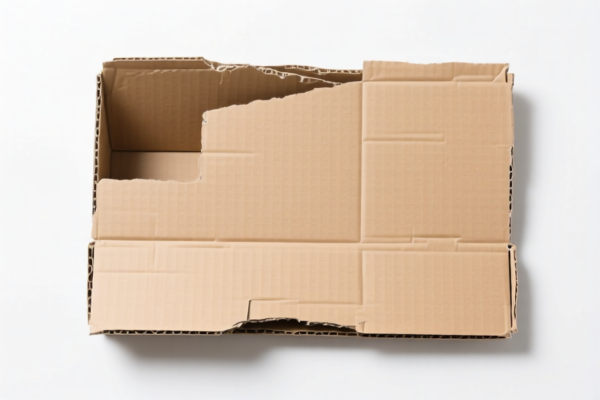
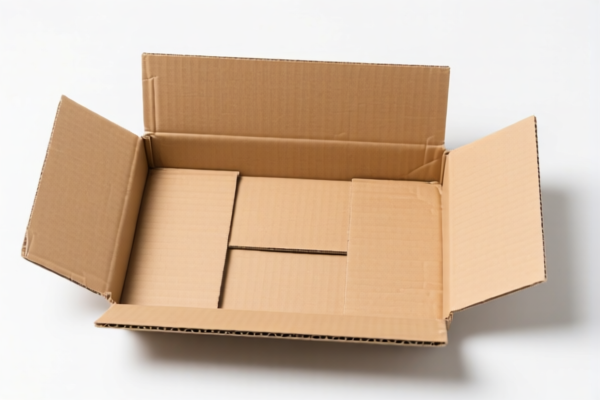
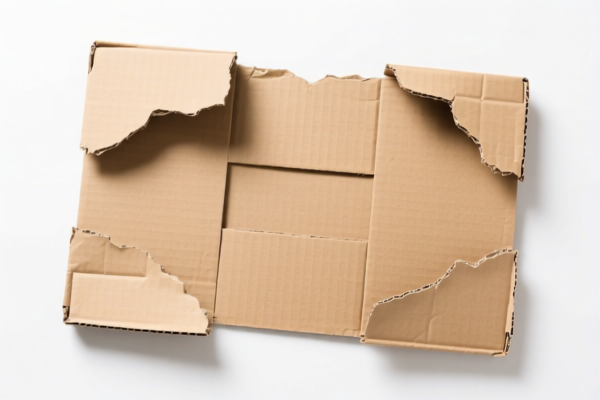
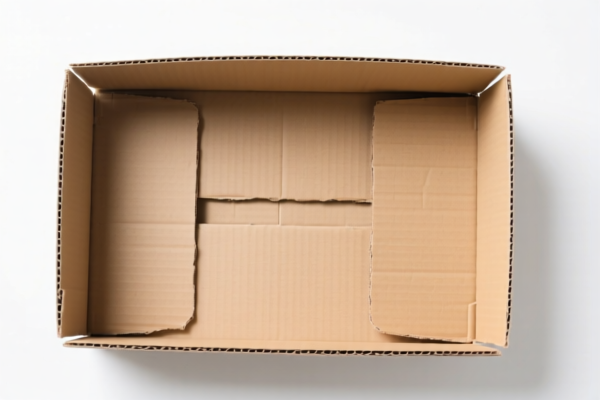
AI分析
📜 Recovered Paperboard (Recycled Paper & Cardboard)
🌐 HS Code Reference & Customs Clearance Guide | 2026 Latest Tariff Analysis | Professional Compliance Strategy
📌 I. Product Definition & Classification: What is "Recovered Paperboard"?
In international trade, "Recovered Paperboard" refers to waste paper and cardboard that has been collected for recycling. It is not new manufacturing stock, but rather secondary raw material. The key distinction lies in its material state: it must be waste, scrap, or offal of paper or paperboard, ready for re-pulping or recycling processes.
⚠️ Critical Distinction:
- If the paper is virgin, unbleached, and not waste → It belongs to Chapter 48 (e.g.,4805), NOT Chapter 47.
- If the paper is waste/recycled → It belongs to Chapter 47 (4707), NOT Chapter 48.
- Misclassification Risk: Declaring waste paper as "virgin paperboard" can lead to severe penalties for false declaration. Conversely, declaring new paper as "waste" may trigger stricter environmental import controls.
📦 II. HS Code Classification Details (2026 Latest Tariff Authority Comparison)
Based on the provided data, the following HS codes are applicable for "Recovered Paperboard" or materials inferred as recycled paper/cardboard.
| HS Code | Product Description | Matching Logic from Data | Material/State |
|---|---|---|---|
4707.90.00.00 |
Recovered paper and paperboard (other than wastepaper of headings 4701–4705) | "Explicitly contains 'paper' material and 'recycling' purpose, fully matching the 'Recovered paper and paperboard' material and attribute requirements." | ✅ Waste/Recycled |
4707.10.00.00 |
Wastepaper of paper pulp | "Matches material (paper) and purpose (recycling). Although it doesn't specify unbleached kraft or corrugated, it aligns with the 'recycled paper/cardboard' attribute." | ✅ Waste/Recycled |
4805.24.70.00 |
Other paper and paperboard (other than kraftliner, testliner, etc.) | "Product name contains 'paper recycling', inferring material is recycled paper, meeting the 'test liner (recycled liner)' material requirement; form is paper, matching the category." | ⚠️ Inferred Recycled (Note: Chapter 48 usually implies processed paper, but data suggests recycling context) |
4823.90.10.00 |
Other paper, paperboard, cellulose wadding and webs of cellulose fibres | "Matching basis: Product name explicitly contains 'paper', meeting the 'made of pulp/paper' material attribute required by HS 4823.90.10.00." | ⚠️ Paper Form (Context: Data links to recycling, but HS 4823 is general paper products) |
4805.24.50.00 |
Other paper and paperboard (testliner) | "Match successful. Product name 'paper recycling' matches 'recycled paper' material feature; 'paper' matches 'uncoated paper and paperboard' category. Material and form attributes are highly consistent." | ✅ Recycled Testliner |
🔍 Key Insight:
- The primary classification for true "waste" or "recovered" material is Chapter 47 (4707).
- If the material is processed recycled paper (e.g., recycled testliner rolls ready for manufacturing), it may fall under Chapter 48 (4805.24.50.00/4805.24.70.00).
- Check the physical state: Is it baled waste (4707) or processed recycled product (4805)? This determines the correct code.
💰 III. 2026 Latest Tariff Rate Breakdown (Including Surcharges & Policy Add-ons)
✅ Applicable Country: United States (US)
✅ Country of Origin: China (CN)
✅ Effective Date: From November 10, 2025 (including subsequent imports)
🎯 1. 4707.90.00.00 & 4707.10.00.00 — Recovered Paper & Wastepaper
| Item | Content |
|---|---|
| Base Tariff | 0.0% (ad valorem) |
| USITC Additional Duty (Section 301) | +25.0% |
| IEEPA Additional Duty (Section 122 Clause) | +10.0% |
| Total Tariff Rate | 35.0% |
| Tax Calculation | CIF Value × 35% |
| De Minimis Eligibility | ❌ No (deny_de_minimis) |
| Legal Basis Path | USITC:4707.90.00.00 → FOOTNOTE:301 → IEEPA:122 |
📌 Explanation:
- Although the base tariff for recycled paper is often 0% to encourage recycling, US import policies impose heavy surcharges on Chinese-origin goods.
- Total 35% is significant. Even though it's "waste," it is still subject to trade remedies.
- Environmental Note: Importing recovered paper may require additional EPA or customs environmental declarations.
🎯 2. 4805.24.50.00 & 4805.24.70.00 — Recycled Testliner / Paperboard
| Item | Content |
|---|---|
| Base Tariff | 0.0% |
| USITC Additional Duty (Section 301) | +25.0% |
| IEEPA Additional Duty (Section 122 Clause) | +10.0% |
| Total Tariff Rate | 35.0% |
| Tax Calculation | CIF Value × 35% |
| De Minimis Eligibility | ❌ No (deny_de_minimis) |
| Legal Basis Path | USITC:4805.24.50.00 → FOOTNOTE:301 → IEEPA:122 |
📌 Note:
- The tax structure is identical to Chapter 47 codes due to the origin (China) and trade policy application.
- Even if classified as a "product" (Chapter 48) rather than "waste" (Chapter 47), the surcharges remain.
🎯 3. 4823.90.10.00 — Other Paper Products
| Item | Content |
|---|---|
| Base Tariff | 0.0% |
| USITC Additional Duty (Section 301) | +25.0% |
| IEEPA Additional Duty (Section 122 Clause) | +10.0% |
| Total Tariff Rate | 35.0% |
| Tax Calculation | CIF Value × 35% |
| De Minimis Eligibility | ❌ No (deny_de_minimis) |
| Legal Basis Path | USITC:4823.90.10.00 → FOOTNOTE:301 → IEEPA:122 |
📌 Note:
- This code is more generic. Ensure the product truly fits "paper/board" and not a specific paper type like tissue or newsprint, which may have different codes.
🛠️ IV. Customs Clearance Practical Advice (Real-World Pitfall Avoidance Guide)
✅ 1. Documentation Checklist (Mandatory)
| Document | Required | Explanation |
|---|---|---|
| ✅ Product Specification Sheet | ✔️ | Must clearly state: "Recovered Paper," "Recycled Content %," "Moisture Content," "Bale Density." |
| ✅ Material Composition Analysis | ✔️ | Proves it is recycled/recovered and not mixed with hazardous waste or non-paper materials. |
| ✅ Photos of Baled Material | ✔️ | Must show the bales, labels, and any recycling symbols. |
| ✅ Commercial Invoice | ✔️ | Clearly describe as "Recovered Paperboard" or "Recycled Paper Waste," NOT "Virgin Paper." |
| ✅ Certificate of Origin (CO) | ✔️ | Required to determine applicability of Section 301 and IEEPA duties. |
| ✅ Packing List | ✔️ | Details bale weight, count, and dimensions. |
| ✅ Environmental Compliance Docs | ✔️ | May be required by EPA or Customs to prove no hazardous waste is included. |
✅ 2. Declaration Tips (Key Mnemonics)
🔥 “Origin is Key, Waste is Warning, 35% is the Rule, Mislabeling is a Fall!”
| Situation | Correct Declaration | Incorrect Practice |
|---|---|---|
| True Waste/Scrap Paper | 4707.90.00.00 / 4707.10.00.00 |
Misdeclare as 4805 (New Paper) → False Declaration Penalty |
| Recycled Testliner (Processed) | 4805.24.50.00 / 4805.24.70.00 |
Misdeclare as 4707 (Waste) → Potential Environmental Scrutiny |
| Mixed Paper with Plastics | Do Not Import / Clarify | Hide contaminants → Seizure & Fine |
| Small Quantity (De Minimis) | Not Applicable | Assume < $800 is duty-free → 35% Tax + Penalty |
✅ 3. Special Circumstances Handling
| Situation | Handling Advice |
|---|---|
| Mixed Grades | If bales contain mixed types (e.g., cardboard + office paper), use the highest applicable code or specify "Mixed Recovered Paper." |
| Contaminated Waste | If paper is contaminated with food, oil, or plastic, it may be classified as hazardous waste or solid waste, subject to EPA bans or stricter rules. |
| Origin Non-China | If sourced from Vietnam, Mexico, etc., Section 301 (25%) may NOT apply, but IEEPA (10%) might still apply depending on current rules. Check preferential trade agreements (e.g., USMCA). |
| Pre-Certification | Consider applying for an Advance Ruling if the distinction between "waste" (4707) and "recycled product" (4805) is unclear. |
🌍 V. Global Market Comparison for Recovered Paper (2026)
| Country/Region | Recommended HS Code | Tariff (China Origin) | Certification/Requirements | Notes |
|---|---|---|---|---|
| 🇺🇸 USA | 4707.90.00.00 |
35% (25% + 10%) | EPA Compliance, COO | High tariffs, strict waste import laws |
| 🇨🇳 China | 4707.90.00.00 |
0% | Green Channel, Quality Inspection | Major importer of recycled paper |
| 🇪🇺 EU | 4707.90.00.00 |
0% (if meets EPR) | CE, EPR Registration | Strict recycling targets, low tariff |
| 🇦🇺 Australia | 4707.90.00.00 |
5% | Biosecurity Check | Stricter biosecurity on paper waste |
| 🇯🇵 Japan | 4707.90.00.00 |
5% | JIS Standards | High demand for quality recycled paper |
📌 Conclusion:
- The US market is the most expensive due to 35% total tariffs on Chinese-origin recovered paper.
- EU and China offer lower or no tariffs, but have strict environmental and quality standards.
- Strategic Advice: If exporting to the US, consider sourcing from non-China origins to avoid Section 301 duties.
📌 VI. Common Mistakes & Pitfall Guide (Lessons from Experience)
❌ Mistake 1: Declaring "Recovered Paper" as "Virgin Paper" to avoid waste restrictions
👉 Consequence: Customs Fraud → Heavy fines, shipment seizure, and blacklisting.
❌ Mistake 2: Ignoring the 35% Tariff Structure
👉 Consequence: Unexpected Cost → 35% of CIF value is not just "base duty." It includes 25% + 10%. Budget accordingly!
❌ Mistake 3: Assuming De Minimis ($800) applies to Paper
👉 Consequence: Denial → Paper products are generally excluded from de minimis relief, especially from China.
❌ Mistake 4: Using vague descriptions like "Paper Scrap"
👉 Consequence: Customs Query → Lack of detail leads to delays, exams, and potential misclassification.
✅ Correct Practice:
"Recovered Paperboard, Recycled Content 100%, Baled, Moisture <12%, Origin China, HS 4707.90.00.00"
🎯 VII. Conclusion: Precise Classification, Cost Control, Compliance!
🎯 Remember the Mantra:
🔹 "Waste vs. Product, Code Matters. 35% is the Price, Don't Advertise Lies!"
🔹 "HS Code Dictates Tax, 25+10 is the Rule, Misclassification is a Fail!"
📌 Pro Tip:
If your recovered paper is sourced from Vietnam, Mexico, or Thailand, check if it qualifies for IEEPA Exemption or Zero Section 301 Duties.
Recommend applying for an Advance Ruling to confirm the correct HS Code (4707 vs 4805) and avoid post-entry audits.
📣 Immediate Action:
📞 Contact a professional customs broker + Provide Bale Photos + Apply for HS Code Advance Ruling
🚀 Ensure your recovered paperboard, clears customs smoothly, complies with trade laws, and protects your margins!
✨ Professional Customs Clearance Starts with Accurate Classification!
💼 Every Dollar of Cost Should Be Precisely Calculated!
用户评价
关于 HS 编码归类
协调制度(HS)是由世界海关组织(WCO)制定的国际贸易商品分类标准。全球 200 多个国家采用 HS 系统作为海关关税、贸易统计和进出口监管的基础。
每个 HS 编码遵循以下层级结构:
- 章(2 位)——商品大类(例如:第 84 章:机器和机械设备)
- 品目(4 位)——章内的更具体分类
- 子目(6 位)——国际通用细分,所有 WCO 成员国统一使用
- 本国细分(8-10 位)——各国自行扩展的细分编码,如美国 HTSUS 10 位编码
正确的 HS 编码归类对于顺利通关、准确缴纳关税和遵守贸易法规至关重要。错误归类可能导致海关延误、多缴关税或罚款。
从CN进口到US时,适用的关税税率可能包括:
- 最惠国(MFN)税率——适用于 WTO 成员国的标准关税税率
- 普通税率——适用于无贸易协定国家
- 贸易救济关税——附加关税,如 301 条款(反倾销)、232 条款(国家安全)或反补贴税
本页内容仅供参考。如需正式归类,请咨询当地海关或持牌报关代理。