Recovered paperboard
CN → US| HS Code | Tariff Rate | Origin | Destination | Doc |
|---|---|---|---|---|
| 4805247000 | 35.0% | CN | US | Official Doc |
| 4707900000 | 35.0% | CN | US | Official Doc |
| 4823901000 | 35.0% | CN | US | Official Doc |
| 4707100000 | 35.0% | CN | US | Official Doc |
| 4805245000 | 35.0% | CN | US | Official Doc |
Product Images
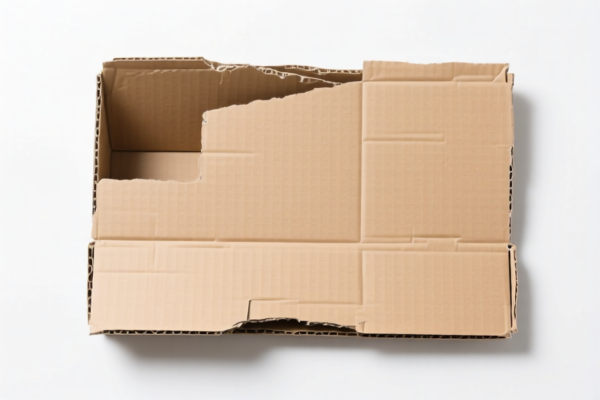
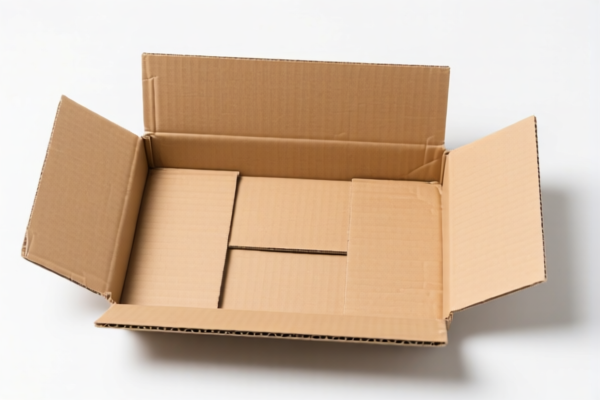
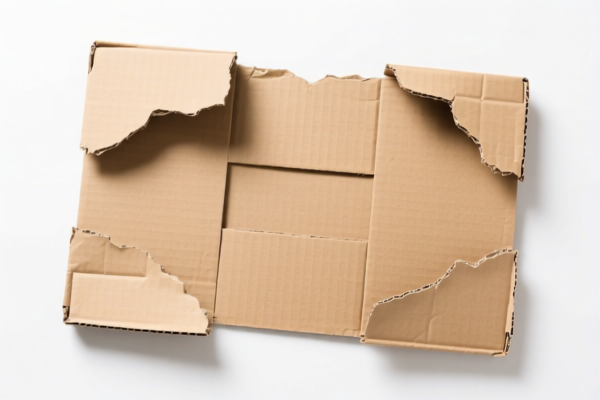
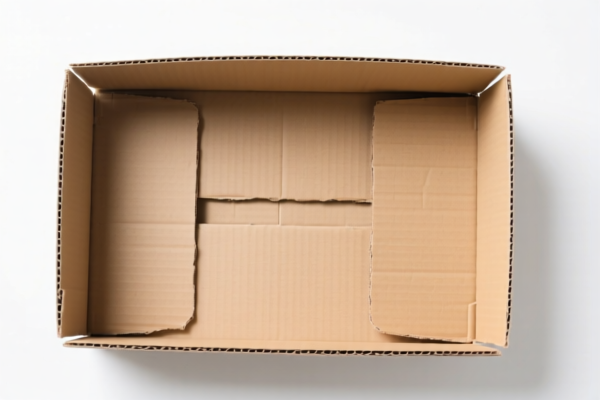
AI Analysis
📜 Recovered Paperboard (Recycled Paper & Cardboard)
🌐 HS Code Reference & Customs Clearance Guide | 2026 Latest Tariff Analysis | Professional Compliance Strategy
📌 I. Product Definition & Classification: What is "Recovered Paperboard"?
In international trade, "Recovered Paperboard" refers to waste paper and cardboard that has been collected for recycling. It is not new manufacturing stock, but rather secondary raw material. The key distinction lies in its material state: it must be waste, scrap, or offal of paper or paperboard, ready for re-pulping or recycling processes.
⚠️ Critical Distinction:
- If the paper is virgin, unbleached, and not waste → It belongs to Chapter 48 (e.g.,4805), NOT Chapter 47.
- If the paper is waste/recycled → It belongs to Chapter 47 (4707), NOT Chapter 48.
- Misclassification Risk: Declaring waste paper as "virgin paperboard" can lead to severe penalties for false declaration. Conversely, declaring new paper as "waste" may trigger stricter environmental import controls.
📦 II. HS Code Classification Details (2026 Latest Tariff Authority Comparison)
Based on the provided data, the following HS codes are applicable for "Recovered Paperboard" or materials inferred as recycled paper/cardboard.
| HS Code | Product Description | Matching Logic from Data | Material/State |
|---|---|---|---|
4707.90.00.00 |
Recovered paper and paperboard (other than wastepaper of headings 4701–4705) | "Explicitly contains 'paper' material and 'recycling' purpose, fully matching the 'Recovered paper and paperboard' material and attribute requirements." | ✅ Waste/Recycled |
4707.10.00.00 |
Wastepaper of paper pulp | "Matches material (paper) and purpose (recycling). Although it doesn't specify unbleached kraft or corrugated, it aligns with the 'recycled paper/cardboard' attribute." | ✅ Waste/Recycled |
4805.24.70.00 |
Other paper and paperboard (other than kraftliner, testliner, etc.) | "Product name contains 'paper recycling', inferring material is recycled paper, meeting the 'test liner (recycled liner)' material requirement; form is paper, matching the category." | ⚠️ Inferred Recycled (Note: Chapter 48 usually implies processed paper, but data suggests recycling context) |
4823.90.10.00 |
Other paper, paperboard, cellulose wadding and webs of cellulose fibres | "Matching basis: Product name explicitly contains 'paper', meeting the 'made of pulp/paper' material attribute required by HS 4823.90.10.00." | ⚠️ Paper Form (Context: Data links to recycling, but HS 4823 is general paper products) |
4805.24.50.00 |
Other paper and paperboard (testliner) | "Match successful. Product name 'paper recycling' matches 'recycled paper' material feature; 'paper' matches 'uncoated paper and paperboard' category. Material and form attributes are highly consistent." | ✅ Recycled Testliner |
🔍 Key Insight:
- The primary classification for true "waste" or "recovered" material is Chapter 47 (4707).
- If the material is processed recycled paper (e.g., recycled testliner rolls ready for manufacturing), it may fall under Chapter 48 (4805.24.50.00/4805.24.70.00).
- Check the physical state: Is it baled waste (4707) or processed recycled product (4805)? This determines the correct code.
💰 III. 2026 Latest Tariff Rate Breakdown (Including Surcharges & Policy Add-ons)
✅ Applicable Country: United States (US)
✅ Country of Origin: China (CN)
✅ Effective Date: From November 10, 2025 (including subsequent imports)
🎯 1. 4707.90.00.00 & 4707.10.00.00 — Recovered Paper & Wastepaper
| Item | Content |
|---|---|
| Base Tariff | 0.0% (ad valorem) |
| USITC Additional Duty (Section 301) | +25.0% |
| IEEPA Additional Duty (Section 122 Clause) | +10.0% |
| Total Tariff Rate | 35.0% |
| Tax Calculation | CIF Value × 35% |
| De Minimis Eligibility | ❌ No (deny_de_minimis) |
| Legal Basis Path | USITC:4707.90.00.00 → FOOTNOTE:301 → IEEPA:122 |
📌 Explanation:
- Although the base tariff for recycled paper is often 0% to encourage recycling, US import policies impose heavy surcharges on Chinese-origin goods.
- Total 35% is significant. Even though it's "waste," it is still subject to trade remedies.
- Environmental Note: Importing recovered paper may require additional EPA or customs environmental declarations.
🎯 2. 4805.24.50.00 & 4805.24.70.00 — Recycled Testliner / Paperboard
| Item | Content |
|---|---|
| Base Tariff | 0.0% |
| USITC Additional Duty (Section 301) | +25.0% |
| IEEPA Additional Duty (Section 122 Clause) | +10.0% |
| Total Tariff Rate | 35.0% |
| Tax Calculation | CIF Value × 35% |
| De Minimis Eligibility | ❌ No (deny_de_minimis) |
| Legal Basis Path | USITC:4805.24.50.00 → FOOTNOTE:301 → IEEPA:122 |
📌 Note:
- The tax structure is identical to Chapter 47 codes due to the origin (China) and trade policy application.
- Even if classified as a "product" (Chapter 48) rather than "waste" (Chapter 47), the surcharges remain.
🎯 3. 4823.90.10.00 — Other Paper Products
| Item | Content |
|---|---|
| Base Tariff | 0.0% |
| USITC Additional Duty (Section 301) | +25.0% |
| IEEPA Additional Duty (Section 122 Clause) | +10.0% |
| Total Tariff Rate | 35.0% |
| Tax Calculation | CIF Value × 35% |
| De Minimis Eligibility | ❌ No (deny_de_minimis) |
| Legal Basis Path | USITC:4823.90.10.00 → FOOTNOTE:301 → IEEPA:122 |
📌 Note:
- This code is more generic. Ensure the product truly fits "paper/board" and not a specific paper type like tissue or newsprint, which may have different codes.
🛠️ IV. Customs Clearance Practical Advice (Real-World Pitfall Avoidance Guide)
✅ 1. Documentation Checklist (Mandatory)
| Document | Required | Explanation |
|---|---|---|
| ✅ Product Specification Sheet | ✔️ | Must clearly state: "Recovered Paper," "Recycled Content %," "Moisture Content," "Bale Density." |
| ✅ Material Composition Analysis | ✔️ | Proves it is recycled/recovered and not mixed with hazardous waste or non-paper materials. |
| ✅ Photos of Baled Material | ✔️ | Must show the bales, labels, and any recycling symbols. |
| ✅ Commercial Invoice | ✔️ | Clearly describe as "Recovered Paperboard" or "Recycled Paper Waste," NOT "Virgin Paper." |
| ✅ Certificate of Origin (CO) | ✔️ | Required to determine applicability of Section 301 and IEEPA duties. |
| ✅ Packing List | ✔️ | Details bale weight, count, and dimensions. |
| ✅ Environmental Compliance Docs | ✔️ | May be required by EPA or Customs to prove no hazardous waste is included. |
✅ 2. Declaration Tips (Key Mnemonics)
🔥 “Origin is Key, Waste is Warning, 35% is the Rule, Mislabeling is a Fall!”
| Situation | Correct Declaration | Incorrect Practice |
|---|---|---|
| True Waste/Scrap Paper | 4707.90.00.00 / 4707.10.00.00 |
Misdeclare as 4805 (New Paper) → False Declaration Penalty |
| Recycled Testliner (Processed) | 4805.24.50.00 / 4805.24.70.00 |
Misdeclare as 4707 (Waste) → Potential Environmental Scrutiny |
| Mixed Paper with Plastics | Do Not Import / Clarify | Hide contaminants → Seizure & Fine |
| Small Quantity (De Minimis) | Not Applicable | Assume < $800 is duty-free → 35% Tax + Penalty |
✅ 3. Special Circumstances Handling
| Situation | Handling Advice |
|---|---|
| Mixed Grades | If bales contain mixed types (e.g., cardboard + office paper), use the highest applicable code or specify "Mixed Recovered Paper." |
| Contaminated Waste | If paper is contaminated with food, oil, or plastic, it may be classified as hazardous waste or solid waste, subject to EPA bans or stricter rules. |
| Origin Non-China | If sourced from Vietnam, Mexico, etc., Section 301 (25%) may NOT apply, but IEEPA (10%) might still apply depending on current rules. Check preferential trade agreements (e.g., USMCA). |
| Pre-Certification | Consider applying for an Advance Ruling if the distinction between "waste" (4707) and "recycled product" (4805) is unclear. |
🌍 V. Global Market Comparison for Recovered Paper (2026)
| Country/Region | Recommended HS Code | Tariff (China Origin) | Certification/Requirements | Notes |
|---|---|---|---|---|
| 🇺🇸 USA | 4707.90.00.00 |
35% (25% + 10%) | EPA Compliance, COO | High tariffs, strict waste import laws |
| 🇨🇳 China | 4707.90.00.00 |
0% | Green Channel, Quality Inspection | Major importer of recycled paper |
| 🇪🇺 EU | 4707.90.00.00 |
0% (if meets EPR) | CE, EPR Registration | Strict recycling targets, low tariff |
| 🇦🇺 Australia | 4707.90.00.00 |
5% | Biosecurity Check | Stricter biosecurity on paper waste |
| 🇯🇵 Japan | 4707.90.00.00 |
5% | JIS Standards | High demand for quality recycled paper |
📌 Conclusion:
- The US market is the most expensive due to 35% total tariffs on Chinese-origin recovered paper.
- EU and China offer lower or no tariffs, but have strict environmental and quality standards.
- Strategic Advice: If exporting to the US, consider sourcing from non-China origins to avoid Section 301 duties.
📌 VI. Common Mistakes & Pitfall Guide (Lessons from Experience)
❌ Mistake 1: Declaring "Recovered Paper" as "Virgin Paper" to avoid waste restrictions
👉 Consequence: Customs Fraud → Heavy fines, shipment seizure, and blacklisting.
❌ Mistake 2: Ignoring the 35% Tariff Structure
👉 Consequence: Unexpected Cost → 35% of CIF value is not just "base duty." It includes 25% + 10%. Budget accordingly!
❌ Mistake 3: Assuming De Minimis ($800) applies to Paper
👉 Consequence: Denial → Paper products are generally excluded from de minimis relief, especially from China.
❌ Mistake 4: Using vague descriptions like "Paper Scrap"
👉 Consequence: Customs Query → Lack of detail leads to delays, exams, and potential misclassification.
✅ Correct Practice:
"Recovered Paperboard, Recycled Content 100%, Baled, Moisture <12%, Origin China, HS 4707.90.00.00"
🎯 VII. Conclusion: Precise Classification, Cost Control, Compliance!
🎯 Remember the Mantra:
🔹 "Waste vs. Product, Code Matters. 35% is the Price, Don't Advertise Lies!"
🔹 "HS Code Dictates Tax, 25+10 is the Rule, Misclassification is a Fail!"
📌 Pro Tip:
If your recovered paper is sourced from Vietnam, Mexico, or Thailand, check if it qualifies for IEEPA Exemption or Zero Section 301 Duties.
Recommend applying for an Advance Ruling to confirm the correct HS Code (4707 vs 4805) and avoid post-entry audits.
📣 Immediate Action:
📞 Contact a professional customs broker + Provide Bale Photos + Apply for HS Code Advance Ruling
🚀 Ensure your recovered paperboard, clears customs smoothly, complies with trade laws, and protects your margins!
✨ Professional Customs Clearance Starts with Accurate Classification!
💼 Every Dollar of Cost Should Be Precisely Calculated!
Customer Reviews
About HS Code Classification
The Harmonized System (HS) is an internationally standardized nomenclature developed by the World Customs Organization (WCO) to classify traded products. Over 200 countries use the HS system as the basis for customs tariffs, trade statistics, and import/export regulations.
Each HS code follows a hierarchical structure:
- Chapter (2 digits) — Broad category of goods (e.g., Chapter 84: Machinery and Mechanical Appliances)
- Heading (4 digits) — More specific grouping within the chapter
- Subheading (6 digits) — Internationally standardized breakdown, used by all WCO member countries
- National subdivisions (8-10 digits) — Country-specific extensions for further classification, such as US HTSUS 10-digit codes
Correct HS code classification is essential for smooth customs clearance, accurate duty payment, and compliance with trade regulations. Misclassification can lead to customs delays, overpayment of duties, or penalties.
When importing from CN to US, the applicable tariff rates may include:
- Most-Favored-Nation (MFN) rate — The standard duty rate applied to WTO members
- General rate — Applied to countries without trade agreements
- Trade remedy duties — Additional tariffs such as Section 301 (anti-dumping), Section 232 (national security), or countervailing duties
The information provided on this page is for reference purposes only. For official classification, please consult with your local customs authority or a licensed customs broker.