Recyclable Paper Handbag
CN → US| HS编码 | 关税税率 | 原产国 | 目的国 | 文档 |
|---|---|---|---|---|
| 4202295000 | 42.8% | CN | US | 官方文档 |
| 4819400020 | 35.0% | CN | US | 官方文档 |
| 4819400040 | 35.0% | CN | US | 官方文档 |
| 4823908000 | 35.0% | CN | US | 官方文档 |
| 4823908680 | 35.0% | CN | US | 官方文档 |
商品图片
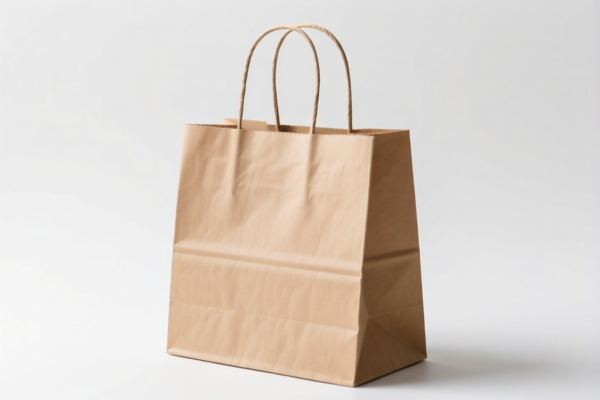
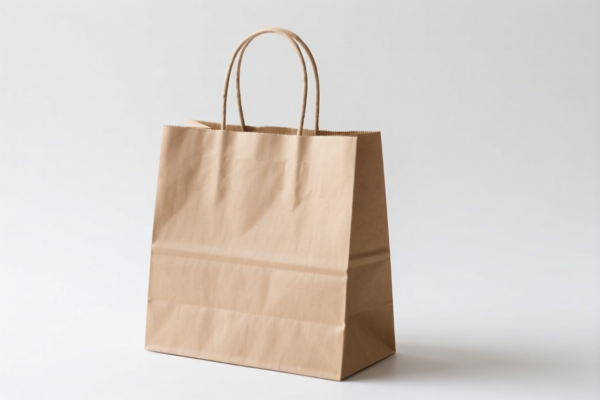
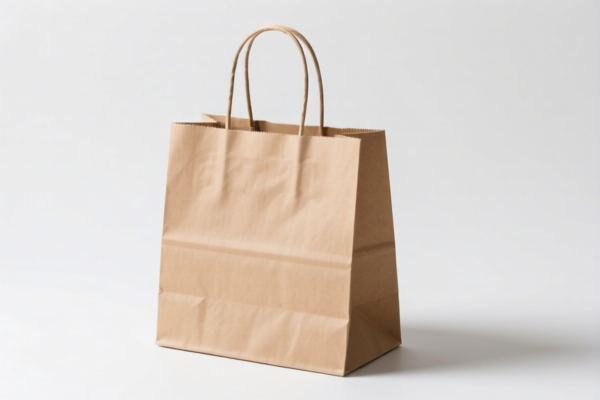
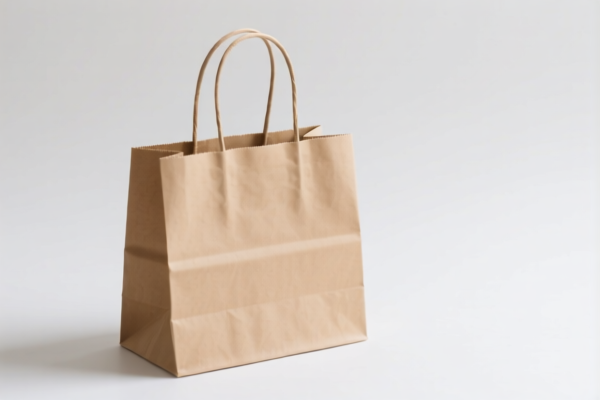
AI分析
📄 Recyclable Paper Handbags: HS Code Classification & Tariff Deep Dive (2026)
🌐 HS Code Reference & Customs Clearance Guide | 2026 Latest Tariff Analysis | Professional-Level Strategy
📌 Part 1: Product Definition & Classification: Do You Really Understand "Paper Handbags"?
Recyclable paper handbags are essential packaging solutions for retail, luxury brands, and eco-friendly commerce. In international trade, despite their simple appearance, they are classified into multiple HS Codes based on material composition, structural design, and specific chapter definitions. Misclassification can lead to severe tariff penalties (up to 42.8%) or customs delays.
⚠️ Critical Distinction:
- If the bag is primarily defined as a "container made of paper" (general packaging) → Likely Chapter 48;
- If it is explicitly defined as a "handbag made of paper covering" (article of furniture/accessories) → Likely Chapter 42.
- Key Risk: All listed codes below attract additional punitive tariffs due to US-China trade policies.
📦 Part 2: HS Code Classification Details (2026 Latest Tariff Authority Mapping)
Based on the provided data, here is the precise mapping for "Recyclable Paper Handbags":
| HS Code | Product Description | Classification Logic | Chapter Context |
|---|---|---|---|
4202.29.50.00 |
Paper handbags, material is paper, fits the definition of "covered by paper" | Treated as a handbag/accessory (Chapter 42) rather than simple packaging. | Chapter 42: Articles of Apparel Clothing Accessories |
4819.40.00.20 |
Paper handbags, belongs to the category of paper packaging bags | Treated as a flexible packaging item. | Chapter 48: Paper and Paperboard |
4819.40.00.40 |
Paper handbags, belongs to other bags in the paper packaging container category | Treated as a specific paper container subtype. | Chapter 48: Paper and Paperboard |
4823.90.80.00 |
Paper handbags, belongs to other shaped articles under the paper products broad category | Treated as a fabricated paper product (not strictly packaging). | Chapter 48: Paper and Paperboard |
4823.90.86.80 |
Paper handbags, belongs to the catch-all category under Chapter 48 sub-heading | Treated as a miscellaneous paper article when specific packaging codes don't fit perfectly. | Chapter 48: Paper and Paperboard |
🔍 Key Insight:
- Code4202.29.50.00is the most "premium" classification but carries the highest tax burden (42.8%) because it views the bag as an accessory rather than disposable packaging.
- Codes4819and4823are more common for bulk retail packaging but still attract significant penalties.
💰 Part 3: 2026 Latest Tariff Rate Breakdown (Including Surcharges)
✅ Applicable Country: United States (US)
✅ Origin: China (CN)
✅ Effective Date: 2025 onwards (Cumulative Impact)
🎯 1. 4202.29.50.00 —— Paper Handbag (Chapter 42 Classification)
| Item | Content |
|---|---|
| Base Tariff | 7.8% (Ad Valorem) |
| Section 301 Surcharge | +25.0% (Trade War Tariff) |
| Section 122 Tariff | +10.0% (Reciprocal Trade Act / Specific Country Measures) |
| Total Effective Rate | 42.8% |
| Tax Calculation | CIF Value × 42.8% |
| De Minimis Exemption | ❌ NOT APPLICABLE (deny_de_minimis applies to high-tariff goods) |
| Legal Path | HTSUS:4202.29.50.00 → USITC:301_List → DOJ:Section122 |
📌 Explanation:
- The 7.8% base rate reflects Chapter 42's higher duty for non-textile bags.
- The 25% Section 301 tariff is the standard punitive tax on Chinese goods in this category.
- The 10% Section 122 tariff adds an additional layer of cost, making this the most expensive option.
🎯 2. 4819.40.00.20 & 4819.40.00.40 —— Paper Packaging Bags (Chapter 48 Classification)
| Item | Content |
|---|---|
| Base Tariff | 0.0% (Ad Valorem) |
| Section 301 Surcharge | +25.0% |
| Section 122 Tariff | +10.0% |
| Total Effective Rate | 35.0% |
| Tax Calculation | CIF Value × 35.0% |
| De Minimis Exemption | ❌ NOT APPLICABLE |
| Legal Path | HTSUS:4819.40.00.xx → USITC:301_List → DOJ:Section122 |
📌 Explanation:
- While the base rate is 0%, the 35% total rate is still very high.
- These codes are preferred if the bag is clearly for bulk packaging or retail carry-out (not luxury accessory style).
🎯 3. 4823.90.80.00 & 4823.90.86.80 —— Other Paper Products (Chapter 48 Catch-All)
| Item | Content |
|---|---|
| Base Tariff | 0.0% (Ad Valorem) |
| Section 301 Surcharge | +25.0% |
| Section 122 Tariff | +10.0% |
| Total Effective Rate | 35.0% |
| Tax Calculation | CIF Value × 35.0% |
| De Minimis Exemption | ❌ NOT APPLICABLE |
| Legal Path | HTSUS:4823.90.8x.xx → USITC:301_List → DOJ:Section122 |
📌 Explanation:
- Used when the bag does not fit neatly into standard packaging definitions (4819) but is clearly a paper product.
- Same 35% total rate as the 4819 codes.
🛠️ Part 4: Customs Clearance Practical Advice (Avoiding Pitfalls)
✅ 1. Essential Documentation Checklist
| Document | Required | Notes |
|---|---|---|
| ✅ Product Specifications | ✔️ | Must specify: Material (e.g., 100% Recyclable Paper), Weight, Handle Type |
| ✅ Photos (Front/Side/Bottom) | ✔️ | Show construction: Is it rigid (Chapter 42) or flexible (Chapter 48)? |
| ✅ Commercial Invoice | ✔️ | Clearly state "Paper Handbag" or "Paper Packaging Bag". Avoid vague terms like "Gift Item" |
| ✅ Packing List | ✔️ | Detail quantity and weight. Ensure CIF value includes freight/insurance |
| ✅ Origin Certificate | ✔️ | Prove China origin to apply correct Section 301 rates |
| ✅ HS Code Pre-ruling | ✔️ | Highly Recommended to avoid disputes between Chapter 42 and 48 |
✅ 2. Declaration Strategy (Key Mantra)
🔥 "Rigid Bags = 42.8%, Flexible Bags = 35.0%. Choose Wisely!"
| Scenario | Correct HS Code | Reason |
|---|---|---|
| Luxury Retail Bag (Stiff, branded, handled like an accessory) | 4202.29.50.00 |
Fits "Article of Apparel/Accessory" definition. Higher base tax but may be acceptable for high-value retail. |
| Grocery/Retail Carry-out Bag (Flexible, thin paper, standard handles) | 4819.40.00.20 or 4819.40.00.40 |
Fits "Paper Packaging Bag" definition. Lower base tax (0%). |
| Custom Shaped Paper Bag (Non-standard, complex structure) | 4823.90.80.00 |
"Other shaped article" when 4819 doesn't fit. |
| Unknown/General Paper Bag | 4823.90.86.80 |
Catch-all for Chapter 48. Use only if no other code fits. |
⚠️ Warning:
- Do NOT declare flexible paper bags as4202.29.50.00to "look fancy" – Customs will reject it, and you may face fines for misdeclaration.
- Do NOT declare rigid luxury bags as4819– If they have structural integrity akin to a handbag, they should be Chapter 42.
✅ 3. Special Considerations for 2026
| Situation | Advice |
|---|---|
| De Minimis (Section 321) | ❌ Do NOT use. All these HS codes are subject to Section 301 and Section 122 tariffs, which override the $800 de minimis exemption. |
| Material Composition | Ensure the "Recyclable" claim is backed by documentation. Mislabeling can lead to environmental compliance issues. |
| Handle Material | If handles are cloth or leather, the bag may still be classified under Chapter 42, but the tax calculation might differ. Check local CBP rulings. |
| Volume Discounts | With a 35-42.8% tax rate, margin compression is significant. Factor this into your pricing strategy. |
🌍 Part 5: Global Market Comparison (2026)
| Market | Recommended HS Code | Approx. Total Tax | Notes |
|---|---|---|---|
| 🇺🇸 USA | 4819.40.00.20 / 4202.29.50.00 |
35% - 42.8% | High punitive tariffs. Section 301 + Section 122 apply. |
| 🇨🇳 China | 4819.40.00.20 |
~0% - 5% | Low base tariff. No Section 301. |
| 🇪🇺 EU | 4819.40.00 |
~0% - 4% | Low base tariff. No Section 301. |
| 🇬🇧 UK | 4819.40.00 |
~0% - 5% | Post-Brexit tariffs vary but generally lower than US. |
| 🇨🇦 Canada | 4819.40.00 |
~0% - 5% | Lower than US, no Section 301. |
📌 Conclusion:
- The USA is the most expensive market for paper handbags due to layered tariffs.
- If exporting to the US, optimize your HS Code to4819(35%) rather than4202(42.8%) if structurally appropriate.
- Consider supply chain diversification (e.g., manufacturing in Vietnam/Mexico) to avoid US-China punitive tariffs.
📌 Part 6: Common Mistakes & Pitfalls (Lessons Learned)
❌ Mistake 1: Using "Gift Bag" as the product name
👉 Consequence: Customs may reclassify as 4202.29.50.00 (42.8%) or demand additional proof.
✅ Fix: Use "Paper Handbag" or "Paper Packaging Bag".
❌ Mistake 2: Assuming "Recyclable" changes the HS Code
👉 Consequence: No HS Code change. "Recyclable" is an environmental claim, not a classification factor.
✅ Fix: Provide sustainability certificates separately.
❌ Mistake 3: Ignoring Section 122 Tariff
👉 Consequence: Underpaying taxes by 10%.
✅ Fix: Always add 10% to the 301 tariff calculation for Chinese-origin goods.
❌ Mistake 4: Splitting one shipment into "Bag + Handle" to lower tax
👉 Consequence: Customs will consolidate and assess full tariff on the whole unit.
✅ Fix: Declare the complete assembled bag.
🎯 Part 7: Conclusion: Smart Classification Saves Money
🎯 Key Takeaway:
🔹 "Flexible Paper Bag = 35% (4819); Rigid Paper Bag = 42.8% (4202)."
🔹 "De Minimis is OFF for these codes – Plan Your Costs!"
📌 Pro Tip:
If your paper handbags are simple, flexible, and for retail carry-out, insist on 4819.40.00.20 or 4819.40.00.40 (35% total).
If they are structured, luxury, and accessory-like, prepare for 4202.29.50.00 (42.8% total).
📣 Action Step:
📞 Contact a licensed customs broker
📦 Provide 3D drawings/photos
📋 Apply for HS Code Pre-ruling if shipment volume is high
✨ Precise Classification = Predictable Costs
💼 Don't let hidden tariffs eat your margins!
用户评价
关于 HS 编码归类
协调制度(HS)是由世界海关组织(WCO)制定的国际贸易商品分类标准。全球 200 多个国家采用 HS 系统作为海关关税、贸易统计和进出口监管的基础。
每个 HS 编码遵循以下层级结构:
- 章(2 位)——商品大类(例如:第 84 章:机器和机械设备)
- 品目(4 位)——章内的更具体分类
- 子目(6 位)——国际通用细分,所有 WCO 成员国统一使用
- 本国细分(8-10 位)——各国自行扩展的细分编码,如美国 HTSUS 10 位编码
正确的 HS 编码归类对于顺利通关、准确缴纳关税和遵守贸易法规至关重要。错误归类可能导致海关延误、多缴关税或罚款。
从CN进口到US时,适用的关税税率可能包括:
- 最惠国(MFN)税率——适用于 WTO 成员国的标准关税税率
- 普通税率——适用于无贸易协定国家
- 贸易救济关税——附加关税,如 301 条款(反倾销)、232 条款(国家安全)或反补贴税
本页内容仅供参考。如需正式归类,请咨询当地海关或持牌报关代理。