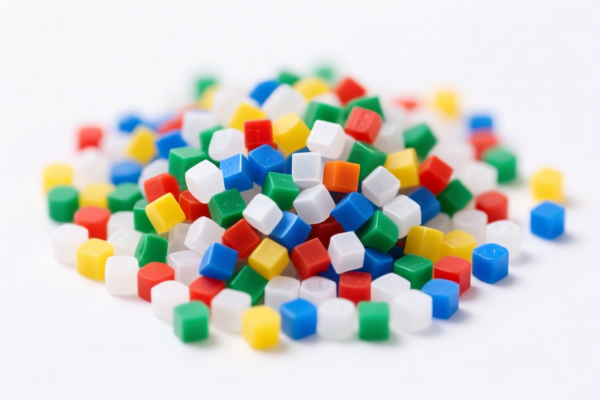
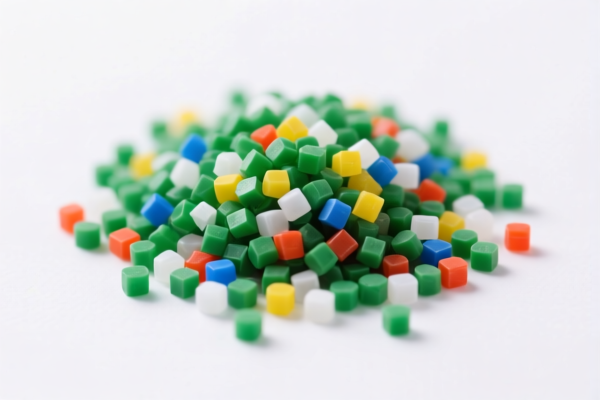
Recycled PET Plastic Pellets
CN → US| HS编码 | 关税税率 | 原产国 | 目的国 | 文档 |
|---|---|---|---|---|
| 3907995050 | 41.5% | CN | US | 官方文档 |
| 3907915000 | 41.5% | CN | US | 官方文档 |
| 3907992000 | 35.0% | CN | US | 官方文档 |
| 3907995010 | 41.5% | CN | US | 官方文档 |
| 4003000000 | 35.0% | CN | US | 官方文档 |
商品图片
AI分析
🧪 Recycled PET Plastic Pellets (再生PET塑料颗粒)
🌐 HS Code Reference & Customs Clearance Guide | 2026 Latest Tariff Analysis | Professional Clearance Strategy
📌 I. Product Definition & Classification: What is "Recycled PET"?
Recycled PET (Polyethylene Terephthalate) pellets are the primary raw material derived from post-consumer or post-industrial PET waste. In international trade, they are categorized based on their form (primary shape/pellets) and origin (virgin vs. recycled).
Key Distinction for Classification: * "Primary Shape" (初级形态): This is the critical legal term in the HS Code. It includes solid forms like granules, flakes, powder, and irregular shapes. It does NOT mean "virgin" plastic. * "Recycled" (再生料): While "recycled" is a key selling point, US Customs (CBP) primarily classifies based on the chemical composition and physical state. Both virgin and recycled PET pellets generally fall under Heading 3907.
⚠️ Critical Warning:
- Do NOT classify recycled PET as "Scrap" (e.g., Chapter 3904 or 3915) if it is in granular/pellet form. It is a "Primary Shape" of polymer.
- Misclassification Risk: Declaring as "Scrap" when it is "Pellets" can lead to severe penalties because scrap often carries different duties and environmental restrictions.
📦 II. HS Code Classification Details (2026 Latest Tariff Reference)
Based on the provided data, there are four potential HS Codes for Recycled PET Pellets, differing slightly by sub-category and resulting in different tax rates.
| HS Code | Product Description | Applicable Scenario | Total Tax Rate (China Origin → US) |
|---|---|---|---|
3907.99.20.00 |
PET Plastic Recycled Material – Specifically classified as "Recycled Material" under Polyester | Preferred for pure recycled content where the HS code explicitly acknowledges "Regenerated" status | 35.0% |
3907.99.50.50 |
Recycled PET Plastic Pellets – Other Polyester, Primary Shape, Pellets | General classification for pellets that may not fit the specific "Regenerated" sub-line or are classified under "Other" | 41.5% |
3907.91.50.00 |
Recycled PET Plastic Pellets – Other Polyesters, Primary Shape | Classification for granules/pellets in the "Other" category (Note: 3907.91 often refers to other forms, but data links it to pellets) | 41.5% |
3907.99.50.10 |
PET Plastic Recycled Material – Polyester, Primary Shape/Raw Material | Broad classification for recycled polyester raw materials in primary form | 41.5% |
🔍 Key Insight:
- Code3907.99.20.00is the MOST COST-EFFECTIVE option if your product documentation explicitly supports its status as "Recycled Material" (再生料) rather than just "Pellets."
- The other three codes (...50.50,...50.00,...50.10) carry a higher base tariff (6.5% vs 0%), resulting in a 41.5% total tax.
💰 III. 2026 Latest Tariff Rate Breakdown (Including Add-ons)
✅ Applicable Country: United States (US)
✅ Country of Origin: China (CN)
✅ Effective Date: 2025-11-10 onwards (for subsequent imports)
🎯 1. 3907.99.20.00 —— Optimized Classification: PET Recycled Material
| Item | Content |
|---|---|
| Base Tariff | 0.0% (Ad Valorem) |
| USITC Add-on (Section 301) | +25.0% |
| IEEPA Add-on (122 Clause) | +10.0% |
| Total Tax Rate | 35.0% |
| Tax Calculation | CIF Value × 35% |
| De Minimis Exemption | ❌ NOT Eligible (deny_de_minimis) |
| Legal Authority Path | IEEPA:9903.01.25 → IEEPA:9903.01.24 → USITC:3907.99.20.00 → FOOTNOTE:9903.88.01 |
📌 Explanation:
- This code benefits from a 0% base tariff, which significantly lowers the final impact of the 35% total duty.
- The 25% USITC and 10% IEEPA are mandatory on all Chinese-origin polyesters.
- Savings: Compared to 41.5%, this saves 6.5% on the CIF value.
🎯 2. 3907.99.50.50 / 3907.91.50.00 / 3907.99.50.10 —— Standard Classification: PET Pellets/Other
| Item | Content |
|---|---|
| Base Tariff | 6.5% (Ad Valorem) |
| USITC Add-on (Section 301) | +25.0% |
| IEEPA Add-on (122 Clause) | +10.0% |
| Total Tax Rate | 41.5% |
| Tax Calculation | CIF Value × 41.5% |
| De Minimis Exemption | ❌ NOT Eligible (deny_de_minimis) |
| Legal Authority Path | IEEPA:9903.01.25 → IEEPA:9903.01.24 → USITC:[Code] → FOOTNOTE:9903.88.01 |
📌 Explanation:
- The 6.5% base tariff is the main driver for the higher total rate.
- Even with 0% USITC (which is not the case here), the total would be 16.5%. With 25% USITC, it hits 41.5%.
- Warning: Do not assume "recycled" automatically grants a 0% base tariff. You must classify under a code that reflects "Recycled Material" (like...20.00) rather than "Other" or "Pellets" (like...50.xx).
🛠️ IV. Customs Clearance Practical Advice (Pitfall Avoidance Guide)
✅ 1. Documentation Checklist (Non-negotiable)
| Document | Required | Purpose |
|---|---|---|
| ✅ Commercial Invoice | ✔️ | Must clearly state "Recycled PET Pellets" and specify Recycled Content % (e.g., 100% Post-Consumer Recycled). |
| ✅ Product Specification Sheet | ✔️ | Details: Melt Flow Index (MFI), Viscosity, Color, Moisture Content. Proves it is a raw material, not a finished good. |
| ✅ Certificate of Origin (CO) | ✔️ | Confirms China origin to calculate correct 301/122 duties. |
| ✅ Bill of Lading (B/L) | ✔️ | Ensure "PCS" (Pieces) or "KG" (Kilograms) is used correctly. |
| ✅ Import Security Filing (ISF) | ✔️ | Must file 24 hours before loading. Error here causes $5,000 fines. |
| ✅ Third-Party Test Report | ✔️ | Optional but recommended: Prove it is PET (not PVC/PE) and meets environmental standards (e.g., RPCR, GRS). |
✅ 2. Classification Strategy (Key Tip)
🔥 "Declare 'Recycled Material', Not Just 'Pellets'!"
| Scenario | Correct HS Code | Tax Rate | Wrong Action | Consequence |
|---|---|---|---|---|
| 100% Recycled PET Pellets | 3907.99.20.00 |
35% | Declare as 3907.99.50.50 |
Overpay 6.5% |
| Recycled PET Flakes (not pellets) | 3907.99.20.00 |
35% | Declare as "Scrap" | Risk of seizure (Flakes are primary shape) |
| Virgin PET Pellets | 3907.99.50.50 |
41.5% | Claim "Recycled" | Fraud Penalty |
📌 Note:
- If your product is mixed (e.g., 50% recycled, 50% virgin), you must still classify based on the primary material. However, some codes allow for "Recycled" designation if it meets specific criteria. Consult a customs broker to see if3907.99.20.00is applicable to your mix. - Do NOT use the "De Minimis" (Section 321) exemption for shipments under $800. Polyester pellets are explicitly excluded from de minimis relief for China-origin goods due to Section 301 and 122 duties.
✅ 3. Special Handling for "Recycled" Goods
| Situation | Handling Advice |
|---|---|
| OEM Customized Color | Provide formula/spec sheet. Color does not change HS code, but must be declared accurately. |
| Contaminated Recycled PET | If moisture >1% or impurities >1%, declare as "Dirty" or "Washed". This may affect quality inspection but not HS code. |
| Transshipment (Vietnam/Mexico) | ❌ Do NOT transship through Vietnam/Mexico to avoid duties unless you have a Certificate of Origin proving non-Chinese origin. US CBP aggressively audits "circumvention" of tariffs. |
| Environmental Compliance | Ensure no hazardous waste classification. PET is generally safe, but if mixed with other plastics, it may be reclassified. |
🌍 V. Global Market Comparison (2026 Latest)
| Country/Region | Recommended HS Code | Total Tax (China Origin) | Key Certification | Remarks |
|---|---|---|---|---|
| 🇺🇸 United States | 3907.99.20.00 |
35% | N/A | Highest duty due to 301+122 clauses. |
| 🇨🇳 China | 3907.99.20.00 |
5% | N/A | Low import duty for recycled material. |
| 🇪🇺 European Union | 3907.60.00 |
6.5% | REACH + GRS | No Section 301. GRS certification preferred. |
| 🇬🇧 United Kingdom | 3907.60.00 |
6.5% | UK REACH | Post-Brexit rules apply. |
| 🇯🇵 Japan | 3907.60.00 |
5% | JIS | Stable market for recycled PET. |
📌 Conclusion:
- USA is the highest-cost market for recycled PET due to trade wars.
- Strategy: Consider transshipment only if legally compliant (e.g., substantial transformation in third country). Otherwise, plan for 35% duty.
📌 VI. Common Mistakes & Pitfalls (Blood & Tears Lessons)
❌ Mistake 1: Classifying Recycled PET as "Scrap" (HS 3915)
👉 Consequence: CBP will reclassify it as "Primary Shape" (3907) + 41.5% duty + Penalty.
❌ Mistake 2: Using De Minimis ($800 exemption) for Small Batches
👉 Consequence: Seizure. Polyester from China is explicitly excluded. You must file formal entry.
❌ Mistake 3: Declaring "Plastic Pellets" without specifying "PET"
👉 Consequence: CBP may assign a generic or higher duty rate, or demand additional testing.
❌ Mistake 4: Ignoring the "Recycled" Label in Documentation
👉 Consequence: You might pay 41.5% instead of 35% because CBP defaults to "Other" (6.5% base) if "Recycled" isn't supported.
✅ Correct Practice:
"Recycled PET Pellets, 100% Post-Consumer Recycled, Food-Grade/Non-Food-Grade, White/Natural, Moisture <0.01%, MFI: 20 g/10min"
🎯 VII. Conclusion: Professional Classification Saves Money!
🎯 Remember the Golden Rule:
🔹 "Recycled = Code .20 = 35% Tax"
🔹 "Other/Pellets = Code .50 = 41.5% Tax"
🔹 "Difference = 6.5% Savings on CIF Value!"📌 Pro Tip:
If your supplier can provide a GRS (Global Recycled Standard) certificate or a PCR (Post-Consumer Recycled) declaration, use it to justify HS Code3907.99.20.00. This small effort can save you 6.5% on every shipment.
📣 Immediate Action:
📞 Contact your customs broker with GRS Certificate + Product Spec
🚀 Apply for Pre-Ruling if possible.
💼 Your Cost, Optimized.
✨ Professional Customs Clearance Starts with Accurate Classification!
💼 Every 6.5% Counts in the Bottom Line!
用户评价
关于 HS 编码归类
协调制度(HS)是由世界海关组织(WCO)制定的国际贸易商品分类标准。全球 200 多个国家采用 HS 系统作为海关关税、贸易统计和进出口监管的基础。
每个 HS 编码遵循以下层级结构:
- 章(2 位)——商品大类(例如:第 84 章:机器和机械设备)
- 品目(4 位)——章内的更具体分类
- 子目(6 位)——国际通用细分,所有 WCO 成员国统一使用
- 本国细分(8-10 位)——各国自行扩展的细分编码,如美国 HTSUS 10 位编码
正确的 HS 编码归类对于顺利通关、准确缴纳关税和遵守贸易法规至关重要。错误归类可能导致海关延误、多缴关税或罚款。
从CN进口到US时,适用的关税税率可能包括:
- 最惠国(MFN)税率——适用于 WTO 成员国的标准关税税率
- 普通税率——适用于无贸易协定国家
- 贸易救济关税——附加关税,如 301 条款(反倾销)、232 条款(国家安全)或反补贴税
本页内容仅供参考。如需正式归类,请咨询当地海关或持牌报关代理。