Recycled PET Plastic Pellets
CN → US| HS Code | Tariff Rate | Origin | Destination | Doc |
|---|---|---|---|---|
| 3907995050 | 41.5% | CN | US | Official Doc |
| 3907915000 | 41.5% | CN | US | Official Doc |
| 3907992000 | 35.0% | CN | US | Official Doc |
| 3907995010 | 41.5% | CN | US | Official Doc |
| 4003000000 | 35.0% | CN | US | Official Doc |
Product Images
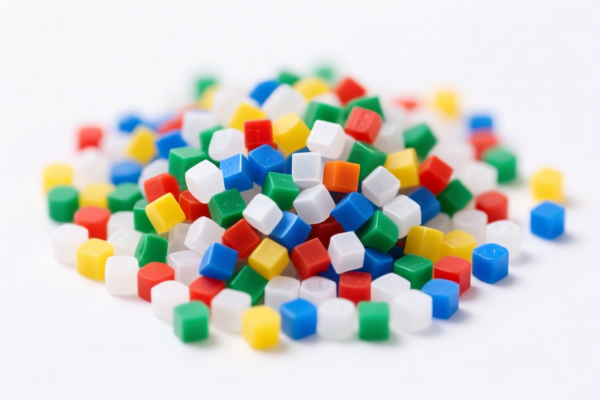
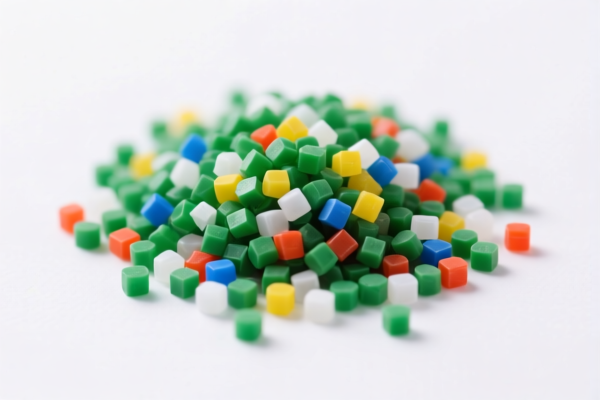
AI Analysis
🧪 Recycled PET Plastic Pellets (再生PET塑料颗粒)
🌐 HS Code Reference & Customs Clearance Guide | 2026 Latest Tariff Analysis | Professional Clearance Strategy
📌 I. Product Definition & Classification: What is "Recycled PET"?
Recycled PET (Polyethylene Terephthalate) pellets are the primary raw material derived from post-consumer or post-industrial PET waste. In international trade, they are categorized based on their form (primary shape/pellets) and origin (virgin vs. recycled).
Key Distinction for Classification: * "Primary Shape" (初级形态): This is the critical legal term in the HS Code. It includes solid forms like granules, flakes, powder, and irregular shapes. It does NOT mean "virgin" plastic. * "Recycled" (再生料): While "recycled" is a key selling point, US Customs (CBP) primarily classifies based on the chemical composition and physical state. Both virgin and recycled PET pellets generally fall under Heading 3907.
⚠️ Critical Warning:
- Do NOT classify recycled PET as "Scrap" (e.g., Chapter 3904 or 3915) if it is in granular/pellet form. It is a "Primary Shape" of polymer.
- Misclassification Risk: Declaring as "Scrap" when it is "Pellets" can lead to severe penalties because scrap often carries different duties and environmental restrictions.
📦 II. HS Code Classification Details (2026 Latest Tariff Reference)
Based on the provided data, there are four potential HS Codes for Recycled PET Pellets, differing slightly by sub-category and resulting in different tax rates.
| HS Code | Product Description | Applicable Scenario | Total Tax Rate (China Origin → US) |
|---|---|---|---|
3907.99.20.00 |
PET Plastic Recycled Material – Specifically classified as "Recycled Material" under Polyester | Preferred for pure recycled content where the HS code explicitly acknowledges "Regenerated" status | 35.0% |
3907.99.50.50 |
Recycled PET Plastic Pellets – Other Polyester, Primary Shape, Pellets | General classification for pellets that may not fit the specific "Regenerated" sub-line or are classified under "Other" | 41.5% |
3907.91.50.00 |
Recycled PET Plastic Pellets – Other Polyesters, Primary Shape | Classification for granules/pellets in the "Other" category (Note: 3907.91 often refers to other forms, but data links it to pellets) | 41.5% |
3907.99.50.10 |
PET Plastic Recycled Material – Polyester, Primary Shape/Raw Material | Broad classification for recycled polyester raw materials in primary form | 41.5% |
🔍 Key Insight:
- Code3907.99.20.00is the MOST COST-EFFECTIVE option if your product documentation explicitly supports its status as "Recycled Material" (再生料) rather than just "Pellets."
- The other three codes (...50.50,...50.00,...50.10) carry a higher base tariff (6.5% vs 0%), resulting in a 41.5% total tax.
💰 III. 2026 Latest Tariff Rate Breakdown (Including Add-ons)
✅ Applicable Country: United States (US)
✅ Country of Origin: China (CN)
✅ Effective Date: 2025-11-10 onwards (for subsequent imports)
🎯 1. 3907.99.20.00 —— Optimized Classification: PET Recycled Material
| Item | Content |
|---|---|
| Base Tariff | 0.0% (Ad Valorem) |
| USITC Add-on (Section 301) | +25.0% |
| IEEPA Add-on (122 Clause) | +10.0% |
| Total Tax Rate | 35.0% |
| Tax Calculation | CIF Value × 35% |
| De Minimis Exemption | ❌ NOT Eligible (deny_de_minimis) |
| Legal Authority Path | IEEPA:9903.01.25 → IEEPA:9903.01.24 → USITC:3907.99.20.00 → FOOTNOTE:9903.88.01 |
📌 Explanation:
- This code benefits from a 0% base tariff, which significantly lowers the final impact of the 35% total duty.
- The 25% USITC and 10% IEEPA are mandatory on all Chinese-origin polyesters.
- Savings: Compared to 41.5%, this saves 6.5% on the CIF value.
🎯 2. 3907.99.50.50 / 3907.91.50.00 / 3907.99.50.10 —— Standard Classification: PET Pellets/Other
| Item | Content |
|---|---|
| Base Tariff | 6.5% (Ad Valorem) |
| USITC Add-on (Section 301) | +25.0% |
| IEEPA Add-on (122 Clause) | +10.0% |
| Total Tax Rate | 41.5% |
| Tax Calculation | CIF Value × 41.5% |
| De Minimis Exemption | ❌ NOT Eligible (deny_de_minimis) |
| Legal Authority Path | IEEPA:9903.01.25 → IEEPA:9903.01.24 → USITC:[Code] → FOOTNOTE:9903.88.01 |
📌 Explanation:
- The 6.5% base tariff is the main driver for the higher total rate.
- Even with 0% USITC (which is not the case here), the total would be 16.5%. With 25% USITC, it hits 41.5%.
- Warning: Do not assume "recycled" automatically grants a 0% base tariff. You must classify under a code that reflects "Recycled Material" (like...20.00) rather than "Other" or "Pellets" (like...50.xx).
🛠️ IV. Customs Clearance Practical Advice (Pitfall Avoidance Guide)
✅ 1. Documentation Checklist (Non-negotiable)
| Document | Required | Purpose |
|---|---|---|
| ✅ Commercial Invoice | ✔️ | Must clearly state "Recycled PET Pellets" and specify Recycled Content % (e.g., 100% Post-Consumer Recycled). |
| ✅ Product Specification Sheet | ✔️ | Details: Melt Flow Index (MFI), Viscosity, Color, Moisture Content. Proves it is a raw material, not a finished good. |
| ✅ Certificate of Origin (CO) | ✔️ | Confirms China origin to calculate correct 301/122 duties. |
| ✅ Bill of Lading (B/L) | ✔️ | Ensure "PCS" (Pieces) or "KG" (Kilograms) is used correctly. |
| ✅ Import Security Filing (ISF) | ✔️ | Must file 24 hours before loading. Error here causes $5,000 fines. |
| ✅ Third-Party Test Report | ✔️ | Optional but recommended: Prove it is PET (not PVC/PE) and meets environmental standards (e.g., RPCR, GRS). |
✅ 2. Classification Strategy (Key Tip)
🔥 "Declare 'Recycled Material', Not Just 'Pellets'!"
| Scenario | Correct HS Code | Tax Rate | Wrong Action | Consequence |
|---|---|---|---|---|
| 100% Recycled PET Pellets | 3907.99.20.00 |
35% | Declare as 3907.99.50.50 |
Overpay 6.5% |
| Recycled PET Flakes (not pellets) | 3907.99.20.00 |
35% | Declare as "Scrap" | Risk of seizure (Flakes are primary shape) |
| Virgin PET Pellets | 3907.99.50.50 |
41.5% | Claim "Recycled" | Fraud Penalty |
📌 Note:
- If your product is mixed (e.g., 50% recycled, 50% virgin), you must still classify based on the primary material. However, some codes allow for "Recycled" designation if it meets specific criteria. Consult a customs broker to see if3907.99.20.00is applicable to your mix. - Do NOT use the "De Minimis" (Section 321) exemption for shipments under $800. Polyester pellets are explicitly excluded from de minimis relief for China-origin goods due to Section 301 and 122 duties.
✅ 3. Special Handling for "Recycled" Goods
| Situation | Handling Advice |
|---|---|
| OEM Customized Color | Provide formula/spec sheet. Color does not change HS code, but must be declared accurately. |
| Contaminated Recycled PET | If moisture >1% or impurities >1%, declare as "Dirty" or "Washed". This may affect quality inspection but not HS code. |
| Transshipment (Vietnam/Mexico) | ❌ Do NOT transship through Vietnam/Mexico to avoid duties unless you have a Certificate of Origin proving non-Chinese origin. US CBP aggressively audits "circumvention" of tariffs. |
| Environmental Compliance | Ensure no hazardous waste classification. PET is generally safe, but if mixed with other plastics, it may be reclassified. |
🌍 V. Global Market Comparison (2026 Latest)
| Country/Region | Recommended HS Code | Total Tax (China Origin) | Key Certification | Remarks |
|---|---|---|---|---|
| 🇺🇸 United States | 3907.99.20.00 |
35% | N/A | Highest duty due to 301+122 clauses. |
| 🇨🇳 China | 3907.99.20.00 |
5% | N/A | Low import duty for recycled material. |
| 🇪🇺 European Union | 3907.60.00 |
6.5% | REACH + GRS | No Section 301. GRS certification preferred. |
| 🇬🇧 United Kingdom | 3907.60.00 |
6.5% | UK REACH | Post-Brexit rules apply. |
| 🇯🇵 Japan | 3907.60.00 |
5% | JIS | Stable market for recycled PET. |
📌 Conclusion:
- USA is the highest-cost market for recycled PET due to trade wars.
- Strategy: Consider transshipment only if legally compliant (e.g., substantial transformation in third country). Otherwise, plan for 35% duty.
📌 VI. Common Mistakes & Pitfalls (Blood & Tears Lessons)
❌ Mistake 1: Classifying Recycled PET as "Scrap" (HS 3915)
👉 Consequence: CBP will reclassify it as "Primary Shape" (3907) + 41.5% duty + Penalty.
❌ Mistake 2: Using De Minimis ($800 exemption) for Small Batches
👉 Consequence: Seizure. Polyester from China is explicitly excluded. You must file formal entry.
❌ Mistake 3: Declaring "Plastic Pellets" without specifying "PET"
👉 Consequence: CBP may assign a generic or higher duty rate, or demand additional testing.
❌ Mistake 4: Ignoring the "Recycled" Label in Documentation
👉 Consequence: You might pay 41.5% instead of 35% because CBP defaults to "Other" (6.5% base) if "Recycled" isn't supported.
✅ Correct Practice:
"Recycled PET Pellets, 100% Post-Consumer Recycled, Food-Grade/Non-Food-Grade, White/Natural, Moisture <0.01%, MFI: 20 g/10min"
🎯 VII. Conclusion: Professional Classification Saves Money!
🎯 Remember the Golden Rule:
🔹 "Recycled = Code .20 = 35% Tax"
🔹 "Other/Pellets = Code .50 = 41.5% Tax"
🔹 "Difference = 6.5% Savings on CIF Value!"📌 Pro Tip:
If your supplier can provide a GRS (Global Recycled Standard) certificate or a PCR (Post-Consumer Recycled) declaration, use it to justify HS Code3907.99.20.00. This small effort can save you 6.5% on every shipment.
📣 Immediate Action:
📞 Contact your customs broker with GRS Certificate + Product Spec
🚀 Apply for Pre-Ruling if possible.
💼 Your Cost, Optimized.
✨ Professional Customs Clearance Starts with Accurate Classification!
💼 Every 6.5% Counts in the Bottom Line!
Customer Reviews
About HS Code Classification
The Harmonized System (HS) is an internationally standardized nomenclature developed by the World Customs Organization (WCO) to classify traded products. Over 200 countries use the HS system as the basis for customs tariffs, trade statistics, and import/export regulations.
Each HS code follows a hierarchical structure:
- Chapter (2 digits) — Broad category of goods (e.g., Chapter 84: Machinery and Mechanical Appliances)
- Heading (4 digits) — More specific grouping within the chapter
- Subheading (6 digits) — Internationally standardized breakdown, used by all WCO member countries
- National subdivisions (8-10 digits) — Country-specific extensions for further classification, such as US HTSUS 10-digit codes
Correct HS code classification is essential for smooth customs clearance, accurate duty payment, and compliance with trade regulations. Misclassification can lead to customs delays, overpayment of duties, or penalties.
When importing from CN to US, the applicable tariff rates may include:
- Most-Favored-Nation (MFN) rate — The standard duty rate applied to WTO members
- General rate — Applied to countries without trade agreements
- Trade remedy duties — Additional tariffs such as Section 301 (anti-dumping), Section 232 (national security), or countervailing duties
The information provided on this page is for reference purposes only. For official classification, please consult with your local customs authority or a licensed customs broker.