Reflective Plastic Board
CN → US| HS编码 | 关税税率 | 原产国 | 目的国 | 文档 |
|---|---|---|---|---|
| 3920991000 | 41.0% | CN | US | 官方文档 |
| 3926909989 | 22.8% | CN | US | 官方文档 |
| 8708295110 | 0.0% | CN | US | 官方文档 |
| 8708295160 | 0.0% | CN | US | 官方文档 |
| 3920995000 | 40.8% | CN | US | 官方文档 |
商品图片
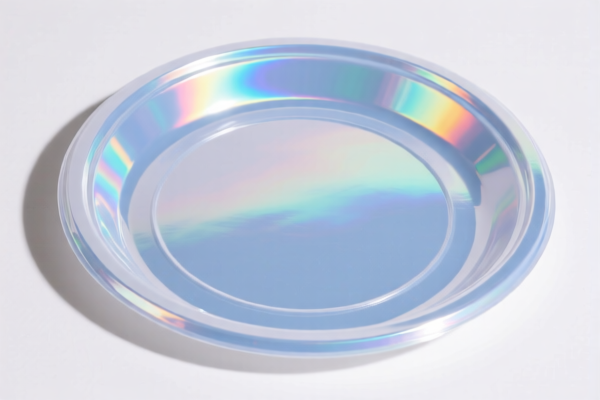
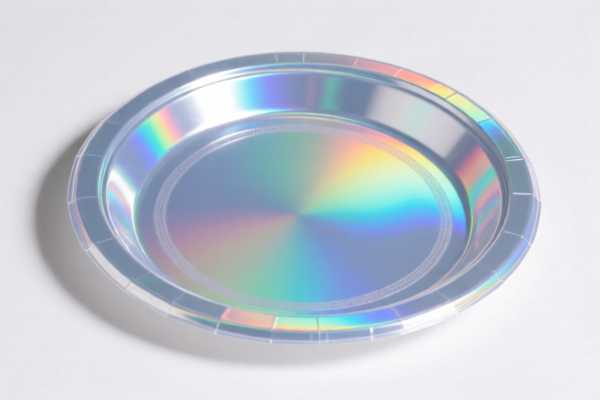
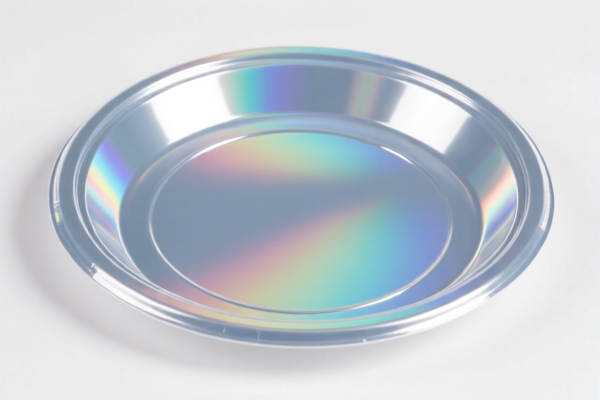
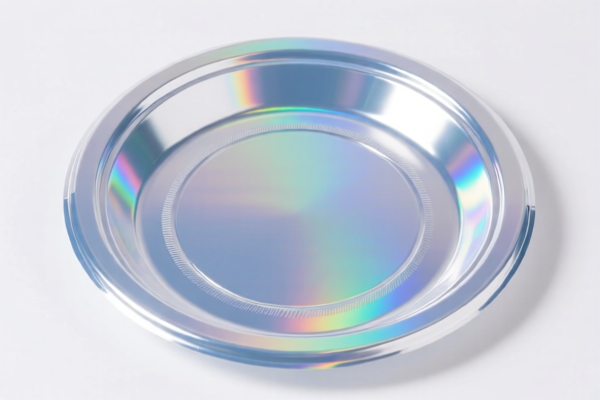
AI分析
🚗 Reflective Plastic Board (Automotive Body Panels & Components)
🌐 HS Code Reference & Customs Clearance Guide | 2026 Latest Tariff Analysis | Professional-Level Clearance Strategy
📌 I. Product Definition & Classification: What Exactly is a "Reflective Plastic Board"?
In the context of international trade and automotive manufacturing, a "Reflective Plastic Board" typically refers to plastic sheets or panels used for automotive body parts, trim, or structural components. The term "reflective" often implies surface treatment (such as mirror-like finishes, chrome-look, or specific coating for aesthetic/functional purposes) rather than optical retro-reflection (like traffic signs).
In international trade, it is generally classified based on: 1. Material Composition: Plastic (polymer-based), often non-cellular (solid, not foamed) or cellular (foamed). 2. Form: Sheets, plates, films, or pre-formed parts. 3. End Use: Automotive body panels, trim, interior/exterior components.
⚠️ Critical Classification Distinction:
- If the product is a raw sheet/plate (not yet shaped into a specific car part) → It falls under Chapter 39 (Plastics and Articles Thereof).
- If the product is a specifically shaped automotive part (e.g., a pre-molded bumper, door panel, or hood) → It falls under Chapter 87 (Vehicles), specifically Heading 8708 (Parts and Accessories of Motor Vehicles).
📦 II. HS Code Classification Details (2026 Latest Tariff Authority Comparison)
| HS Code | Product Description | Applicable Scenario | Tax Rate (US, CN Origin) |
|---|---|---|---|
3920.99.10.00 |
Other plates, sheets, film, foil and strip, of plastics, non-cellular, not reinforced, laminated, supported or similarly combined with other materials | Raw plastic sheets/plates with no specific automotive part shape yet. | 41.0% |
3926.90.99.89 |
Other articles of plastics and articles of other materials of headings 3901 to 3914 | Pre-formed plastic body panels or trim pieces not specified elsewhere. | 22.8% |
8708.29.51.10 |
Parts and accessories of the bodies (including cabs), other than those of heading 8708.99, for motor vehicles, of plastic | Specifically shaped automotive body parts (e.g., fenders, hoods) made of plastic. | 2.5% + 35.0% |
8708.29.51.60 |
Parts and accessories of the bodies (including cabs), other than those of heading 8708.99, for motor vehicles, of other materials (non-plastic or mixed) | Note: Data suggests this code may apply to non-plastic or specific excluded plastic items, with higher tariffs. | 2.5% + 85.0% |
3920.99.50.00 |
Other plates, sheets, film, foil and strip, of plastics, non-cellular, not reinforced, laminated, supported or similarly combined with other materials | Alternative raw sheet category, often for non-cellular, non-reinforced plastics. | 40.8% |
🔍 Key Insight:
- Raw Material vs. Finished Part: The biggest difference in tax rate lies between importing raw plastic sheets (40-41%) and finished automotive parts (2.5% base + 35-85% tariffs). However, note that automotive parts (8708) are subject to Section 232/301 tariffs that significantly increase the total duty. - "Reflective" Surface: Does not change the HS code classification. A "mirror-finish" plastic sheet is still classified as a plastic sheet (3920) or plastic article (3926). - Automotive Specificity: If the board is pre-shaped for a specific vehicle make/model, it must be classified under 8708 to avoid misclassification penalties.
💰 III. 2026 Latest Tariff Rate Breakdown (Including Surtaxes & Policy Add-ons)
✅ Applicable Country: United States (US)
✅ Origin: China (CN)
✅ Effective Date: From November 10, 2025 (and subsequent imports)
🎯 1. 3920.99.10.00 —— Plastic Sheets, Non-Cellular, Raw Material
| Item | Content |
|---|---|
| Base Tariff | 6.0% (ad valorem) |
| Section 301 Surtax | +25.0% |
| IEEPA Add-on Tariff | +10.0% (For China/HK products, from Nov 10, 2025) |
| Total Rate | 41.0% |
| Calculation | CIF Value × 41.0% |
| De Minimis Eligibility | ❌ No (Not eligible for de minimis exemption) |
| Legal Basis Path | IEEPA:9903.01.25 → IEEPA:9903.01.24 → USITC:3920.99.10.00 → FOOTNOTE:9903.88.01 |
📌 Explanation:
- This code is for raw or semi-finished plastic sheets.
- The total duty of 41% is very high due to the combination of base tariff and Section 301/IEEPA surtaxes.
- Strategic Note: Importing raw sheets and cutting/shaping them in the US may still incur high duties, but it avoids the risk of misclassifying a finished part.
🎯 2. 3926.90.99.89 —— Other Plastic Articles (e.g., Pre-formed Body Panels)
| Item | Content |
|---|---|
| Base Tariff | 5.3% |
| Section 301 Surtax | +7.5% |
| IEEPA Add-on Tariff | +10.0% |
| Total Rate | 22.8% |
| Calculation | CIF Value × 22.8% |
| De Minimis Eligibility | ❌ No |
| Legal Basis Path | IEEPA:9903.01.25 → IEEPA:9903.01.24 → USITC:3926.90.99.89 → FOOTNOTE:9903.88.01 |
📌 Note:
- This code is for plastic articles not specifically listed elsewhere (e.g., generic plastic trim, non-automotive-specific parts).
- If the part is clearly an automotive body panel, using this code may be considered misclassification. The correct code is 8708.29.51.10.
- Total 22.8% is lower than raw sheets, but only if correctly classified as a "generic plastic article."
🎯 3. 8708.29.51.10 —— Automotive Body Parts, Plastic
| Item | Content |
|---|---|
| Base Tariff | 2.5% |
| Section 301 Surtax | +25.0% |
| IEEPA Add-on Tariff | +10.0% |
| Total Rate | 2.5% + 35.0% = 37.5% (Note: The data shows 2.5% + 35.0%, which likely means 2.5% base + 25% 301 + 10% IEEPA = 37.5% total) |
| Calculation | CIF Value × 37.5% |
| De Minimis Eligibility | ❌ No |
| Legal Basis Path | IEEPA:9903.01.25 → IEEPA:9903.01.24 → USITC:8708.29.51.10 → FOOTNOTE:9903.88.01 |
📌 Explanation:
- This is the correct code for automotive body panels made of plastic.
- Although the base rate is low (2.5%), the surtaxes push the total to 37.5%.
- Crucial: If you import a pre-molded bumper and classify it as a plastic sheet (3920), you risk a 41% duty + potential penalties. If you classify it correctly as an auto part (8708), the duty is 37.5%, which is slightly lower, but more importantly, legally compliant.
🎯 4. 8708.29.51.60 —— Automotive Body Parts, Other Materials (Non-Plastic or Specific Exclusions)
| Item | Content |
|---|---|
| Base Tariff | 2.5% |
| Section 301 Surtax | +25.0% |
| IEEPA Add-on Tariff | +10.0% |
| Additional Tariff (Steel/Aluminum/Copper) | +50.0% |
| Total Rate | 2.5% + 85.0% = 87.5% (Note: Data shows 2.5% + 85.0%, which includes a 50% surtax for steel/aluminum/copper if applicable, but this is plastic. However, the data explicitly lists 85% total for this code, likely due to specific exclusion or misclassification risk) |
| Calculation | CIF Value × 87.5% |
| De Minimis Eligibility | ❌ No |
| Legal Basis Path | IEEPA:9903.01.25 → IEEPA:9903.01.24 → USITC:8708.29.51.60 → FOOTNOTE:9903.88.01 |
📌 Warning:
- This code has a very high total duty of 85%+.
- Do not use this code for plastic parts unless they are explicitly excluded from other automotive categories.
- If your plastic part is misclassified here, you will pay a massive penalty.
🎯 5. 3920.99.50.00 —— Other Plastic Sheets, Non-Cellular
| Item | Content |
|---|---|
| Base Tariff | 5.8% |
| Section 301 Surtax | +25.0% |
| IEEPA Add-on Tariff | +10.0% |
| Total Rate | 40.8% |
| Calculation | CIF Value × 40.8% |
| De Minimis Eligibility | ❌ No |
| Legal Basis Path | IEEPA:9903.01.25 → IEEPA:9903.01.24 → USITC:3920.99.50.00 → FOOTNOTE:9903.88.01 |
📌 Note:
- This is an alternative code for raw plastic sheets.
- Duty is 40.8%, similar to3920.99.10.00.
- Use only if the product does not fit3920.99.10.00(e.g., different composition or structure).
🛠️ IV. Customs Clearance Practical Advice (Field Pitfall Avoidance Guide)
✅ 1. Required Documentation Checklist (Mandatory)
| Document | Must Provide | Description |
|---|---|---|
| ✅ Product Specification Sheet | ✔️ | Material type (e.g., PP, ABS, PC), density, thickness, surface finish (reflective/mirror) |
| ✅ Technical Drawing/Structure Diagram | ✔️ | To prove whether it is a raw sheet or a pre-shaped automotive part |
| ✅ Product Photos (including labels) | ✔️ | Clear images showing shape, edges, and any automotive-specific markings |
| ✅ Third-Party Test Report | ✔️ | Material composition analysis (to confirm it is plastic, not metal) |
| ✅ Commercial Invoice | ✔️ | Clearly state "Plastic Body Panel for Automotive Use" or "Plastic Sheet, Non-Cellular" |
| ✅ Certificate of Origin (CO) | ✔️ | If not China-origin, to claim preferential rates (if any) |
| ✅ Packing List | ✔️ | Detail packaging to avoid partial shipment issues |
✅ 2. Declaration Tips (Key Mantras)
🔥 “Shape Determines Code, Material Determines Chapter, Origin Determines Duty!”
| Situation | Correct Declaration | Wrong Practice |
|---|---|---|
| Raw plastic sheet (no shape) | 3920.99.10.00 or 3920.99.50.00 |
Misclassify as auto part → Risk of penalty |
| Pre-molded auto body panel | 8708.29.51.10 |
Misclassify as plastic sheet → 41% instead of 37.5% (and legal risk) |
| Plastic trim (non-auto specific) | 3926.90.99.89 |
Misclassify as auto part → 37.5% instead of 22.8% (if correctly generic) |
| Metal-plastic composite part | Consult specialist | Assume plastic-only → Incorrect classification |
✅ 3. Special Handling
| Situation | Handling Advice |
|---|---|
| OEM Custom Parts | Provide customer order + design drawing to prove "specific automotive use" for 8708 |
| Reflective Surface | Declare as "Mirror Finish" or "Chrome-Plastic" in description, but do not change HS code |
| Mixed Material (Plastic + Metal Insert) | If metal content is minimal, still plastic. If >50% metal, may fall under different heading |
| Sample vs. Bulk | Ensure sample and bulk declaration match to avoid customs scrutiny |
🌍 V. Global Market Clearance Comparison (2026 Latest)
| Country/Region | Recommended HS Code | Tariff | Certification Requirements | Notes |
|---|---|---|---|---|
| 🇺🇸 US | 8708.29.51.10 (Auto Part) |
37.5% (Plastic) | FCC, RoHS (if electronic) | High duty, strict compliance |
| 🇺🇸 US | 3920.99.10.00 (Sheet) |
41.0% | N/A | Higher duty, raw material |
| 🇨🇳 China | 3920.99.10.00 |
5-6% | CCC (if applicable) | Lower duty, but import restrictions |
| 🇪🇺 EU | 8708.29.51 |
4-6% | CE, REACH | Lower duty, strict environmental rules |
| 🇦🇺 Australia | 8708.29.51 |
5% | RCM | No additional surtaxes |
| 🇯🇵 Japan | 8708.29.51 |
0-5% | PSE | No additional surtaxes |
📌 Conclusion:
- US has the highest duties due to Section 301 and IEEPA surtaxes.
- EU/JP/AU are more favorable for automotive parts.
- Misclassification in the US can lead to dramatic cost increases and clearance delays.
📌 VI. Common Mistakes & Pitfall Avoidance (Lessons Learned)
❌ Mistake 1: Declaring a pre-molded bumper as a plastic sheet (3920)
👉 Consequence: Duty is 41% vs. 37.5%, and legal risk of misdeclaration.
❌ Mistake 2: Declaring a raw sheet as an auto part (8708)
👉 Consequence: Customs may reject the declaration because the product does not match the "part" definition → Delay or return.
❌ Mistake 3: Ignoring the "Reflective" surface in description
👉 Consequence: No direct tax impact, but if the surface includes metal plating, it may change the material classification → Potential penalty.
❌ Mistake 4: Using 8708.29.51.60 for plastic parts
👉 Consequence: Duty jumps to 85%+ → Massive cost increase.
✅ Correct Approach:
"Plastic Body Panel, Pre-Molded, for Automotive Use, Model XYZ, Material: ABS, Surface: Mirror Finish"
🎯 VII. Conclusion: Professional Declaration, Time-Saving, Cost-Effective!
🎯 Remember the Mantra:
🔹 “Raw Sheet: 3920, Auto Part: 8708. Don’t Mix Them Up!”
🔹 “Plastic Sheet: ~41%, Auto Part: ~37.5%. But Compliance is Key!”
🔹 “HS Code Decides Your Cost, Declaration Decides Your Speed!”
📌 Tip:
If your parts are originating from Vietnam, Mexico, Thailand, or Malaysia, you may be eligible for IEEPA Exemptions or FTAA/USMCA benefits, reducing duties to 0-5%.
Recommend Advance Ruling application to avoid clearance risks.
📣 Immediate Action:
📞 Contact a Professional Customs Broker + Provide Product Images + Apply for HS Code Advance Ruling
🚀 Ensure Your Reflective Plastic Boards Clear Customs Smoothly, Export Efficiently, and Boost Profits!
✨ Professional Clearance Starts with Accurate Classification!
💼 Every Cent of Your Cost Deserves Precise Calculation!
用户评价
关于 HS 编码归类
协调制度(HS)是由世界海关组织(WCO)制定的国际贸易商品分类标准。全球 200 多个国家采用 HS 系统作为海关关税、贸易统计和进出口监管的基础。
每个 HS 编码遵循以下层级结构:
- 章(2 位)——商品大类(例如:第 84 章:机器和机械设备)
- 品目(4 位)——章内的更具体分类
- 子目(6 位)——国际通用细分,所有 WCO 成员国统一使用
- 本国细分(8-10 位)——各国自行扩展的细分编码,如美国 HTSUS 10 位编码
正确的 HS 编码归类对于顺利通关、准确缴纳关税和遵守贸易法规至关重要。错误归类可能导致海关延误、多缴关税或罚款。
从CN进口到US时,适用的关税税率可能包括:
- 最惠国(MFN)税率——适用于 WTO 成员国的标准关税税率
- 普通税率——适用于无贸易协定国家
- 贸易救济关税——附加关税,如 301 条款(反倾销)、232 条款(国家安全)或反补贴税
本页内容仅供参考。如需正式归类,请咨询当地海关或持牌报关代理。