Reflective Plastic Board
CN → US| HS Code | Tariff Rate | Origin | Destination | Doc |
|---|---|---|---|---|
| 3920991000 | 41.0% | CN | US | Official Doc |
| 3926909989 | 22.8% | CN | US | Official Doc |
| 8708295110 | 0.0% | CN | US | Official Doc |
| 8708295160 | 0.0% | CN | US | Official Doc |
| 3920995000 | 40.8% | CN | US | Official Doc |
Product Images
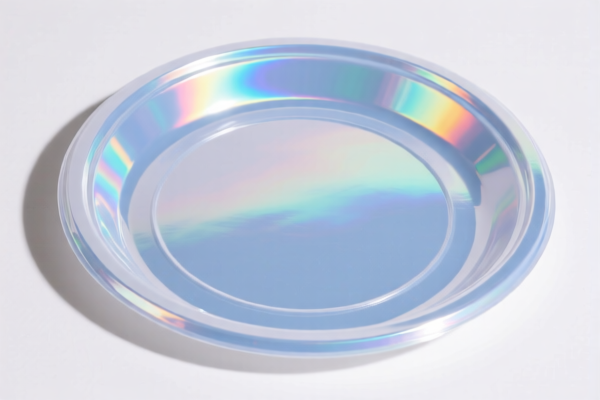
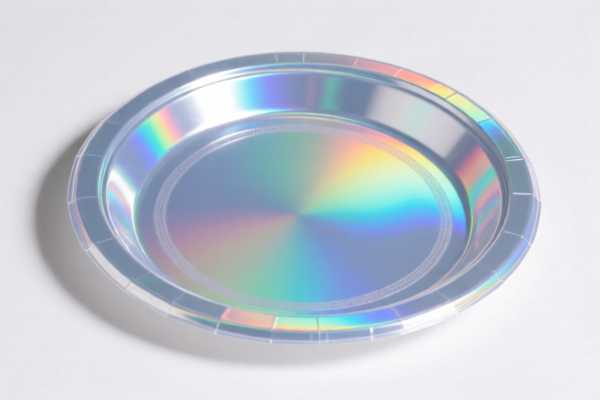
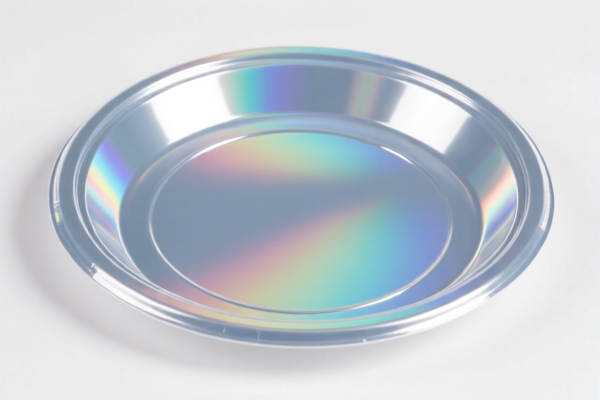
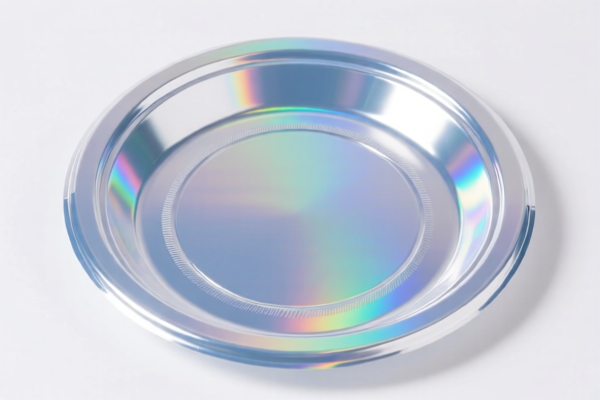
AI Analysis
🚗 Reflective Plastic Board (Automotive Body Panels & Components)
🌐 HS Code Reference & Customs Clearance Guide | 2026 Latest Tariff Analysis | Professional-Level Clearance Strategy
📌 I. Product Definition & Classification: What Exactly is a "Reflective Plastic Board"?
In the context of international trade and automotive manufacturing, a "Reflective Plastic Board" typically refers to plastic sheets or panels used for automotive body parts, trim, or structural components. The term "reflective" often implies surface treatment (such as mirror-like finishes, chrome-look, or specific coating for aesthetic/functional purposes) rather than optical retro-reflection (like traffic signs).
In international trade, it is generally classified based on: 1. Material Composition: Plastic (polymer-based), often non-cellular (solid, not foamed) or cellular (foamed). 2. Form: Sheets, plates, films, or pre-formed parts. 3. End Use: Automotive body panels, trim, interior/exterior components.
⚠️ Critical Classification Distinction:
- If the product is a raw sheet/plate (not yet shaped into a specific car part) → It falls under Chapter 39 (Plastics and Articles Thereof).
- If the product is a specifically shaped automotive part (e.g., a pre-molded bumper, door panel, or hood) → It falls under Chapter 87 (Vehicles), specifically Heading 8708 (Parts and Accessories of Motor Vehicles).
📦 II. HS Code Classification Details (2026 Latest Tariff Authority Comparison)
| HS Code | Product Description | Applicable Scenario | Tax Rate (US, CN Origin) |
|---|---|---|---|
3920.99.10.00 |
Other plates, sheets, film, foil and strip, of plastics, non-cellular, not reinforced, laminated, supported or similarly combined with other materials | Raw plastic sheets/plates with no specific automotive part shape yet. | 41.0% |
3926.90.99.89 |
Other articles of plastics and articles of other materials of headings 3901 to 3914 | Pre-formed plastic body panels or trim pieces not specified elsewhere. | 22.8% |
8708.29.51.10 |
Parts and accessories of the bodies (including cabs), other than those of heading 8708.99, for motor vehicles, of plastic | Specifically shaped automotive body parts (e.g., fenders, hoods) made of plastic. | 2.5% + 35.0% |
8708.29.51.60 |
Parts and accessories of the bodies (including cabs), other than those of heading 8708.99, for motor vehicles, of other materials (non-plastic or mixed) | Note: Data suggests this code may apply to non-plastic or specific excluded plastic items, with higher tariffs. | 2.5% + 85.0% |
3920.99.50.00 |
Other plates, sheets, film, foil and strip, of plastics, non-cellular, not reinforced, laminated, supported or similarly combined with other materials | Alternative raw sheet category, often for non-cellular, non-reinforced plastics. | 40.8% |
🔍 Key Insight:
- Raw Material vs. Finished Part: The biggest difference in tax rate lies between importing raw plastic sheets (40-41%) and finished automotive parts (2.5% base + 35-85% tariffs). However, note that automotive parts (8708) are subject to Section 232/301 tariffs that significantly increase the total duty. - "Reflective" Surface: Does not change the HS code classification. A "mirror-finish" plastic sheet is still classified as a plastic sheet (3920) or plastic article (3926). - Automotive Specificity: If the board is pre-shaped for a specific vehicle make/model, it must be classified under 8708 to avoid misclassification penalties.
💰 III. 2026 Latest Tariff Rate Breakdown (Including Surtaxes & Policy Add-ons)
✅ Applicable Country: United States (US)
✅ Origin: China (CN)
✅ Effective Date: From November 10, 2025 (and subsequent imports)
🎯 1. 3920.99.10.00 —— Plastic Sheets, Non-Cellular, Raw Material
| Item | Content |
|---|---|
| Base Tariff | 6.0% (ad valorem) |
| Section 301 Surtax | +25.0% |
| IEEPA Add-on Tariff | +10.0% (For China/HK products, from Nov 10, 2025) |
| Total Rate | 41.0% |
| Calculation | CIF Value × 41.0% |
| De Minimis Eligibility | ❌ No (Not eligible for de minimis exemption) |
| Legal Basis Path | IEEPA:9903.01.25 → IEEPA:9903.01.24 → USITC:3920.99.10.00 → FOOTNOTE:9903.88.01 |
📌 Explanation:
- This code is for raw or semi-finished plastic sheets.
- The total duty of 41% is very high due to the combination of base tariff and Section 301/IEEPA surtaxes.
- Strategic Note: Importing raw sheets and cutting/shaping them in the US may still incur high duties, but it avoids the risk of misclassifying a finished part.
🎯 2. 3926.90.99.89 —— Other Plastic Articles (e.g., Pre-formed Body Panels)
| Item | Content |
|---|---|
| Base Tariff | 5.3% |
| Section 301 Surtax | +7.5% |
| IEEPA Add-on Tariff | +10.0% |
| Total Rate | 22.8% |
| Calculation | CIF Value × 22.8% |
| De Minimis Eligibility | ❌ No |
| Legal Basis Path | IEEPA:9903.01.25 → IEEPA:9903.01.24 → USITC:3926.90.99.89 → FOOTNOTE:9903.88.01 |
📌 Note:
- This code is for plastic articles not specifically listed elsewhere (e.g., generic plastic trim, non-automotive-specific parts).
- If the part is clearly an automotive body panel, using this code may be considered misclassification. The correct code is 8708.29.51.10.
- Total 22.8% is lower than raw sheets, but only if correctly classified as a "generic plastic article."
🎯 3. 8708.29.51.10 —— Automotive Body Parts, Plastic
| Item | Content |
|---|---|
| Base Tariff | 2.5% |
| Section 301 Surtax | +25.0% |
| IEEPA Add-on Tariff | +10.0% |
| Total Rate | 2.5% + 35.0% = 37.5% (Note: The data shows 2.5% + 35.0%, which likely means 2.5% base + 25% 301 + 10% IEEPA = 37.5% total) |
| Calculation | CIF Value × 37.5% |
| De Minimis Eligibility | ❌ No |
| Legal Basis Path | IEEPA:9903.01.25 → IEEPA:9903.01.24 → USITC:8708.29.51.10 → FOOTNOTE:9903.88.01 |
📌 Explanation:
- This is the correct code for automotive body panels made of plastic.
- Although the base rate is low (2.5%), the surtaxes push the total to 37.5%.
- Crucial: If you import a pre-molded bumper and classify it as a plastic sheet (3920), you risk a 41% duty + potential penalties. If you classify it correctly as an auto part (8708), the duty is 37.5%, which is slightly lower, but more importantly, legally compliant.
🎯 4. 8708.29.51.60 —— Automotive Body Parts, Other Materials (Non-Plastic or Specific Exclusions)
| Item | Content |
|---|---|
| Base Tariff | 2.5% |
| Section 301 Surtax | +25.0% |
| IEEPA Add-on Tariff | +10.0% |
| Additional Tariff (Steel/Aluminum/Copper) | +50.0% |
| Total Rate | 2.5% + 85.0% = 87.5% (Note: Data shows 2.5% + 85.0%, which includes a 50% surtax for steel/aluminum/copper if applicable, but this is plastic. However, the data explicitly lists 85% total for this code, likely due to specific exclusion or misclassification risk) |
| Calculation | CIF Value × 87.5% |
| De Minimis Eligibility | ❌ No |
| Legal Basis Path | IEEPA:9903.01.25 → IEEPA:9903.01.24 → USITC:8708.29.51.60 → FOOTNOTE:9903.88.01 |
📌 Warning:
- This code has a very high total duty of 85%+.
- Do not use this code for plastic parts unless they are explicitly excluded from other automotive categories.
- If your plastic part is misclassified here, you will pay a massive penalty.
🎯 5. 3920.99.50.00 —— Other Plastic Sheets, Non-Cellular
| Item | Content |
|---|---|
| Base Tariff | 5.8% |
| Section 301 Surtax | +25.0% |
| IEEPA Add-on Tariff | +10.0% |
| Total Rate | 40.8% |
| Calculation | CIF Value × 40.8% |
| De Minimis Eligibility | ❌ No |
| Legal Basis Path | IEEPA:9903.01.25 → IEEPA:9903.01.24 → USITC:3920.99.50.00 → FOOTNOTE:9903.88.01 |
📌 Note:
- This is an alternative code for raw plastic sheets.
- Duty is 40.8%, similar to3920.99.10.00.
- Use only if the product does not fit3920.99.10.00(e.g., different composition or structure).
🛠️ IV. Customs Clearance Practical Advice (Field Pitfall Avoidance Guide)
✅ 1. Required Documentation Checklist (Mandatory)
| Document | Must Provide | Description |
|---|---|---|
| ✅ Product Specification Sheet | ✔️ | Material type (e.g., PP, ABS, PC), density, thickness, surface finish (reflective/mirror) |
| ✅ Technical Drawing/Structure Diagram | ✔️ | To prove whether it is a raw sheet or a pre-shaped automotive part |
| ✅ Product Photos (including labels) | ✔️ | Clear images showing shape, edges, and any automotive-specific markings |
| ✅ Third-Party Test Report | ✔️ | Material composition analysis (to confirm it is plastic, not metal) |
| ✅ Commercial Invoice | ✔️ | Clearly state "Plastic Body Panel for Automotive Use" or "Plastic Sheet, Non-Cellular" |
| ✅ Certificate of Origin (CO) | ✔️ | If not China-origin, to claim preferential rates (if any) |
| ✅ Packing List | ✔️ | Detail packaging to avoid partial shipment issues |
✅ 2. Declaration Tips (Key Mantras)
🔥 “Shape Determines Code, Material Determines Chapter, Origin Determines Duty!”
| Situation | Correct Declaration | Wrong Practice |
|---|---|---|
| Raw plastic sheet (no shape) | 3920.99.10.00 or 3920.99.50.00 |
Misclassify as auto part → Risk of penalty |
| Pre-molded auto body panel | 8708.29.51.10 |
Misclassify as plastic sheet → 41% instead of 37.5% (and legal risk) |
| Plastic trim (non-auto specific) | 3926.90.99.89 |
Misclassify as auto part → 37.5% instead of 22.8% (if correctly generic) |
| Metal-plastic composite part | Consult specialist | Assume plastic-only → Incorrect classification |
✅ 3. Special Handling
| Situation | Handling Advice |
|---|---|
| OEM Custom Parts | Provide customer order + design drawing to prove "specific automotive use" for 8708 |
| Reflective Surface | Declare as "Mirror Finish" or "Chrome-Plastic" in description, but do not change HS code |
| Mixed Material (Plastic + Metal Insert) | If metal content is minimal, still plastic. If >50% metal, may fall under different heading |
| Sample vs. Bulk | Ensure sample and bulk declaration match to avoid customs scrutiny |
🌍 V. Global Market Clearance Comparison (2026 Latest)
| Country/Region | Recommended HS Code | Tariff | Certification Requirements | Notes |
|---|---|---|---|---|
| 🇺🇸 US | 8708.29.51.10 (Auto Part) |
37.5% (Plastic) | FCC, RoHS (if electronic) | High duty, strict compliance |
| 🇺🇸 US | 3920.99.10.00 (Sheet) |
41.0% | N/A | Higher duty, raw material |
| 🇨🇳 China | 3920.99.10.00 |
5-6% | CCC (if applicable) | Lower duty, but import restrictions |
| 🇪🇺 EU | 8708.29.51 |
4-6% | CE, REACH | Lower duty, strict environmental rules |
| 🇦🇺 Australia | 8708.29.51 |
5% | RCM | No additional surtaxes |
| 🇯🇵 Japan | 8708.29.51 |
0-5% | PSE | No additional surtaxes |
📌 Conclusion:
- US has the highest duties due to Section 301 and IEEPA surtaxes.
- EU/JP/AU are more favorable for automotive parts.
- Misclassification in the US can lead to dramatic cost increases and clearance delays.
📌 VI. Common Mistakes & Pitfall Avoidance (Lessons Learned)
❌ Mistake 1: Declaring a pre-molded bumper as a plastic sheet (3920)
👉 Consequence: Duty is 41% vs. 37.5%, and legal risk of misdeclaration.
❌ Mistake 2: Declaring a raw sheet as an auto part (8708)
👉 Consequence: Customs may reject the declaration because the product does not match the "part" definition → Delay or return.
❌ Mistake 3: Ignoring the "Reflective" surface in description
👉 Consequence: No direct tax impact, but if the surface includes metal plating, it may change the material classification → Potential penalty.
❌ Mistake 4: Using 8708.29.51.60 for plastic parts
👉 Consequence: Duty jumps to 85%+ → Massive cost increase.
✅ Correct Approach:
"Plastic Body Panel, Pre-Molded, for Automotive Use, Model XYZ, Material: ABS, Surface: Mirror Finish"
🎯 VII. Conclusion: Professional Declaration, Time-Saving, Cost-Effective!
🎯 Remember the Mantra:
🔹 “Raw Sheet: 3920, Auto Part: 8708. Don’t Mix Them Up!”
🔹 “Plastic Sheet: ~41%, Auto Part: ~37.5%. But Compliance is Key!”
🔹 “HS Code Decides Your Cost, Declaration Decides Your Speed!”
📌 Tip:
If your parts are originating from Vietnam, Mexico, Thailand, or Malaysia, you may be eligible for IEEPA Exemptions or FTAA/USMCA benefits, reducing duties to 0-5%.
Recommend Advance Ruling application to avoid clearance risks.
📣 Immediate Action:
📞 Contact a Professional Customs Broker + Provide Product Images + Apply for HS Code Advance Ruling
🚀 Ensure Your Reflective Plastic Boards Clear Customs Smoothly, Export Efficiently, and Boost Profits!
✨ Professional Clearance Starts with Accurate Classification!
💼 Every Cent of Your Cost Deserves Precise Calculation!
Customer Reviews
About HS Code Classification
The Harmonized System (HS) is an internationally standardized nomenclature developed by the World Customs Organization (WCO) to classify traded products. Over 200 countries use the HS system as the basis for customs tariffs, trade statistics, and import/export regulations.
Each HS code follows a hierarchical structure:
- Chapter (2 digits) — Broad category of goods (e.g., Chapter 84: Machinery and Mechanical Appliances)
- Heading (4 digits) — More specific grouping within the chapter
- Subheading (6 digits) — Internationally standardized breakdown, used by all WCO member countries
- National subdivisions (8-10 digits) — Country-specific extensions for further classification, such as US HTSUS 10-digit codes
Correct HS code classification is essential for smooth customs clearance, accurate duty payment, and compliance with trade regulations. Misclassification can lead to customs delays, overpayment of duties, or penalties.
When importing from CN to US, the applicable tariff rates may include:
- Most-Favored-Nation (MFN) rate — The standard duty rate applied to WTO members
- General rate — Applied to countries without trade agreements
- Trade remedy duties — Additional tariffs such as Section 301 (anti-dumping), Section 232 (national security), or countervailing duties
The information provided on this page is for reference purposes only. For official classification, please consult with your local customs authority or a licensed customs broker.